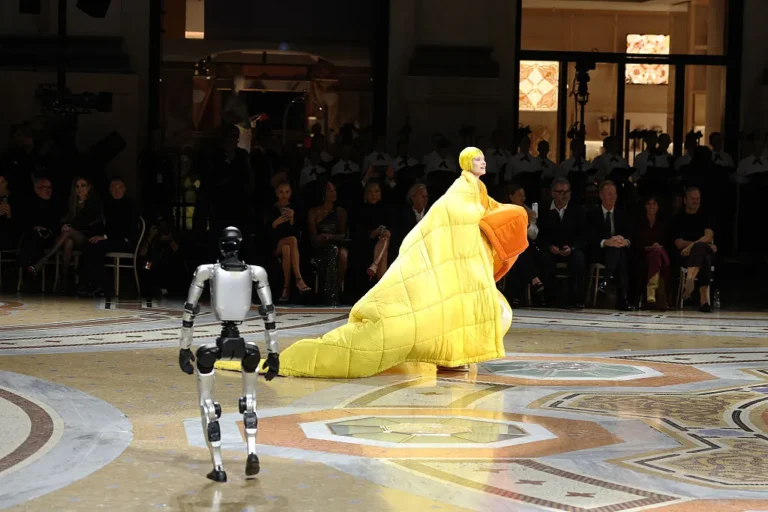










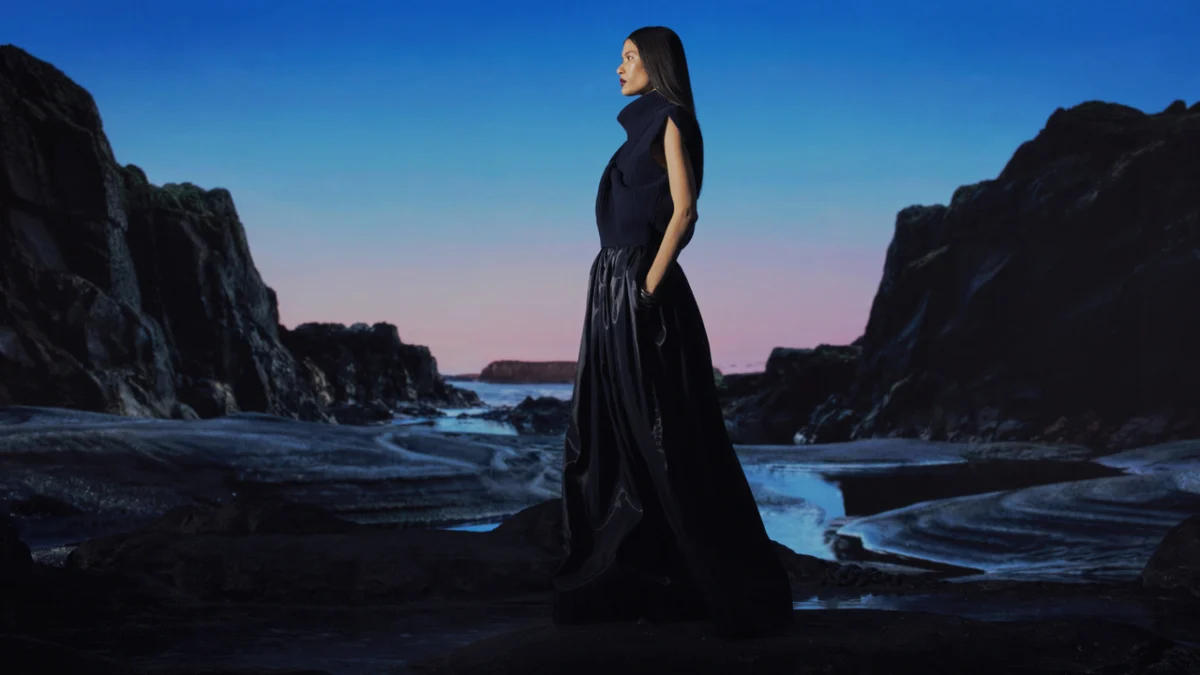
On Saturday, New York Fashion Week witnessed a significant intersection of high-concept design and enterprise-grade technology as designer Kate Barton unveiled her latest collection. While the runway remains the traditional centerpiece of the event, Barton introduced a digital layer to her presentation through a strategic partnership with Fiducia AI. Together, they launched a multilingual artificial intelligence agent, engineered using IBM watsonx on IBM Cloud, designed to facilitate a deeper, more interactive engagement between the audience and the garments. This deployment marks a pivotal moment in the industry’s adoption of generative AI, shifting the technology from back-end logistics to a front-facing, consumer-centric experiential tool.
The collaboration represents a sophisticated application of visual and linguistic AI. The bespoke agent allows guests to identify specific pieces from the collection in real-time, providing technical details, fabric compositions, and the narrative inspiration behind each look. Beyond simple identification, the platform offers photorealistic virtual reality try-ons, allowing users to visualize how the avant-garde silhouettes would translate to their own forms. By utilizing IBM’s robust infrastructure, including IBM Cloud Object Storage and watsonx’s data management capabilities, the activation ensures that the interaction is seamless, low-latency, and globally accessible through its multilingual voice and text interface.
The Architectural Foundation of the AI Presentation
The technical execution of the project was spearheaded by Ganesh Harinath, the founder and CEO of Fiducia AI. In discussions leading up to the presentation, Harinath emphasized that the primary challenge was not the refinement of the AI models themselves, but the complex orchestration required to make the technology appear invisible and intuitive to the end-user. The production-grade activation relied on a visual AI lens capable of detecting the unique geometric shapes and textures characteristic of Barton’s work.
To achieve this level of precision, Fiducia AI leveraged the IBM watsonx platform to train models on high-resolution imagery and metadata specific to the new collection. This allowed the AI to act as a digital docent, capable of answering complex queries in any language. The choice of IBM Cloud was intentional, providing the security and scalability necessary for a high-profile event like New York Fashion Week, where data privacy and system reliability are paramount.
Dee Waddell, Global Head of Consumer, Travel and Transportation Industries at IBM Consulting, noted that this specific application of AI moves the needle for the retail sector. According to Waddell, when product intelligence and consumer engagement are synchronized in real-time, AI evolves from a novelty feature into a genuine growth engine. This sentiment reflects a broader trend in the industry where luxury brands are seeking "measurable competitive advantages" through digital transformation that enhances, rather than distracts from, the physical product.
Kate Barton’s Vision: Technology as a Portal
For Kate Barton, the integration of AI is not a departure from her craft but an extension of it. Barton has consistently positioned her brand at the vanguard of innovation, viewing technology as a medium similar to fabric or thread. She describes her approach as creating a "portal" into the collection’s world. In her view, the technology serves to expand the atmosphere surrounding the clothes, heightening the sense of storytelling that is often lost in the rapid-fire pace of a traditional runway show.
"Today, tech is a tool for expanding the world around the clothes, how they are presented, and how people enter the story," Barton stated. She emphasized that the goal was to create a moment where the viewer’s eyes do a "double take," blending the boundaries between the physical garment and its digital representation. This philosophy of "the real and the unreal" has become a hallmark of her design identity.
This is not Barton’s first foray into the digital frontier. In previous seasons, she experimented with AI-generated models and digital prototyping, also in collaboration with Fiducia AI. However, the current iteration is more ambitious, focusing on democratization and accessibility. By allowing guests to interact with the collection via their own devices in their native languages, Barton is effectively lowering the barrier to entry for high fashion, which has historically been an exclusionary environment.

A Chronology of Fashion’s Digital Evolution
The fashion industry’s relationship with technology has historically been one of cautious observation followed by rapid, inevitable adoption. The current discourse surrounding AI mirrors the skepticism seen in the late 1990s and early 2000s regarding e-commerce.
- The Early 2000s: Major luxury houses were famously hesitant to launch websites, fearing that an online presence would dilute the exclusivity of their brands.
- 2010–2015: The rise of social media forced a shift. Instagram became the primary gallery for fashion, and the "see-now-buy-now" model began to challenge the traditional six-month lead time of the fashion calendar.
- 2020–2022: The COVID-19 pandemic accelerated digital transformation, leading to the rise of digital fashion shows, NFTs, and the "metaverse" hype. While many of these initiatives were experimental, they laid the groundwork for serious investment in 3D modeling.
- 2023–Present: The focus has shifted to Generative AI. While many brands use AI quietly for inventory management, supply chain optimization, and trend forecasting, Barton is among a small group of designers bringing the technology to the forefront of the creative presentation.
Barton herself noted this parallel, suggesting that the question has shifted from "should we be using this technology" to "is our use of this technology actually good?" She acknowledges that many brands remain "quiet" about their AI usage due to potential reputational risks, including concerns over copyright, the replacement of human labor, and the "uncanny valley" effect of AI-generated imagery.
Supporting Data: The Economic Impact of AI in Fashion
The integration seen at Barton’s show is backed by significant economic projections. According to a 2023 report by McKinsey & Company, generative AI could add between $150 billion and $275 billion to the operating profits of the apparel, fashion, and luxury sectors within the next three to five years. The report highlights that the most significant gains will come from "creative and commercial" use cases—exactly the type of application demonstrated by Barton and Fiducia AI.
Furthermore, data from Statista indicates that the global market for AI in retail is expected to reach $31 billion by 2028. Consumer surveys suggest a growing appetite for these tools; approximately 40% of Gen Z and Millennial shoppers express interest in using VR try-on technology to reduce the environmental impact of returns and to personalize their shopping experience. By operationalizing these tools now, Barton is positioning her brand to capture a demographic that increasingly values the intersection of sustainability, technology, and personalization.
Ethical Considerations and the Human Element
Despite the technological sophistication of the AI agent, Barton remains firm on the importance of human agency. She addressed the industry-wide anxiety that AI might eventually replace designers, pattern makers, and models. "If the technology is used to erase people, I am not into it," Barton said. She argued that audiences are sophisticated enough to distinguish between "invention"—the use of tools to enhance creativity—and "avoidance"—the use of tools to cut costs at the expense of human craft.
The path forward, according to Barton, requires a framework of "clear discourse, clear licensing, and clear credit." This aligns with growing calls within the creative industries for more transparent AI training sets and robust intellectual property protections for designers whose aesthetics might be scraped by unauthorized models. Barton’s partnership with Fiducia AI and IBM is notable for its use of "production-grade," enterprise AI, which typically offers better data provenance and security than open-source alternatives.
The Future Landscape: 2028 and Beyond
Ganesh Harinath of Fiducia AI offered a timeline for the normalization of these technologies. He predicts that by 2028, AI-integrated fashion shows will no longer be seen as "tech-themed" events but will be the industry standard. By 2030, he expects AI to be so deeply embedded into the operational core of retail that the distinction between "online" and "offline" shopping will effectively disappear.
The differentiator for brands moving forward will not be the technology itself—as much of it already exists—but the ability to assemble the right partners and build teams capable of operationalizing AI responsibly. The Barton-Fiducia-IBM triad serves as a blueprint for this collaborative model, combining creative vision, specialized AI orchestration, and global cloud infrastructure.
As the curtains closed on the Saturday presentation, the takeaway was clear: the future of fashion is not automated, but augmented. The success of Barton’s latest collection suggests that when technology is used to heighten craft and deepen storytelling, it does not flatten the human experience—it enriches it. For an industry built on the allure of the new, the integration of IBM watsonx on the runway may be the most significant "new look" of the season.