



The coastal town of Taormina, Sicily, recently served as the backdrop for a significant intersection of high fashion and global celebrity culture as Jennifer Lopez attended the Dolce & Gabbana Alta Moda events. While the multi-day festivities were anchored by the unveiling of the brand’s latest couture collections, Lopez’s presence and her meticulously curated series of off-runway ensembles provided a masterclass in strategic brand alignment and thematic dressing. Throughout her stay, the American entertainer and entrepreneur transitioned through a variety of looks that paid homage to mid-century Italian glamour, effectively serving as a living embodiment of the Dolce & Gabbana "La Dolce Vita" marketing philosophy.
The Strategic Context of Alta Moda in Taormina
Dolce & Gabbana’s Alta Moda, Alta Sartoria, and Alta Gioielleria events represent the pinnacle of the brand’s artisanal output, designed to rival the haute couture traditions of Paris. Unlike standard ready-to-wear shows, these events are immersive experiences held in culturally significant Italian locations, often spanning several days of private viewings, gala dinners, and performances. By choosing Taormina—a hill-town on the east coast of Sicily known for its ancient Greek theater and breathtaking views of Mount Etna—designers Domenico Dolce and Stefano Gabbana sought to reinforce the brand’s deep-rooted connection to Sicilian heritage.
The presence of high-profile brand ambassadors like Jennifer Lopez is a critical component of the Alta Moda strategy. According to industry analysts, celebrity appearances at such exclusive events generate significant Media Impact Value (MIV). For Dolce & Gabbana, Lopez represents a demographic that values both the opulence of high fashion and the relatability of Mediterranean leisure. Her participation was not limited to front-row attendance; it extended to a headline performance at the Alta Moda closing party, necessitating a wardrobe that could transition seamlessly from casual afternoon strolls to high-octane evening entertainment.
A Chronology of Sicilian Style: The 1960s Postcard Aesthetic
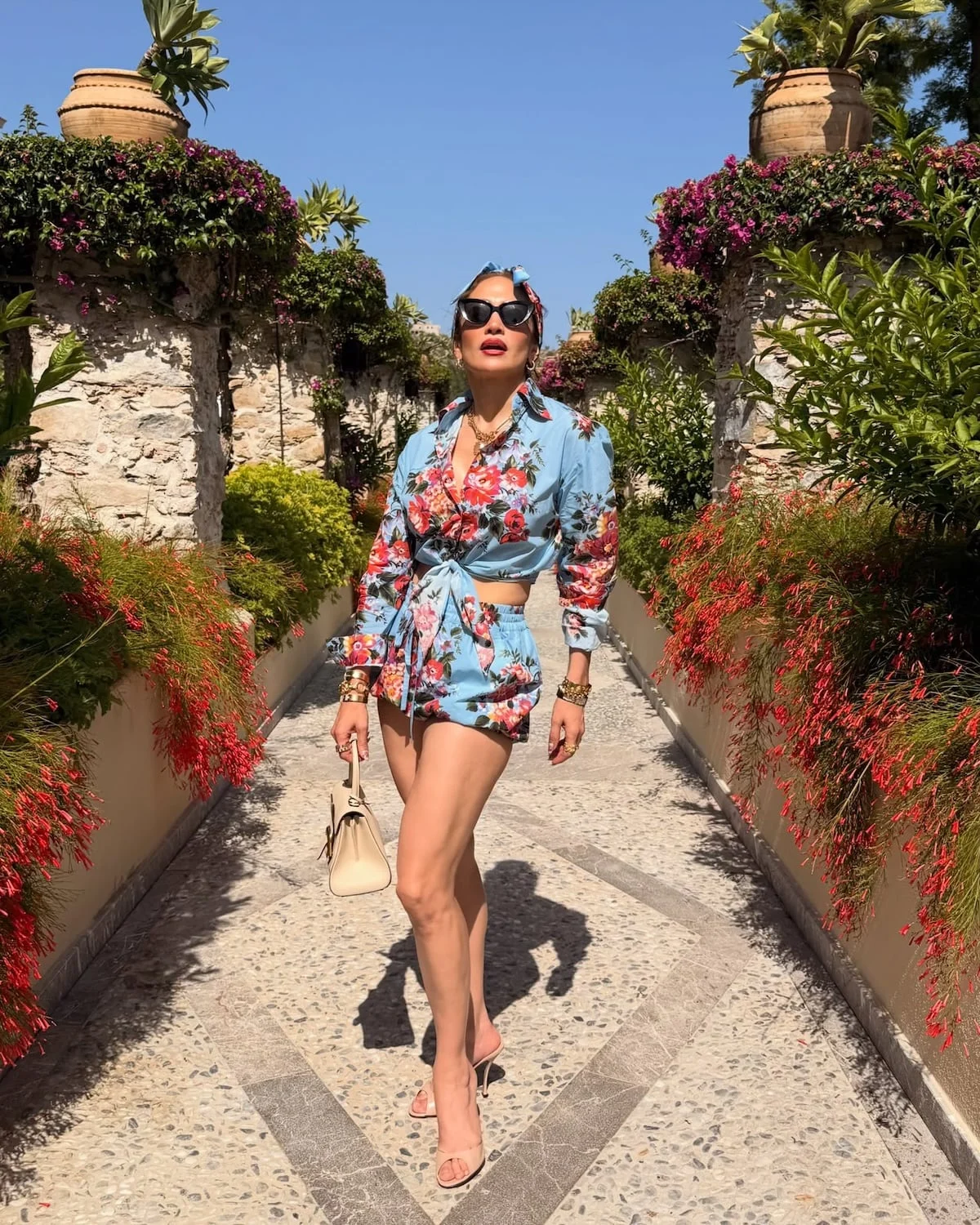
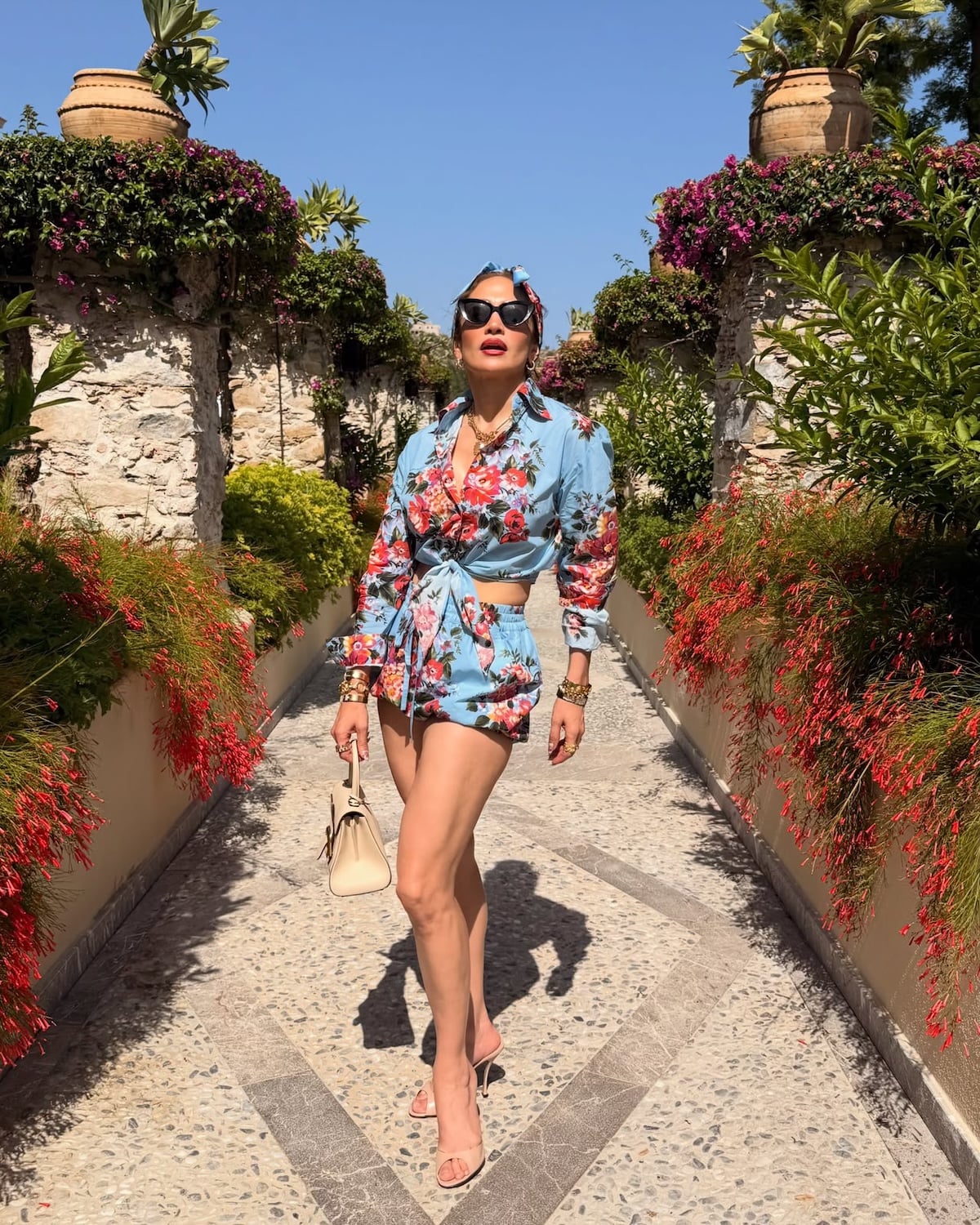
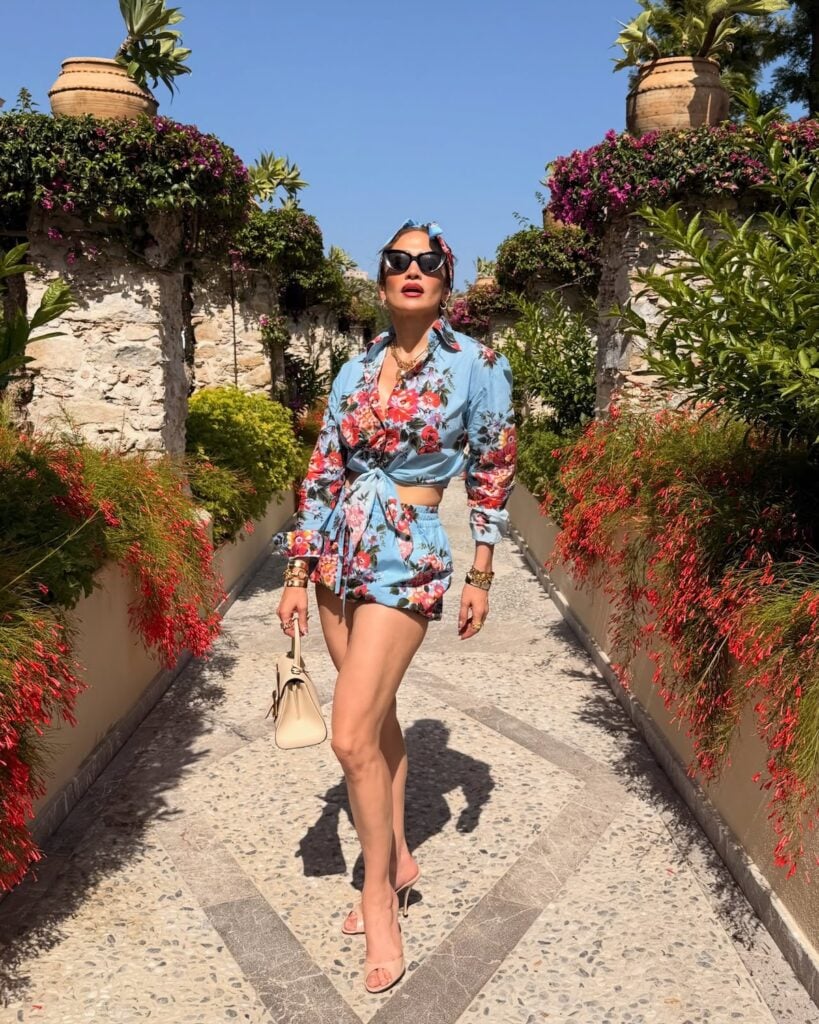
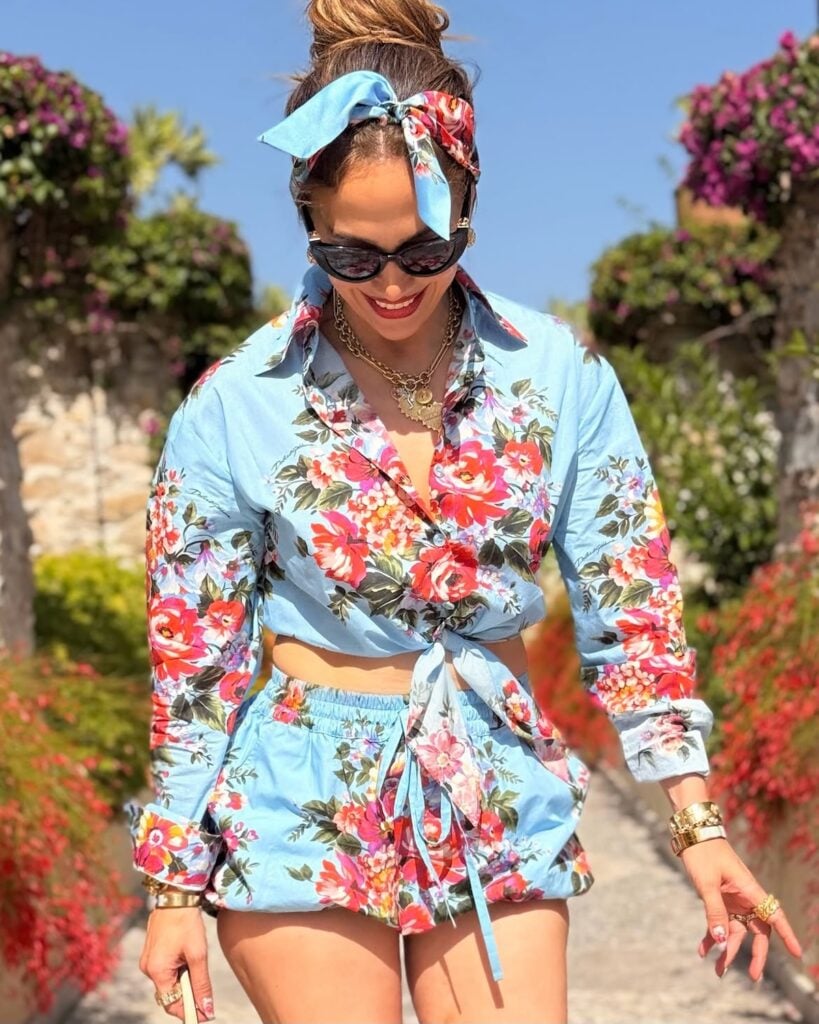
The first notable ensemble in Lopez’s Taormina wardrobe was a floral-print co-ord set consisting of tailored shorts and a cropped shirt. This look, styled by her long-term collaborators Rob Zangardi and Mariel Haenn, was a direct reference to the golden age of the Italian Riviera. By pairing the set with a matching silk headscarf and Dolce & Gabbana Hinge cat-eye sunglasses, the styling evoked the imagery of 1960s cinema icons, most notably Sophia Loren and Monica Vitti.
The technical execution of the look relied on a balance of vibrant patterns and understated accessories. The choice of beige peep-toe mules and a Delvaux Le Brillant Mini bag in ivory served to anchor the busy floral print, preventing the ensemble from appearing over-saturated. Fashion historians note that this specific silhouette—the high-waisted short paired with a structured, collared crop—was a staple of European resort wear during the post-war economic boom, a period that Dolce & Gabbana frequently cites as a primary inspiration for their aesthetic identity.
Cultural Heritage Through Print: The Majolica Influence
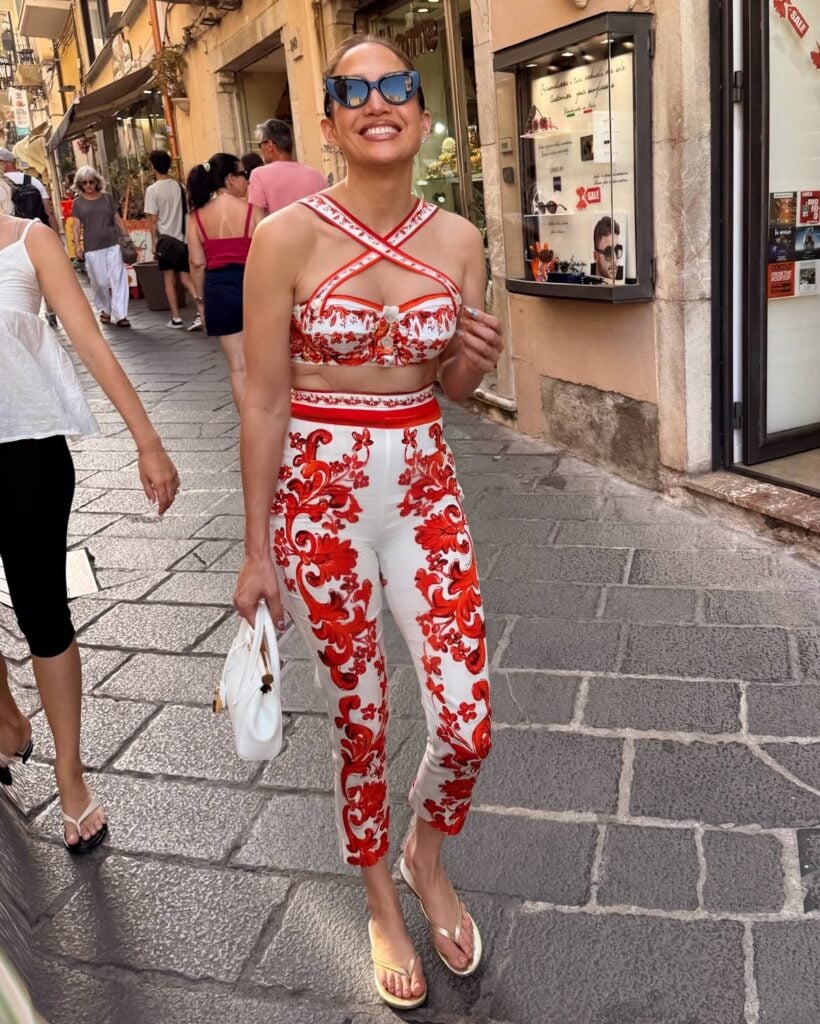
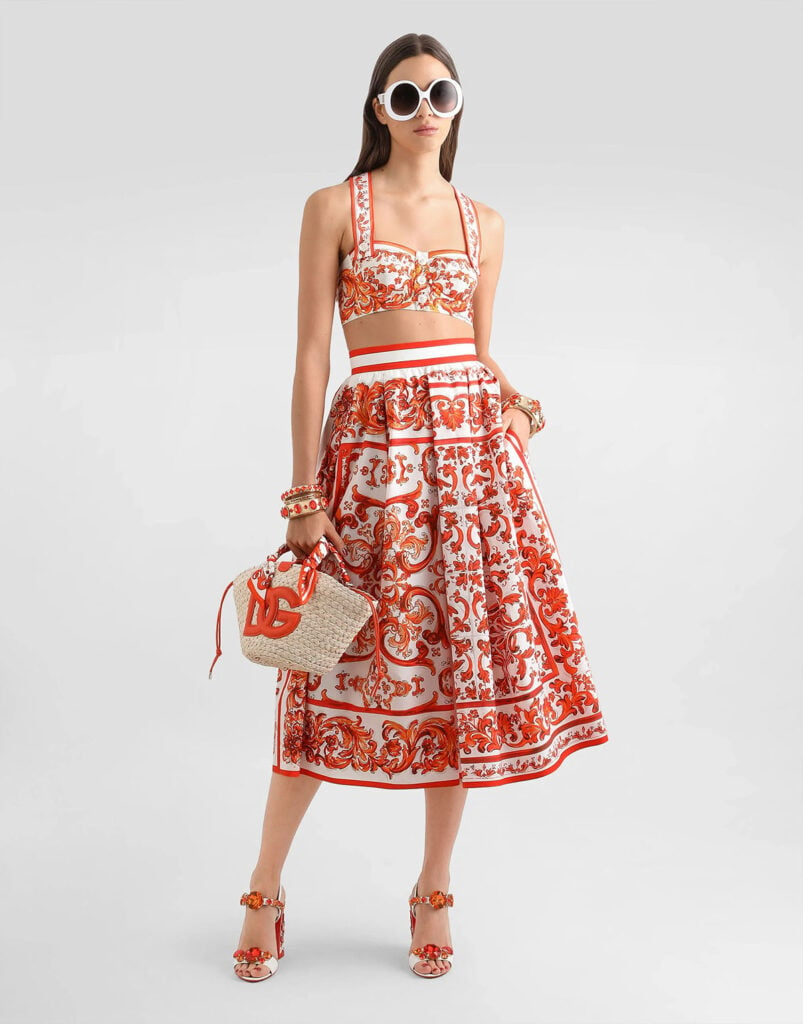
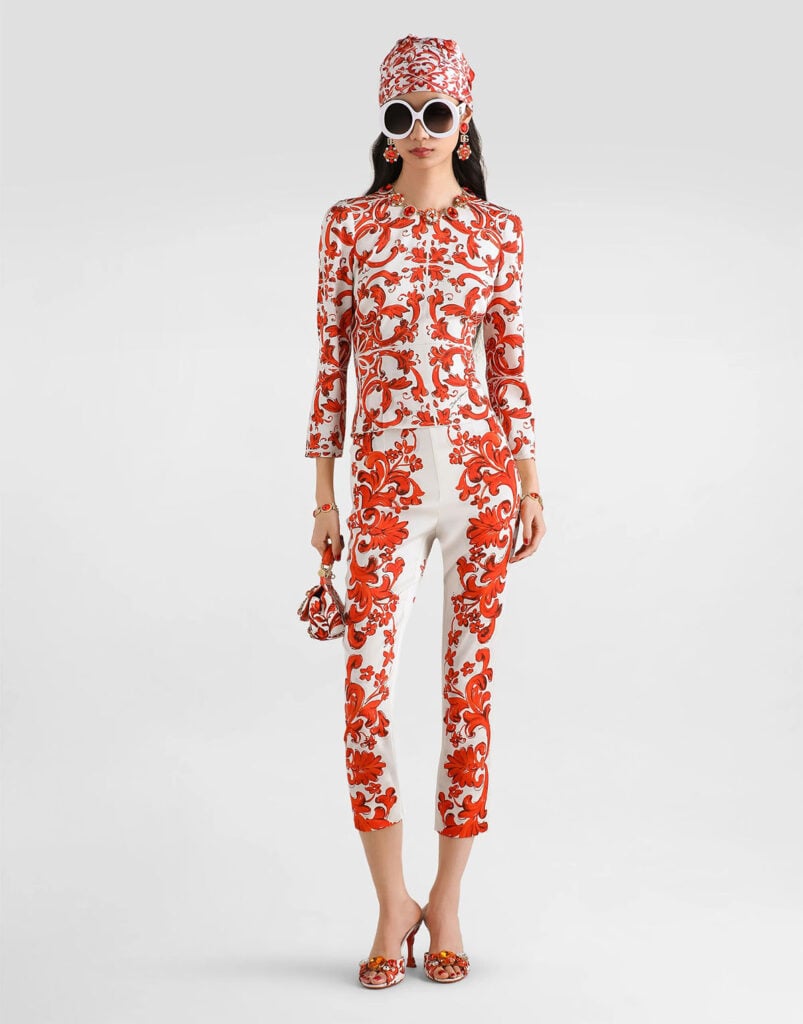
Central to the Sicilian narrative of the weekend was Lopez’s adoption of the Majolica print. This specific pattern, characterized by its intricate blue and white ceramic-inspired motifs, is a cornerstone of the Dolce & Gabbana visual lexicon. It draws directly from the traditional tin-glazed pottery of Caltagirone, a Sicilian city famous for its ceramic production since the medieval period.
Lopez wore the Majolica print in a contemporary silhouette: a structured bustier paired with matching leggings. This choice demonstrated the versatility of traditional motifs when applied to modern athleisure-adjacent garments. To maintain a level of "piazza-appropriate" casualness, the look was accessorized with gold flip-flops and a Mini Marlene Day bag. The juxtaposition of a formal, corseted bodice with casual footwear highlights a growing trend in luxury travel dressing, where the boundaries between formal evening wear and relaxed day wear are increasingly blurred to accommodate the lifestyle of the global elite.
From Shoreline to Socialite: The Transformation of the Lace Cover-up
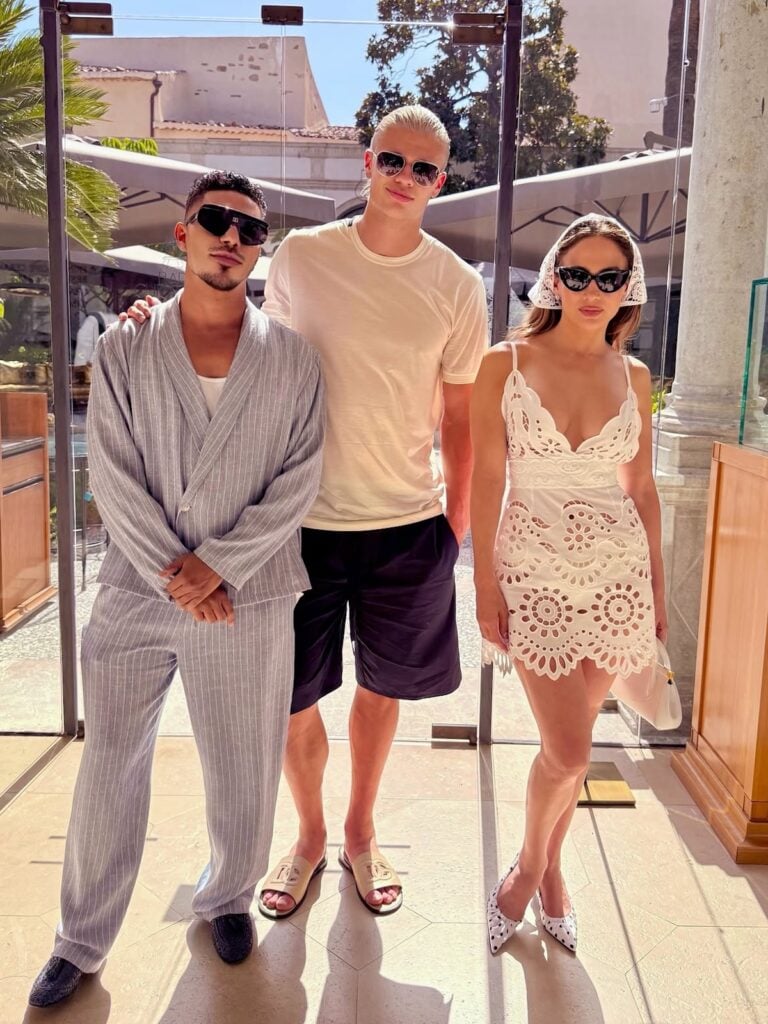
As the event progressed toward the final Alta Moda show and the subsequent closing celebrations, Lopez’s wardrobe moved toward monochromatic elegance. One of the most discussed looks of the trip was a white lace mini dress that functioned as both a beach cover-up and a sophisticated daytime ensemble.
The dress, constructed from intricate Italian lace—another hallmark of the brand’s craftsmanship—was styled with a white lace headscarf, creating a cohesive, bridal-adjacent aesthetic that is often associated with traditional Sicilian ceremonies. However, the addition of polka-dot pumps and the Mini Marlene Day bag transitioned the look from a seaside garment to a formal outfit suitable for the social atmosphere of Taormina’s central squares.
During these public appearances, Lopez was frequently seen in the company of other high-profile attendees, including professional footballer Erling Haaland and vocal coach Stevie Mackey. This social grouping underscores the diverse reach of the Dolce & Gabbana brand, which successfully bridges the worlds of Hollywood, international sports, and the music industry.
Technical Analysis of Styling and Performance
The logistical success of Lopez’s wardrobe can be attributed to the precision of her styling team. Rob Zangardi and Mariel Haenn have worked with Lopez for over a decade, developing a signature style that emphasizes her athletic physique while adhering to the specific cultural requirements of the venues she visits. For the Taormina event, the styling focused on "thematic immersion." By utilizing headscarves and oversized eyewear, the stylists protected the "celebrity mystique" while simultaneously paying tribute to the local fashion history.
The final phase of the event saw Lopez take the stage for a performance that required a shift from daytime leisure to theatrical glamour. Reports from the closing party indicate that her performance was a high-energy retrospective of her hits, requiring garments that offered both visual impact and the necessary range of motion for choreography. This transition from "tourist" to "performer" within the span of a few hours illustrates the multifaceted role of the modern brand ambassador.
Broader Industry Implications and Economic Impact
The collaboration between Jennifer Lopez and Dolce & Gabbana in Taormina reflects broader trends within the luxury sector. As the "quiet luxury" trend continues to dominate certain segments of the market, brands like Dolce & Gabbana are doubling down on "maximalist storytelling." By utilizing bold prints, historical references, and high-wattage celebrity endorsements, they maintain a distinct market position that appeals to consumers seeking visible opulence.
Furthermore, the choice of Sicily as a recurring venue for Alta Moda has had a measurable impact on local tourism. The "JLo effect," combined with the global visibility of the Alta Moda shows, often leads to an uptick in luxury travel bookings to the region. Data from previous years suggest that when a high-profile event of this nature occurs, secondary markets—including local hotels, boutique retailers, and artisanal workshops—experience a surge in interest as followers seek to replicate the "Italian summer" experience showcased on social media.
Conclusion
Jennifer Lopez’s stay in Taormina was more than a series of public appearances; it was a calculated exercise in fashion communication. By seamlessly integrating into the Sicilian environment through her choice of Dolce & Gabbana attire, she reinforced her status as a global style icon while providing the brand with an authentic, high-visibility platform for its most iconic designs. From the historical resonance of the Majolica print to the cinematic allure of the 1960s-inspired co-ords, the wardrobe served as a comprehensive tribute to the enduring appeal of Italian craftsmanship and the romanticized vision of the Mediterranean lifestyle. As the fashion industry continues to evolve, such deep-level integrations between talent, location, and brand heritage are likely to become the standard for high-stakes luxury marketing.