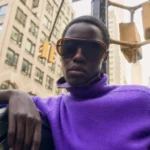


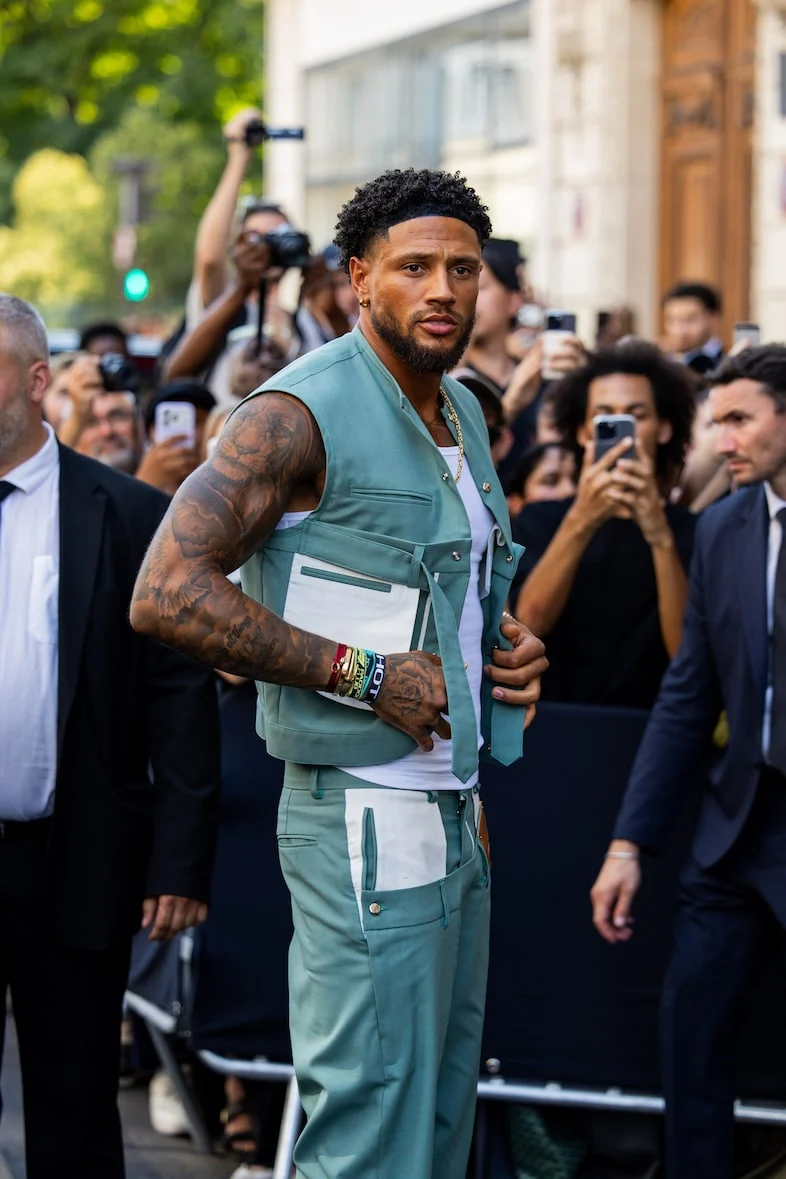
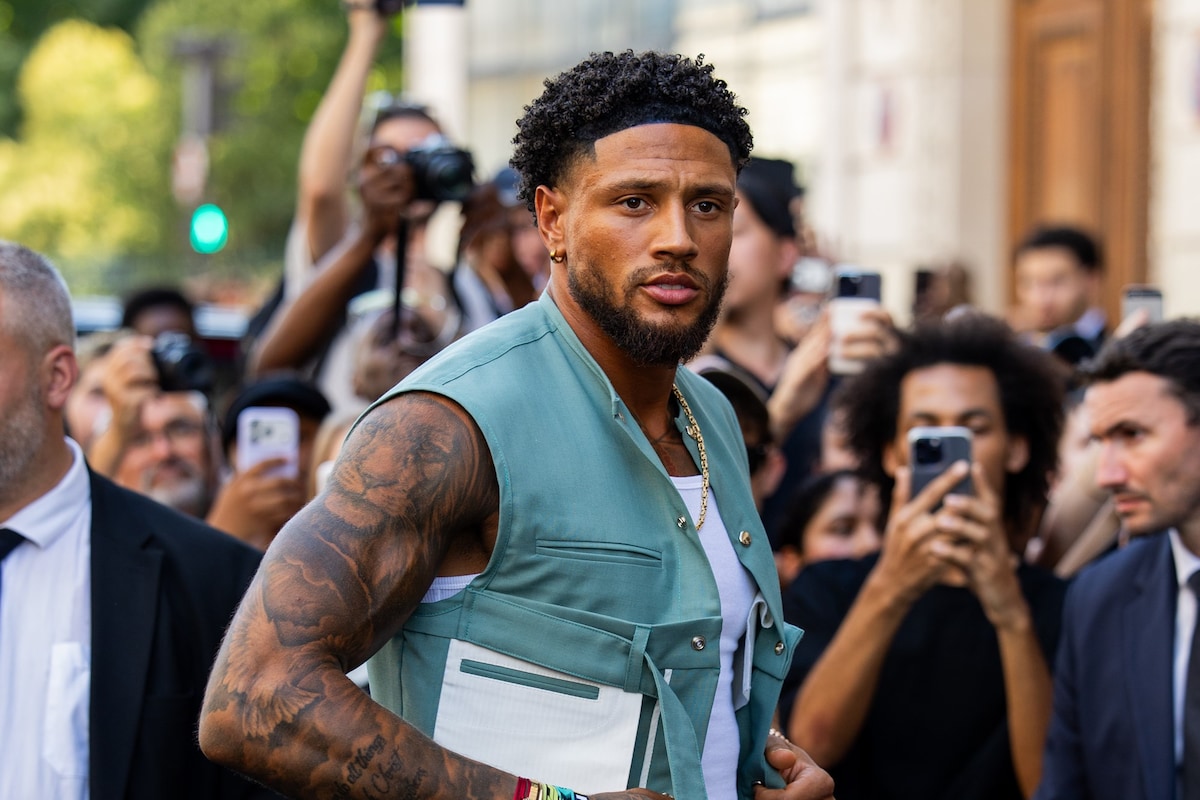
The intersection of sport, celebrity, and high fashion converged dramatically at Paris Fashion Week as Nigerian international goalkeeper Maduka Okoye made an unexpected yet impactful debut on the front row of the Jean Paul Gaultier Autumn/Winter 2026 haute couture show. While Nigeria’s absence from this year’s World Cup might have sidelined Okoye from the pitch, his burgeoning profile as a style icon is quickly positioning him as a new fixture in the global fashion landscape. His appearance coincided with a pivotal moment for the storied French house, as Duran Lantink presented his inaugural haute couture collection as the brand’s newly appointed permanent creative director, marking a significant evolution in Gaultier’s innovative post-retirement strategy.
From Silverstone to the Seine: Okoye’s Seamless Transition to Fashion
Maduka Okoye, the 24-year-old German-Nigerian footballer, has been making headlines beyond the penalty box. Just last weekend, the Udinese goalkeeper was reportedly spotted at Silverstone, immersing himself in the high-octane world of Formula 1 alongside rising star Kimi Antonelli. This transcontinental dash from the racing circuits of Britain to the fashion capital of France, facilitated by a swift Eurostar journey, underscores Okoye’s rapidly expanding interests and influence. His arrival at Paris Fashion Week was not merely an attendance but a statement, signaling a deliberate foray into an industry increasingly embracing diverse public figures.
Okoye’s journey to the coveted front row of Jean Paul Gaultier was catalyzed, in part, by his viral ascent on social media platform TikTok. His striking looks and undeniable charisma garnered significant attention, leading to a phenomenon where fans lauded his "lethal facecard." This digital groundswell translated directly into the fashion world’s radar, demonstrating the potent influence of contemporary media in identifying and elevating new muses. For many brands, tapping into personalities with organic social media traction offers an invaluable conduit to younger, digitally native audiences, a demographic critical for maintaining relevance in the fast-paced fashion ecosystem.
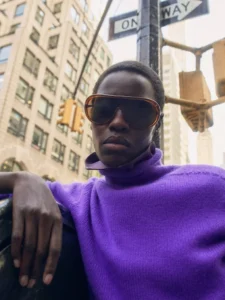
At the AW26 couture show, Okoye exchanged his familiar club or national team kit for a meticulously curated teal denim ensemble, a sophisticated yet contemporary choice that perfectly blended with the avant-garde spirit of Gaultier. His seating arrangement was nothing short of a celebrity trifecta, as he found himself positioned between Grammy-winning rap superstar Cardi B and the iconic French model, singer, and actress Amanda Lear. This unexpected trio immediately captured media attention, symbolizing the eclectic mix of personalities that haute couture now attracts and the increasingly blurred lines between different spheres of influence.
A brief interaction with Okoye before the show offered a glimpse into his perspective. When queried about the secret to being perceived as "hot," his candid response—"good looks"—was delivered with a charming self-assurance, further solidifying his confident persona. On the sporting front, his loyalties for the ongoing World Cup, following Germany’s early exit, had shifted to France, a diplomatic choice given his current location and the country’s strong footballing heritage. These snippets of conversation painted a picture of a young athlete at ease with his newfound celebrity, navigating the glittering world of fashion with an approachable charm.
Jean Paul Gaultier: A Legacy Reimagined with Duran Lantink
The Jean Paul Gaultier brand has, since 2015, exclusively focused on haute couture collections, a strategic pivot that reinforced its position at the pinnacle of artisanal fashion. Following the legendary designer Jean Paul Gaultier’s retirement in 2020, the house embarked on an audacious and unprecedented experiment: a rotating-designer structure. This innovative model invited a series of guest creative directors from across the globe to interpret Gaultier’s audacious vision, infusing the brand with fresh perspectives while honoring its foundational DNA.
Over the past five years, this rotating system has been a masterclass in brand revitalization. Critically acclaimed designers such as Simone Rocha, Olivier Rousteing of Balmain, Ludovic de Saint Sernin, and Glenn Martens of Y/Project and Diesel have each lent their distinctive aesthetics to the Gaultier oeuvre. Rocha’s collection brought a romantic, darkly feminine touch; Rousteing injected his signature opulent glamour; de Saint Sernin explored sensuality and craftsmanship; and Martens delivered a deconstructed, experimental take. Each collaboration generated significant buzz, attracting diverse audiences and maintaining Gaultier’s cultural cachet in a rapidly changing industry. This model not only ensured the brand remained perpetually relevant but also allowed for a continuous exploration of its multifaceted identity through the lens of contemporary talent.
Today, however, marked a significant shift. The AW26 couture show was not another guest designer collaboration but the debut haute couture collection of Duran Lantink as the brand’s new, permanent creative director. Lantink, known for his sustainable approach, deconstructive aesthetic, and playful subversion of established norms, had already presented two ready-to-wear collections for the brand. His permanent appointment signals a new chapter for Jean Paul Gaultier, moving beyond the curated experimentation of the rotating model towards a singular, consistent creative vision. This transition reflects a strategic decision to solidify a long-term artistic direction while still embracing the spirit of innovation that has defined Gaultier.
Duran Lantink’s Avant-Garde Couture: A Sculptural Narrative
The AW26 couture collection under Duran Lantink’s direction was a bold declaration of intent, pushing the boundaries of traditional haute couture with an uncompromisingly artistic vision. The show commenced with American model Selena Forrest in a tailored, knee-length navy coat, paired unexpectedly with neon yellow socks and matching heels. This opening look, while refined, proved to be a deliberate, almost deceptive, introduction to the dramatic narrative that was about to unfold, setting a relatively "tame" precedent for Lantink’s typically audacious style.
What followed was a spectacle that transcended conventional garment design, transforming fashion into wearable sculpture. Lantink’s collection explored exaggerated silhouettes and unconventional forms, challenging perceptions of the human body and its adornment. He masterfully manipulated volume, incorporating "giant cylinders to the bust and behind," which, rather than merely enhancing form, created entirely new architectural dimensions. From these dramatic structures, "plumes of tulle tumbled out," evoking a sense of raw, almost domestic chaos—a comparison to "pulling bedsheets out the washing machine" captures the surprising yet captivating texture and movement.
The collection continued its exploration of tubular shapes and spherical dresses, with some garments resembling "upside-down lightbulbs." These forms were not merely decorative; they fundamentally reconfigured the wearer’s outline, creating silhouettes that were both abstract and powerfully expressive. Lantink’s designs showcased a profound understanding of couture craftsmanship, combined with an irreverent, almost playful approach to construction and material. The garments were a testament to the atelier’s skill, translating Lantink’s visionary concepts into wearable art pieces. The collection’s audaciousness prompted a lighthearted reflection: if Maduka Okoye were to wear one of these voluminous, protective creations on the football pitch, he would undoubtedly find them effective in blocking shots.
Lantink’s aesthetic, deeply rooted in upcycling and deconstruction, found a sophisticated expression within the haute couture framework. His ability to transform discarded or conventional elements into high fashion is not just a stylistic choice but a philosophical statement on consumption and creativity. This collection, more than any before it for Gaultier, cemented Lantink’s unique voice, demonstrating how he plans to carry forward the house’s legacy of challenging norms while injecting his own distinct, future-forward perspective.
The Broader Implications: Redefining Celebrity and Couture in the Digital Age
Maduka Okoye’s high-profile appearance at Paris Fashion Week, alongside Duran Lantink’s avant-garde debut, encapsulates several significant shifts within the fashion and broader cultural landscapes. The increasing fluidity between the worlds of sports, entertainment, and high fashion is undeniable. Athletes, once primarily confined to their professional domains, are now leveraging their global platforms and aspirational appeal to become influential figures in fashion. Their presence at such exclusive events not only elevates their personal brands but also introduces haute couture to a wider, more diverse global audience, far beyond traditional fashion enthusiasts.
Social media, particularly platforms like TikTok, plays a pivotal role in this democratization of celebrity and influence. It has created new pathways for individuals to gain prominence, bypassing conventional gatekeepers and directly connecting with millions. Okoye’s viral fame is a testament to this power, demonstrating how digital charisma can translate into tangible opportunities within industries like fashion, which are constantly seeking fresh faces and authentic voices.
For Jean Paul Gaultier, Lantink’s appointment and his sculptural couture collection signal a bold commitment to artistic innovation and a continued embrace of the avant-garde spirit that defined the brand’s founder. By moving from a rotating guest designer model to a permanent creative director, the house is establishing a cohesive, long-term vision that promises to challenge the conventions of luxury and haute couture. Lantink’s focus on transformative silhouettes and conceptual design positions Gaultier at the forefront of a movement redefining couture for the 21st century—less about traditional glamour and more about artistic expression, sustainability, and intellectual provocation.
The convergence witnessed at the AW26 couture show—a football star turned fashion muse, a cutting-edge designer, and an iconic house reinventing itself—reflects a dynamic cultural moment. It highlights how industries are increasingly interconnected, driven by global talent, digital influence, and a shared desire to push creative boundaries. As the lines between different spheres of celebrity and creativity continue to blur, the stage is set for an even more exciting and unpredictable future for both fashion and its new generation of icons.