








Beneath the polished facade of the global fashion industry lies a subterranean network of private archives, warehouses, and temperature-controlled vaults that serve as the ultimate creative fuel for contemporary designers. While the general public fixates on seasonal runway shows and rapid-fire retail trends, creative directors, stylists, and costume designers routinely turn to secretive subculture archives to mine decades of design history. In London, institutions like The Contemporary Wardrobe supply underground reference points and physical garments to major design houses. In Paris, spaces such as Passage—formerly known as Le Souk—house inventories exceeding 40,000 items, spanning contemporary ready-to-wear and historic haute couture. Yet, for avant-garde menswear, technical outerwear, and deconstructed tailoring, Berlin-based ENDYMA has quietly established itself as the preeminent destination of the modern fashion ecosystem.
Founded in 2014 by Greek collector Michael Kardamakis, ENDYMA—taking its name from the ancient Greek word for clothing—holds the largest and most comprehensive collection of vintage Helmut Lang apparel in the world. Alongside its peerless holdings of Lang’s minimalist, utilitarian work from the 1990s and early 2000s, the archive boasts extraordinarily rare pieces from legendary designers including Raf Simons, Rick Owens, and Junya Watanabe. What began as a modest personal obsession has evolved over the past decade into an essential institutional resource, a hybrid between a high-fashion lending library and a prospective museum. Now, the inner workings of this secretive archive are being brought to light through a newly released 25-minute documentary directed by Berlin-based filmmaker Philippe Gnannt.
The Evolution of a Subcultural Institution
The origins of ENDYMA trace back to 2014, when Kardamakis, then born and raised in Athens, was studying art history in Norwich, United Kingdom. What initially started as an individual pursuit of acquiring specific garments quickly escalated into a systematic archival project. As Kardamakis developed his academic understanding of visual culture, his focus gravitated toward the structural and conceptual integrity of late-20th-century designer fashion, particularly the cerebral, anti-luxury ethos championed by Helmut Lang.
Following his graduation, Kardamakis relocated to London, where the city’s vibrant and eclectic fashion community allowed the archive to expand rapidly. However, maintaining physical inventory in one of Europe’s most expensive real estate markets proved logistically demanding. Consequently, Kardamakis relocated the core of the collection back to his native Athens, operating out of Greece for several years while simultaneously building an international clientele via digital platforms. By 2020, as the global demand for archival fashion reached unprecedented commercial heights, Kardamakis made the strategic decision to move ENDYMA to Berlin.
Berlin’s reputation for industrial grit, affordable creative spaces, and a thriving subcultural arts scene made it the ideal geographic and cultural base for the archive. Reflecting on the project’s humble beginnings, Kardamakis notes that ENDYMA was initially operated much like an ordinary online storefront—and one that he humorously admits was not particularly polished. Over time, however, as the fashion industry’s appetite for vintage and archival reference material exploded, the business model underwent a profound transformation. The venture transitioned from a retail shop into a specialized rental service, ultimately evolving into a specialized research library for professionals seeking historical garments to study or sample.
Capturing the Archive: The Gnannt-Kardamakis Collaboration
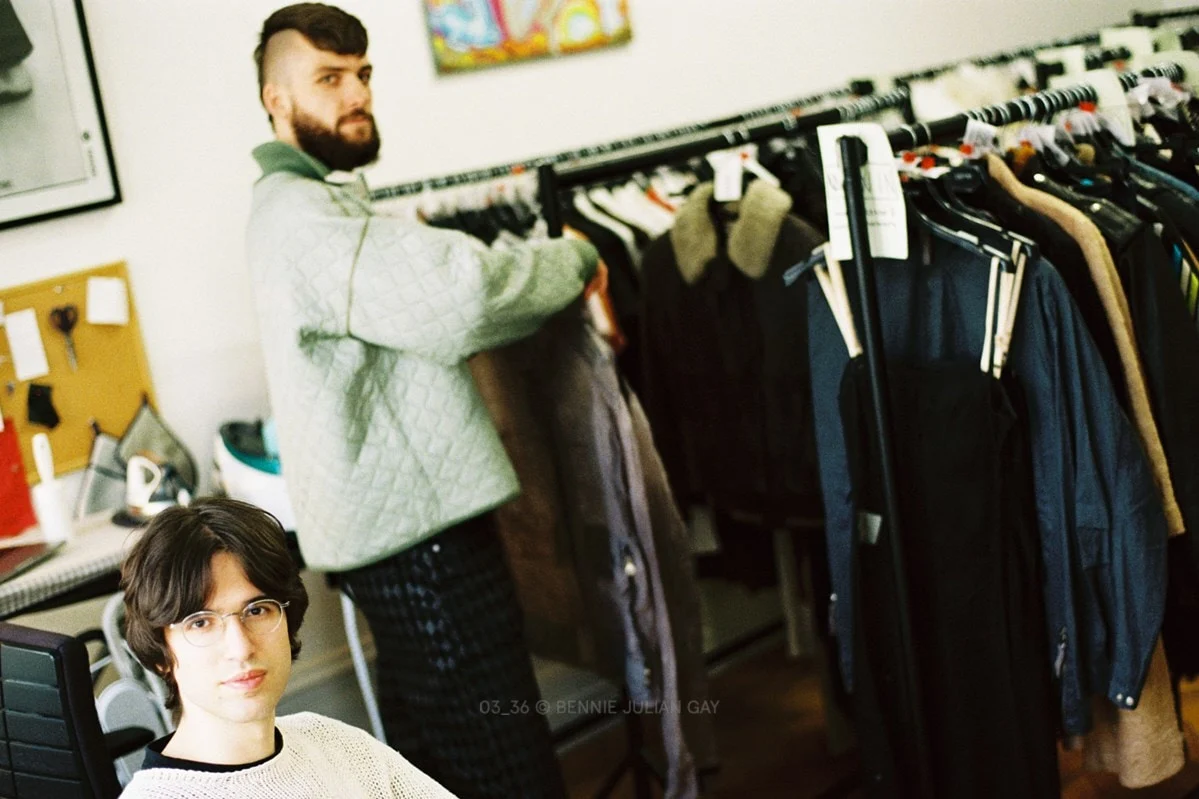
The release of the new documentary marks a significant departure from ENDYMA’s typically discreet operations. For years, the archive existed primarily as a digital storefront, a behind-the-scenes supplier to elite design studios, and the subject of occasional specialist profiles—such as a comprehensive feature published by Dazed in 2018. However, the new film grants the wider public an intimate, unfiltered look inside the physical racks of the Berlin warehouse.
The project materialized through an encounter with Berlin-based filmmaker Philippe Gnannt. Long fascinated by the broader mechanics of vintage clothing, Gnannt spent months immersing himself in fashion history, researching iconic design houses, garment construction techniques, and archival preservation. During this extensive research phase, Gnannt stumbled upon ENDYMA. Astonished to discover a world-class fashion archive located in his immediate geographic vicinity, the filmmaker reached out to Kardamakis shortly thereafter to propose a collaborative visual project.
While Gnannt admits to admiring traditional, polished fashion documentaries such as McQueen and Dior and I, he made a conscious stylistic decision to avoid the pristine aesthetic typical of mainstream fashion media. Rather than producing a clean, high-definition YouTube-style archive tour, Gnannt opted for a gritty, atmospheric visual approach inspired by classic skateboarding documentaries. The resulting film captures the raw, tactile reality of the garments—highlighting heavy nylon straps, distressed denim, precise tailoring, and industrial hardware—while emphasizing the physical labor and spatial reality of archiving clothing.
Principal photography for the documentary spanned three intensive days, followed by weeks of meticulous late-night editing. The resulting 25-minute film serves as both a portrait of Kardamakis’s curatorial journey and a rare documentary exploration of how modern fashion interacts with its own recent history.
The Economics and Cultural Impact of Archival Fashion
The rise of ENDYMA coincides with a structural shift in the global fashion economy. Over the past fifteen years, the market for vintage designer clothing has transitioned from a niche hobby for passionate collectors into a multi-million-dollar sector that heavily influences contemporary runway collections. Major luxury houses, fast-fashion conglomerates, and independent designers alike now recognize that historical garments serve as foundational blueprints for modern design.
Historically, fashion houses rarely maintained comprehensive internal archives, often prioritizing current commercial output over historical preservation. When early pioneers like Helmut Lang or Raf Simons stepped away from their labels, or when corporate restructuring led to corporate oversight, vast portions of design heritage were frequently lost, discarded, or sold off to private collectors. Independent collectors like Kardamakis effectively stepped into this vacuum, acting as unofficial cultural preservationists. By salvaging, authenticating, and cataloging these garments, archives like ENDYMA protect pieces of late-20th-century design history that might otherwise have vanished.
Furthermore, the operational model of contemporary archives reflects a changing relationship with intellectual property and creative inspiration. Design teams routinely rent historical garments to analyze proprietary pattern-making techniques, textile treatments, and hardware engineering. This functional utility has transformed private archives from passive collections into active production hubs. Rather than operating purely as static museums where garments sit safely behind glass, archives like ENDYMA treat clothing as a living, breathing medium that must be handled, examined, and studied to inform future creations.
Future Projections and Collecting Priorities
Despite achieving international renown within the fashion community, Kardamakis remains focused on the continuous expansion and refinement of the archive. Looking ahead, the collector has outlined two primary strategic objectives for ENDYMA’s next chapter.
The first objective is the systematic expansion of the collection’s stylistic scope. While ENDYMA remains globally synonymous with the definitive preservation of Helmut Lang’s oeuvre, Kardamakis aims to broaden the inventory to encompass a more diverse array of designers, particularly those who operated outside the traditional fashion capitals of Paris and Milan during the late 20th century. By incorporating a wider spectrum of subcultural and avant-garde design, the archive aims to construct an even more comprehensive mapping of modern menswear history.
The second objective is more immediate and deeply personal: acquiring rare examples of 1970s Giorgio Armani menswear. While Armani is widely celebrated for revolutionizing tailoring through the introduction of the unconstructed jacket in the late 1970s and 1980s, pristine archival examples from this foundational era remain exceptionally scarce on the secondary market. Securing these pieces would allow ENDYMA to bridge the stylistic gap between traditional tailoring and the radical deconstructionist movements of the 1990s that define the core of the archive.
As the boundary between contemporary design and historical preservation continues to blur, ENDYMA stands at the vanguard of a quiet revolution in how fashion values its own past. Through its unique combination of rigorous curation, accessibility to industry insiders, and now, a cinematic documentation of its physical space, the archive ensures that the ghosts of modern design history continue to haunt and inspire the runway collections of tomorrow.