



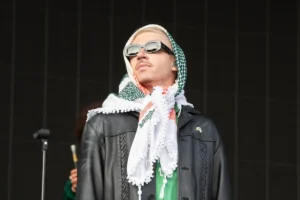


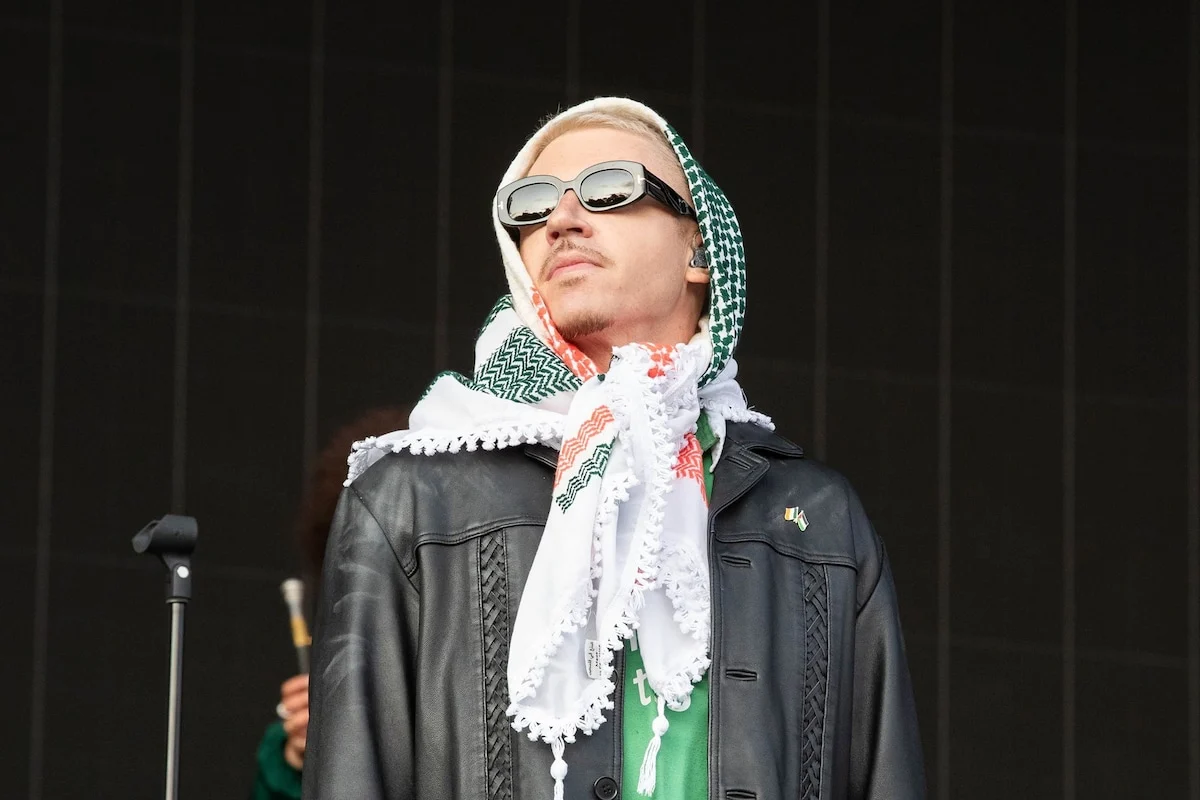
The intersection of popular music, geopolitical advocacy, and corporate venue management has generated a profound cultural flashpoint, following a series of events that began at New Jersey’s MetLife Stadium and rapidly cascaded across the international touring circuit. The controversy initially ignited when hip-hop artist Macklemore utilized his performance platform to voice explicit support for Palestine, employing terms such as "genocide" and "apartheid" to describe Israeli military actions in Gaza, and performing his politically charged single "Hind’s Hall." Named in memory of Hind Rajab, a five-year-old Palestinian girl killed by Israeli fire in Gaza in 2024, the song set a contentious tone that immediately reverberated through the upper echelons of the entertainment industry.
Within days of the concert, Macklemore was formally dropped as a support act for Ed Sheeran’s ongoing stadium tour. The removal followed an intense, organized campaign orchestrated by various advocacy groups, including the Israeli-American Council, alongside pressure exerted by high-profile venue stakeholders. Macklemore subsequently stated that Robert Kraft, the billionaire owner of Gillette Stadium in Foxborough, had directly helped coordinate pressure among other venue owners to oppose his inclusion on the tour lineup. Messina Touring Group, the tour’s promoter, independently confirmed that multiple venues had refused to host dates featuring Macklemore on the bill, effectively forcing his removal from the roster.
Chronology of the Boycott and Industry Fallout
The sequence of events unfolded rapidly over the course of a single week, transforming a localized tour dispute into an international debate regarding artistic censorship and political expression.
The timeline of the controversy establishes a clear escalation pattern:
- Initial Performance: Macklemore performs "Hind’s Hall" and delivers pro-Palestinian remarks at MetLife Stadium in New Jersey.
- The Backlash: Pro-Israel organizations launch coordinated campaigns targeting tour promoters and venue executives.
- Tour Removal: Messina Touring Group confirms Macklemore’s exclusion from remaining tour dates due to venue ultimatums, with alleged pressure from stakeholders such as Robert Kraft.
- Sheeran’s Statement: Ed Sheeran issues a neutral statement addressing the conflict, emphasizing the power of music to bridge divides and asserting, "I’m not complicit."
- Artist Withdrawals: In rapid succession, support acts FINNEAS, Aaron Rowe, and Lukas Graham, alongside onstage collaborators Beoga, announce their withdrawal from the tour in solidarity with Macklemore.
- PACBI Intervention: The Palestinian Campaign for the Academic and Cultural Boycott of Israel (PACBI) issues calls for broader boycotts targeting the remainder of Sheeran’s tour.
Rather than silencing the discourse, the attempt to remove Macklemore triggered an unprecedented wave of solidarity from his fellow artists. Every remaining support act on the tour—including FINNEAS, Aaron Rowe, and Lukas Graham—alongside the traditional Irish folk band Beoga, formally dropped out of their scheduled performances alongside Sheeran. FINNEAS released a public statement encapsulating the sentiment of the withdrawing artists, asserting that creatives must not be silenced when speaking out on behalf of oppressed populations.
Public Reaction and Corporate Reputational Costs
The fallout placed British pop star Ed Sheeran under intense public scrutiny. Critics widely denounced his issued statement as equivocal and evasive, pointing to classic tropes of conflict-neutrality, such as appealing to "both sides," reducing the humanitarian crisis in Gaza to a generic "conflict," and leaning heavily on platitudes regarding the unifying power of music. Legal and public relations analysts noted that the inclusion of the phrase "I’m not complicit" served to alienate audiences rather than defuse tensions, exposing a disconnect between legacy tour management strategies and contemporary public expectations regarding socio-political accountability.
Furthermore, the withdrawal of specific acts underscored a regional dimension to the cultural resistance. Both Aaron Rowe and Beoga explicitly cited their Irish identity and Ireland’s historical experiences with oppression as primary motivators for their solidarity with Palestine. For Sheeran, whose brand has historically leaned heavily into cultural Irishness, the public rebuke from artists invoking that very heritage carried a distinct reputational penalty.
This incident reflects a broader structural shift in how public discourse surrounding Israel and Palestine is received in Western societies. Data compiled by major polling organizations illustrates a measurable erosion of public support for Israeli government policies, particularly within the United States. According to a 2026 Pew Research Center survey, approximately 60 percent of US adults maintain an unfavorable view of Israel, a sentiment that registers with even greater intensity among younger demographics. Additionally, concurrent YouGov polling data indicates that roughly 40 percent of the American public characterizes Israel’s actions in Gaza using the terminology of genocide and apartheid—perspectives that were previously marginalized or restricted within mainstream media and corporate entertainment spaces.
Broader Precedents: The Mark Ruffalo and Hollywood Controversies
The Ed Sheeran tour fallout is not an isolated event, but part of a wider pattern of institutional friction surrounding celebrity activism. A parallel controversy recently enveloped actor Mark Ruffalo following public statements criticizing Paramount Skydance during discussions surrounding a proposed corporate merger with Warner Bros Discovery. Ruffalo drew attention to the business ties linking Oracle—founded by billionaire Larry Ellison—to the Israeli military.
In response, Paramount Skydance accused Ruffalo of invoking antisemitic tropes, an allegation the actor categorically rejected. The dispute quickly drew a firm counter-response from the creative community. An open letter signed by more than 180 Jewish artists, writers, and public figures—including prominent names such as Hannah Einbinder and Wallace Shawn—condemned the allegations against Ruffalo as a coordinated smear campaign intended to chill protected speech. Despite the intensity of the corporate pushback, Ruffalo’s career has sustained minimal visible damage, and he remains actively employed on major Hollywood productions.
However, industry analysts emphasize that the professional costs of pro-Palestinian advocacy are distributed unevenly across the entertainment landscape. While established male actors with significant industry capital like Ruffalo have largely weathered institutional pressure, female artists and creators from less secure positions have reported tangible professional setbacks. Veteran actress Susan Sarandon publicly stated that her advocacy for Palestinian rights has resulted in the loss of prominent movie roles. Similarly, actress Melissa Barrera faced widespread industry repercussions in late 2023 when she was dismissed from the Scream VII franchise following social media posts concerning Gaza, though she has since secured roles in subsequent film projects.
Observers also note that non-Palestinian artists frequently encounter severe professional headwinds, yet Palestinian creatives themselves face structural barriers that are historically far more entrenched and unforgiving within Western cultural institutions.
Analysis of Implications and Future Outlook
The capacity of institutional stakeholders, political lobbying groups, and venue owners to discipline public figures without encountering significant public blowback appears to be diminishing. While pro-Israel organizations and corporate entities retain substantial leverage over physical infrastructure, such as stadium bookings and tour logistics, exercising that leverage increasingly risks provoking an organized counter-response from peers and consumers alike.
The cultural terrain has historically served as a critical arena for international human rights movements, mirroring patterns seen during the anti-apartheid struggles in South Africa and past anti-war mobilizations. Campaigns spearheaded by coalitions such as PACBI continue to press for cultural boycotts, directly targeting artists who decline to take a stand or who cross established picket lines.
As public opinion data demonstrates a persistent hardening of skepticism toward Israeli military actions in Gaza and the West Bank, attempts by corporate entities to enforce silence on touring artists are encountering structural limits. The events surrounding the Ed Sheeran tour suggest that maintaining neutrality or actively suppressing pro-Palestinian speech now carries a quantifiable reputational cost—one that the entertainment industry can no longer easily absorb or dismiss as a fringe phenomenon.