







The resurgence of roller skating across major global metropolitan areas over the past several years has offered a vibrant, kinetic testament to individual autonomy. Against the backdrop of a steadily worsening deficit in urban "third spaces"—accessible, non-commercial environments outside of home and the workplace where communities can organically gather—groups of skaters navigating city streets with portable sound systems have become symbols of unbridled joy and self-determination. In London, this movement has found a uniquely structured anchor in Skate Sounds, a multifaceted collective that transcends traditional definitions by operating simultaneously as a music label, a cultural movement, and a tight-knit community. Founded by Australian music producer Adam Friedman, Skate Sounds has successfully bridged the gap between raw urban athleticism and original musical production, serving as a case study in how modern subcultures can rapidly scale, foster deep social cohesion, and challenge conventional notions of community building in contemporary urban centers.
Main Facts and the Genesis of Skate Sounds
At its core, Skate Sounds is a pioneering hybrid entity designed to soundtrack and elevate the London roller skating ecosystem. Established by Friedman after relocating to the United Kingdom and immersing himself deeply in the local skate community, the initiative was born out of a perceived void within the city’s cultural landscape. While urban street skating and underground music have historically enjoyed a symbiotic relationship, Friedman identified a distinct lack of homegrown, original musical compositions specifically tailored to the cadence and lifestyle of London skaters.
Rather than waiting years for a traditional subculture to naturally germinate through decades of underground iteration, Skate Sounds adopted a fast-tracked ethos grounded in radical inclusion, shared vulnerability, and mutual trust. The collective functions as a record label producing original tracks, a content creator documenting the visceral energy of street sessions, and a logistical network organizing pop-up events in unconventional urban spaces. By fusing the rhythmic elements of electronic and hip-hop production with the physical demands of quad and inline skating, Friedman and his collaborators have created an authentic audio-visual identity for a demographic that frequently finds itself priced out or pushed out of traditional London nightlife venues and cultural hubs.
Chronology of a Movement: From Underground Sessions to Corporate Collaboration
The trajectory of Skate Sounds mirrors the rapid, digital-age evolution of modern youth subcultures, moving swiftly from grassroots pavement sessions to high-profile brand partnerships.
The foundational phase of the collective began quietly as Friedman and a core group of enthusiasts spent countless hours navigating London’s asphalt, transforming familiar street corners and transit plazas into impromptu dance floors. These relentless, non-stop outdoor sessions forged an implicit familial bond among participants, turning casual acquaintances into a dedicated crew united by shared physical spaces and the inevitable trials of learning complex skate maneuvers.
A critical inflection point in the collective’s timeline occurred late last year, marking a transition from purely underground obscurity to broader visibility. The NBK skate team approached Skate Sounds to provide the sonic backdrop and cultural energy for an exclusive, highly confidential event hosted in a disused subterranean supermarket car park. This collaboration served as a validation of the collective’s artistic direction, placing them at the center of London’s transient, high-energy underground scene.
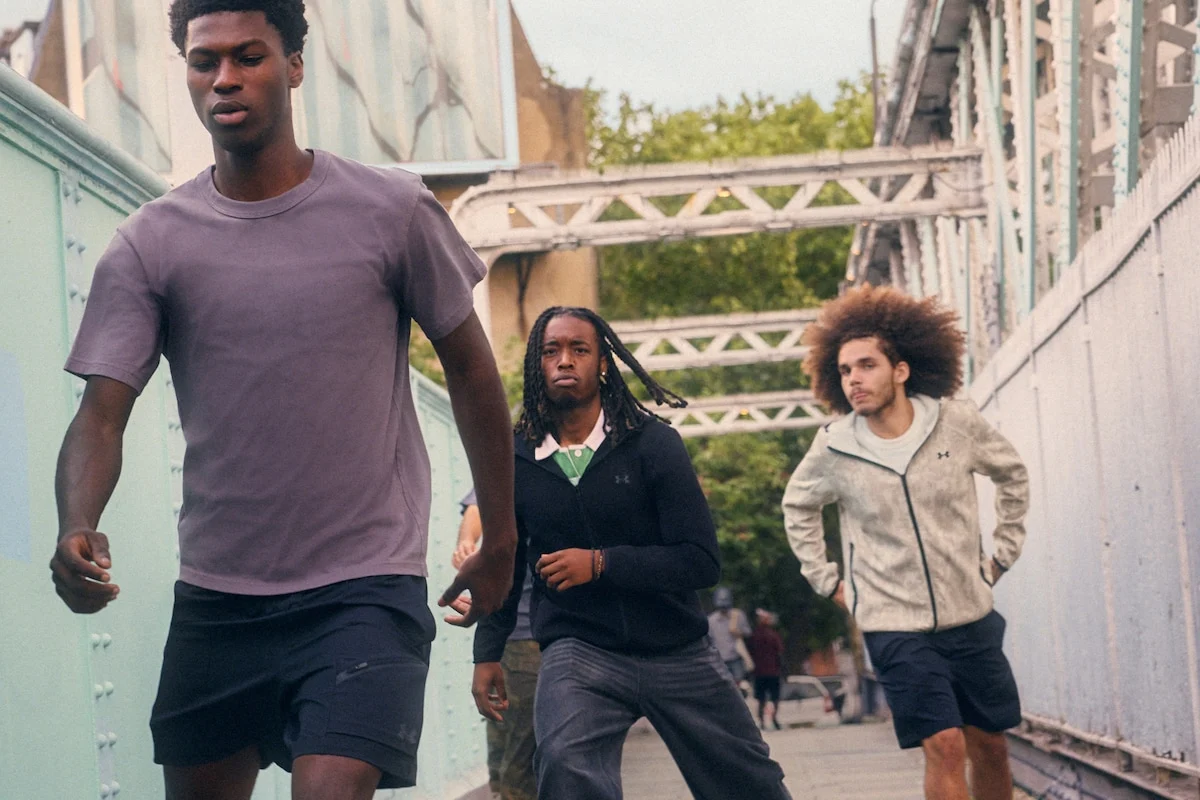
Building upon this momentum, Skate Sounds recently entered into a strategic partnership with global sportswear giant Under Armour as part of the brand’s "Rest Less" campaign. This initiative aims to spotlight grassroots collectives and individuals channeling restless energy into tangible community action. Far from diluting the collective’s counter-cultural credibility, the partnership has provided a broader platform to amplify the voices of London skaters, setting the stage for an aggressive expansion of their musical and cultural output over the coming twelve months.
Supporting Data and the Urban Third Space Crisis
To fully understand the cultural resonance of Skate Sounds, one must examine the socio-economic pressures currently facing global metropolises, particularly London. Urban planning experts and sociologists have increasingly sounded alarms regarding the systematic erosion of third spaces. According to recent urban development studies in the UK, over 40% of public youth centers and independent community venues have closed or faced severe budget cuts over the past decade, driven by commercial real estate development, rising rents, and stringent municipal noise ordinances.
This scarcity has disproportionately affected younger demographics, who face a median rental burden consuming more than 40% of their disposable income in Greater London, leaving little room for traditional commercial leisure. Consequently, public squares, subterranean car parks, and asphalt corridors have been reclaimed as vital infrastructural alternatives. Roller skating, which requires minimal fixed infrastructure beyond a pair of skates and an open slab of concrete, represents a low-barrier, highly mobile form of physical recreation.
Data from sports and recreation authorities indicate a 65% surge in adult participation in non-traditional urban sports—such as skateboarding, roller skating, and urban cycling—since 2020. Skate Sounds capitalizes on this behavioral shift by converting transient public spaces into structured, legally sanctioned, and musically enriched pop-up venues, effectively demonstrating how communities can temporarily hack urban infrastructure to fulfill unmet social needs.
The Skate Sounds Manifesto: Five Pillars of Subcultural Sustainability
To maintain its operational integrity and prevent co-optation or burnout, the collective operates under a structured ethical framework articulated by its founder. Known internally as the Skate Sounds Manifesto, this set of five guiding principles governs how members interact with one another, approach their craft, and engage with the city of London.
-
Each One Teach One
Rooted in the historical traditions of hip-hop and street sports, this principle mandates that seasoned skaters actively mentor novices. Friedman emphasizes that the patience extended to him during his own learning curve must be reciprocated. Mentorship within the collective is holistic, encompassing technical advice on footwork, guidance on music production, and general life counsel. This intergenerational and peer-to-peer knowledge transfer ensures the collective’s culture remains resilient and self-sustaining. -
Enthusiasm Over Skill
Challenging the hyper-competitive, gatekept nature of elite action sports, Skate Sounds prioritizes raw passion and positive energy over technical perfection. Friedman draws on linguistic pedagogy—noting that the best language students are often those with the highest enthusiasm rather than advanced proficiency—to argue that a beginner willing to embrace the discomfort of day-one skating brings more value to the collective than a jaded expert. -
Don’t Look Back
Addressing a common cultural ailment—nostalgia for a romanticized past—this rule encourages participants to fully appreciate their current temporal reality. While acknowledging the socio-economic and cultural challenges of the present era, the manifesto posits that those who pine for a perceived "golden age" often fail to recognize that they are currently living through history. The emphasis is firmly placed on active, present-tense participation. -
Londoners, Your City is Iconic
Viewed through the starry-eyed lens of an Australian expatriate, London is framed as an irreplaceable global mecca for arts and subculture. Friedman frequently reminds younger, native-born Londoners that the underground parties, architectural backdrops, and diverse artistic collisions available in the city are globally unique. The goal of this principle is to cultivate civic pride and self-awareness among a generation that may take its immediate environment for granted.
-
(Time + Interest) Divided by Fear = Results
De-mystifying the perceived innate talent of master athletes and musicians, this formula asserts that progression is purely a mathematical function of dedication and fearlessness. By breaking down the psychological barriers associated with failure—specifically the willingness to fall over and make mistakes in public—Skate Sounds encourages a growth mindset that applies equally to mastering a transition on a half-pipe or producing a certified club track.
Official Responses and Industry Perspectives
While underground collectives often maintain an adversarial relationship with commercial entities, industry analysts view the collaboration between Skate Sounds and mainstream brands as a sophisticated evolution in lifestyle marketing. Representatives from Under Armour have noted that collectives like Skate Sounds represent the future of brand engagement, moving away from top-down celebrity endorsements toward authentic, community-led storytelling. By supporting initiatives that foster genuine human connection, corporate partners gain credibility within hard-to-reach subcultures while providing vital financial resources that allow independent labels to press vinyl, secure event permits, and hire local talent.
Cultural commentators have similarly lauded the collective’s ability to monetize its output without sacrificing its grassroots ethos. By operating simultaneously as a record label, event promoter, and athletic community, Skate Sounds creates multiple revenue streams that insulate it from the financial precarity typically plaguing independent art projects in high-cost cities.
Broader Impact and Implications for Urban Sociology
The emergence of Skate Sounds holds significant implications for the future of urban design, youth culture, and community resilience. As cities become increasingly densified and commercialized, the traditional models of community organizing are proving inadequate. The success of Friedman’s collective demonstrates that modern subcultures do not require permanent physical architecture to thrive; rather, they rely on ideological infrastructure—shared values, digital communication channels, mobile sound systems, and a rigorous commitment to inclusivity.
Furthermore, the integration of music production with physical sport offers a scalable template for other creative communities seeking to activate underutilized urban spaces. By turning empty car parks, industrial estates, and public plazas into temporary cultural epicenters, Skate Sounds challenges municipal authorities to reconsider how public space is zoned and utilized.
As the collective looks toward its ambitious 12-month roadmap of amplifying London skate culture to a broader international audience, its underlying message remains stubbornly simple: urban isolation is not an immutable law of modern life, but a design flaw that can be actively skated around, soundtracked, and dismantled from the ground up.