








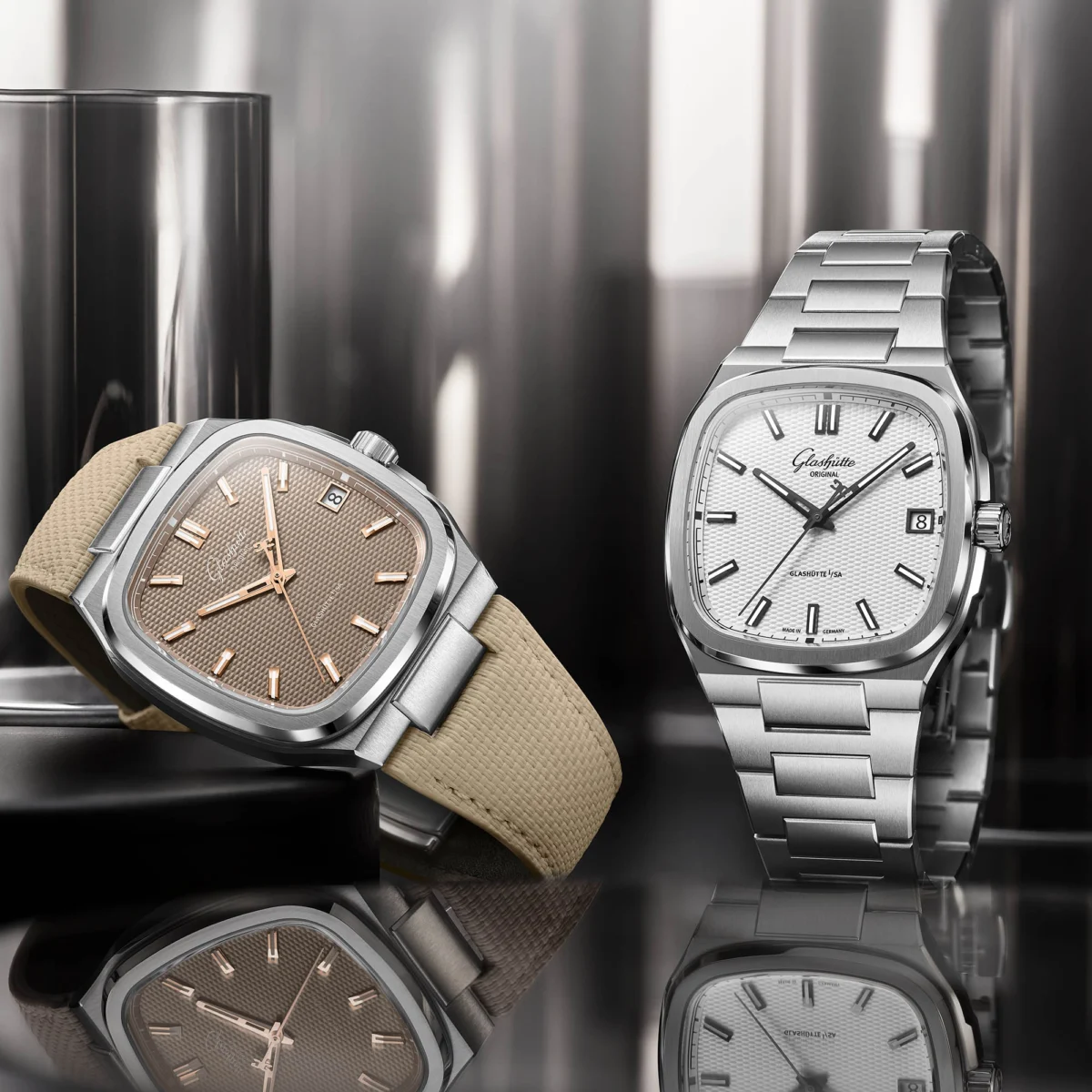
Glashütte Original has officially unveiled its 2026 iteration of the 70s collection, marking a significant strategic pivot for the German manufacture within the fiercely competitive integrated sports watch market. By departing from the softer, more idiosyncratic curves of its predecessors, the brand has introduced a leaner, more angular aesthetic that draws direct inspiration from the brutalist design language of mid-century high-fidelity audio equipment. This release signals a broader industry trend toward compact, high-performance luxury steel watches that prioritize daily wearability and architectural precision over traditional vintage revivalism.
A Departure from Tradition: The Evolution of the 70s Line
The Glashütte Original 70s collection has historically occupied a unique niche. Often referred to simply as the "Seventies" in previous years, the line served as the brand’s primary answer to the surging demand for luxury sports watches with integrated bracelets. However, those early models were characterized by their distinctively rounded, organic case geometry—a design choice that, while deeply rooted in the brand’s German heritage, often polarized collectors.

The 2026 update represents a fundamental reimagining of the series. The new models are housed in stainless steel cases measuring 39mm in diameter and a remarkably slim 9.6mm in thickness. This reduction in profile is a direct response to current market preferences for watches that sit more flush against the wrist. The soft, sloping bezels of the past have been replaced by a faceted, architectural design that emphasizes geometric clarity. The upper surfaces feature vertical brushing, contrasted by high-polished chamfers that extend to the case sides, creating a play of light that feels significantly more contemporary than previous versions. The redesign of the crown guards—now low, wide, and rectangular—further reinforces this shift toward a modern, industrial aesthetic.
Chronology of Development and Design
The development of this collection appears to have been an intensive multi-year project focused on bridging the gap between Glashütte Original’s reputation for haute horlogerie finishing and the utilitarian requirements of an active-lifestyle timepiece. The shift began in early 2024 when the brand’s design studio initiated a study on the interplay between mechanical sound equipment and watchmaking ergonomics.
By 2025, prototypes were refined to incorporate the new "Hexagrid" dial texture. This pattern, which departs from the standard sunburst or clous de Paris finishes, is explicitly designed to mimic the mesh speaker grilles found on vintage 1970s hi-fi consoles. The decision to introduce this specific texture was intended to provide a more sculptural, light-catching surface that complements the angularity of the new case. The naming conventions for the dial variants—"Tweed Amp," "Stereo Panel," and the limited-edition "Vinyl Record"—further cement the thematic connection to audio equipment, reflecting a trend among luxury brands to infuse technical product design with lifestyle-oriented narratives.

Technical Specifications and Engineering Excellence
At the heart of the 2026 70s collection lies the in-house Caliber 36 automatic movement. This movement is a cornerstone of Glashütte Original’s technical portfolio, offering a robust 100-hour power reserve and a standard 28,800 vibrations per hour (4Hz) frequency. The architecture of the movement remains true to the Saxon tradition of watchmaking, featuring a three-quarter plate with striping, blued screws, and polished anglage.
The technical specifications for the collection are as follows:
- Case Diameter: 39mm
- Case Thickness: 9.6mm
- Water Resistance: 100 meters
- Movement: In-house Caliber 36
- Power Reserve: 100 hours
- Bracelet: H-link integrated stainless steel with quick-release Groove Lock system
- Alternative Strap: Woven-effect integrated rubber with leather lining
A noteworthy technical shift is the adoption of a standard 3 o’clock date aperture, replacing the brand’s iconic, oversized double-wheel "Panorama Date" at 6 o’clock. This adjustment is indicative of the brand’s desire to streamline the dial for a more balanced, minimalist appearance, appealing to a broader demographic that favors the symmetry of traditional Swiss-style layouts.

Market Implications and Competitive Positioning
The entry of the updated 70s collection into the current landscape of integrated sports watches—a segment dominated by titans such as the Audemars Piguet Royal Oak and the Vacheron Constantin Overseas—places Glashütte Original in a calculated position. The brand is not attempting to replicate the overt luxury of these competitors; instead, it is leveraging its "under-the-radar" reputation to offer a product that prioritizes build quality and German engineering precision at a different price-to-value ratio.
Market analysts note that the move toward a more "crowd-pleasing" aesthetic is a pragmatic step for a brand that has historically been viewed as a specialist manufacturer. By adopting a more aggressive, angular design, Glashütte Original is likely attempting to capture a younger, design-conscious audience that is currently migrating away from the saturated market of generic luxury watches toward pieces that offer a more distinct, narrative-driven aesthetic.
The decision to limit the production of the "Vinyl Record" black dial variant creates a strategic scarcity, which is a standard industry practice to stimulate collector interest and generate secondary market momentum. If the initial reception is positive, the brand may have a significant opportunity to scale the 70s collection as a foundational pillar alongside its existing Senator and Pano lines.

Industry and Expert Perspectives
While the brand has not released specific sales projections, the industry response has been one of cautious optimism. Horological observers have praised the move toward a 39mm case size, noting that the "sweet spot" for modern sports watches has shifted back toward more modest dimensions. The integration of the H-link bracelet—which mirrors the industrial design of the case—is also seen as a necessary upgrade to ensure the watch feels cohesive on the wrist.
However, purists have raised questions regarding the departure from the "Panorama Date." For long-time fans of Glashütte Original, the double-wheel date display was considered a hallmark of the brand’s identity. The decision to move toward a more conventional display suggests that the brand is willing to sacrifice some of its traditional idiosyncrasies in favor of universal aesthetic appeal. This is a recurring tension in the luxury watch sector: the necessity of maintaining brand heritage while adapting to the visual preferences of a global, increasingly design-literate market.
Looking Ahead
The launch of the 2026 70s collection serves as a case study in how heritage brands can pivot toward contemporary demand without losing their core identity. By refining the case, introducing a thematic dial architecture, and maintaining a high-performance in-house movement, Glashütte Original has created a platform that is both technically competent and aesthetically distinct.

The success of this collection will ultimately depend on the brand’s ability to sustain interest beyond the initial launch phase. With its combination of German technical rigor and a design language that resonates with the current cultural obsession with mid-century modern aesthetics, the 2026 70s collection is well-positioned to maintain Glashütte Original’s status as a serious contender in the high-end sports watch market. As the brand continues to roll out these models to global retailers, the industry will be watching to see if this "dark horse" can effectively disrupt the established hierarchy of the integrated sports watch segment.