






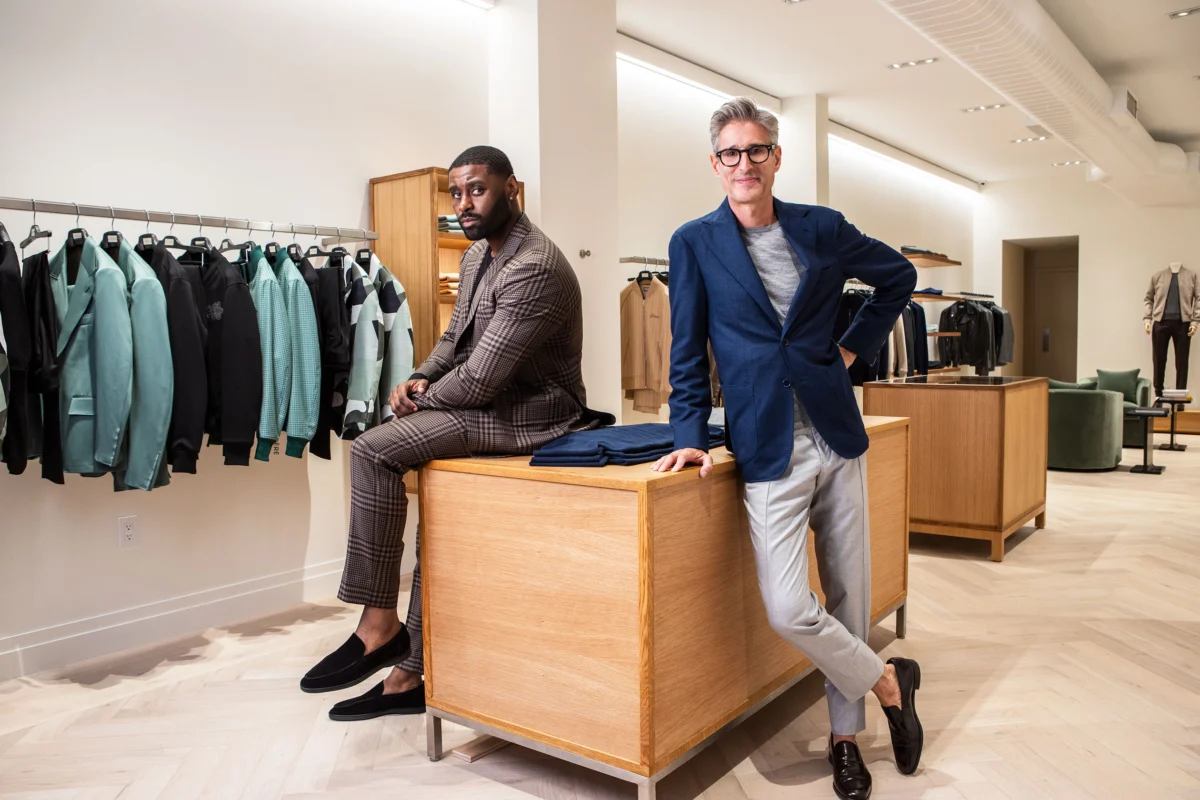
The convergence of Silicon Valley’s executive suite and high-end European tailoring has reached a new milestone with the official opening of Frère’s first flagship boutique in New York City’s historic SoHo neighborhood. Since its quiet launch in March, the brand has rapidly ascended to become the preferred clothier for a specific echelon of global power brokers, counting Apple CEO Tim Cook, music mogul Jay Z, and Coinbase co-founder Fred Ehrsam among its early adopters. This expansion marks a significant shift in the menswear landscape, as the "quiet luxury" movement moves beyond a digital trend to become the foundational wardrobe of the world’s most influential tech leaders.
Frère, a brand specialized in bespoke and ready-to-wear garments, has positioned itself at the intersection of traditional craftsmanship and modern executive needs. While the brand is perhaps most recognized for its precision-cut suits, its broader collection includes high-performance luxury items such as $3,490 wool knit tracksuits and $5,990 cashmere overcoats. These price points and materials signal a departure from the logo-heavy luxury of the previous decade, favoring instead a subtle aesthetic where quality and fit serve as the primary indicators of status.
The Founders: A Synthesis of Luxury Pedigree and Creative Vision
The rapid rise of Frère is largely attributed to the complementary backgrounds of its two founders: CEO François Kress and Creative Director Davidson Petit-Frère. Kress brings a formidable resume of corporate luxury leadership to the venture. His previous roles include serving as the president of Fendi for North and South America, followed by a tenure as the CEO and managing director of Bulgari in the same regions. He also held the position of president and CEO of Prada Group for the United States. This deep institutional knowledge of the luxury sector provides Frère with a strategic framework typically reserved for legacy European houses.
In contrast, Davidson Petit-Frère offers a narrative of entrepreneurial evolution. Before entering the fashion industry, Petit-Frère worked in the high-stakes world of luxury real estate, an experience that informed his understanding of the lifestyle and expectations of ultra-high-net-worth individuals. He entered fashion through a series of internships, eventually launching Musika Frère, a brand that gained notoriety for its bespoke tailoring and high-profile clientele, including Beyoncé and NBA star Stephen Curry.
The partnership between Kress and Petit-Frère was born from a shared inquiry into the trajectory of modern menswear. According to the founders, the brand was designed to provide a "balance of innovation, artistry, and cultural relevance." Kress noted that the mission was to reshape the menswear narrative by focusing on elements that remain immune to the volatility of fashion cycles: timeless elegance, exceptional craftsmanship, and beautiful tailoring.
The Evolution of the "Tech Bro" Aesthetic
For nearly two decades, the fashion identity of the technology sector was defined by a utilitarian, almost anti-fashion sentiment. The "tech bro" uniform—consisting of Patagonia vests, corporate-branded hoodies, distressed denim, and functional sneakers—became a global meme. This aesthetic was rooted in a philosophy of "decision fatigue" reduction, famously championed by figures like Steve Jobs and Mark Zuckerberg, who opted for repetitive, simple wardrobes to focus their mental energy on innovation.
However, as the tech industry has matured and its leaders have moved from startup founders to global statesmen, their sartorial choices have undergone a sophisticated refinement. The industry is currently witnessing a transition from "normcore" to "stealth wealth." While the silhouette remains relatively understated, the materials and construction have shifted toward extreme luxury.
Recent public appearances by Jeff Bezos and Mark Zuckerberg have highlighted this shift, with both CEOs incorporating more tailored fits, high-end materials, and subtle accessories into their wardrobes. Frère has capitalized on this transition by offering "quiet luxury" alternatives that allow these leaders to stand out subtly. The brand’s aesthetic caters to environments where understated style speaks the loudest, replacing the branded hoodie with fitted neutral T-shirts that cost upwards of $1,000 and overcoats that prioritize tactile quality over visual branding.
Strategic Investment and Financial Backing
The financial structure of Frère reflects the very industry it seeks to clothe. The company is currently in the process of raising a seed round, but it has already secured a roster of high-profile investors from the worlds of venture capital, finance, and entertainment.

The lead investor is Robert Nelsen, co-founder and managing director of ARCH Venture Partners. Nelsen, primarily known for his prolific and successful investments in the biotechnology sector, invested in Frère as an angel investor. His participation signals a growing interest among traditional tech and science VCs in luxury brands that demonstrate high customer retention and clear market differentiation. Joining Nelsen in the investment round are Robert Hamwee of New Mountain Capital and Jay Z, whose involvement further bridges the gap between cultural influence and institutional finance.
Nelsen’s endorsement of the brand emphasizes the professional utility of Frère’s designs. "They make a helluva suit, plain and simple," Nelsen stated. "For folks in tech, it’s about having style that feels personal but still professional, something that reflects who you are and where you’re going." This sentiment highlights a growing realization in the tech world that personal presentation is a component of professional branding.
The SoHo Flagship: Prioritizing the Physical Experience
In an era where many direct-to-consumer brands launch exclusively online, Frère has taken a contrarian approach by prioritizing a physical flagship store before launching an e-commerce platform. The SoHo boutique serves as an immersive environment designed to tell the brand’s story and allow customers to interact with the materials firsthand.
The decision to delay e-commerce—planned for launch later this month—was intentional. François Kress argued that beautiful, high-end products need to be experienced in person to be fully understood. In the luxury sector, the tactile experience of testing the weight of cashmere, the drape of a wool knit, and the precision of a bespoke fit is essential to justifying the premium price point.
The SoHo location also places Frère in the heart of New York’s luxury retail corridor, positioning it alongside established heritage brands. This physical presence is a critical component of the brand’s "quiet luxury" strategy, as it fosters a sense of exclusivity and personalized service that is difficult to replicate through a digital interface.
Cultural Heritage and Global Influence
While Frère draws heavily on the traditions of European tailoring, Creative Director Davidson Petit-Frère incorporates elements of his Haitian heritage into the designs. This infusion of cultural identity provides the brand with a unique aesthetic profile that distinguishes it from the more clinical styles of competitors like Loro Piana or Brunello Cucinelli.
The blend of Caribbean-inspired vibrancy with the sophistication of luxury tailoring allows the brand to appeal to a diverse, global audience. This approach has resonated particularly well with leaders who want to maintain a professional appearance while subtly acknowledging their personal history and cultural background. The inclusion of these elements ensures that the "quiet luxury" offered by Frère is not synonymous with "boring," but rather with "refined."
Market Implications and the Future of Luxury Menswear
The emergence of Frère is a symptom of a larger trend in the global luxury market. According to recent market analysis, the luxury menswear sector is growing at a faster rate than womenswear in several key markets, driven by a renewed interest in tailoring and high-quality basics. The "Succession" effect—a reference to the popular television show that glamorized logo-free, ultra-expensive clothing—has accelerated consumer demand for brands that prioritize craftsmanship over conspicuous consumption.
For the tech industry, the adoption of Frère represents a maturation of the sector’s cultural identity. As technology companies become the dominant forces in the global economy, their leaders are increasingly adopting the sartorial language of traditional power. However, they are doing so on their own terms, favoring "innovation and artistry" over the stiff, formal constraints of the 20th-century corporate suit.
As Frère prepares to launch its e-commerce platform and complete its seed funding round, the brand stands as a case study in how modern luxury is being redefined. By focusing on a specific, high-influence demographic and prioritizing physical excellence, Frère has successfully carved out a niche in a crowded market. Whether the "tech bro" will entirely abandon the hoodie remains to be seen, but for the industry’s elite, the transition to the $6,000 cashmere overcoat appears to be well underway.