










The landscape of fashion technology is undergoing a transformative shift as Alta, the startup founded by Jenny Wang, moves beyond its initial reputation as a digital novelty to become a critical infrastructure layer for the global retail industry. During the most recent New York Fashion Week (NYFW), the company demonstrated a significant expansion of its capabilities, transitioning from a consumer-facing virtual closet to a sophisticated enterprise solution that allows high-end designers to integrate personalized virtual try-on technology directly into their e-commerce platforms. This evolution comes on the heels of a successful $11 million funding round led by Menlo Ventures, signaling deep investor confidence in the intersection of generative artificial intelligence and apparel retail.
The Genesis of Alta and the Realization of the Clueless Vision
The concept of a digitized wardrobe has lived in the collective cultural consciousness since the 1995 film "Clueless," in which the protagonist Cher Horowitz utilized a computer program to coordinate her outfits. For nearly three decades, this remained a futuristic trope that traditional software struggled to replicate due to the complexities of fabric physics, body proportions, and the nuanced way clothing layers over different silhouettes. Alta’s arrival in 2023 marked the first time these technical hurdles were overcome through the application of advanced generative AI and computer vision.
Since its launch, Alta has seen explosive growth. The platform’s initial consumer app allowed users to digitize their physical closets, creating a "digital twin" of their wardrobe. According to Wang, the platform has facilitated the generation of more than 100 million outfits since its inception. This massive dataset of user preferences and styling combinations has provided the company with a unique vantage point on consumer behavior, which it is now leveraging to provide B2B services to major fashion houses and retail giants.
The company’s rapid ascent was bolstered by a high-profile investment round that closed last year. Beyond the lead investment from Menlo Ventures, the round saw participation from the Anthology Fund—the venture arm of the AI heavyweight Anthropic—and prominent figures within the fashion industry, including supermodels Karlie Kloss and Jasmine Tookes, as well as Jenny Fleiss, the co-founder of Rent the Runway. This blend of Silicon Valley technical expertise and New York fashion pedigree has positioned Alta as a bridge between two often disparate industries.
Strategic Re-Debut: The Public School New York Integration
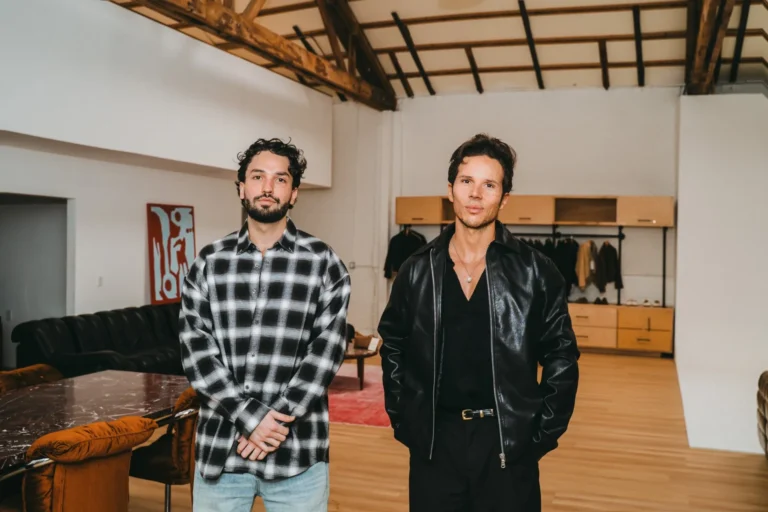
A centerpiece of Alta’s current expansion is its new partnership with Public School New York (PSNY). The collaboration, unveiled during New York Fashion Week, marks a pivotal moment for both the tech startup and the storied streetwear brand. Public School, led by designers Dao-Yi Chow and Maxwell Osborne, recently returned to the fashion circuit following a multi-year hiatus. Their "re-debut" was framed not just as a return to design, but as a modernization of their business model.
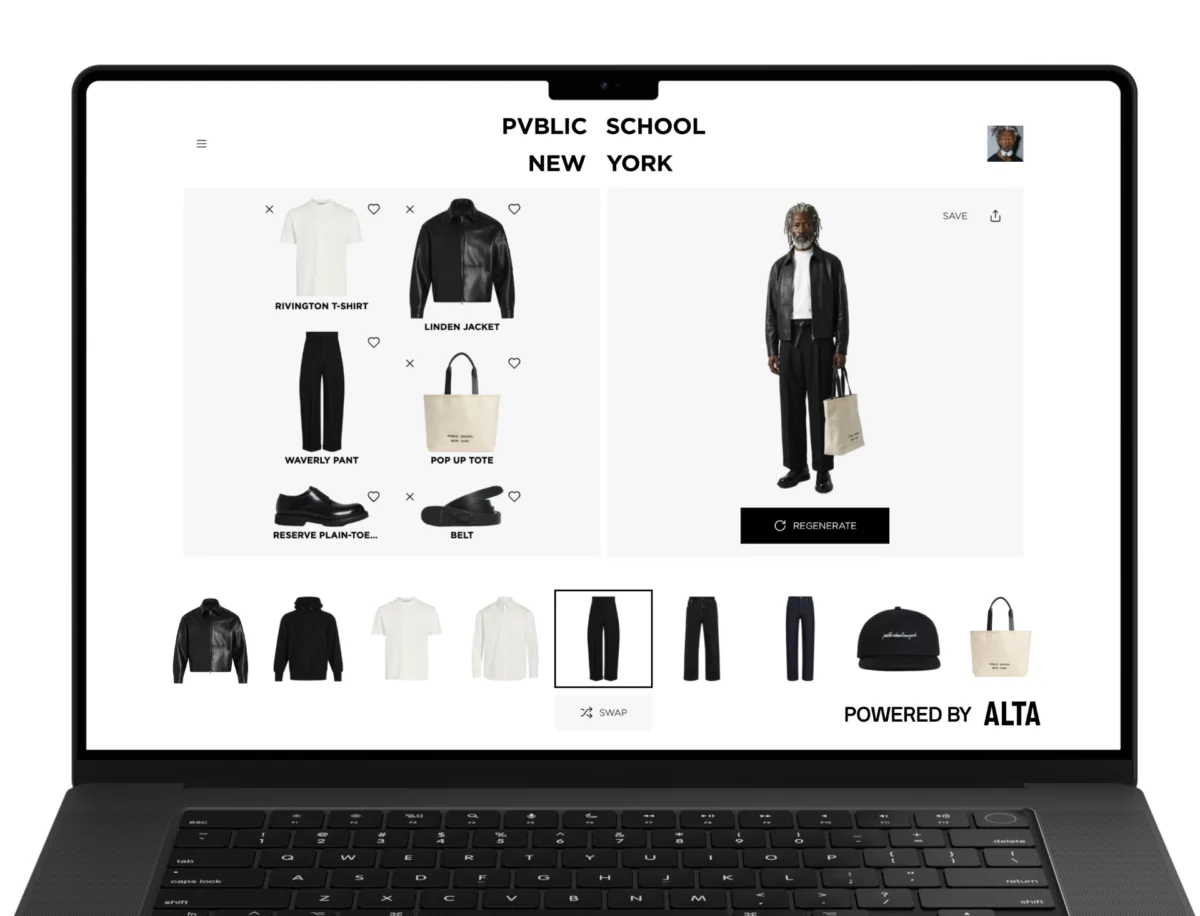
Chow and Osborne, who met Wang through Poshmark founder and mutual investor Manish Chandra, sought a way to engage customers who may not be able to visit a physical showroom or attend a runway show. The integration manifests as a "Style with Alta" feature on the Public School website. When a customer views a product, such as the signature Linden Jacket, they can click an icon that redirects them to a personalized Alta experience. There, they can see the garment rendered on their own digital avatar, which is built to their specific likeness and body measurements.
This integration represents a departure from traditional e-commerce, where shoppers rely on static images of professional models. By allowing the consumer to see themselves in the clothing, the brand aims to reduce the "uncertainty gap" that often leads to high return rates in online shopping. Chow noted that the partnership was born out of a necessity to view technology as a partner rather than a peripheral tool, stating that the industry has moved far beyond the standards of 2015 and must now embrace AI to extend brand storytelling into the digital realm.
Technical Superiority and the Competitive Landscape
The virtual try-on (VTO) market is increasingly crowded, with legacy retailers like Zara and luxury houses like Balmain experimenting with digital avatars. However, Wang highlights a significant technical divergence between Alta and its competitors. Traditional VTO solutions are often slow and limited in scope. For example, some existing systems allow a user to try on a maximum of four items, often requiring up to two minutes to render the final image.

Alta’s proprietary engine has optimized this process for speed and complexity. The platform allows users to layer at least eight different items simultaneously, with the rendering process completed in seconds. This capability is crucial for high-fashion styling, where an outfit often consists of multiple layers—undergarments, shirts, sweaters, jackets, and accessories. By solving the "layering problem" through generative AI, Alta provides a more realistic representation of how clothing interacts with both the body and other garments.
Furthermore, Alta’s integration with the Council of Fashion Designers of America (CFDA) and Poshmark indicates a broad-based acceptance of its technology across different tiers of the fashion ecosystem. While the CFDA partnership lends the company institutional credibility among luxury designers, the Poshmark connection taps into the massive secondary market, where accurate digital representation can significantly speed up the resale process.
Data Analysis: The Economic Impact of Virtual Try-On Technology
The push toward virtual wardrobes and avatars is driven by more than just aesthetic novelty; it is a response to the dire economic and environmental costs of returns in the apparel industry. Industry data suggests that return rates for online clothing purchases can hover between 30% and 40%, with "fit and style" cited as the primary reason for most returns. These returns cost retailers billions of dollars annually in logistics, restocking, and liquidated inventory.
By providing a high-fidelity "Alta Avatar," the company provides a data-driven solution to the fit problem. If a customer can accurately visualize how a garment drapes over their specific body type, the likelihood of a successful purchase increases. While Alta has not yet released specific conversion and return-rate data for its Public School integration, similar technologies in the retail sector have shown the potential to reduce returns by as much as 25% while simultaneously increasing the average order value (AOV) by encouraging customers to style—and subsequently purchase—complete looks rather than individual items.
Chronology of Development
The timeline of Alta’s development reflects the accelerating pace of AI adoption in the consumer sector:
- Early 2023: Alta launches its initial consumer app, allowing users to digitize their physical closets.
- Mid-2023: The platform reaches its first 50 million outfit generations, gaining traction among Gen Z and millennial "wardrobe planners."
- Late 2023: Alta secures $11 million in funding. Time and Vogue recognize the platform as a top innovation of the year.
- Early 2024: Partnerships with Poshmark and the CFDA are formalized, expanding the app’s brand database to include thousands of labels.
- September 2024: During NYFW, Alta debuts its first direct-to-website integration with Public School New York, marking its transition into a B2B service provider.
- Future Outlook: The company aims to become the "identity layer" for AI-driven commerce, integrating its avatar technology across a wider network of global retail sites.
Broader Implications: The Rise of Agentic Commerce
Looking forward, Jenny Wang envisions Alta as more than just a styling tool; she views it as the foundational data layer for "agentic commerce." In this emerging model, AI agents will act on behalf of consumers to find, style, and purchase clothing. For this to work effectively, the AI requires a deep understanding of the user’s personal context—their existing closet, their body measurements, their style preferences, and their past purchase history.
"For agentic commerce to truly work, we need a data layer that understands the shopper’s style preferences," Wang explained. By maintaining a persistent digital identity (the Alta Avatar) that can travel across different brand websites, Alta is positioning itself as the central repository for a consumer’s fashion data. This shift suggests a future where shopping is no longer a process of scrolling through endless grids of products, but a curated experience where an AI assistant presents only the items that fit the user’s body and complement their existing wardrobe.
The implications for the fashion industry are profound. As brands like Public School New York adopt these tools, the traditional barriers between the runway and the consumer continue to erode. The "Clueless" closet is no longer a cinematic fantasy; it is becoming the standard interface for a multi-billion dollar industry seeking to modernize its relationship with the digital consumer. Through strategic partnerships and technical innovation, Alta is proving that the future of fashion is not just about what we wear, but how we see ourselves wearing it in the digital space.