


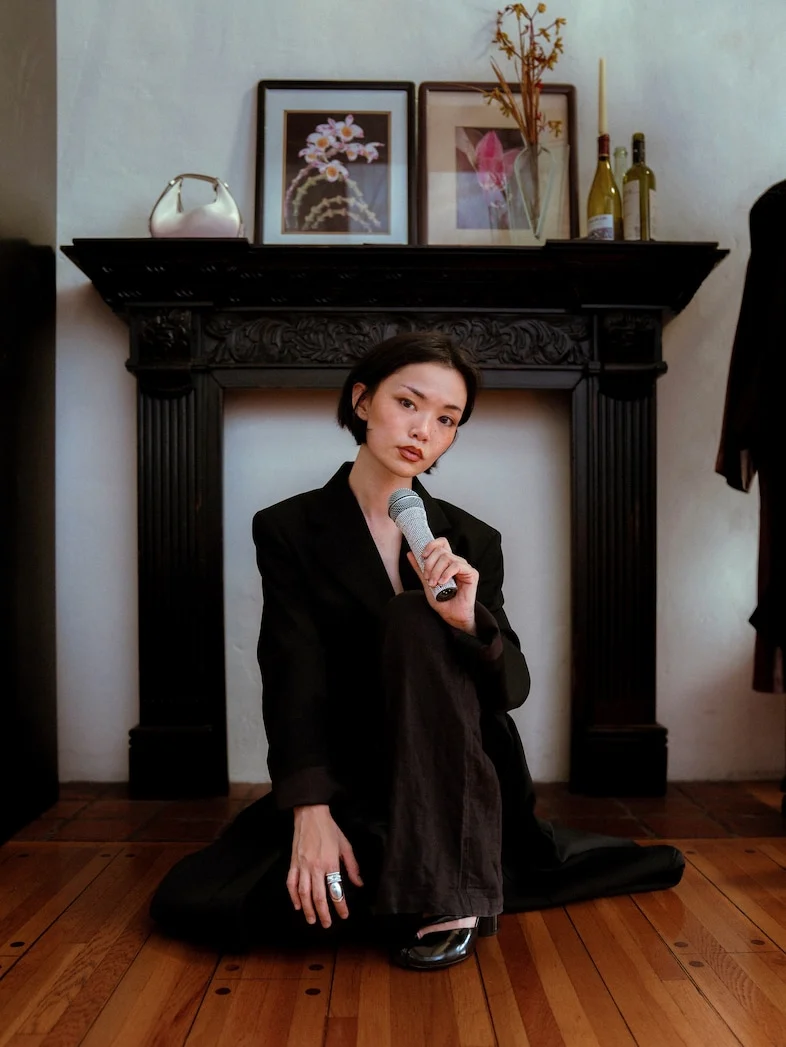
Fashion theorist and digital content creator Shuang Bright has emerged as a vital voice in contemporary cultural discourse, meticulously charting the rich, often overlooked, history of lesbian fashion. Through her compelling online videos, Bright seamlessly intertwines academic rigor with accessible storytelling, transforming complex historical narratives into engaging lessons for hundreds of thousands of followers. Her work stands as a critical endeavor in an era marked by increasing challenges to the preservation and dissemination of queer history, particularly within educational institutions and public platforms across America.
The Genesis of a Fashion Historian: Early Influences and Academic Foundations
Shuang Bright’s journey into the world of fashion, and subsequently fashion theory, began far from the bustling runways of New York, rooted instead in the quiet, homeschooled environment of Pennsylvania. Her formative years were often spent exploring the local mall with her mother, not merely as a consumer, but as an observer. These excursions frequently led her to Borders, a prominent bookstore of its time, where she delved into the fashion section. Here, she discovered the vibrant pages of old FRUiTS magazines and Japanese manga, publications that offered a kaleidoscopic window into Japanese street style. This early exposure was not just an aesthetic appreciation; it was Bright’s foundational introduction to style as a subject worthy of deep study, a curiosity that now defines her online presence.
FRUiTS magazine, launched in 1997 by photographer Shoichi Aoki, became an international phenomenon, celebrated for its candid documentation of the eclectic and boundary-pushed fashion worn by young people in Tokyo’s Harajuku district. It showcased a diverse array of subcultures, from Lolita and Decora to Visual Kei, profoundly influencing global street style trends and offering a counter-narrative to mainstream fashion dictates. For Bright, these pages were more than just images; they were anthropological texts, demonstrating how clothing could be a powerful tool for self-expression, community building, and even rebellion. This foundational understanding cultivated a perspective where fashion was not superficial but deeply embedded in social and cultural contexts.
Her academic pursuits further solidified this intellectual framework. Bright pursued a minor in sociology at New York University (NYU), a discipline that naturally encourages an examination of societal structures, cultural phenomena, and the intricate ways individuals interact within them. This academic background provided her with the methodological tools and theoretical lenses necessary to analyze fashion beyond its surface appeal, prompting her to ask critical questions: "Why is this popular? What were the origins? And how did this style even evolve? Understanding history and context is so important." This interdisciplinary approach, blending fashion’s visual language with sociological inquiry, forms the bedrock of her unique content creation.
From Outfit Videos to Historical Deep Dives: The Pandemic’s Pivot
Bright’s foray into content creation was, like many, a direct response to the seismic shifts brought about by the COVID-19 pandemic. Living in New York City, she had cherished the city’s vibrant culture of personal presentation, where "everyone puts a lot of care and effort into how they present themselves." The sudden transition to a work-from-home environment, characterized by daily pajamas and reduced social interaction, had a profound impact on her well-being. "Shifting to that work-from-home environment where you are just wearing pyjamas every day was making me quite depressed," she recounted.
Then back in Pennsylvania, and already holding a full-time job in the beauty industry, Bright initially had no aspirations of becoming a social media influencer. However, driven by a need to reconnect with her passion for style and combat the monotony of pandemic life, she began posting outfit videos. These early videos quickly gained traction, indicating a broader audience appetite for engaging fashion content during a period of widespread isolation.
The success of her initial outfit content provided the platform, but her deeper intellectual curiosity soon steered her trajectory. For the past year, Bright has shifted her focus, leveraging her sociology minor to produce meticulously researched videos on lesbian fashion history. Her page, while still featuring her distinctive personal style, now serves as a digital archive and educational resource, informing hundreds of thousands of followers about topics ranging from post-war trends in queer communities to the enduring queer fashion legacy of icons like Queen Latifah. This evolution marks a deliberate move from purely aesthetic showcasing to a more profound exploration of fashion’s historical and sociological dimensions, particularly within the LGBTQ+ community.
Her personal style evolution mirrors this intellectual journey. While younger, Bright describes herself as having been "obsessed with dressing quite hyper-feminine." However, as she has settled into adulthood and deepened her academic engagement with fashion, her preferences have shifted towards "more androgynous silhouettes." This transition reflects a broader understanding of gender expression and identity, moving beyond conventional norms to embrace styles that resonate more authentically with her evolved perspective. Her current aesthetic, which she playfully describes as "almost a newsboy of the 18th century," embodies a blend of historical reference and contemporary flair, a visual representation of her scholarly approach.
Unearthing Hidden Narratives: The Importance of Culturally Queer History
At the core of Shuang Bright’s work is a profound commitment to addressing a perceived "gap in understanding history" within the queer community, particularly among younger generations. She distinguishes between being "a queer person" and being "culturally queer," arguing that while many individuals identify as queer, there can be a lack of fundamental historical context that enriches and grounds that identity. "No shade if your only reference point to queer life is that you like the movie Bottoms, which is a great movie, but queer history is so rich," Bright asserts. "It informs the way that you are able to show up in the world. You’re only able to live this life because of all the people who have come before you, who have made all these decisions and have moved the needle to allow you to exist the way that you do now."
This emphasis on "culturally queer" identity speaks to the critical role of collective memory and heritage. For marginalized communities, history is not merely a collection of past events; it is a blueprint for resilience, a source of pride, and a tool for navigating present-day challenges. The erasure or neglect of this history can leave individuals feeling disconnected from a lineage of struggle and triumph, potentially weakening a sense of collective identity and political agency. Bright’s videos aim to bridge this gap, ensuring that contemporary queer life is understood not as an isolated phenomenon, but as a vibrant continuum built upon generations of queer existence and resistance.
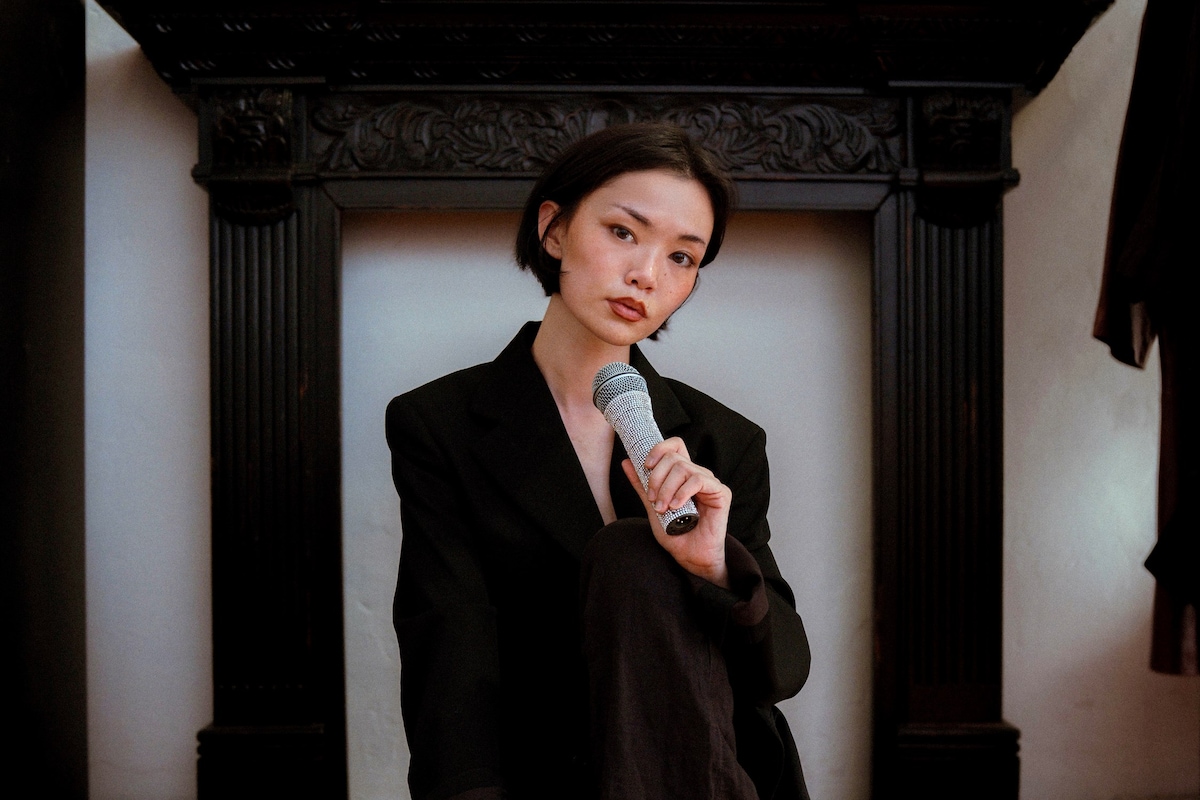
Her methodology involves expertly pairing historical narratives with contemporary relevance. By taking "a modern-day topic, but infusing that historical aspect," she makes history relatable and immediate, demonstrating how past struggles and stylistic innovations directly inform current trends and societal norms. This approach is particularly effective in engaging a digital audience accustomed to rapid consumption of information, offering digestible yet deeply informative content that encourages a deeper understanding of "how we even got to where we are, because we didn’t end up here without all the stuff that happened before." This pedagogical strategy transforms passive viewing into an active learning experience, fostering a more informed and engaged queer community.
Navigating the Labyrinth of Erased Histories: Challenges in Documentation
The task of documenting lesbian fashion history is fraught with unique challenges, largely due to systemic erasure and the often-covert nature of queer life throughout history. Bright highlights etymology as a particularly difficult aspect. "Terminology is really important," she explains, noting how certain terms within the queer community can be appropriated or lose their original meanings over time. She cites the word "stud" as an example, observing its occasional misuse by white individuals despite its "heavy historical context specific only to the Black community." This phenomenon underscores the complexities of linguistic evolution within subcultures and the imperative to respect the origins and specificities of identity markers. Such linguistic appropriation can inadvertently erase the contributions and experiences of the communities that coined and embodied these terms.
Another significant hurdle is the scarcity of documented evidence, particularly in digital formats. Much of queer history, especially that of marginalized subgroups, was either intentionally suppressed, deemed unworthy of mainstream archival efforts, or existed primarily within ephemeral subcultures. Bright notes the frustrating reality that she can sometimes "source things that, when I search online, don’t exist," often finding information in obscure print interviews or community archives that have not been digitized. This digital void means that critical historical data remains inaccessible to a wider audience, underscoring the ongoing need for dedicated archival projects and oral histories to ensure these narratives are not permanently lost.
Historians and archivists specializing in LGBTQ+ studies frequently confront similar obstacles. Dr. Sarah Schulman, a prominent queer historian and author, has often discussed the challenges of piecing together narratives from fragmented sources, personal testimonies, and underground publications, emphasizing that official records rarely capture the full spectrum of queer life. This mirrors Bright’s experience, where the lack of formal documentation necessitates a more investigative, grassroots approach to historical recovery, relying on community knowledge, personal accounts, and niche publications to reconstruct a more complete picture. The difficulty in tracing these linguistic and visual histories back further than current documentation allows speaks to generations of deliberate silencing and marginalization.
Unpacking Legal and Social Codes: The "Three-Piece Law" and Beyond
One of the most striking revelations Bright shares from her research is the existence of the "three-piece law," a stark reminder of historical discrimination against gender non-conforming individuals. While not exclusively targeting lesbians, this law, often framed as a "masquerade law," mandated that individuals had to wear at least three articles of clothing associated with their assigned gender at birth. Bright illustrates this with a clear example: "For example, I could not be wearing pants, a man’s jacket and a man’s shirt. I would need to be wearing three articles of clothing that are feminine pieces of clothing in combination with those things." These laws were specifically "targeted towards trans women and masculine lesbians," serving as a tool for societal control and suppression of gender expression that deviated from rigid norms.
These "masquerade laws" or "cross-dressing laws" were prevalent in many American cities from the late 19th century through much of the 20th century, particularly peaking in the mid-20th century. They were often enforced with brutal efficiency, leading to arrests, public humiliation, and harassment of individuals who dared to defy gendered sartorial codes. The objective was to maintain a visible distinction between genders, which was seen as crucial for upholding public morality and social order. For lesbians, especially those who adopted more masculine or androgynous styles, these laws criminalized their very existence and visibility, forcing many to navigate public spaces with extreme caution or to adhere to enforced gender presentation that felt inauthentic. The Stonewall Riots of 1969, a pivotal moment in queer liberation, were sparked in part by police raids on gay bars where individuals were arrested under such laws for not wearing "gender-appropriate" clothing.
Beyond formal legal statutes, queer communities also developed their own subtle "visual codes" to signal identity and connect with one another in discreet ways. Bright notes historical examples such as the carabiner, the pinky ring, or the monocle, the latter being predominantly used among upper-class lesbians. These items, seemingly innocuous to the uninitiated, served as clandestine identifiers of sexual preference, allowing queer individuals to recognize allies and potential partners in a world where open expression was dangerous. This system of coded communication highlights the ingenuity and resilience of queer communities in establishing networks and culture under repressive conditions. While these codes were essential for survival, they also illustrate the pervasive need for concealment that characterized much of queer history.
The Aestheticization of Queer Style Online: Blurring Lines and Identity
In the contemporary digital landscape, a new phenomenon has emerged: the aestheticization of queer style. Bright observes "an overlap of being trendy and being queer," where elements historically associated with queer subcultures are increasingly adopted by broader audiences and turned into internet aesthetics. This raises questions about the distinction between genuine queer identity and stylistic appropriation.
While acknowledging this blurring, Bright maintains that "a queer person can spot another queer person." She suggests that despite the widespread adoption of certain stylistic elements, the nuances of identity are often conveyed through more subtle cues. "It all overlaps online," she says, referring to the interconnectedness of fashion trends. She posits that while a straight woman might wear "the same outfit as a high femme lesbian," the discerning eye can still "clock it by the mannerisms and how they are carrying themselves, as opposed to there being a strong visual code." This implies a shift from overt visual signals to more embodied forms of expression and presentation as markers of identity.
This aestheticization presents a complex dynamic for the queer community. On one hand, the mainstreaming of certain queer aesthetics can increase visibility and potentially foster greater acceptance. On the other hand, it risks diluting the original meaning and historical context of these styles, stripping them of their radical or subversive connotations. When elements of queer