









The global fashion industry is currently grappling with an unprecedented crisis of oversupply, with major brands holding billions of dollars in unsold inventory that threatens both corporate balance sheets and global environmental stability. As retailers like ASOS, H&M, and Zara face the logistical nightmare of managing excess stock, a South African startup named FARO has secured $6 million in seed funding to transform this systemic inefficiency into a sustainable retail powerhouse. By positioning itself at the intersection of high-end brand liquidation and emerging market demand, FARO is building a "recommerce" ecosystem designed to provide affordable, authentic fashion to African consumers while significantly reducing the environmental footprint of the textile industry.
The investment round was led by JP Zammitt, the president of Bloomberg, and saw participation from a diverse coalition of venture capital firms and angel investors. Notable contributors include Presight Capital, Gharage Ventures, and E4E Africa, alongside individual tech luminaries such as Mato Perić of MPGI and Tushar Ahluwalia of the Razor Group. This capital injection marks a significant milestone for FARO, which has demonstrated explosive growth since its inception, and signals a growing investor appetite for circular economy solutions in the Global South.
The Paradox of Plenty and the Crisis of Waste
The fashion industry operates on a model of high-volume production that frequently outpaces consumer demand. Estimates suggest that the global apparel market produces over 100 billion garments annually, with a staggering percentage never reaching a primary consumer. To protect brand equity and prevent "market cannibalization"—where discounted goods undermine full-price sales—many premium brands historically opted to incinerate unsold stock or slash labels and dump inventory into secondary markets without oversight.
Simultaneously, emerging markets, particularly across the African continent, have become the destination for the world’s textile cast-offs. While the secondhand clothing trade (often referred to as "mitumba" in East Africa or "obroni wawu" in Ghana) provides affordable clothing for millions, the quality has plummeted. Reports indicate that between 30% and 40% of secondhand imports are unusable upon arrival due to damage or poor quality, leading to massive textile graveyards in cities like Accra and Nairobi. These discarded garments clog waterways, fuel landfill fires, and release microplastics into the ecosystem.
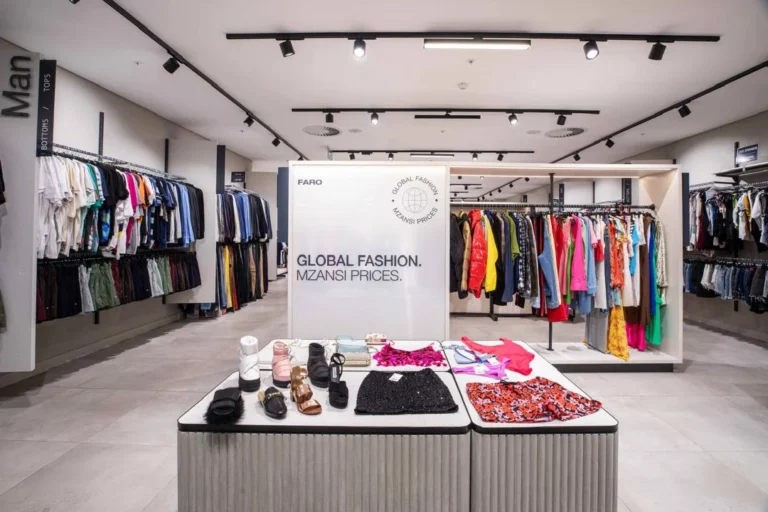
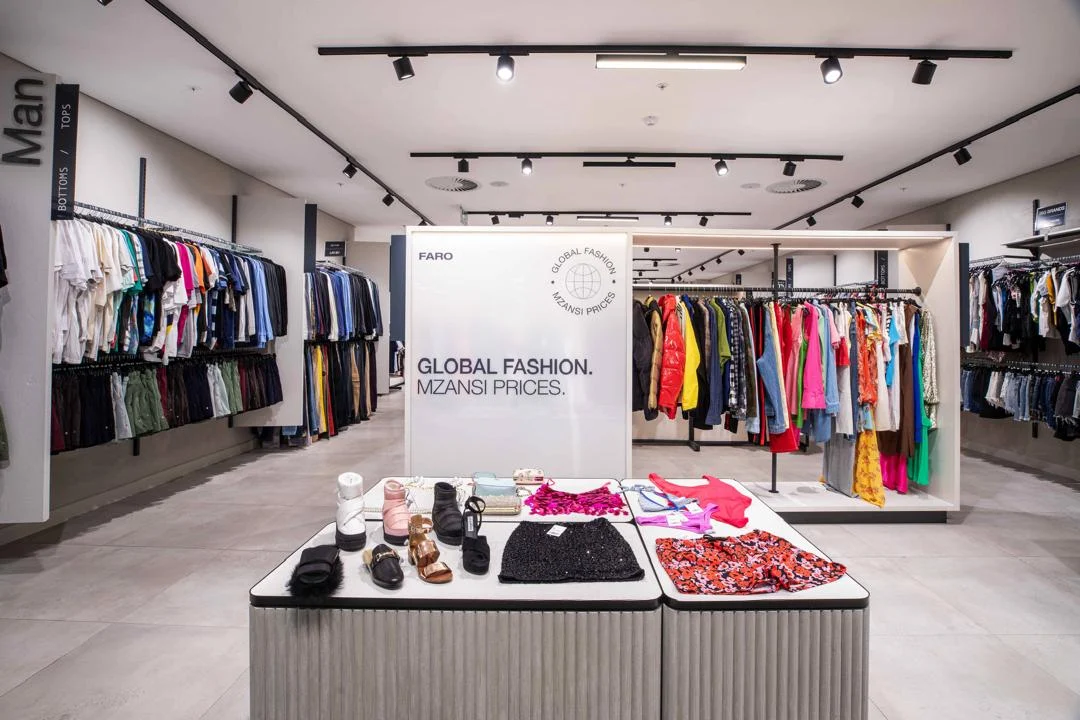
FARO’s business model addresses this paradox by creating a structured, high-value pipeline for overstock and "B-grade" returns. Rather than allowing these items to become environmental hazards, FARO intercepts them, restores them to retail quality, and distributes them through a sophisticated physical retail network in South Africa.
A Chronology of Rapid Scaling and Market Validation
The trajectory of FARO reflects a shift in how retail startups are approaching the African market. Founded by a team of seasoned executives—David Torr, Will McCarren, Chris Makhanya, and Amber Penney-Young—the company brings together expertise from global giants like Amazon and Jumia.
In early 2023, the founders launched an experimental pop-up store in a high-traffic South African urban hub. The objective was to test whether local consumers would embrace a formal "off-price" retail experience for brands like Levi’s, Tommy Hilfiger, and G-Star. The results were immediate and overwhelming: the single pop-up generated $100,000 in revenue in its first month of operation.
Initially, the management team projected that they would require at least seven physical locations to reach an annual revenue run rate of $2 million. However, the demand for authentic, discounted branded apparel proved so potent that FARO surpassed the $2.3 million milestone with only four stores. This represented a 20-fold revenue increase within a single calendar year. Following this proof of concept, the startup has now set its sights on a fivefold growth target for the current fiscal year, underpinned by the new $6 million funding round.
The Mechanics of the FARO Recommerce Engine
FARO’s operational success is built on a "fixed-margin" model that prioritizes volume and customer loyalty over aggressive markups. The company sources its inventory through direct partnerships with major global retailers, including ASOS, Boohoo, and Jack & Jones.
A critical component of FARO’s strategy is its focus on consumer returns. In the modern e-commerce landscape, returns are a massive cost center for brands. Often, a garment returned with a missing button or a minor smudge is deemed too expensive to process in high-labor-cost markets like the U.K. or the U.S. FARO acquires these items at ultra-low prices—sometimes as low as £1 per piece—and transports them to its specialized facilities in South Africa.
Once on-site, the garments undergo a rigorous reconditioning process. FARO’s industrial infrastructure includes advanced laundry systems and steam tunnels, alongside a skilled workforce that performs repairs and quality checks. By adding value to "damaged" goods through affordable local labor, FARO can offer premium brands at discounts of up to 70% off original retail prices while maintaining a target margin of roughly 45% after all processing and logistics costs.
The inventory mix is currently balanced at approximately 40% reconditioned returns and 60% traditional overstock. This hybrid approach ensures a constant flow of diverse, high-quality merchandise that appeals to "aspirational" buyers—consumers who value the status and durability of international brands but are priced out of traditional high-end malls.
Technological Innovation: AI Agents vs. Legacy Systems
One of the most significant barriers to scaling off-price retail is the complexity of inventory management. Unlike traditional retail, where a buyer might order 10,000 units of a single SKU, FARO deals with "fragmented" inventory—thousands of unique items, each with different sizes, conditions, and brand origins.
Historically, this has been managed by large teams of planners using manual Excel spreadsheets, a process that is slow, prone to error, and difficult to scale. David Torr, co-CEO of FARO, notes that even multibillion-dollar global retailers like TJX (the parent company of T.J. Maxx) rely heavily on labor-intensive legacy systems.
To disrupt this, FARO is developing proprietary AI-powered agents designed to automate the buying and manifest-processing workflow. These AI models can analyze massive datasets from brand partners, categorize items, and determine optimal pricing strategies in seconds rather than hours.
"We’ve started deploying our first buy models that can do this with accuracy that is infinitely better than a human being," Torr stated. This technological edge allows FARO to remain lean while managing the logistical complexity of a 1,000-store vision. Furthermore, the company plans to introduce personalized AI tools for consumers, notifying them via mobile alerts when specific brands or styles arrive at their local store, bridging the gap between the physical and digital shopping experiences.
Navigating the Competitive Landscape: Temu, Shein, and the E-commerce Hurdle
FARO’s decision to focus on physical retail is a calculated response to the unique challenges of the African market. While e-commerce platforms like Jumia and Takealot have made significant strides, the "last-mile" delivery costs in many African regions remain prohibitively high for low-margin apparel. Additionally, the unique nature of off-price inventory—where many items are "one-of-ones"—makes it difficult and expensive to photograph and list every piece online.
However, the retail environment is changing rapidly with the arrival of ultra-fast-fashion giants like Shein and Temu. These Chinese platforms have disrupted the South African market by offering extremely low prices directly to consumers. FARO distinguishes itself from these competitors by focusing on "status" brands and physical quality. While Shein offers trendy, disposable fashion, FARO provides durable, authentic goods from established global labels.
Furthermore, South Africa’s retail infrastructure is uniquely suited for FARO’s model. With over 2,000 shopping centers and a highly developed formal retail culture, the country serves as the perfect launchpad for a network of off-price stores that can compete with traditional department stores on both price and experience.
Broader Implications and the Road to One Thousand Stores
The long-term vision for FARO is nothing short of a continental transformation. The startup aims to scale to 1,000 locations over the next decade, expanding beyond South Africa into other emerging markets in Africa, South America, Asia, and the Middle East.
Success in this expansion will require a deep understanding of localized consumer behavior. A pricing strategy or brand mix that works in Cape Town may not necessarily translate to Lagos or Nairobi. FARO’s reliance on AI to build "localized price profiles" will be essential in navigating these diverse economic landscapes.
From an environmental perspective, FARO represents a shift toward a "circular" rather than "linear" fashion economy. By giving a second life to billions of dollars in unsold inventory, the company provides a legitimate alternative to the unregulated dumping of textile waste. If the model proves scalable, it could offer a blueprint for how other emerging markets can fulfill consumer demand for high-quality goods without the associated ecological destruction of the current secondhand trade.
As FARO begins its next phase of growth, the retail world will be watching closely. The company’s ability to blend industrial-scale refurbishing, AI-driven logistics, and a customer-centric retail model suggests that the solution to the fashion industry’s waste problem may not lie in producing less, but in distributing more intelligently. For the African consumer, FARO is not just a clothing store; it is a gateway to global brands that were previously out of reach, delivered through a system that respects both the wallet and the planet.