










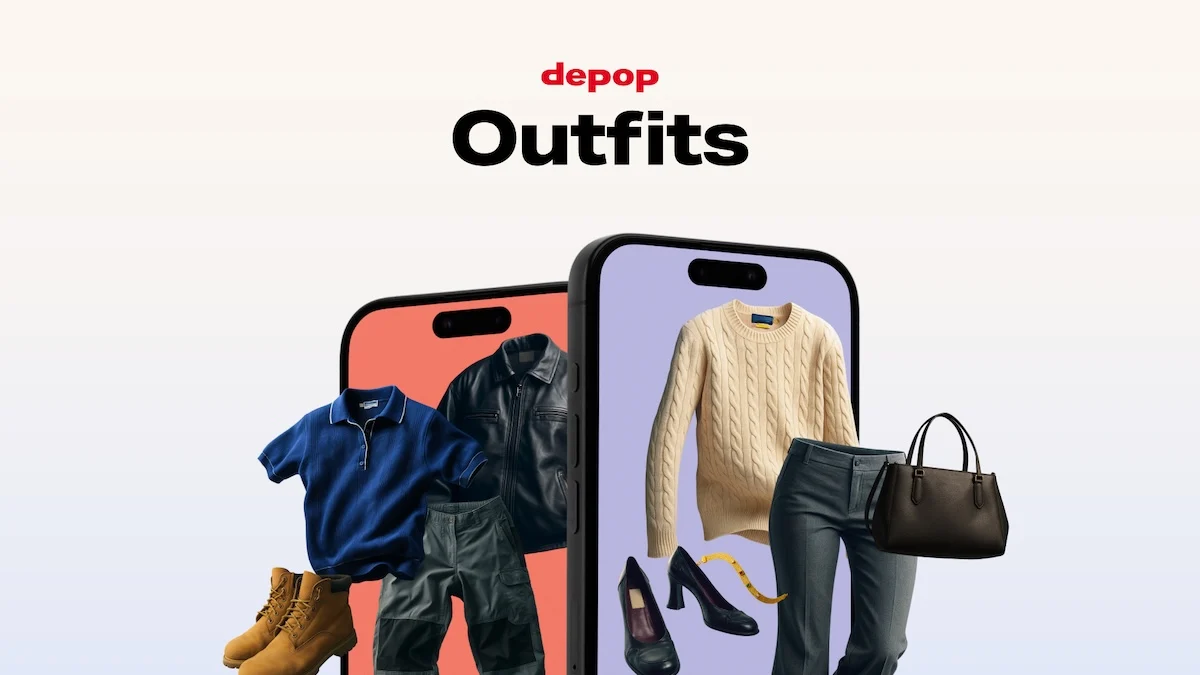
In a strategic move to deepen its footprint in the social commerce space, fashion resale powerhouse Depop announced on Wednesday the debut of Outfits, a dedicated styling and collaging tool designed to transform how users interact with secondhand apparel. The feature provides a mood board-like interface, allowing the platform’s predominantly young user base to design curated ensembles, share them with followers, and visualize how disparate vintage pieces can function as a cohesive look. This launch marks a significant evolution for the Etsy-owned subsidiary, transitioning the app from a transactional marketplace into a creative hub for digital fashion curation.
Technical Functionality and User Experience
The Outfits tool is integrated directly into the existing Depop interface, prioritizing ease of use for both casual buyers and professional resellers. To access the feature, users select a specific item they wish to style and engage the scissors icon located on the right-hand side of the interface. This action triggers an image-segmentation process, allowing the item to be isolated and placed onto a digital canvas.
The customization suite within Outfits is comprehensive, offering users the ability to modify backgrounds with various color palettes and adjust the scaling, rotation, and placement of multiple images. For users seeking aesthetic direction, Depop has included a variety of pre-designed templates that serve as layout guides, mirroring the functionality of popular graphic design and social media editing applications.
A critical component of this feature is its integration with Depop’s e-commerce engine. Every item featured within a collage is fully shoppable. In an effort to mitigate the friction caused by the one-of-one nature of secondhand inventory, Depop has implemented an algorithmic safety net: if a specific item within a collage is sold, the app automatically generates suggestions for similar alternatives. This ensures that the creative content remains functional as a sales driver even after individual listings have been exhausted.
Strategic Alignment with Gen Z Consumer Behavior
The introduction of Outfits is a direct response to the "collage culture" that has dominated Gen Z’s digital aesthetic over the last several years. By centralizing these creative tools within its own ecosystem, Depop aims to capture the "top-of-funnel" inspiration phase of the shopping journey, which currently often takes place on external platforms like Pinterest or Instagram.
The strategic emphasis on social sharing is evident in the feature’s design, which allows for the export of static images to external platforms. By encouraging users to share their Depop-curated outfits on Pinterest and Instagram, the company is effectively leveraging its user base as a decentralized marketing force. This move follows a broader industry trend where visual discovery and community-led curation are becoming the primary drivers of e-commerce conversion.
Pinterest, a pioneer in this space, launched its own collage-making application, Shuffles, in 2022. The rapid success of Shuffles—which gained significant traction on TikTok—led Pinterest to integrate those features directly into its core application. Depop’s decision to follow a similar path suggests a recognition that for younger consumers, the act of "window shopping" has been replaced by the act of "digital styling."
Financial Context and Market Performance
The launch of Outfits occurs during a period of robust financial performance for Depop. According to the Q2 2025 earnings report released by parent company Etsy, Depop’s Gross Merchandise Sales (GMS) saw a substantial increase of 34.7% year-over-year on a currency-neutral basis. This trajectory has placed the platform on a clear path toward a $1 billion GMS run rate, a milestone that underscores its dominance in the global resale market.
This growth is particularly notable when compared to its peers in the peer-to-peer (P2P) resale sector. For instance, the Japanese marketplace Mercari reported a Gross Merchandise Value (GMV) of approximately $728 million for the fourth quarter of 2024. While Mercari remains a significant player, Depop’s aggressive growth and specialized focus on fashion and "it-girl" aesthetics have allowed it to maintain a unique competitive advantage.

Etsy’s management has frequently highlighted Depop as a high-growth engine within its portfolio. Since acquiring the London-based app for $1.62 billion in 2021, Etsy has focused on improving Depop’s search algorithms, shipping logistics, and community safety features. The addition of creative tools like Outfits represents the next phase of this investment: increasing user retention and "stickiness" by transforming the app into a daily destination for fashion inspiration, rather than just a place to buy or sell.
The Evolution of the Digital Fashion Marketplace
The transition toward integrated styling tools reflects a broader shift in the circular economy. In the early days of resale platforms like eBay, the primary value proposition was price and availability. However, as the market has matured, the "search and find" model has become increasingly crowded. To differentiate themselves, platforms are now focusing on the "discovery" model.
For sellers, the Outfits tool serves as a powerful merchandising asset. It allows them to move beyond the traditional "flat lay" or "mirror selfie" photography and instead present their inventory within a lifestyle context. By showing how a vintage skirt can be paired with a specific jacket, boots, and accessories, sellers can increase the perceived value of their items and potentially drive multi-item "bundle" sales.
From an industry perspective, the move is also seen as a response to the "Polyvore vacuum." Polyvore, a beloved fashion styling site that was shuttered in 2018 after being acquired by SSENSE, left a significant gap in the market for digital mood boarding. While apps like Combyne and Shuffles have attempted to fill this space, Depop is the first major marketplace to tie the styling experience directly to a live, purchasable inventory of secondhand goods.
Implications for the Circular Economy and Sustainability
Beyond the financial and technical aspects, the Outfits feature carries implications for the sustainability movement. One of the primary barriers to secondhand shopping is the difficulty of visualizing how disparate, unique pieces can fit into a modern wardrobe. By providing tools that facilitate outfit planning, Depop is lowering the barrier to entry for consumers who might otherwise default to the convenience of fast-fashion retailers.
Industry analysts suggest that by encouraging "slow fashion" through curation, Depop is reinforcing the idea of clothing longevity. When users spend time styling an item virtually before purchasing it, they are arguably making more intentional consumption choices, which can lead to lower return rates and a more sustainable lifecycle for the garment.
Chronology of Depop’s Strategic Milestones
To understand the significance of the Outfits launch, it is helpful to view it within the context of Depop’s recent development timeline:
- June 2021: Etsy acquires Depop for $1.62 billion, signaling a major bet on the Gen Z resale market.
- 2022-2023: Depop focuses on backend infrastructure, improving its "Suggested for You" algorithms and expanding its "Depop Payments" system to streamline transactions.
- Late 2023: The platform introduces improved search filters and AI-driven tagging to help sellers categorize inventory more accurately.
- Early 2024: Depop reports a surge in "bundle" purchases, indicating a trend toward multi-item orders.
- August 2025: Etsy Q2 earnings confirm Depop’s 34.7% GMS growth.
- September 2025: The "Outfits" tool is officially launched to all users, marking a shift toward social-led commerce.
Future Outlook and Competitive Pressures
While Depop currently enjoys strong momentum, it faces a competitive landscape that is rapidly evolving. Vinted, which has a massive footprint in Europe, has been expanding its market share by focusing on a zero-seller-fee model. Meanwhile, Poshmark, under its new ownership by Naver, has been integrating more live-streaming features to capitalize on the "Live Shopping" trend that has seen massive success in Asian markets.
Depop’s decision to double down on creative styling tools rather than live-streaming suggests a commitment to its identity as an aesthetic-first platform. The success of the Outfits feature will likely be measured not just by immediate sales, but by the increase in time spent on the app and the volume of cross-platform shares.
As the lines between social media, creative expression, and e-commerce continue to blur, Depop’s Outfits tool positions the company as a leader in the next generation of "shoppability." By empowering its community to act as stylists, Depop is not just selling clothes; it is facilitating a digital fashion ecosystem where the value is derived as much from the curation as it is from the product itself. For the $1 billion-bound platform, the future of fashion appears to be as much about the collage as it is about the closet.