










Apple has officially expanded its high-end accessory lineup with the introduction of the iPhone Pocket, a premium textile sling developed in collaboration with the renowned Japanese fashion house Issey Miyake. The product, which debuted on the Apple Store with a starting price of $149.95 for the "short" hand-held version and $229.95 for the "long" crossbody variant, represents a significant intersection of consumer technology and avant-garde fashion. The iPhone Pocket is marketed as a limited-edition item, drawing inspiration from the "A Piece of Cloth" (APOC) design philosophy pioneered by the late designer Issey Miyake. This launch follows a history of Apple venturing into high-margin, minimalist accessories that often spark debate regarding price-to-utility ratios, such as the $19 polishing cloth released in 2021.
Design Philosophy and Technical Specifications
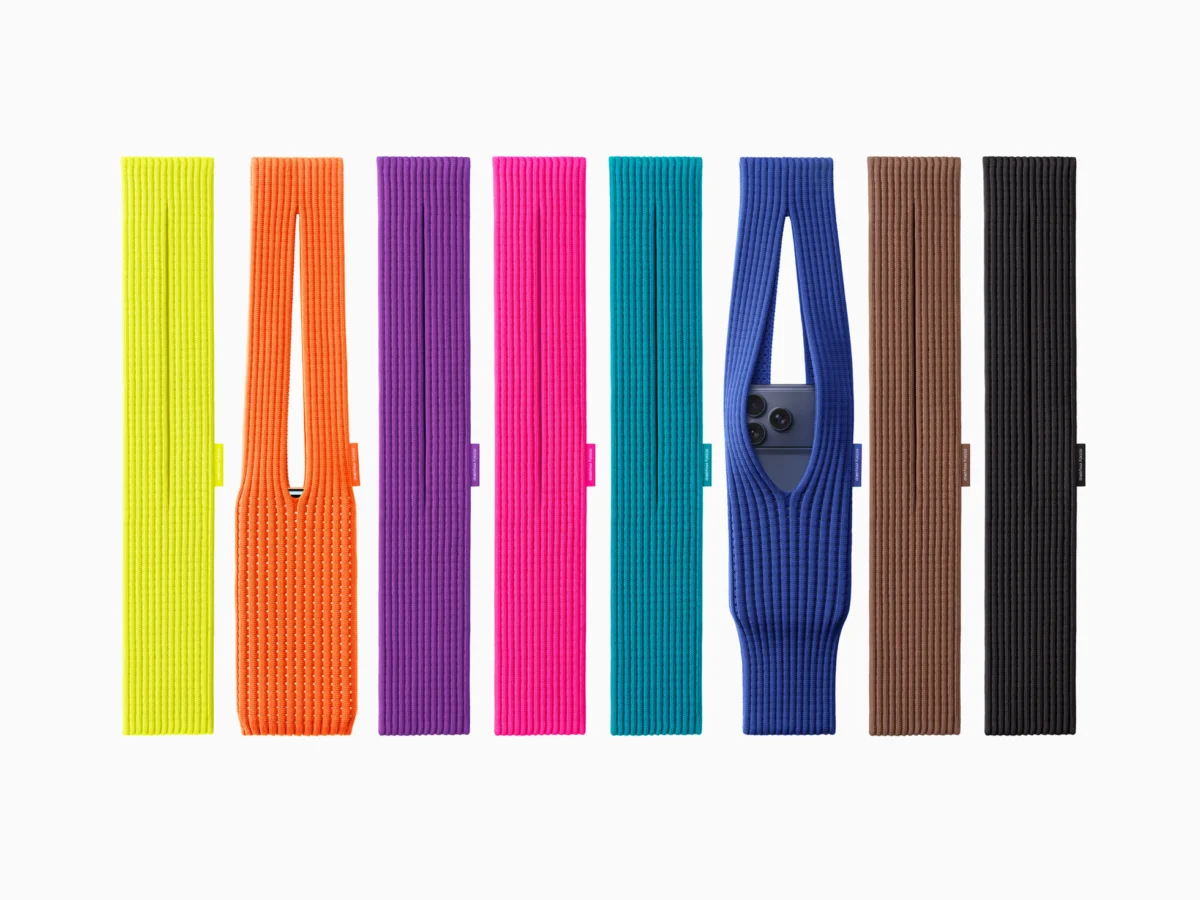
The iPhone Pocket is constructed from a specialized ribbed mesh fabric that utilizes a single-piece construction method. According to product documentation provided by Apple, the design is inspired by the concept of "a piece of cloth," a manufacturing technique where an entire garment or accessory is formed from a continuous roll of fabric with minimal cutting or sewing. This method, originally developed by Issey Miyake and Dai Fujiwara in 1997, is intended to reduce industrial waste while providing a flexible, durable structure.
The material features a pleated, expandable weave that allows the user to see the iPhone’s display through the textile when the fabric is stretched. Apple describes the structure as having "the qualities of the original pleats by Issey Miyake," referring to the designer’s signature "Pleats Please" line which used heat-treating to create permanent folds in polyester. The iPhone Pocket is available in a variety of colorways, including a "Lemon" yellow, with the short version offering a broader palette than the long crossbody version, which is currently limited to three primary colors.
The short version of the pocket is designed to be attached to other bags or carried as a wristlet, while the long version functions as a standalone crossbody accessory. Both versions are compatible with various iPhone models, relying on the elasticity of the mesh to secure the device.
The Historical Context of Apple and Issey Miyake
The collaboration between the Miyake label and Apple is rooted in a decades-long relationship between the fashion house and Apple’s co-founder, Steve Jobs. In the early 1980s, during a visit to Sony’s headquarters in Japan, Jobs observed that employees wore uniforms designed by Miyake. Impressed by the sense of corporate identity and the functionality of the clothing, Jobs commissioned Miyake to design a uniform for Apple employees.
Although the proposal for a company-wide uniform was ultimately rejected by Apple staff, Jobs and Miyake maintained a close personal and professional friendship. This relationship led to the creation of Jobs’ iconic personal "uniform"—a black mockneck sweater. Miyake reportedly produced hundreds of these shirts for Jobs, which became synonymous with the Apple brand’s aesthetic of "sleek elegance" and functional minimalism.

While Issey Miyake passed away in 2022, his design house has continued to operate under the creative direction of his successors, maintaining the APOC and pleating techniques that defined his career. The release of the iPhone Pocket is the first formal product collaboration between the Apple brand and the Issey Miyake label, though the aesthetic influence of Miyake has been present in Apple’s design language for years.
Market Trends and the Rise of "Accessory-for-an-Accessory" Culture
The iPhone Pocket arrives at a time when the consumer electronics and fashion industries are increasingly overlapping. Market analysts point to several concurrent trends that provide a framework for the product’s release.
The Miniaturization of Utility
As mobile devices have integrated the functions of wallets, keys, and cameras, the necessity for traditional large handbags has diminished. Technologies such as Apple Pay (Tap to Pay) and digital car/home keys have enabled consumers to leave their homes with only a smartphone. This shift has fueled the growth of the "micro-bag" market. Brands like Telfar, Baggu, and Lululemon have seen significant success with small-format bags designed specifically to hold a phone and perhaps a single card or key.
Luxury Utility and "Rage-Bait" Pricing
The pricing of the iPhone Pocket—ranging from roughly $150 to $230—has drawn comparisons to previous Apple accessory launches that were perceived as "premium-priced essentials." In 2021, Apple’s $19 polishing cloth became a viral sensation, frequently selling out despite criticism over its price. Similarly, the $549 AirPods Max and the $99 MagSafe Wallet have positioned Apple as a luxury lifestyle brand rather than a mere hardware manufacturer. The iPhone Pocket follows this trajectory, targeting a demographic that values brand heritage and textile innovation over raw functional cost.
The Labubu and Stanley Cup Influence
The "short" version of the iPhone Pocket, which functions as a decorative attachment for larger bags, aligns with the current "accessory-for-an-accessory" trend. This phenomenon is exemplified by the global popularity of Labubu—monster-themed plush keychains from Pop Mart—which are often attached to luxury handbags. Retail data suggests that consumers, particularly in the Gen Z and Millennial demographics, are increasingly spending on "charms" and modular additions to their existing products. This trend is also visible in the "Stanley Cup accessorizing" movement, where users add pouches and charms to their insulated water bottles.
Chronology of Apple’s Textile and Accessory Evolution
To understand the positioning of the iPhone Pocket, it is necessary to examine Apple’s recent history with materials and third-party fashion partnerships:
- 2015: Apple partners with Hermès to produce luxury leather bands for the Apple Watch, marking its first major foray into high fashion.
- 2021: The release of the $19 Polishing Cloth, which established Apple’s ability to sell simple textile goods at a premium.
- 2023: Apple announces the discontinuation of leather accessories in favor of "FineWoven," a microtwill material made from 68% post-consumer recycled content. The material faced mixed reviews regarding durability.
- Early 2024: Apple releases its own $59 crossbody strap, testing the market for wearable phone accessories.
- Late 2025: The launch of the Issey Miyake iPhone Pocket, moving the brand into the "limited edition" designer collaboration space.
Industry Reactions and Economic Implications
While Apple has not released specific sales targets for the iPhone Pocket, industry experts suggest the product serves a dual purpose: brand elevation and high-margin revenue. By associating with a label like Issey Miyake, Apple reinforces its image as a curator of high culture.

"The iPhone Pocket is not designed for the mass-market consumer," says Jonathan Reynolds, a retail analyst specializing in tech-fashion hybrids. "It is a strategic move to capture the ‘HENRY’ (High Earner, Not Rich Yet) demographic and the luxury fashion enthusiast. From a manufacturing standpoint, the APOC method is cost-effective at scale, meaning the profit margins on a $230 fabric sling are likely substantial."
Environmental advocates have noted that the use of the APOC technique is a positive step toward sustainable manufacturing, as it minimizes textile scrap. However, some critics argue that the limited-edition nature of the product encourages "drop culture" and consumerism that may offset the sustainability gains of the production method.
Broader Impact on the Tech-Fashion Landscape
The release of the iPhone Pocket is expected to influence how other technology companies approach accessory design. If successful, it could pave the way for more "designer-engineered" peripherals. We have already seen Samsung collaborate with brands like Maison Margiela for special edition foldable phones, and Google partner with various artists for Pixel cases.
The iPhone Pocket also signals a shift in the "post-Jony Ive" era of Apple design, where the company appears more willing to experiment with textures, bold colors, and external fashion influences that deviate from the stark aluminum and glass aesthetic of the 2010s.
As the 2025 holiday season approaches, the iPhone Pocket will serve as a litmus test for the "luxury tech accessory" market. Whether it becomes a mainstay in the fashion world or remains a niche collector’s item, its launch highlights the increasing blurring of lines between the devices we use and the clothes we wear. For Apple, the product is a return to a specific lineage of design excellence—one that began with a black turtleneck and has now evolved into a $230 piece of pleated cloth.