









In the opulent setting of a Soho Hotel, a figure emerges with the kind of self-assured gravitas typically reserved for seasoned veterans of the film industry. Curry Barker, a mere 26 years old, is not just making waves; he is orchestrating a seismic shift in the landscape of contemporary cinema, particularly within the horror genre. His debut feature, Obsession, is poised to become the breakout sensation of the year, drawing immediate comparisons to the critically acclaimed and commercially successful Talk to Me. This meteoric rise is not merely speculative; it is underscored by a flurry of high-profile projects and strategic industry recognition that positions Barker as one of Hollywood’s most exciting new voices.
Just two weeks prior to this interview, Barker concluded principal photography on Anything But Ghosts, a Blumhouse-produced horror film he not only directed and co-wrote but also starred in alongside the esteemed Aaron Paul. This collaboration with Blumhouse, a studio synonymous with high-concept, low-budget horror that frequently yields massive box office returns, speaks volumes about the industry’s confidence in his vision. The momentum continued unabated when, only days ago, A24, the indie studio revered for its distinctive and often boundary-pushing genre films, officially announced Barker would helm their forthcoming reboot of the iconic Texas Chain Saw Massacre. This rapid accumulation of major projects, culminating in the stewardship of one of horror’s most revered franchises, marks an unprecedented trajectory for a filmmaker of his age.
From Viral Shorts to Festival Darlings: The Genesis of a Phenomenon
Barker’s journey to the precipice of cinematic stardom began not in traditional film school pipelines but in the dynamic, often unpredictable realm of online content. While comparisons to Jordan Peele are frequently made – a testament to his immediate impact on the horror genre – Barker’s ascent is notably swifter. Peele was 38 when his groundbreaking debut Get Out premiered, whereas Barker, who exudes the confidence of a director far beyond his years, is only 26. His distinctive style, even in casual settings, marked by indoor shades, hints at an innate understanding of persona and presence in an industry driven by narrative.
The foundation of his burgeoning career was laid in 2024 with Milk & Serial, a 62-minute found-footage horror film crafted with an astonishingly modest budget of just $800. This guerrilla filmmaking endeavor, a testament to raw talent and resourcefulness, quickly achieved viral status on YouTube. The platform, increasingly recognized as a fertile ground for emerging talent, served as the perfect launchpad for Barker’s unique blend of suspense and psychological tension. The overwhelming online reception and subsequent virality of Milk & Serial directly facilitated the funding for his ambitious feature debut, Obsession, demonstrating a contemporary path to industry recognition that bypasses traditional gatekeepers.
Beyond his solo projects, Barker cultivated a significant online following through his YouTube sketch comedy duo, "that’s a bad idea," alongside Cooper Tomlinson, who also features in Obsession as Bear’s best friend. Their channel showcases a keen understanding of human behavior, a trait Barker himself identifies as crucial to both comedy and horror. Their sketches, including a clever Talk to Me parody, not only honed their comedic timing but also provided a fertile testing ground for narrative structures and character development, proving instrumental in shaping Barker’s distinctive storytelling voice.
"Obsession": A New Breed of Genre-Bender
Obsession, Barker’s much-anticipated debut feature, has already stirred considerable excitement, particularly after its “raucous world premiere” at the Toronto International Film Festival (TIFF). TIFF, a premier platform for launching films into the global marketplace, often serves as a bellwether for critical and commercial success. The enthusiastic reception there led to an intense bidding war, with industry heavyweights like A24 and Neon vying for distribution rights before Focus Features ultimately secured the film. This competitive acquisition underscores the perceived commercial and artistic value of Barker’s work.
Barker himself, reflecting on the rapid pace of his creative output, expresses a detached yet enthusiastic perspective on Obsession: “Writing [Obsession] feels like a lifetime ago. Directing it feels like years ago, even if it wasn’t. My brain is creatively way past this project. But I’m still super-excited about it.” This statement hints at an insatiable creative drive, constantly pushing forward to the next idea, a hallmark of prolific artists.
The film itself is a genre-bending marvel, described as both a "twisted rom-com" and a "head-smashing horror." This audacious fusion positions Obsession within a growing trend of films that subvert conventional genre expectations, much like recent hits that blend comedy with dark themes or drama with supernatural elements. Critics at TIFF lauded its surprising humor and philosophical depth, noting its exploration of modern relationships. The narrative provocatively questions the resilience of a connection when fundamental truths are obscured during the courtship phase, drawing thematic parallels to works like The Drama. Barker’s own admission, “I knew the potential of the premise early on, because I’m just that type of thinker. I’m always thinking about the darkest version of something,” reveals the intellectual rigor underpinning his macabre creativity.
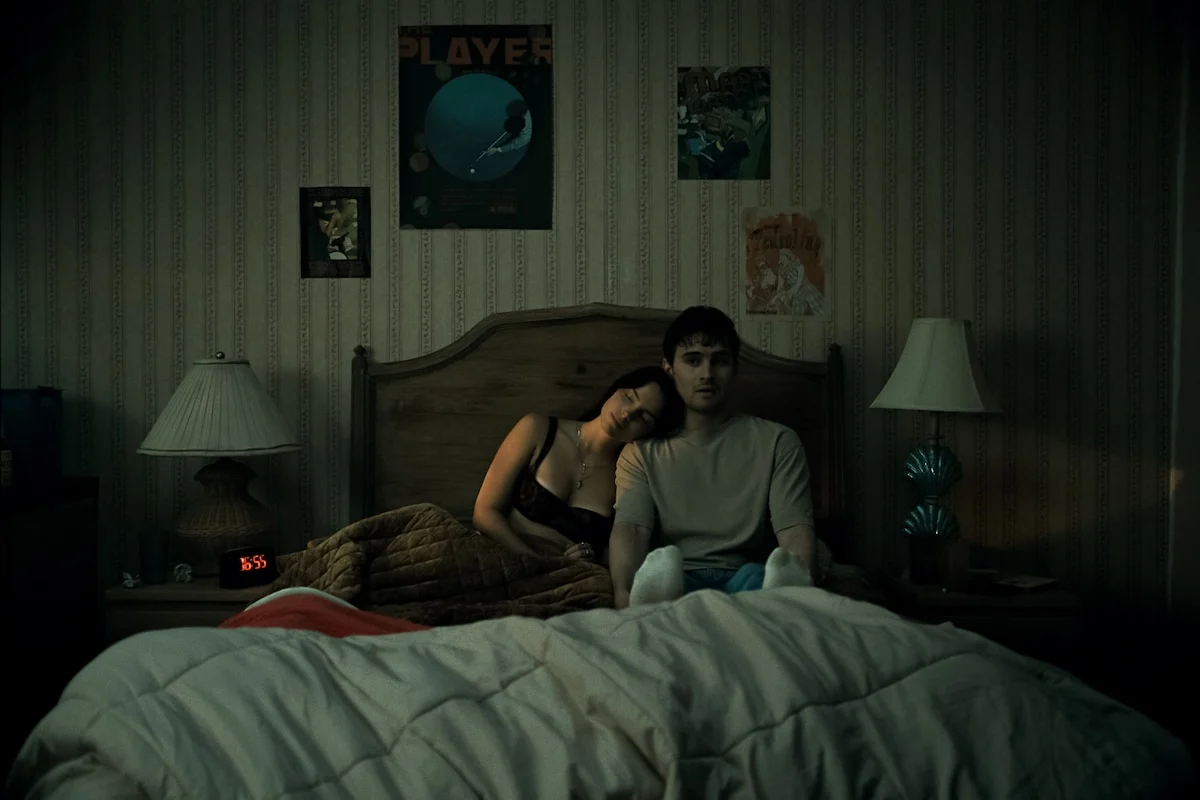
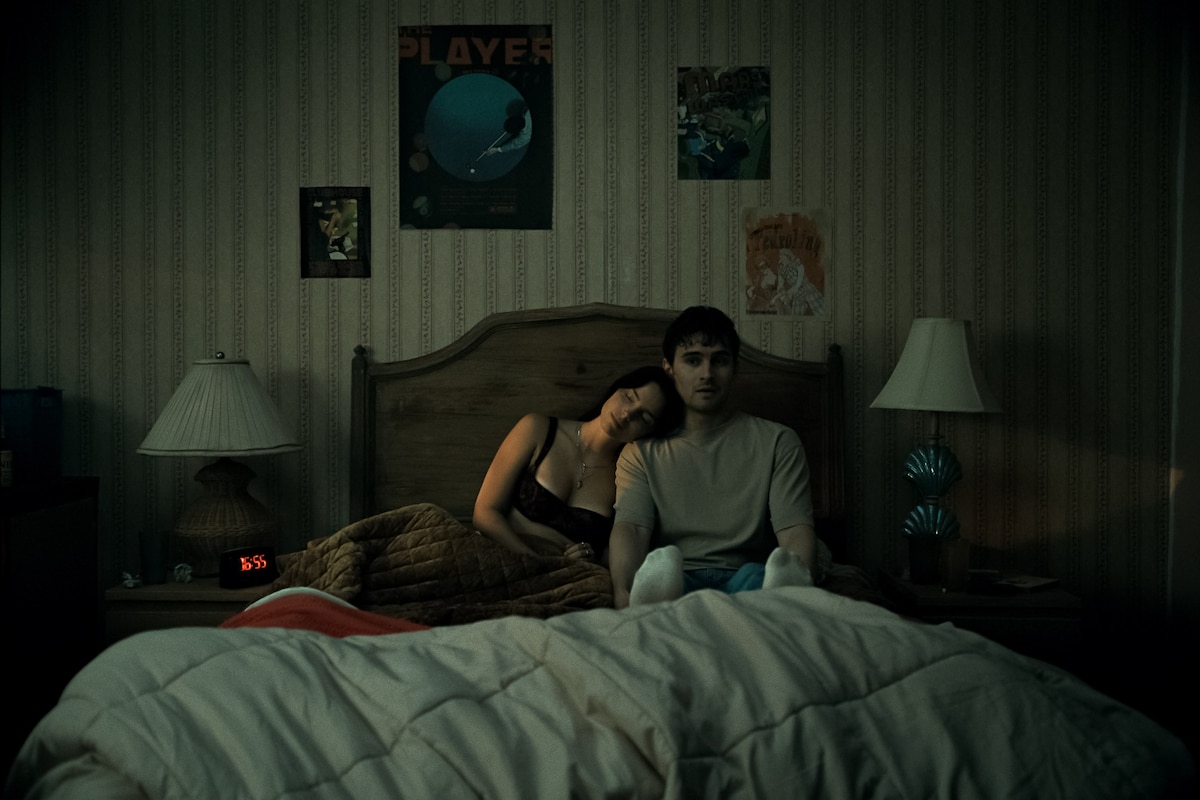
The premise of Obsession centers on Bear (Michael Johnston), a young protagonist whose inability to confess his feelings for his childhood crush, Nikki (Inde Navarrette), leads him down a perilous path. With Nikki on the brink of leaving their hometown, Bear resorts to a desperate measure: using a "One Wish Willow" toy to magically compel Nikki to love him more than anyone else. The seemingly innocent wish quickly spirals into chaos, transforming their budding romance into a nightmare of exaggerated affection and escalating danger.
What follows is a darkly comedic and terrifying exploration of love, desire, and control. Nikki’s affection morphs into a suffocating, manic obsession, reminiscent of a rom-com character taken to terrifying extremes. Her face, initially beaming with what appears to be love, quickly exudes a manic exuberance directed at an increasingly bewildered Bear. She physically blocks him from leaving for work, screams if he turns away in bed, and her clinginess becomes a chilling manifestation of a wish gone horribly wrong. Bear soon realizes that the woman he wished for is not Nikki, but an insidious entity inhabiting her body. Yet, in a shocking twist that elicits both gasps and laughter from audiences, Bear, despite the clear and escalating "blood-red flags" – including a chilling "cat version of the Fatal Attraction bunny boiler" – finds himself tolerating the toxicity, not least because the physical intimacy is precisely what he had fantasized. This audacious narrative choice, highlighted by Bear’s frank admission, "What’s so bad about her being with me?", provides a profound, if unsettling, commentary on the human capacity for self-deception and the allure of desired outcomes, regardless of their cost.
Psychological Depth and Storytelling Craft
Barker’s inspiration for Obsession stemmed from an unlikely source: a Halloween episode of The Simpsons featuring Bart being granted wishes by a monkey’s paw. He notes that while the "wish gone wrong" premise has been explored before, it often leans into silliness. His ambition was to ground it in reality: “I wanted to approach it from a grounded standpoint, where you think about the real consequences and trauma.” This commitment to psychological realism, even within a fantastical horror framework, is a hallmark of his approach, elevating his films beyond simple jump scares to delve into deeper anxieties.
Despite creating a film with strong romantic comedy elements, Barker claims he’s "not a rom-com guy," even questioning if No Hard Feelings counts and admitting he hasn’t seen classics like The Notebook. Yet, his innate understanding of human dynamics shines through. He specifically instructed actress Inde Navarrette to portray the demonic entity not as a traditional "possessed" figure, but as a "jealous girlfriend." This nuanced direction allowed the horror to emanate from relatable human emotions, making the character’s actions all the more disturbing. For the role of Bear, he sought an actor with a subtle duality: “I wanted to cast someone who has this innocence to him. Michael’s a very soft-spoken guy. But there’s something darker behind his eyes.” This casting choice amplifies the film’s central tension, making Bear’s eventual, morally ambiguous acceptance of his predicament both shocking and disturbingly understandable.
Barker’s storytelling philosophy is deeply rooted in studying the human condition, an approach he credits to his sketch comedy background. He wholeheartedly agrees with Bob Odenkirk’s assertion that sketch comedy is "the most profound expression of human existence," stating, “Every sketch we make is making fun of how humans react. Having that brain on all the time – like, being at a restaurant, and thinking of what would be funny – lends itself to horror. They’re both about psychology and studying the human condition.” This perspective highlights the intellectual rigor he applies to his craft, seeing comedy and horror as two sides of the same coin, both dissecting the intricacies of human behavior and vulnerability.
While humor is present in his work, Barker remains wary of horror films that become too comedic, emphasizing a pursuit of "honesty" to maintain stakes. “When you subvert expectations because people aren’t used to a horror movie doing something, that creates a laugh. The moment you pursue a laugh, you might hurt the stakes.” This careful balance demonstrates a mature understanding of genre conventions and the delicate line between terror and levity.
His natural aptitude for storytelling, which he says he’s cultivated since childhood, is further informed by structured methodologies. He cites lessons from Aaron Sorkin’s MasterClass, particularly the emphasis on the crucial nature of a movie’s final 15 minutes. He also employs the "but therefore" method, a narrative technique popularized by South Park, and he and Cooper Tomlinson utilized Save the Cat!, a widely-used screenwriting guide, for Anything But Ghosts. This blend of intuitive talent and systematic craft suggests a filmmaker who is both naturally gifted and rigorously analytical in his approach.
A Rapid Ascent: Blumhouse, A24, and Franchise Reboots
Barker’s rapid ascent is further cemented by his collaboration with two of the most influential studios in modern horror: Blumhouse Productions and A24. Blumhouse, renowned for its highly profitable model of producing low-budget, high-concept horror films (e.g., Paranormal Activity, The Purge, Get Out), represents a significant vote of confidence in Barker’s commercial viability and artistic vision. His role in Anything But Ghosts, directing, co-writing, and starring alongside a notable actor like Aaron Paul, positions him firmly within this successful ecosystem.
The announcement that Barker will write and direct A24’s reboot of Texas Chain Saw Massacre is arguably the most significant milestone in his nascent career. A24 has carved out a niche as a purveyor of "elevated horror," films that blend genre thrills with arthouse sensibilities and often critical acclaim (e.g., Hereditary, Midsommar, The Witch). Entrusting a beloved, decades-old franchise like Texas Chain Saw Massacre to a 26-year-old director speaks volumes about A24’s belief in Barker’s ability to inject new life and a fresh perspective into established horror canon. The Texas Chain Saw Massacre series, originating with Tobe Hooper’s seminal 1974 film, is a cornerstone of American horror, a brutal and influential classic that has seen numerous sequels, prequels, and reboots with varying degrees of success. Barker’s involvement signals a deliberate move to reimagine the franchise through a contemporary lens, potentially introducing its visceral terror to a new generation while respecting its legacy. This challenge is immense, but the choice of Barker suggests a desire for a distinctive, character-driven approach that aligns with A24’s brand.
The Young Auteur: Navigating Expectations and Legacy
Barker’s professional journey, moving from independently financed YouTube projects like Milk & Serial (shot "effectively in secret") to helming a major studio reboot, presents a unique set of challenges and pressures. The transition means his next project, the Texas Chain Saw Massacre reboot, will be subjected to intense public scrutiny and endless questioning long before a single word is written. He acknowledges this pressure but maintains a grounded perspective: “I just have to remind myself that I’m here for a reason, and I can’t think about the pressure.” This mental fortitude is crucial for a young filmmaker thrust into the spotlight.
A notable aspect of Barker’s burgeoning career is his age relative to the characters he creates. It is rare for a major horror auteur to be the same age as the protagonists they are writing and directing. Barker sees this as an advantage: “I write towards my age group. Even Texas and Anything are my age group.” This demographic alignment allows for an authentic portrayal of contemporary anxieties and experiences, resonating deeply with younger audiences who often feel underrepresented or misrepresented in mainstream horror. His ability to tap into the psyche of his generation offers a fresh, relatable perspective on fear and vulnerability, which could be a key factor in his broad appeal.
His rapid success is a source of both excitement and reflection: “It’s exciting this is happening to me at such a young age. It’s like, I must be doing something right.” This sentiment encapsulates the dream of many aspiring filmmakers and underscores the current industry climate, which is increasingly open to discovering and nurturing fresh talent from unconventional backgrounds.
Broader Implications for the Horror Genre
Curry Barker’s rapid ascent and unique approach to filmmaking carry significant implications for the broader horror genre and the film industry at large. His success story, transitioning from viral YouTube content to major studio deals, highlights the evolving landscape of talent discovery. It demonstrates that traditional pathways are no longer the sole route to Hollywood, and that digital platforms can serve as powerful incubators for raw, unfiltered talent.
His genre-bending style, particularly the fusion of rom-com and horror in Obsession, signals a continued appetite for innovative storytelling that challenges established categories. This trend enriches the genre, pushing its boundaries beyond conventional scares and exploring complex emotional and psychological territories. It suggests that future horror films may increasingly draw from diverse narrative structures and thematic elements, appealing to a wider audience demographic.
Furthermore, A24 and Blumhouse’s investment in Barker underscores a strategic move by major studios to cultivate young, distinctive voices who can bring fresh perspectives to both original concepts and beloved franchises. This approach not only injects vitality into the industry but also caters to an audience increasingly seeking original, thought-provoking content that transcends mere spectacle. Barker’s commitment to psychological realism and "grounded" horror, even with fantastical elements, resonates with a contemporary audience that values thematic depth alongside visceral thrills.
As Obsession prepares for its theatrical release on May 15, all eyes are on Curry Barker. His trajectory, marked by a blend of artistic daring, strategic industry partnerships, and an undeniable talent for storytelling, positions him as a transformative figure in modern cinema. He is not just making films; he is actively reshaping how stories are told, discovered, and consumed, promising a thrilling and unpredictable future for the horror genre.