









The art world is mourning the loss of David Hockney, one of Britain’s most celebrated and influential artists, who passed away peacefully last week on June 11, 2026, just one month shy of his 89th birthday. Born in 1937 in the working-class city of Bradford, West Yorkshire, Hockney’s seven-decade-long career was marked by an insatiable curiosity, a revolutionary spirit, and an unwavering commitment to depicting the beauty of the human experience and the world around him. From the iconic sun-drenched swimming pools of Los Angeles to the vibrant, expansive landscapes of his native Yorkshire, his oeuvre consistently challenged conventional perceptions and embraced a profound sensuality, cementing his status as a national treasure and a global artistic force. His indispensable legacy encompasses pioneering queer art, innovative approaches to photography, and a tireless exploration of new mediums, all driven by a singular pursuit of what he famously termed a "big, brilliant life."
Early Life and Formative Years: A Working-Class Visionary Emerges
David Hockney’s journey began far from the glittering art scenes he would later inhabit. Growing up in Bradford during the austere years preceding and following World War II, his childhood instilled in him a strong work ethic and a unique perspective on life. His father, a committed pacifist, played a significant role in shaping Hockney’s early political and social convictions. This grounding in a pragmatic, northern sensibility remained a cornerstone of his character throughout his life, famously contrasting with the hedonistic image sometimes ascribed to him.
His artistic talent was evident from an early age. He attended Bradford College of Art from 1953 to 1957, where he honed his skills and began to develop his distinctive voice. It was here, at the age of 16, that he famously countered a neighbour’s dismissive remark about art students being "lazy buggers" with a resolute, "Oh, I am going to work, don’t worry." This dedication would define his entire career. His academic prowess earned him a place at London’s prestigious Royal College of Art (RCA) in 1959, where he was part of a groundbreaking generation that included R.B. Kitaj and Allen Jones. It was during this pivotal period in London, steeped in the nascent Pop Art movement, that Hockney began to explore themes that would become central to his work: identity, desire, and the everyday.
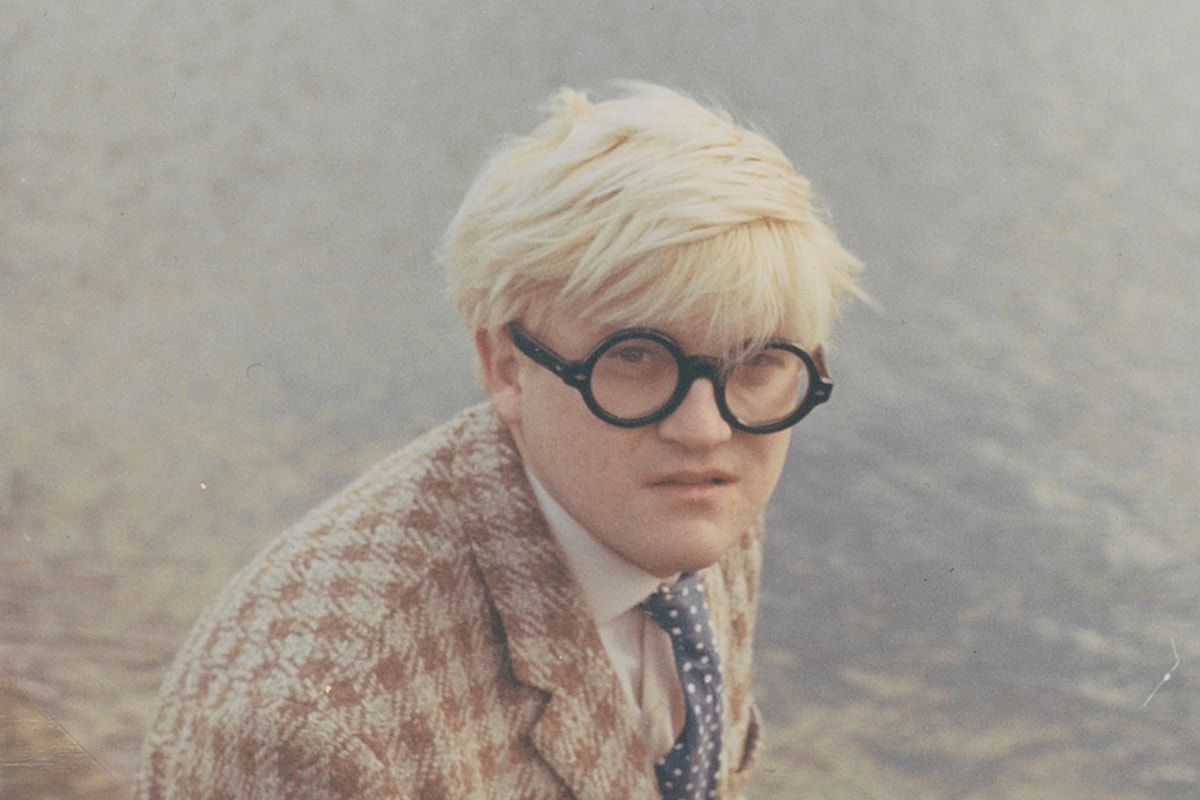
Crucially, Hockney’s RCA years coincided with a deeply repressive era for homosexuality in Britain. Before the Sexual Offences Act partially decriminalised homosexuality in England and Wales in 1967 (and even then, only for men over 21 "in private"), expressions of queer love were not merely taboo but illegal, carrying severe penalties. Yet, Hockney bravely began to integrate his personal desires into his art, producing works that were revolutionary in their tender and unapologetic portrayal of gay affection. Paintings such as We Two Boys Together Clinging (1961), a title borrowed from a Walt Whitman poem, depicted a fiercely romantic embrace between two men, a defiant act of visibility. Domestic Scene (1963) further pushed boundaries, showing one man showering while another washes his back, presenting an intimate and domestic portrayal of same-sex intimacy that was, at the time, considered shockingly deviant by wider society. These early works not only showcased his artistic courage but also positioned him as a pivotal figure in the burgeoning queer art movement, long before such representation became more widely accepted.
The California Dream: Pools, Light, and Artistic Liberation
The allure of California proved irresistible to Hockney, offering a stark contrast to the often-grey skies and social strictures of Britain. Drawn by the promise of sun, freedom, and a vibrant gay scene, he made his first transformative move to Los Angeles in 1964, a city he had never before visited. He spoke of being captivated by the "sleazy, sexy hot nightlife" depicted in John Rechy’s 1963 novel City of Night, which painted a vivid picture of liberation that resonated deeply with his own yearning for an uninhibited existence.
Los Angeles, with its endless sunshine and relative social openness, became an immediate muse and a haven for Hockney. He embraced the city’s unique aesthetic, particularly its ubiquitous swimming pools, which became synonymous with his artistic identity. "There were no paintings of Los Angeles. People then didn’t even know what it looked like," Hockney told Melyn Bragg in a 1975 interview with The Listener magazine. Upon his arrival, he vividly recalled seeing a freeway ramp soaring into the air and realizing, "My God, this place needs its Piranesi." He dedicated himself to providing this visual language, capturing the essence of Californian life with a vibrant, often Pop Art-inflected palette.
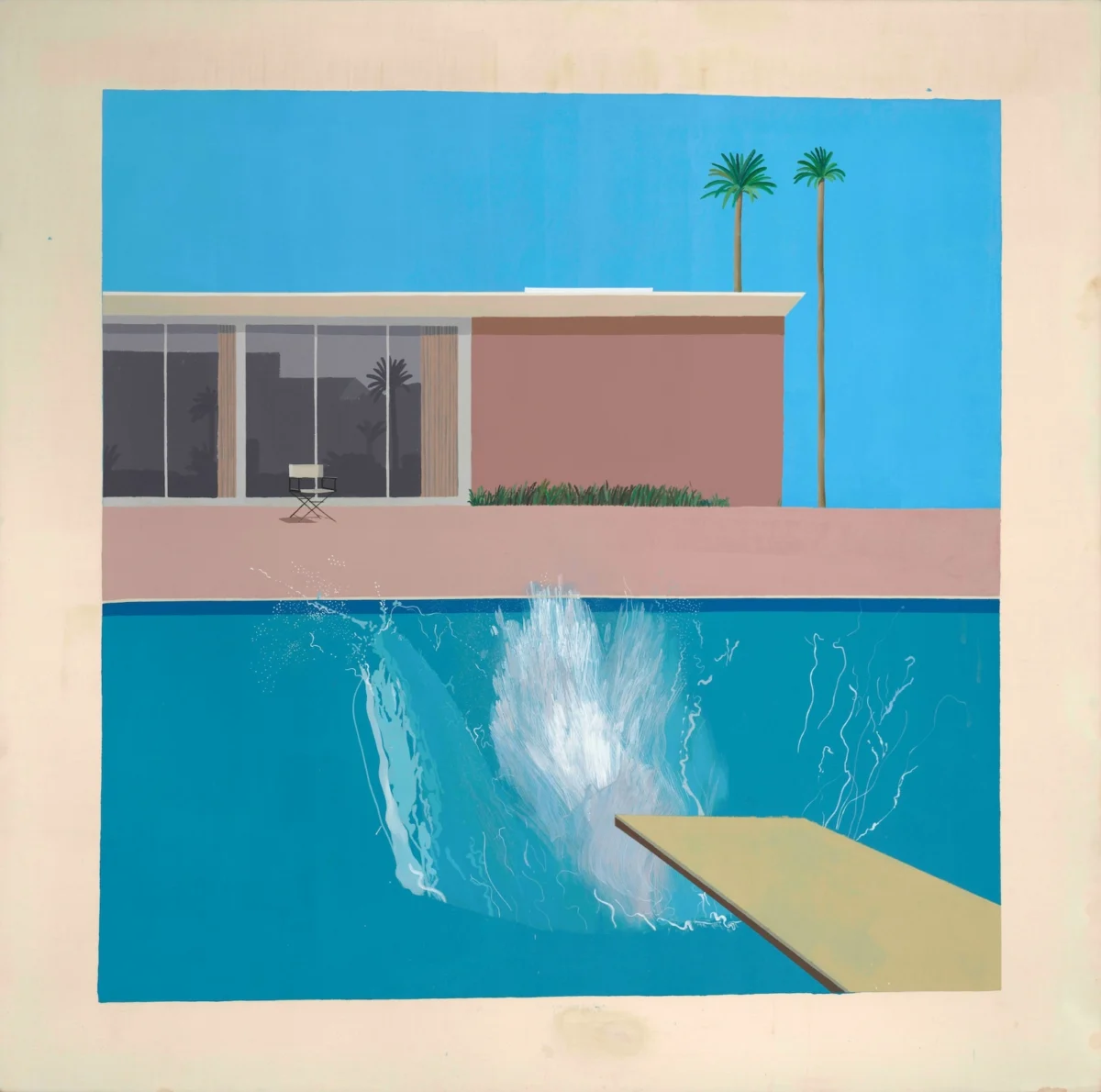
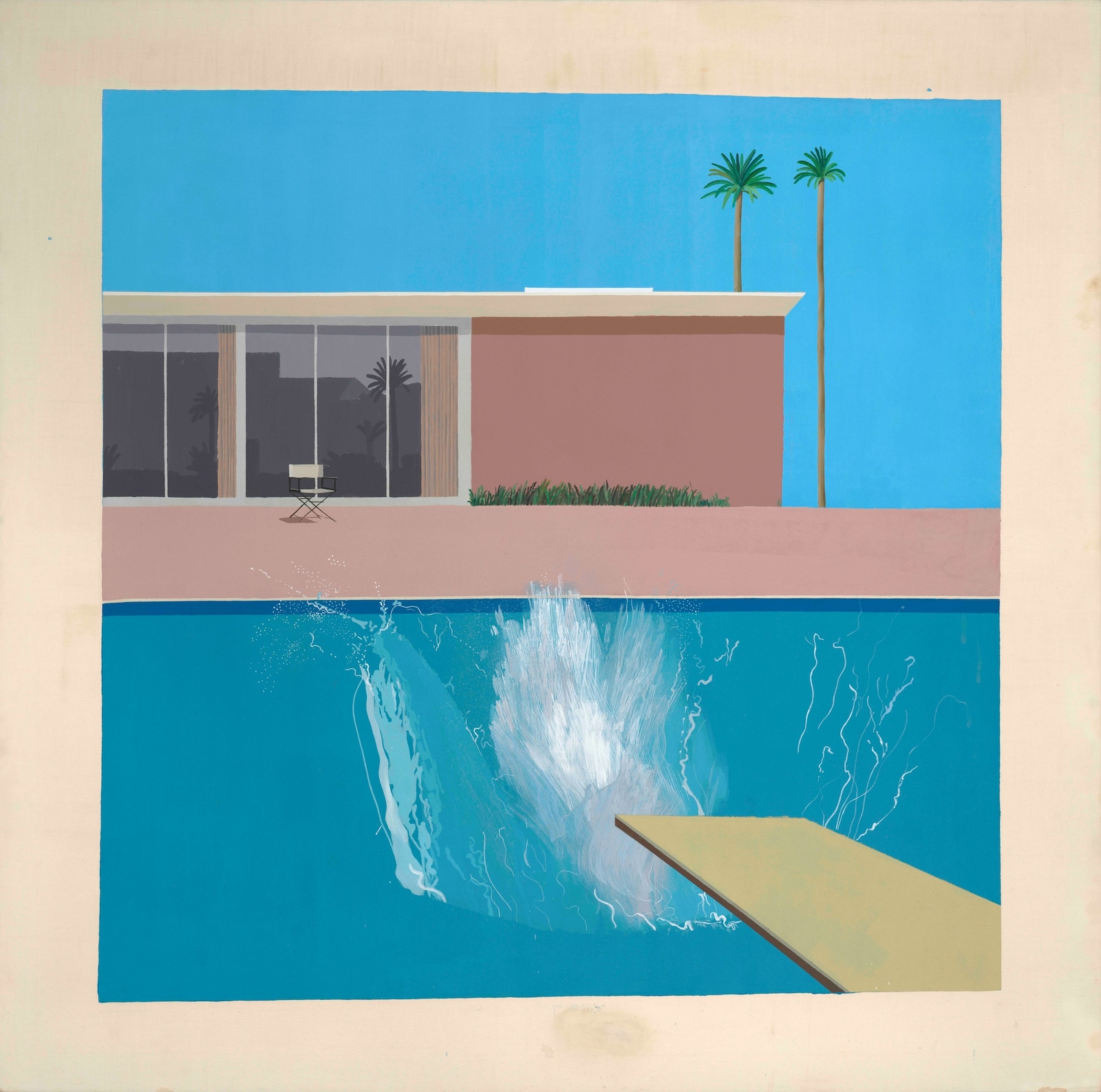
His iconic "pool paintings" from this period, characterized by electric blues, crisp lines, and the play of light on water, are among his most recognizable and beloved works. A Bigger Splash (1967), Man in Shower in Beverly Hills (1964), Sunbather (1966), and Peter Getting Out of Nick’s Pool (1966) not only captured the laid-back bohemia and aspirational lifestyle of Southern California but also continued his courageous depiction of queer desire within the domestic sphere. These works were revolutionary, imbuing the everyday scenes of leisure with a profound sense of sensuality and emotional depth. As curator Stephanie Barron aptly noted to The New York Times in a reflection following Hockney’s passing, these paintings are now "embedded in the psyche as symbols of Los Angeles." Other notable Californian works include the expansive acrylic painting Mulholland Drive: The Road to the Studio (1980) and numerous lithograph prints of swimming pools, all contributing to the city’s visual lexicon.
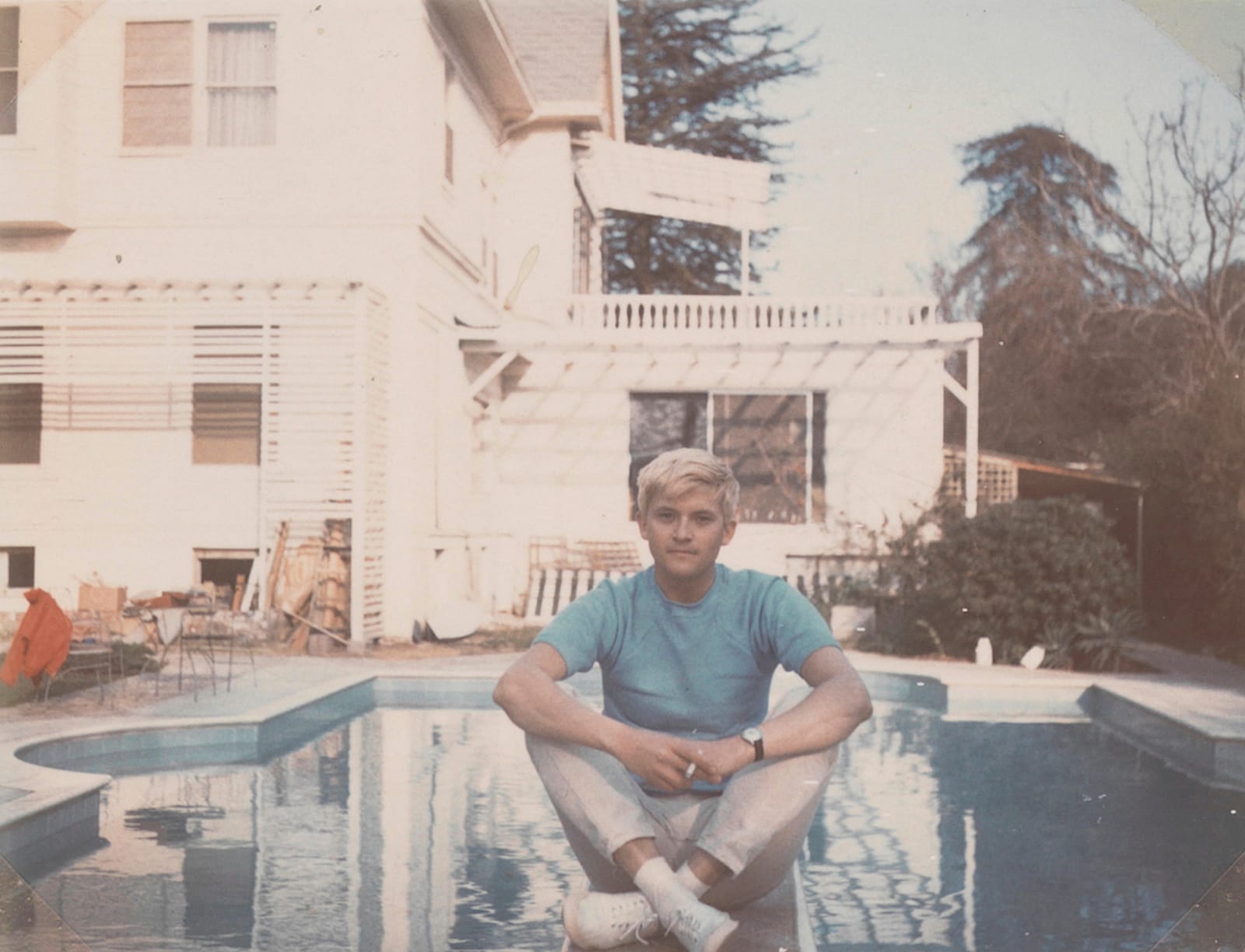
Hockney’s connection to California extended beyond his art; it became deeply intertwined with his biography. He acquired the comfortable status of a celebrated artist, often associated with bleached hair, chain-smoking, and moving among counter-cultural elites. However, he was quick to dispel the myth of the carefree hedonist. In a 2015 interview with The Guardian, he stressed his rigorous discipline: "I was never much of a party boy. I didn’t mind being seen that way, but I am actually a worker. An artist can approve of hedonism, but he can’t be a hedonist himself." This dedication to his craft, inherited from his working-class roots, allowed him to constantly innovate and remain relevant throughout his long career, even after achieving global recognition and breaking auction records, such as the 2018 sale of Portrait of an Artist (Pool with Two Figures) for $90.3 million, making him the most expensive living artist at the time.
A Return to Roots: The Yorkshire Landscapes and Digital Exploration
While Los Angeles provided him with artistic freedom and iconic subject matter, Hockney never truly severed ties with his British heritage. In later years, he embarked on a profound artistic re-engagement with his native Yorkshire, translating the rolling hills and changing seasons of the Wolds into monumental landscape paintings. These works, often executed on multiple canvases to form vast, immersive panoramas, showcased a vibrant Fauvist colour palette, pushing the boundaries of traditional landscape painting. Winter Timber (2009) is a prime example, demonstrating his ability to infuse the familiar British countryside with an exhilarating energy and a renewed sense of wonder.
This period also saw Hockney’s enthusiastic embrace of digital technology as a new artistic medium. He famously began creating art on his iPhone and later his iPad, sending digital "drawings" of sunrises and landscapes to friends. This was not a mere novelty for Hockney but a serious exploration of how technology could enhance and expand the act of drawing and painting. Martin Gayford, in A Bigger Message: Conversations with David Hockney, recounts a telling anecdote from 2009: Hockney sent Gayford an iPhone painting of a North Sea sunrise with the message, "Would Turner have slept through such terrific drama? Absolutely not! Anyone in my business who slept through that would be a fool. I don’t keep office hours." This statement encapsulates his lifelong dedication to observation and his willingness to use any tool at his disposal to capture the world’s "terrific drama." His digital works, exhibited globally, demonstrated that the essence of art lay not in the medium itself, but in the artist’s eye and intention.
A Maverick’s Mediums: Challenging Perception
Hockney’s artistic inquiry was consistently centered on the question of how we truly see the world. He was a lifelong skeptic of the camera’s ability to capture the richness of human perception in a single frame, arguing that photography, despite its claims of objective truth, often presented a limited, monocular view. This conviction led him to develop his distinctive photographic "joiners" and collages in the 1980s, such as the monumental Pearblossom Highway, 11-18th April 1986 (Second Version). This intricate photocollage, composed of hundreds of individual photographs pieced together, aimed to mimic the way the human eye moves and processes a scene over time, capturing multiple viewpoints and a more subjective, expansive reality. Similarly, My Mother Sleeping, Los Angeles, another joiner, explored intimate domestic moments with a multifaceted perspective.
These "joiners" were not just technical experiments; they were philosophical statements about the nature of seeing and representation. He argued that a single photograph flattens experience, whereas his collages, by fragmenting and reassembling images, came closer to the dynamic, multi-perspectival way humans actually perceive their surroundings. This groundbreaking work profoundly influenced subsequent generations of photographers and artists, challenging the very definition of photographic realism and emphasizing the active role of the viewer in constructing meaning.
In an infamous 1988 KCET broadcast of Videolog, Hockney took the host to the exact location where Pearblossom Highway was photographed. He eloquently articulated his belief in the profound privilege of being an artist, stating, "You’ll never meet an artist who’s dying saying, ‘God, I wish I’d been president of the Bank of America.’ But you might meet a dying president of the Bank of America who said, ‘You know, I’d rather have been a poet or an artist.’ It would be that way round, wouldn’t it?" This quote perfectly encapsulates his lifelong conviction in the intrinsic value and enduring power of artistic creation over material success.
The Unapologetic Persona: Wit, Work, and Cigarettes
Beyond his groundbreaking art, Hockney cultivated a public persona that was as distinctive as his paintings. Instantly recognizable with his signature blonde hair, often eccentric attire, thick-rimmed glasses, and an ever-present cigarette, he became an enduring cultural icon. His love for smoking was not merely a habit but, in his own words, an integral part of his creative process. In a 2015 interview with Channel 4, he explained, "I smoke because it’s part of the work. When I’m painting, I don’t smoke because my hands are doing it. But when I stop to think about it, I’d always smoke then." He elaborated that the pleasure of smoking helped him to focus on the artwork rather than his aging body, a testament to his single-minded dedication.
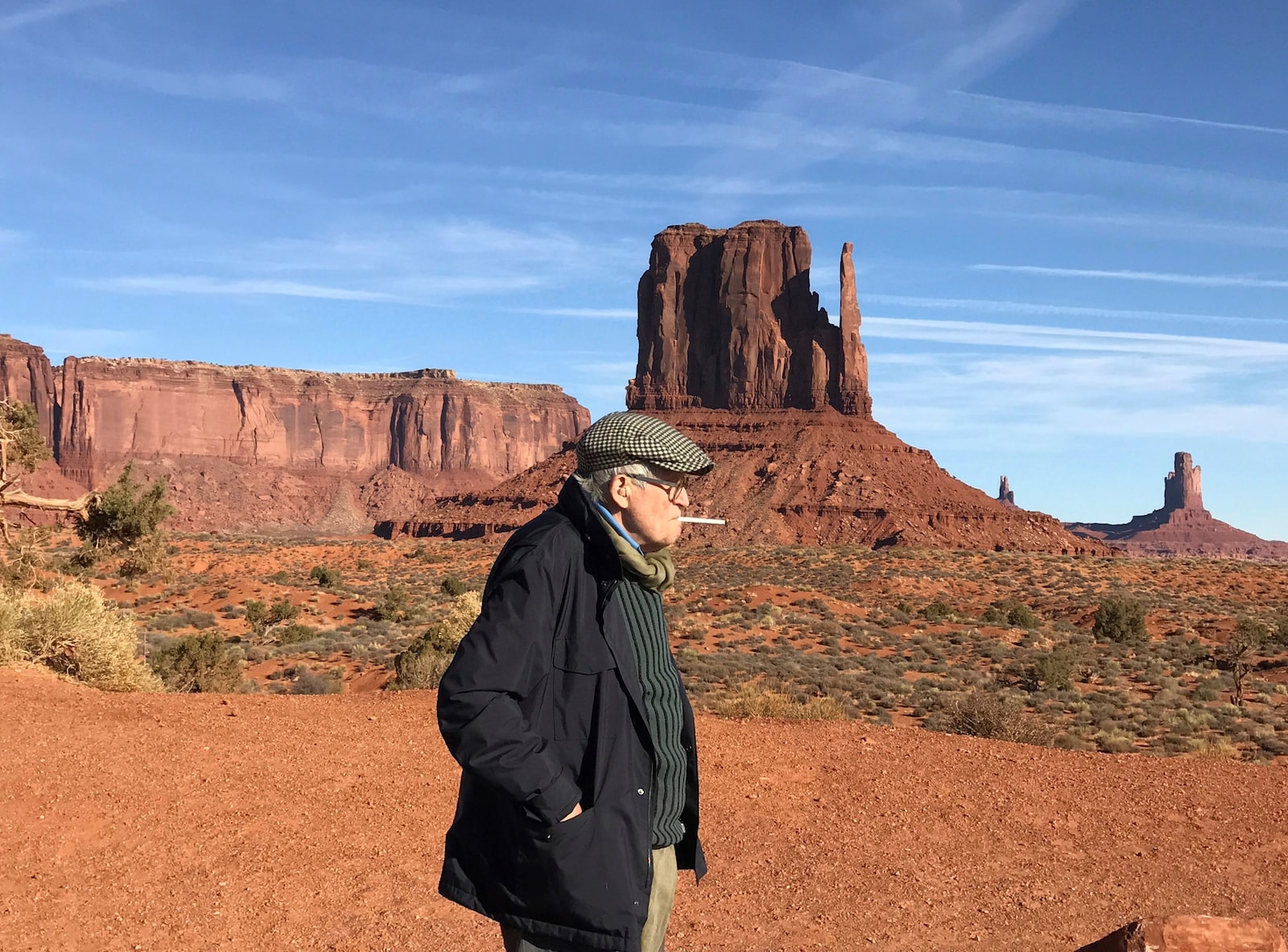
This unapologetic stance on personal liberty and his unique wit extended to his activism. He was a vocal advocate for the freedom to smoke, famously campaigning against smoking bans at the 2005 Labour Party Conference with a placard that read, "Death awaits you all even if you do smoke." His final painting, Play within a Play within a Play and Me with a Cigarette (2025), reportedly featured him with a cigarette, a poignant final nod to this lifelong companion. His reputation as a smoker was so legendary that a satirical news outlet, Newsbiscuit, published a mock obituary titled "Ashtrays are at half-mast as the art world mourns the passing of one of its finest and most innovative smokers," a headline Hockney would likely have appreciated. This irreverent spirit, combined with his profound artistic output, made him an endlessly intriguing figure.
Legacy and Enduring Influence
David Hockney’s passing marks the end of an era, yet his legacy will undoubtedly continue to resonate across generations. He was not only a prolific artist but also a tireless advocate for the power of visual art to connect us to the world and to each other. In a 1984 interview with The New Yorker, he firmly stated his belief that art should not become detached from daily life, insisting that painting is a fundamentally human act, a "10,000-year longing" traceable to cave paintings. "Art is about correspondences – making connections with the world and to each other," he explained.
His contributions span multiple dimensions:
- Queer Art Pioneer: His early, brave depictions of gay love broke significant ground, offering visibility and validation at a time of severe societal repression. He helped pave the way for greater LGBTQ+ representation in art and culture.
- Innovator of Perception: His "joiners" and consistent questioning of photographic realism forced a re-evaluation of how we understand images and perception itself, influencing digital art and visual theory.
- Master of Mediums: From oil on canvas to printmaking, fax machines, and iPads, Hockney fearlessly embraced new technologies, demonstrating that artistic vision transcends specific tools. He democratized digital art, showing its potential for serious artistic expression.
- Chronicler of Place: He gave visual identity to both the glamour of Los Angeles and the earthy beauty of the Yorkshire landscape, demonstrating a profound connection to his chosen environments.
- A National Treasure: Recognised with an Order of Merit in 2012, his work is held in major institutions worldwide, including the Tate Modern, The Metropolitan Museum of Art, and the Museum of Modern Art. His retrospectives at institutions like Tate Britain consistently drew record crowds, attesting to his enduring popularity and critical acclaim.
The art world has reacted with an outpouring of grief and appreciation. Curators, gallerists, and fellow artists have universally lauded his fearless experimentation, his vibrant palette, and his profound humanism. Tributes from institutions like the Royal College of Art and Tate, where he had significant retrospectives, have highlighted his unparalleled contribution to contemporary art. His influence is palpable in the work of countless artists who have followed, inspired by his courage to depict the personal, his innovative spirit, and his insistence on the sheer joy of looking.
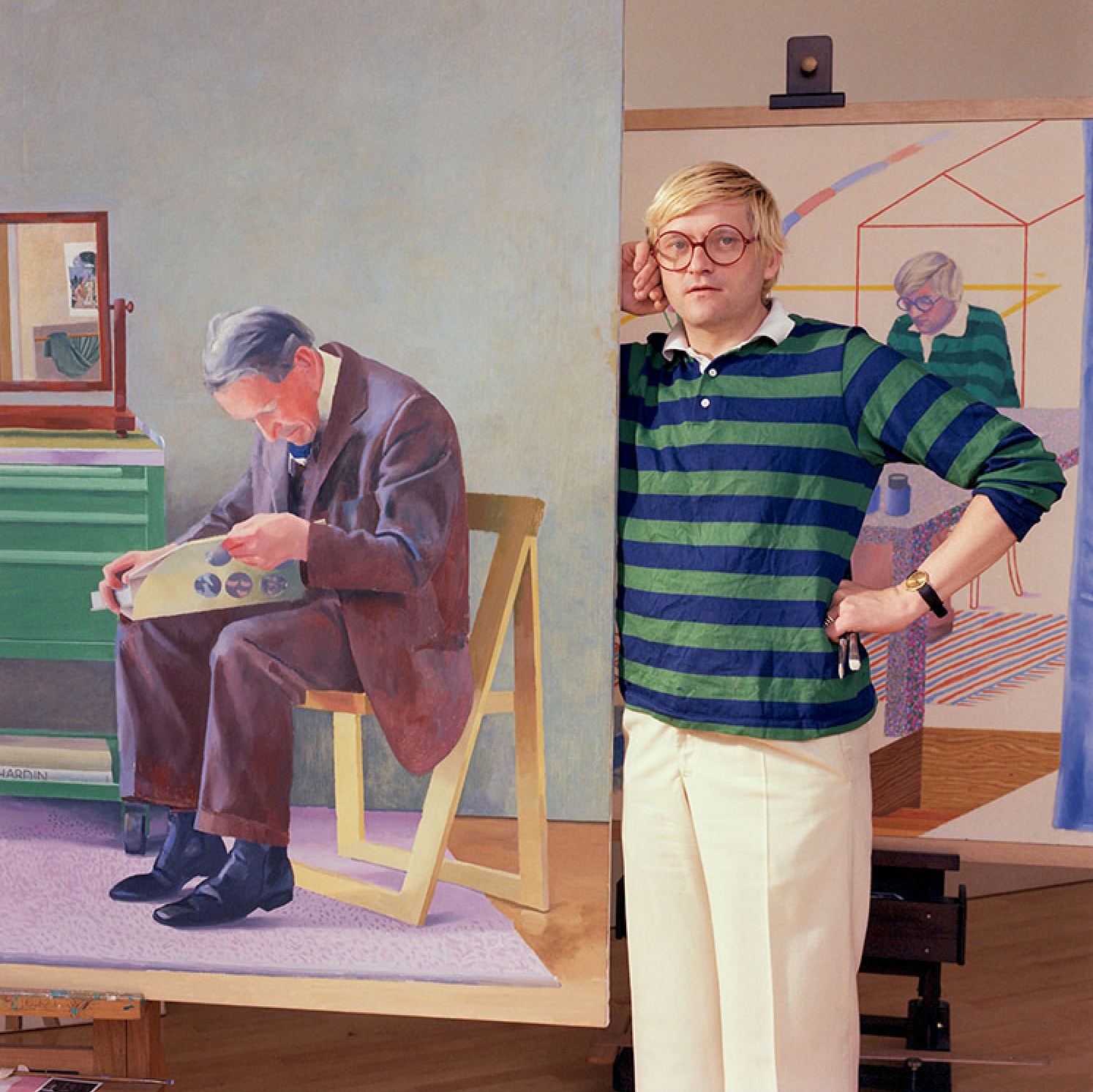
David Hockney lived a life dedicated to art, curiosity, and an unwavering belief in the power of observation. He challenged us to look harder, to see more deeply, and to embrace the vivid tapestry of existence. His departure leaves a void, but his "big, brilliant life" and monumental body of work will continue to illuminate, provoke, and inspire for generations to come. He will be remembered not only as a great artist but as a vital, singular voice who dared to paint the world as he saw it, and in doing so, taught us all how to see it anew.