









Diving, as a sport and a profession, is steeped in a rich tapestry of legends. Many of these tales originate from the nascent days of underwater exploration, a period when diving manuals were being written on the fly, and safety margins were discovered through daring, often risky, experimentation. It was during this era, on the cusp of diving’s transition from an extreme adventure to a more accessible recreational pursuit, that vintage Doxa dive watches emerged. Among these iconic timepieces, the Doxa SUB 200 T-Graph stands as a testament to a bygone age, a polarizing design that continues to captivate collectors.
The genesis of the SUB 200 T-Graph can be traced back to the success of the 1968 SUB 300T, a model that benefited from a strategic distributorship agreement with U.S. Divers Co. (now Aqualung) for the American market. Despite this significant achievement, Doxa found itself navigating increasingly challenging times within the Swiss watch industry. The late 1960s and early 1970s presented a period of consolidation and strategic alliances as brands sought to bolster their stability. In this climate, Doxa was acquired by the Synchron Group, a consortium that included esteemed marques such as Eberhard, Cyma, and Borel. This integration provided Doxa with a crucial infusion of stability and resources.

Emboldened by this newfound stability, Doxa embarked on an ambitious project, leading to the introduction of the T-Graph the following year. This innovative dive chronograph, rated to 200 meters, featured a two-register layout, a significant technical achievement for a dive watch of its time. The development of the T-Graph was facilitated by the collaborative spirit within the Synchron Group. Doxa was able to leverage a rebranded version of the Eberhard 310-82 column-wheel chronograph movement, a high-quality and reliable mechanism that formed the horological heart of the new timepiece.
A Limited Legacy and a Cult Following
The original Doxa SUB 200 T-Graph’s production run was notably brief. Estimates suggest that only approximately 300 units were manufactured across Doxa’s signature colorways: the deep Sharkhunter black, the bright Searambler silver, and the vibrant Professional orange. The demanding nature of diving as a profession meant that many of these watches likely endured the rigors of underwater use. The passage of time, coupled with the potential for deferred maintenance in the harsh environments they operated in, inevitably led to the attrition of a significant portion of these early models.
Despite its highly limited production and the challenging operational environment, the Doxa SUB 200 T-Graph has cultivated a dedicated cult following among dive watch enthusiasts and collectors. Its distinctive design, robust construction, and historical significance have cemented its status as a sought-after vintage piece.

A Texan Debut for the Modern Era
In a recent event held in Fort Worth, Texas, a select group of Doxa enthusiasts gathered for a private dinner hosted by Doxa and The Watch Preserve. This exclusive preview offered a glimpse into the highly anticipated Doxa SUB 200 T-Graph II models, specifically the Professional and Caribbean variants. Jacque O’Rourke, Doxa’s Senior Director of Retail and Wholesale for the Americas and Caribbean, was on hand to elucidate the historical context and key features of the new timepieces. The event underscored Doxa’s commitment to engaging with its passionate collector base and providing them with early access to significant product releases.
The setting in Fort Worth, a hub for watch culture in Texas, provided a fitting backdrop for the unveiling. This region has seen a burgeoning interest in horology, with dedicated groups and retailers fostering a vibrant community. The collaboration with The Watch Preserve, a well-regarded entity within this community, further amplified the significance of the event.
Design Evolution and Enhanced Wearability
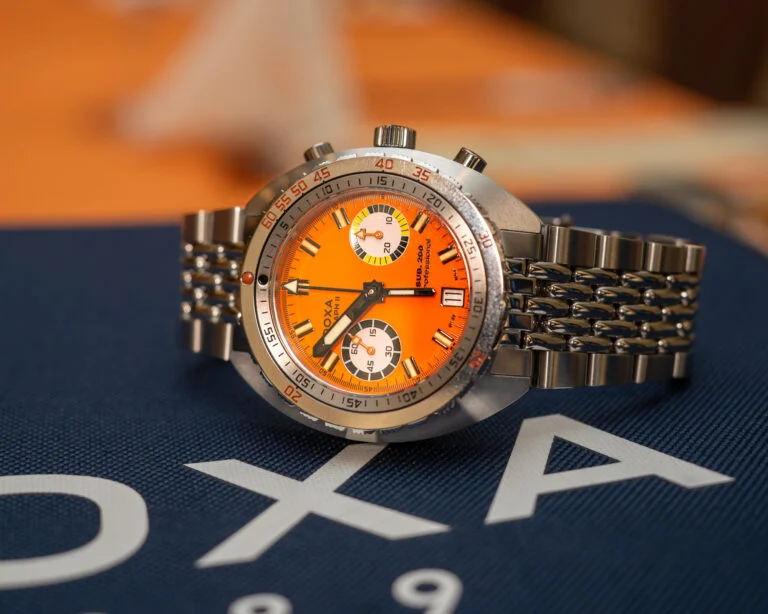
The new Doxa SUB 200 T-Graph II presents a carefully considered evolution of its legendary predecessor, aiming to blend historical aesthetics with modern sensibilities. The watch features a 42mm wide stainless steel case, a dimension that aligns harmoniously with other models in the SUB family from the same era, such as the SUB 300 and 300T. Notably, this new iteration is 1mm slimmer than the most recent T-Graph reissue, measuring a manageable 14.6mm in thickness. This reduction in profile contributes to its suitability as a contemporary dive chronograph.

A key aspect of Doxa’s design philosophy, particularly for its dive watches, is wearability. The T-Graph II, like many Doxa models, exhibits a surprisingly comfortable feel on the wrist, even for smaller wrists. This is largely attributable to its short lug-to-lug distance, measuring 44.5mm. This compact dimension prevents the watch from "overhanging" the wrist, ensuring a secure and balanced fit.
The T-Graph II retains the robust water resistance expected of a Doxa dive watch, offering a rating of 200 meters. This depth capability is more than adequate for both terrestrial adventures and a wide range of subaquatic activities. A significant enhancement from its vintage forebear is the inclusion of a screw-down crown. This modern safety feature prevents accidental opening of the watch while submerged, a critical consideration for any dive instrument. It is important to note, as with the vast majority of dive chronographs, the pushers for the chronograph functions are not rated for underwater use, a standard safety protocol in watchmaking.
The Iconic Dial and Colorways
The dial of the T-Graph II pays homage to the classic layout of its vintage counterpart. It features a distinctive design with alternating black and yellow rings encircling the running seconds sub-register at 9 o’clock and the 30-minute counter at 3 o’clock. These contrasting rings not only add visual interest but also serve a functional purpose in quickly differentiating the sub-dials.

Dominating the dial is Doxa’s iconic, oversized orange minute hand. This signature element is of paramount importance in diving, as it is the primary tool for tracking bottom time, the most critical metric for diver safety. The T-Graph II revives the beloved colorways that graced the original early 1970s models: the deep Sharkhunter black, the bright Searambler silver, and the classic Professional orange. A notable addition to this esteemed lineup is the all-new Caribbean blue variant, offering enthusiasts a fresh and appealing aesthetic choice.
A Functional Bezel with Historical Significance
The unidirectional rotating bezel of the T-Graph II is a critical component of its dive-oriented functionality. It features Doxa’s distinctive no-decompression scale, calibrated in meters. This scale is based on period dive tables and, in conjunction with the watch’s depth gauge capabilities, allowed divers to conduct single dives without the need to consult separate decompression tables.
For instance, if a diver planned a dive to 60 feet, they would rotate the bezel so that the triangular pip aligned with the minute hand at the commencement of the dive. By then locating the "60" marker on the upper track of the bezel, which conveniently aligns with the pip, the diver would know they had approximately one hour of bottom time available for that dive.

The Evolving Role of Dive Bezel Features
While the no-decompression scale offers a fascinating glimpse into historical diving practices, it’s crucial to understand its limitations in modern diving. This feature does not account for the residual nitrogen load that accumulates in a diver’s bloodstream during a dive. Failing to consider this factor can lead to decompression sickness, commonly known as "the bends." Furthermore, this type of bezel is not designed for planning subsequent dives, which require more complex decompression calculations.
In contemporary recreational diving, dive tables have largely been superseded by dive computers. These electronic devices offer a far more sophisticated and accurate method of managing dive profiles, decompression obligations, and overall diver safety. Consequently, the no-decompression scale on watches like the T-Graph II, while historically significant and an integral part of its design, serves more as an artifact of diving’s past than a primary operational tool for today’s divers.
The Bracelet and Movement: Modern Enhancements
The T-Graph II is presented on Doxa’s signature beads-of-rice bracelet. This bracelet is equipped with a ratcheting adjustment mechanism, activated by a secondary set of pushers integrated into the clasp. This feature allows for quick and easy adjustments to the bracelet size, accommodating changes in wrist circumference due to temperature variations or activity levels. While functional, the design of this modern bracelet may not possess the same level of elegance or the supreme comfort attributed to some vintage Doxa bracelets, which often incorporated both a ratchet mechanism and spring-loaded elements for a more adaptive and precise fit.

At the heart of the Doxa SUB 200 T-Graph II beats the Sellita SW510 movement. This robust automatic caliber features a 30-minute counter located at the 3 o’clock position, a running seconds indicator at 9 o’clock, and a date window discreetly placed at the 6 o’clock position. The SW510 operates at a frequency of 4Hz and, in this configuration, offers a power reserve of approximately 56 hours.
The choice of the Sellita SW510 movement is a strategic one that contributes to both the affordability and the refined profile of the T-Graph II. Compared to the limited-edition T-Graph from 2019, the new model is approximately 1mm thinner. This reduction in thickness enhances the overall wearability and aesthetic appeal of the watch. When placed side-by-side with the previous reissue, the subtle differences become apparent, but the wearability improvements engineered into the T-Graph II position it as a refined successor.
A Highly Anticipated Release
The unveiling of the Doxa SUB 200 T-Graph II has generated significant excitement within the watch community, particularly among those who appreciate Doxa’s heritage and its contribution to dive watch history. The combination of its historical design cues, enhanced modern features, and a relatively accessible price point positions this timepiece as a strong contender in the market.

The Doxa SUB 200 T-Graph II is offered starting at $4,250 USD on a rubber strap, with the beads-of-rice bracelet option priced at $4,290 USD. The modest price differential between the strap and bracelet options makes the bracelet the more compelling choice for many. While positioned slightly above other current models within the SUB family, the T-Graph II stands out as a non-limited edition, offering exceptional value for an automatic dive chronograph with such a storied lineage.
The anticipation surrounding this release suggests that Doxa has successfully captured the essence of its legendary T-Graph while making it more accessible and wearable for a contemporary audience. The ultimate decision for enthusiasts will likely hinge on their preferred colorway and the immediate desire to take this piece of diving history into the water. For further details and to explore the full range of options, interested parties are encouraged to visit the official Doxa website.