








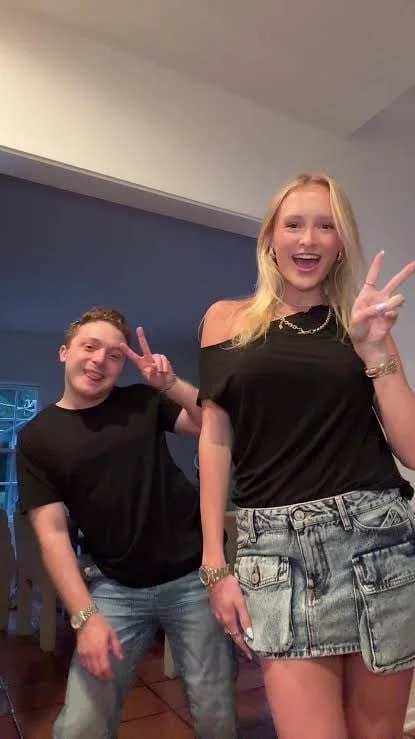
Isabelle Kube, a 29-year-old marketer based in Copenhagen, recently experienced a notable workplace connection, one that transformed a colleague into a genuine friend. The catalyst was a seemingly innocuous phrase: “That’s common sense, I fear.” To those unfamiliar with specific corners of the internet, the expression might pass unnoticed. However, for a growing segment of digitally fluent individuals, it instantly signals a shared cultural understanding. The phrase is a direct reference to a viral conversation between popular influencers and best friends, Jake Shane and Brett Chody, on Shane’s podcast Therapuss. The now-ubiquitous expression originated when Chody, a long-distance runner, surprised Shane by revealing that all marathons share the same standardized length, adding her now-iconic, deadpan remark. Today, this soundbite has been used over 17,000 times on TikTok, serving as an immediate identifier for members of the duo’s extensive fanbase. When Kube uttered it at work, her colleague instantly recognized the reference, forging an immediate bond. “We bonded over the fact that our For You Pages are identical, and that we follow the same people,” Kube explains. “Sometimes [when we’re talking], another colleague will be sitting there asking, ‘What are you guys talking about?’, and we’re like, ‘You’re not online enough.’”
Kube’s experience is far from isolated. Across the digital landscape, a burgeoning phenomenon sees audiences captivated by the on-screen friendships of leading content creators. As the creator economy continues its meteoric rise, some of today’s most successful influencers are those who operate within a duo or a larger, tight-knit friend group, openly sharing the intimate texture of their relationships online. Prominent examples include Dom Roberts and Maya Umemoto Gorman of Upstairs Neighbors, Brooke Averick and Connor Wood of Brooke and Connor Make a Podcast, and, of course, the aforementioned Jake Shane and Brett Chody. By showcasing their authentic bonds, these creators build unique, insider lexicons and cultivate an even deeper sense of fandom among their followers. As the Therapuss soundbite illustrates, a single phrase can become a powerful signal of belonging, fostering a sense of community that transcends geographical boundaries. The engagement with these friendships is so intense that for pairs like Chody and Shane, or Ride’s Benito Skinner and Mary Beth Barone, fan edits – once reserved for highly "shipped" romantic celebrity couples – are now commonplace. This pervasive fascination prompts a critical question: why are audiences so profoundly obsessed with watching influencer friendships unfold on their screens?
The Evolution of Digital Camaraderie: From Assembled Groups to Authentic Bonds
The concept of creator friendships captivating online audiences is not entirely novel. Kudzi Chikumbu, former director of creator community at TikTok and now VP of creator partnerships at Tubi, notes, “Creator friendships have existed on the internet from the time that I started working on it.” Chikumbu points to groups like O2L (Our2ndLife), a mid-2000s YouTube channel that featured emerging stars such as Connor Franta and Kian Lawley, as an early precedent. Similarly, TikTok saw the rise of creator houses like the Hype House, which famously housed the D’Amelio sisters, Lil Huddy, and Addison Rae.
However, a significant shift has occurred. While earlier iterations often involved influencers explicitly assembled into groups by management or for strategic content production, the friendships gaining traction today tend to be more organic. These are often pre-existing friendships that transition into the online sphere, lending them an air of authenticity that resonates deeply with audiences. This perception of genuine connection is further amplified by the nature of short-form, vertical content platforms like TikTok, which offer an unparalleled level of immersion. “You almost have this positively parasocial relationship with a friendship as if you’re one of them,” Chikumbu elaborates. “It’s like you’re getting to eavesdrop on a real friendship, but you’re also part of the friendship.” This distinction between manufactured groups and authentic pairings is crucial in understanding the contemporary appeal. Audiences increasingly seek genuine interactions and unscripted moments, a trend that influencer friendships capitalize on. The casual, unpolished nature of many of these shared moments fosters a feeling of intimacy and accessibility that highly produced content often lacks.
The Aspirational Pull: Friendship as a Modern Commodity
Rebecca Jennings, a prominent reporter covering the creator economy and internet culture, echoes this sentiment, observing, “It’s like this dream friendship where we don’t have to do any of the work, but we get to feel like we’re part of it.” Jennings further posits a compelling theory for the heightened obsession: in 2026, friendship itself may have become an aspirational commodity. “Influencers have always been admired for flaunting what they have, and right now, something that a lot of people want and don’t feel they have enough of is friends,” she states. This observation aligns with broader societal trends. According to recent sociological studies, there has been a notable decline in social connections and an increase in reported loneliness across various demographics. Data from organizations like the U.S. Surgeon General’s office and various international health bodies indicate a rising prevalence of social isolation, exacerbated by factors such as remote work, increased digital interaction over in-person contact, and shifting cultural norms.
Furthermore, Jennings notes, “Fewer people are getting married and fewer people are dating… So instead of being interested in romantic ships, audiences are more interested in these aspirational friendships they’re seeing on their feeds, which they feel like they can root for without it having to be the end-all be-all of their life in the way a romantic ship might be.” This shift suggests a recalibration of societal priorities and desires. As traditional romantic relationships become less central to individual narratives for many, the stability, joy, and mutual support embodied by strong friendships gain increasing value and visibility. Influencers, by openly sharing these aspects of their lives, tap into a deep-seated human need for connection and belonging, presenting a relatable yet idealized vision of camaraderie that resonates with a generation seeking authentic bonds. The perceived lower stakes of "shipping" a friendship, compared to a romantic coupling, also allows for a more relaxed and joyful form of engagement.
Building Bridges: From Online Fandom to Real-Life Connection
The aspirational quality of influencer friendships extends beyond mere passive observation; it actively fosters real-life connections among followers. Isabelle Kube’s experience with her coworker is a prime example of this phenomenon. Similarly, Anjolie Ware, a college student in Georgia, deepened her bond with her now-roommate through their shared admiration for Brooke Averick and Connor Wood. Once mere online mutuals, their common fandom served as a powerful catalyst for a closer friendship.
Fandom has historically been a fertile ground for forming connections, with examples ranging from fan clubs of musical acts like One Direction on Tumblr pages to online gaming communities. However, Ware highlights a critical difference in the current landscape: the sheer volume and accessibility of content from influencers. “My roommate and I have a lot of shared interests in music, too,” the 20-year-old explains. “But because the influencers are posting content every week, there’s honestly something for us to participate in more often. It’s almost like its own cultural thing that we talk about more day to day.” The continuous stream of content – be it podcasts, vlogs, or short-form videos – provides a constant wellspring of shared references, inside jokes, and discussion points, transforming passive consumption into active, ongoing engagement that translates seamlessly into offline interactions.
Ella Willabrand, a 29-year-old living in San Francisco, experienced a similar journey. She and her now-best friend bonded when they both inadvertently dropped phrases from Emergency Intercom, a podcast hosted by Enya Umanzor and Drew Phillips, into conversation, immediately recognizing each other as fellow fans. Willabrand’s engagement extends further; she is also a fan of Upstairs Neighbors and, last year, made a new friend at one of the creators’ live shows, where attendees were actively encouraged to mingle. “It was low-key like a church service,” Willabrand recalls of the night, highlighting the almost spiritual sense of community and shared experience among fans. These anecdotes underscore how influencer friendships serve as a powerful social lubricant, providing a common language and a shared cultural space that facilitates the formation of genuine, real-world relationships.
The Economic and Cultural Impact of Ensemble Influencing
Beyond their social resonance, influencer friendships also represent a significant and evolving segment of the creator economy. The combined appeal of two or more personalities often results in amplified reach, increased engagement rates, and diversified content opportunities. For brands, partnering with a duo or group offers a unique value proposition: access to a highly engaged, often deeply loyal, and implicitly trusting audience. The authenticity perceived in these friendships can transfer to product endorsements, making sponsored content feel less like an advertisement and more like a trusted recommendation from a friend. This leads to higher conversion rates and greater brand affinity.
Podcast ventures, in particular, have proven to be a highly successful format for showcasing these friendships. The conversational nature of podcasts lends itself perfectly to the unscripted banter and genuine rapport that defines these relationships. According to industry reports, the global podcast market is projected to grow significantly, reaching an estimated $4 billion by 2024, with conversational and personality-driven shows dominating listenership. This growth trajectory provides a lucrative platform for influencer duos to monetize their chemistry through advertising, subscriptions, and exclusive content. Live shows, merchandise, and even joint brand collaborations further diversify revenue streams, demonstrating the robust economic model underpinning ensemble influencing. The combined creative output and synergistic appeal often allow these groups to command higher rates and secure more comprehensive deals than individual creators.
Challenges and the Future Outlook
While the appeal of influencer friendships is undeniable, the landscape is not without its challenges. The pressure to maintain authenticity under constant public scrutiny can be immense. What begins as a genuine friendship can become a commercial enterprise, requiring a delicate balance between personal boundaries and content creation demands. The risk of burnout, conflicts arising from differing creative directions, or the inevitable evolution of personal relationships all pose threats to the longevity of these online dynamics. Furthermore, the intensely parasocial nature of these relationships, while largely positive, can sometimes lead to unhealthy expectations or intrusive fan behavior, requiring creators to navigate complex boundaries.
Looking ahead, the trend of aspirational influencer friendships is likely to persist, evolving alongside the broader digital media landscape. As platforms continue to innovate and audience preferences shift, creators will likely explore new formats and interactive experiences to deepen their connections. The integration of AI in content creation might pose questions about authenticity, yet the inherent human need for genuine connection suggests that real friendships, however mediated by technology, will retain their unique allure.
In conclusion, the phenomenon of influencer friendships is far more than a fleeting internet trend. It represents a profound cultural shift, reflecting contemporary desires for connection, authenticity, and community in an increasingly digitized and often isolating world. These online bonds, from the viral phraseology of Therapuss to the communal gatherings for Upstairs Neighbors, serve not only as entertainment but as powerful conduits for fostering real-world friendships and cultivating a sense of belonging. While it can be easy to dismiss the obsession with influencer friendships as merely parasocial, the underlying reason for this widespread preoccupation is remarkably simple and deeply human: it feels profoundly good to be part of something. As Ella Willabrand aptly summarizes, “It feels like you’re part of an inside joke alongside thousands of other people,” a sentiment that speaks to the enduring power of shared experience and human connection in the digital age.