










Bally, Pennsylvania — As the global composites industry gathers at the Georgia World Congress Center (GWCC) in Atlanta from September 21 to 24, 2026, Bally Ribbon Mills (BRM) is positioning itself at the epicenter of structural innovation. During CAMX 2026—the Composites and Advanced Materials Expo—the Pennsylvania-based manufacturer is utilizing booth K46 to demonstrate its proprietary 3-D woven technology, a critical advancement in the evolution of lightweight, high-strength aerospace components.
CAMX, widely recognized as the premier event for the composites and advanced materials community, serves as the annual venue for manufacturers, researchers, and government agencies to converge. For BRM, the 2026 exhibition represents more than just a product showcase; it is a platform to highlight how decades of textile engineering are solving the most pressing challenges in thermal protection, structural weight reduction, and extreme-environment durability.
The Evolution of 3-D Weaving: A Historical Perspective
The trajectory of Bally Ribbon Mills has been marked by a transition from traditional narrow fabric weaving to the development of complex, multi-dimensional structures. For over a century, the company has operated out of the Bally region, but the last two decades have seen a strategic pivot toward high-performance composites.
The chronology of this innovation is underscored by significant industry recognition. In 2016, the company’s trajectory in the space sector was solidified when it was honored with a JEC Innovation Award in the Space category. This accolade recognized the company’s ability to move beyond 2-D laminates, which are prone to delamination under extreme stress, toward integrated 3-D architectures.
This momentum culminated in a major milestone in 2023, when BRM was awarded the NASA Government Invention of the Year for its contribution to the 3D Orthogonally woven 3DMAT (3D-woven Multi-functional Ablative Thermal Protection System) Quartz Material. This technology was specifically engineered for the compression pads of the Orion Multi-Purpose Crew Vehicle (MPCV), a cornerstone of the Artemis program aimed at returning humans to the moon and eventually Mars.
Technical Superiority of 3-D Woven Structures
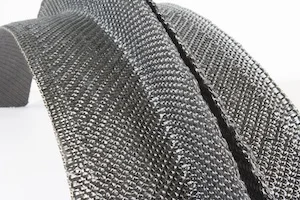
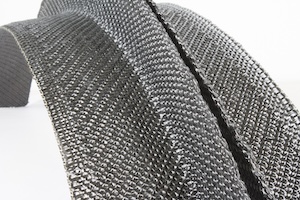
The core of BRM’s competitive advantage lies in its ability to manipulate fibers across all three spatial dimensions during the weaving process. Unlike traditional composites, which rely on stacking layers—a method that creates "interlaminar" weaknesses—3-D continuous weaving creates an integrated structural matrix.
By weaving fibers in the X, Y, and Z planes, BRM produces complex net shapes, including Pi (π), double-T, and H-sections. These shapes are not merely geometric; they are load-bearing, engineered solutions. The technical implication of this integration is significant:
- Load Path Integrity: Because the reinforcement is continuous throughout the entire thickness of the component, load paths are distributed more efficiently across joined substructures, preventing the catastrophic failure points often found in bonded or bolted metallic joints.
- Weight Reduction: The ability to replace heavy metallic brackets and fasteners with carbon fiber composite structures offers a direct reduction in the "dead weight" of aircraft and spacecraft. In the aerospace sector, where every kilogram saved equates to substantial fuel savings or increased payload capacity, this weight-to-performance ratio is the primary driver of adoption.
- Tailored Architecture: Each woven component is programmed at the loom level. Engineers can vary yarn types, density, and thickness to create "graded" properties, where one side of a component might be optimized for heat resistance while another is optimized for mechanical stiffness.
Thermal Protection Systems (TPS) and Mission Criticality
The most demanding application for BRM’s technology remains Thermal Protection Systems (TPS). During atmospheric reentry, spacecraft face temperatures exceeding 2,000°C. The 3DMAT technology developed with NASA is a testament to the efficacy of woven quartz in these environments.
The mechanism of protection involves a sacrificial ablative process. As the material heats up, the outer layers char and erode, carrying heat away from the structural core of the vehicle. By using a 3-D woven architecture, BRM ensures that the ablative material remains anchored to the vehicle’s structure, preventing the "spalling" or premature shedding of the heat shield that could lead to structural breach.
The collaboration between BRM and NASA highlights a broader shift in government procurement. Rather than relying solely on large-scale aerospace prime contractors, NASA has increasingly leveraged the agility of small businesses that possess highly specialized technical niches. This model has proven successful in rapidly iterating on new material concepts, moving from the laboratory to flight-ready hardware in record time.
Broader Industry Implications and Market Trends
The implications of BRM’s presence at CAMX 2026 extend beyond space exploration. The automotive, defense, and commercial aviation sectors are all facing pressure to lower carbon emissions and improve fuel efficiency.
As the industry moves toward "Industry 4.0," the repeatability and precision of automated 3-D weaving have become increasingly valuable. Traditional hand-layup methods are prone to human error, which can introduce microscopic voids in the composite structure. By contrast, computerized weaving ensures that every meter of fabric produced is identical to the last, satisfying the stringent quality control requirements mandated by the Federal Aviation Administration (FAA) and defense agencies.
Furthermore, the replacement of metallic components in aircraft engines—a high-vibration, high-temperature environment—represents a significant market opportunity. Replacing heavy titanium or superalloy components with carbon-fiber-reinforced polymers can reduce the mass of an engine’s hot section, allowing for higher rotation speeds and better thermodynamic efficiency.
Strategic Outlook: The Road Ahead
As the 2026 event progresses, the discussions at booth K46 center on the scalability of these advanced fabrics. While 3-D weaving was once considered a boutique technology suitable only for small-batch space missions, the current trend is toward high-volume automation.
Industry analysts observe that the integration of 3-D woven materials into primary structures—such as wing spars and fuselage frames—will be the next major hurdle. Currently, these materials are predominantly used in secondary structures, fairings, and thermal components. However, as test data from recent missions continues to validate the structural integrity of 3-D woven joints, adoption in primary load-bearing structures is expected to grow.
BRM’s ongoing research into hybrid yarns, which combine carbon fibers with high-temperature polymers or metallic filaments, suggests that the company is preparing for a future where materials are not just structural, but also capable of sensing environmental conditions or conducting electricity for de-icing systems.
Conclusion
The participation of Bally Ribbon Mills at CAMX 2026 serves as a microcosm of the current state of the advanced materials industry. By blending the time-honored craft of weaving with state-of-the-art computational engineering, the company is addressing the fundamental requirements of modern aerospace: safety, efficiency, and sustainability.
As stakeholders leave Atlanta, the conversations initiated at booth K46 will likely influence the design parameters of the next generation of aircraft and exploration vehicles. With a proven track record of government collaboration and a portfolio of award-winning technologies, Bally Ribbon Mills remains a key player in the transition toward a more advanced, composite-driven future. The company continues to encourage partners, engineers, and industry leaders to explore the full capabilities of its 3-D woven composite solutions, signaling that the potential for these materials is only beginning to be realized in the context of global industrial manufacturing.