







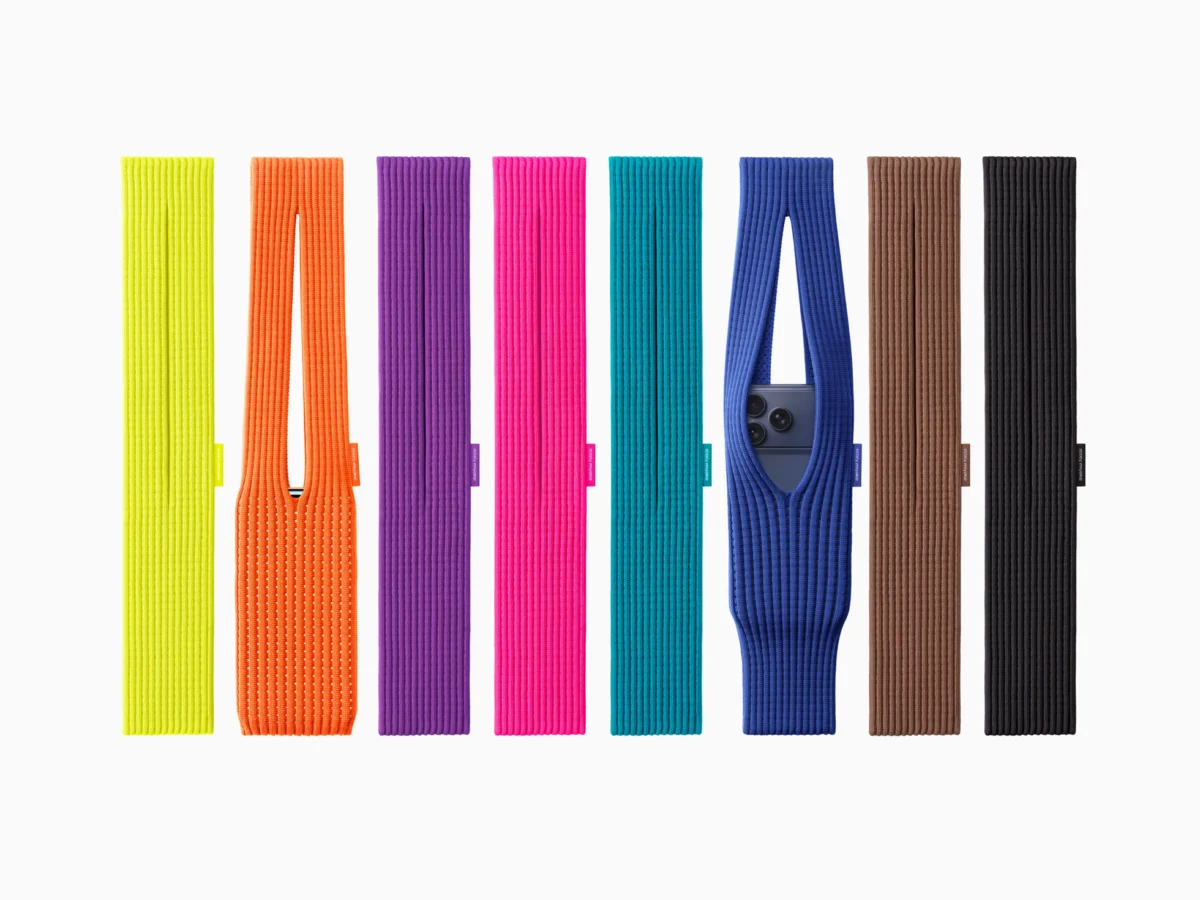
The technology and fashion sectors have converged once again as Apple introduces its latest limited-edition accessory, the iPhone Pocket, a textile-based carrying solution developed in collaboration with the renowned Japanese fashion house Issey Miyake. This product, which functions as a specialized cloth sling for the iPhone, represents a significant price jump from Apple’s previous high-margin textile offerings, retailing at $149.95 for the short version and $229.95 for the long, crossbody iteration. The launch underscores Apple’s continued strategy of positioning the iPhone not merely as a communication device, but as a centerpiece of a luxury lifestyle ecosystem.
The iPhone Pocket is defined by its adherence to the "A Piece Of Cloth" (APOC) design philosophy, a concept pioneered by the late Issey Miyake in the late 1990s. The accessory features a sophisticated ribbed mesh structure that mimics the iconic pleats associated with the Miyake brand. According to technical specifications provided by the manufacturer, the textile is designed to be highly elastic; when stretched, the open-weave structure subtly reveals the device inside, allowing users to glance at their iPhone display without removing it from the pouch. This blend of transparency and protection is intended to appeal to consumers who value both minimalist aesthetics and functional innovation.
The Historical Synergy Between Apple and Issey Miyake
The collaboration between the Apple brand and the House of Issey Miyake is rooted in a decades-long relationship that began with Apple’s co-founder, Steve Jobs. In the early 1980s, during a visit to Sony’s headquarters in Japan, Jobs was struck by the company’s use of employee uniforms. Seeking to foster a similar sense of corporate identity at Apple, Jobs commissioned Issey Miyake to design a vest for Apple staff. While the uniform concept was ultimately rejected by Apple employees, the interaction sparked a personal friendship between the two visionaries.
This relationship famously led to the creation of Jobs’ signature look. Miyake provided Jobs with hundreds of copies of a black mockneck shirt, which became the cornerstone of his daily "uniform." This aesthetic choice eventually came to symbolize the sleek, utilitarian, and high-design ethos of Apple itself. Although Miyake passed away in 2022, his design studio continues to uphold his legacy of blending traditional craftsmanship with futuristic technology. The iPhone Pocket serves as the first formal product collaboration between the two entities, fulfilling a long-anticipated fusion of their shared design vocabularies.
Technical Innovation: The APOC Concept
The "A Piece Of Cloth" (APOC) system, which serves as the foundation for the iPhone Pocket, was first introduced by Miyake and designer Dai Fujiwara in 1997. It was a revolutionary manufacturing process that utilized industrial knitting machines to create garments from a single continuous tube of fabric. This method significantly reduced material waste and allowed for the creation of complex, three-dimensional structures without traditional seams.

By applying APOC principles to the iPhone Pocket, Apple is leaning into the narrative of sustainable luxury. The ribbed mesh is engineered to retain its shape even after repeated stretching, a technical requirement for an accessory intended to house a heavy smartphone. The short version of the pocket is available in a variety of vibrant hues, including a signature "Lemon" yellow, while the crossbody version is offered in a more limited, sophisticated palette. This tiered product strategy allows Apple to target two distinct consumer segments: the "accessory-for-accessory" market and the high-end functional fashion market.
Market Context and Consumer Trends
The release of a $230 fabric pouch has drawn immediate comparisons to Apple’s $19 polishing cloth, which became a viral sensation and a symbol of the brand’s pricing power in 2021. However, market analysts suggest that the iPhone Pocket is situated within a much larger and more lucrative trend: the rise of the "phone-centric" wardrobe. As digital wallets and mobile payment systems like Apple Pay reduce the need for traditional handbags, the industry has seen a surge in demand for dedicated phone carriers.
This trend is evidenced by the success of several "it" items in recent years:
- The Crossbody Phone Strap: Apple previously released a $59 crossbody strap, and third-party brands like Bandolier have built entire businesses around phone-carrying accessories.
- Miniature Bags: The popularity of the "Small" Telfar Shopping Bag and the viral frenzy over miniature Trader Joe’s totes indicate a consumer preference for accessories that prioritize form over storage capacity.
- The Labubu Phenomenon: The rise of high-priced "blind box" collectibles and bag charms, such as the Labubu monster plush, demonstrates a willingness among younger consumers to spend significant sums on "accessories for their accessories."
The iPhone Pocket bridges the gap between these trends. The short version is designed to be clipped onto larger bags—acting much like a designer keychain or a "sock" for the phone—while the long version functions as a standalone piece of wearable technology.
Pricing and Economic Implications
The pricing of the iPhone Pocket—ranging from $150 to $230—places it firmly in the category of luxury goods rather than utilitarian tech accessories. For comparison, a standard silicone or leather-alternative case from Apple typically retails between $49 and $59. The premium for the Miyake collaboration is nearly 300%, a margin that reflects the "halo effect" of the designer brand.
Industry observers note that such products are rarely intended for mass-market adoption. Instead, they serve as high-visibility marketing tools that reinforce Apple’s position as a premium brand. These items often generate significant social media engagement—sometimes referred to as "rage-bait" marketing—where the high price point drives discussion, brand awareness, and eventually, sales among a niche group of affluent collectors and fashion enthusiasts.

Comparative Analysis of Apple’s Accessory Strategy
Apple’s foray into high-fashion textiles has seen mixed results in the past. In 2023, the company moved away from leather in favor of "FineWoven," a microtwill material marketed as more environmentally friendly. However, FineWoven faced criticism from consumers and reviewers for its susceptibility to scratches and staining, leading to reports that the company had halted production of the material for certain lines.
The Issey Miyake collaboration appears to be a pivot toward more established textile technologies. By utilizing Miyake’s proven mesh and pleat structures, Apple avoids the durability pitfalls of its proprietary synthetic fabrics while gaining the prestige of a storied fashion house. This move mirrors Apple’s long-standing partnership with Hermès for the Apple Watch, which has successfully maintained a high-end market segment for nearly a decade.
Broader Impact on the Fashion-Tech Landscape
The launch of the iPhone Pocket is likely to influence how other technology companies approach the accessory market. As hardware specifications become increasingly homogenized across the industry, brand differentiation is frequently achieved through software ecosystems and lifestyle branding.
Logically inferred reactions from the fashion community suggest a mix of admiration for the technical execution and skepticism regarding the utility. Critics argue that a mesh pouch offers minimal drop protection compared to a standard ruggedized case. However, from a fashion perspective, the iPhone Pocket is not being sold as a protective device, but as a "beautiful way to wear and carry" the device, shifting the conversation from durability to elegance.
Future Outlook for 2026 and Beyond
As the holiday season approaches, the iPhone Pocket is positioned as a primary "status" gift item. Its success will likely be measured not by total units sold, but by its presence in fashion capitals and its influence on the "phone-as-accessory" trend. If the product gains traction, it could signal a new era of "soft" tech accessories, where textiles and traditional craftsmanship take precedence over plastic and silicone.
While it remains to be seen if the iPhone Pocket will achieve the cult status of the Labubu or the ubiquity of the Stanley Cup accessory, it represents a clear statement of intent from Apple. The company is no longer content with merely being the manufacturer of the world’s most popular phone; it aims to be the curator of the wardrobe that carries it. For the consumer, this means the line between the electronics store and the luxury boutique will continue to blur, one $230 piece of cloth at a time.