










The global industrial landscape is currently undergoing a transformative shift as manufacturers across the automotive, construction, and textile sectors aggressively pursue decarbonization and circular economy objectives. At the heart of this transition is the resurgence of natural fibers—specifically bast fibers such as hemp and flax—which are increasingly replacing synthetic counterparts in high-performance applications. On July 16, 2026, ANDRITZ, a global leader in industrial engineering, highlighted its comprehensive suite of solutions designed to master the complexities of natural fiber processing. By integrating centuries of textile heritage with cutting-edge mechanical engineering, the company is enabling a scalable, efficient transition toward bio-based materials that meet the rigorous standards of modern industry.
The Strategic Importance of Bast Fibers in Modern Industry
The move toward natural fibers is not merely a trend driven by environmental sentiment but a strategic response to the evolving regulatory and functional requirements of global markets. Bast fibers—the strong, woody fibers found in the phloem of certain plants—and regenerated natural fibers are now critical components in technical textiles, automotive lightweighting, and sustainable construction.
Each fiber type brings unique mechanical properties to the industrial table. Jute, often referred to as the "golden fiber," has become a staple in the production of geotextiles and erosion control fabrics. Its high tensile strength and complete biodegradability make it an ideal choice for large-scale environmental engineering projects. In the automotive sector, hemp has emerged as a frontrunner for interior components. Hemp fibers offer an exceptional strength-to-weight ratio, which is vital for the electric vehicle (EV) market, where reducing vehicle mass directly correlates to extended battery range.
Flax, or linen, continues to be valued for its stiffness and fine diameter, making it a preferred material for high-quality thermal and acoustic insulation panels. Meanwhile, coconut fibers (coir) are prized for their durability and resistance to rot, serving the horticulture and bedding industries with unparalleled resilience. The challenge for manufacturers, however, lies in the inherent variability of these organic materials. Unlike synthetic fibers, which are produced with uniform specifications, natural fibers vary based on soil quality, weather conditions, and harvest timing. Mastering this variability requires a level of process knowledge that ANDRITZ has refined over decades of operation.
France as a Global Hub for Natural Fiber Innovation
The current advancements in fiber technology are deeply rooted in the industrial history of France. For centuries, France has served as the global epicenter for flax production, particularly within the fertile regions of Normandy and Northern France. These areas remain the world’s premier source of high-quality linen, supported by a specialized infrastructure that spans from agriculture to advanced textile engineering.
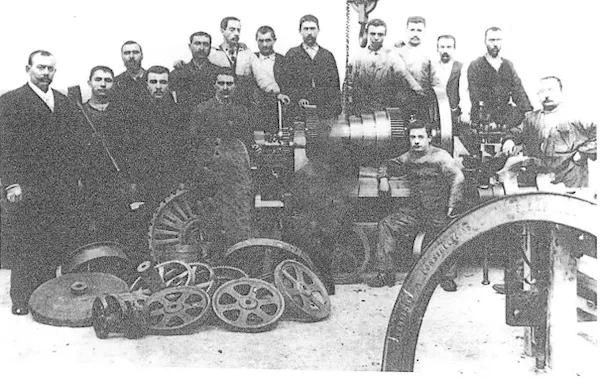
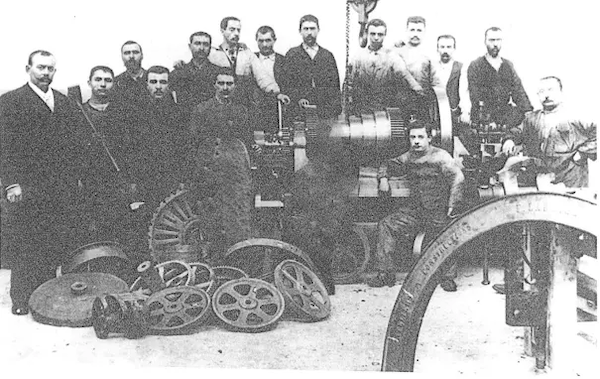
The historical timeline of French fiber expertise is extensive. During the Middle Ages, hemp cultivation was a cornerstone of the French economy, providing the raw material for the ropes and sails that powered maritime trade. By the Renaissance, the city of Lyon had established itself as the center of the European silk trade, fostering a culture of innovation in fiber handling and weaving. This legacy continued into the 20th century with companies like Laroche—now an integral part of the ANDRITZ Group—which revolutionized fiber opening and recycling as early as the 1920s.
Today, ANDRITZ leverages this deep-seated French expertise through three specialized technical centers located in Elbeuf, Cours-La-Ville, and Montbonnot. These facilities allow global customers to conduct pilot-scale testing, refining their processes for decortication, refining, and web formation under real-world production conditions. This proximity to the historical heart of the industry ensures that modern technological solutions are informed by generations of practical experience.
Technical Challenges in Fiber Preparation and Decortication
One of the primary hurdles in utilizing natural fibers at an industrial scale is the initial preparation phase. Raw bast straw is a complex material consisting of the valuable fiber, the woody core (shives), and significant amounts of dust and impurities. Most equipment suppliers struggle with the "cleanliness" and "uniformity" required for high-end applications like nonwovens or fine spinning.
ANDRITZ has addressed this by developing integrated solutions that begin at the decortication stage. Decortication is the mechanical process of separating the fiber from the woody stem. The ANDRITZ teXline system for bast fibers is engineered to handle these materials gently, ensuring that the fiber length is preserved while maximizing the removal of shives and dust.
The process is highly sensitive to moisture; optimal processing usually occurs when the straw is maintained at a controlled humidity level between 12% and 16%. The technology is designed to be versatile, capable of processing both rectangular cut bales (up to 50 cm in length) and large, round uncut bales. This flexibility is essential for processors who must source raw materials from diverse agricultural suppliers with varying baling standards.
Performance Metrics and Industrial Scalability
To meet the demands of global supply chains, natural fiber processing must be both reproducible and scalable. The ANDRITZ teXline bast fiber configuration provides a clear benchmark for industrial output. In a standard hemp processing setup, the system achieves a distribution that typically results in:
- 50% Cleaned Shives: These are often diverted to the construction industry for use in lime-hemp concrete or animal bedding.
- 25% Cleaned Refined Fibers: The primary output for textiles and nonwovens.
- 15–20% Dust: Captured and removed to ensure a clean working environment and high-quality final product.
- 5% Short Fibers: Often utilized in paper production or lower-grade felt.
Scalability is a core feature of the ANDRITZ offering. Modular line concepts allow manufacturers to begin operations with a capacity of 1 ton per hour (t/h) and expand as market demand grows. Standard industrial lines are now available with throughput capacities of 2.5, 5, and even 10 tons of straw per hour. For specialized applications requiring even finer fibers, the company offers dedicated "cottonizing" processes. These lines, which have capacities ranging from 0.1 to 1 t/h, refine bast fibers to a state where they can be blended with cotton or used in hygiene products, ensuring a consistent quality that was previously difficult to achieve with natural bast sources.
Downstream Value Creation: Airlay and Carding Technologies
Once the fibers are cleaned and refined, the focus shifts to web formation—the process of turning loose fibers into a coherent fabric or mat. This is where the final characteristics of the product, such as density, permeability, and tensile strength, are determined.
ANDRITZ airlay technology is particularly well-suited for natural fibers. Unlike traditional carding, which uses mechanical teeth to align fibers, airlay systems use airflow to suspend and deposit fibers onto a forming belt. This method is ideal for the relatively short and sometimes fragile nature of natural fibers. It allows for the creation of mats with weights ranging from 500 to 10,000 grams per square meter (gsm). These heavy-duty mats are the backbone of the automotive insulation and building acoustics markets.
Furthermore, these systems are designed for "blending versatility." Manufacturers can combine virgin natural fibers with recycled "shoddy" fibers or bio-based binders to create 100% sustainable products. This ability to control the full value chain—from the raw straw at the field’s edge to the finished nonwoven roll—is becoming a critical competitive advantage. By controlling the preparation stage, companies can mitigate the risks associated with raw material fluctuations, ensuring that the final product meets the exact specifications required by Tier 1 automotive suppliers or construction firms.
The Local Ecosystem and Economic Implications
The transition to natural fibers also carries significant implications for regional economies. Unlike synthetic fiber production, which is often centralized in massive chemical complexes, natural fiber processing relies on a localized "eco-system." Because transporting raw, unprocessed straw is bulky and expensive, decortication lines are most efficient when located in close proximity to the cultivation areas.
This localized model supports rural development and creates a "green" value chain that benefits farmers, local processors, and end-market manufacturers. In regions like North America and parts of Asia, where hemp cultivation is seeing a legal and industrial resurgence, the implementation of ANDRITZ’s large-scale decortication technology is providing the missing link between the farm and the factory. By turning agricultural "waste" or rotational crops into high-value industrial feedstock, the technology is fostering a new era of bio-regional manufacturing.
Conclusion: A Holistic Approach to Sustainable Engineering
As the industry looks toward 2030 and beyond, the success of sustainable manufacturing will depend on the integration of individual technologies into cohesive, end-to-end solutions. ANDRITZ has positioned itself as a "one-stop-shop," providing not just the machinery, but the system expertise required to manage the complex lifecycle of natural fibers.
The company’s holistic approach—combining fiber preparation, web forming, bonding, and finishing—ensures faster commissioning and higher uptime for new installations. With hundreds of proven installations across Europe, the Americas, and Asia, the data suggests that the industrialization of natural fibers has reached a tipping point. By providing the tools to profitably valorize bio-based fibers, ANDRITZ is not only helping its customers meet environmental mandates but is also defining the technical standards for the next generation of industrial materials. This integration of tradition and technology ensures that natural fibers will remain at the forefront of the global movement toward a more sustainable and resilient industrial future.