



The confirmation of Anthony Vaccarello’s departure from Saint Laurent, announced on the morning of October 9 following a critically acclaimed presentation at Paris Fashion Week, marks the close of a definitive ten-year chapter for the historic French luxury fashion house. Over the course of a decade, the Belgian designer systematically dismantled and rebuilt the visual lexicon of the brand, steering it away from the indie-grunge inclinations of his predecessor and toward an uncompromisingly sophisticated, nocturnal vision of Paris. Set against the glittering backdrop of the Eiffel Tower, Vaccarello’s tenure was defined by languid silhouettes, precise androgynous tailoring, and an unapologetic exploration of what he termed "bourgeois perversity"—the delicate, electric tension between high-society elegance and pulse-racing fetishism.
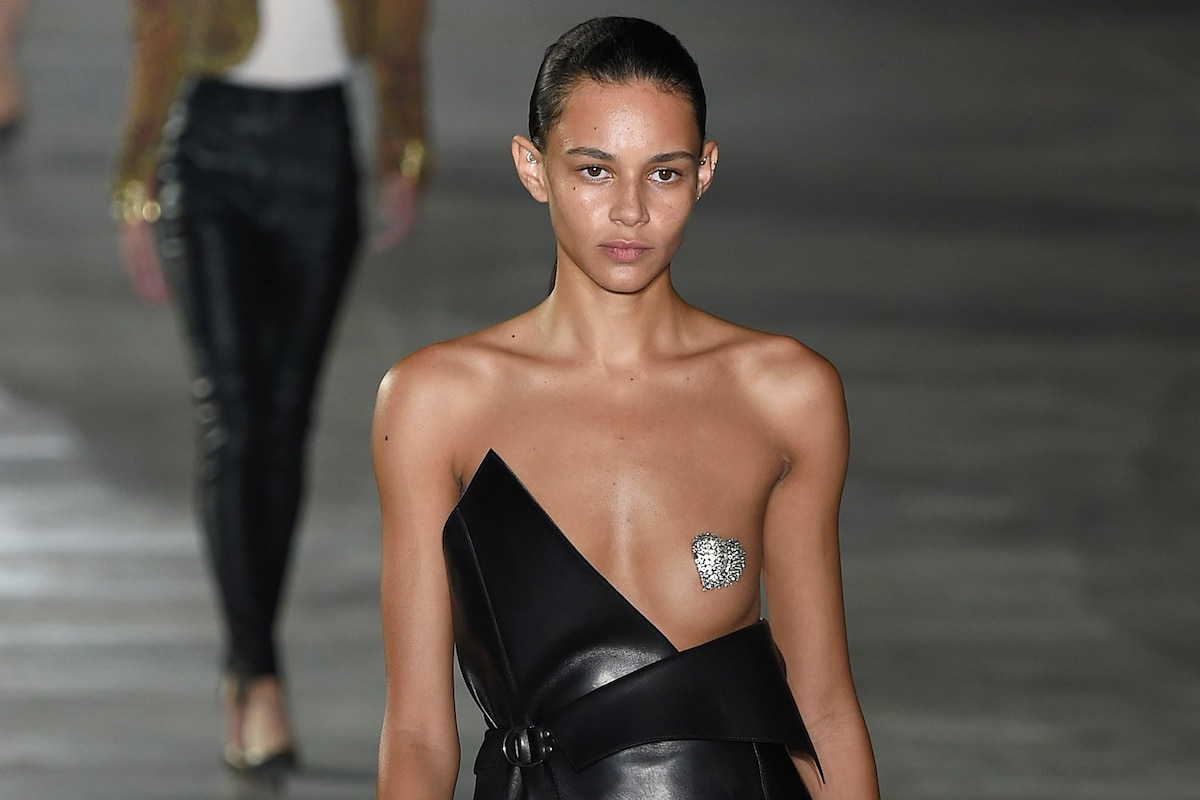
To understand the magnitude of Vaccarello’s departure, one must examine the trajectory of his decade-long stewardship. Taking the creative helm in 2016, Vaccarello inherited a house undergoing rapid structural and aesthetic evolution. His predecessor, Hedi Slimane, had famously dropped the "Yves" from the brand name and pivoted the house toward a West Coast, youth-culture-inspired indie-rock aesthetic. Vaccarello, by contrast, sought to reconnect the label with its Parisian roots while injecting a potent dose of high-octane glamour. His debut Spring/Summer 2017 collection signaled this intent immediately. Hanging a massive neon YSL logo from a construction crane above the show venue, he boldly reasserted the brand’s heritage. The collection introduced the Opyum pump—replacing a traditional stiletto heel with the interlocking metal YSL monogram—which became an instant commercial phenomenon and established a new blueprint for luxury accessories.
As his tenure progressed, Vaccarello refined his thesis on the modern Saint Laurent woman. Rejecting the notion that feminine dress is inherently designed for external validation or the gaze of others, Vaccarello frequently emphasized self-possession in his collections. In interviews, including a September appearance on Bella Freud’s Fashion Neurosis podcast, he described his muse not as someone trying to please a partner, but as an autonomous figure pursuing her own psychological and physical pleasures. This philosophy manifested in a wardrobe that functioned as a toolkit for expressing hidden desires. Sharp, corporate officewear was regularly juxtaposed with dominatrix-inspired latex, sadomasochistic leather, and sheer fabrics, creating a visual dialogue between conventional good taste and transgressive fetish.
The Milestones of a Decade: Seven Defining Collections
Throughout his ten years at Saint Laurent, several specific collections crystallized Vaccarello’s design philosophy, charting a course from rock-infused debutante glamour to high-fashion conceptualism.
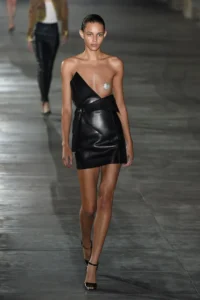
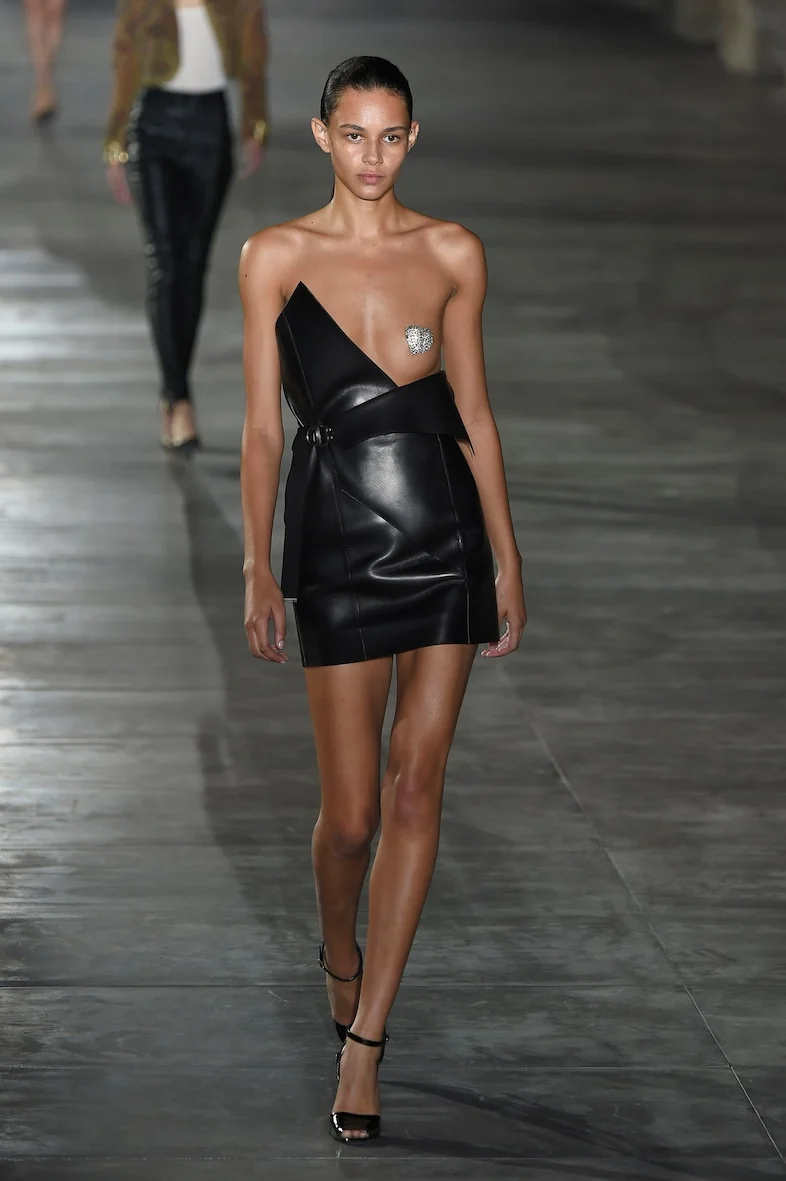
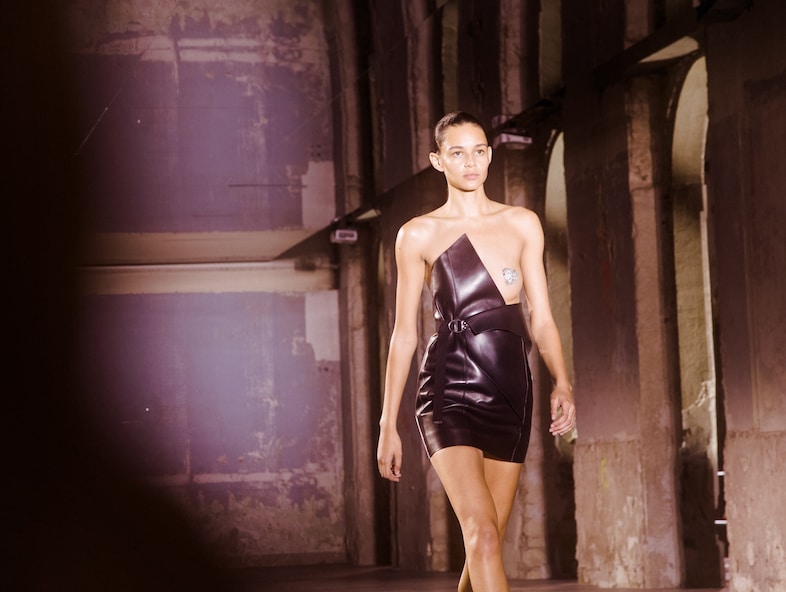
The Spring/Summer 2017 debut established the foundational vocabulary: exaggerated 1980s power suiting, dark and seductive fabrics, and leg-lengthening micro-minis. It successfully bridged the gap between Slimane’s indie grunge and a mature, after-dark Parisian aesthetic.
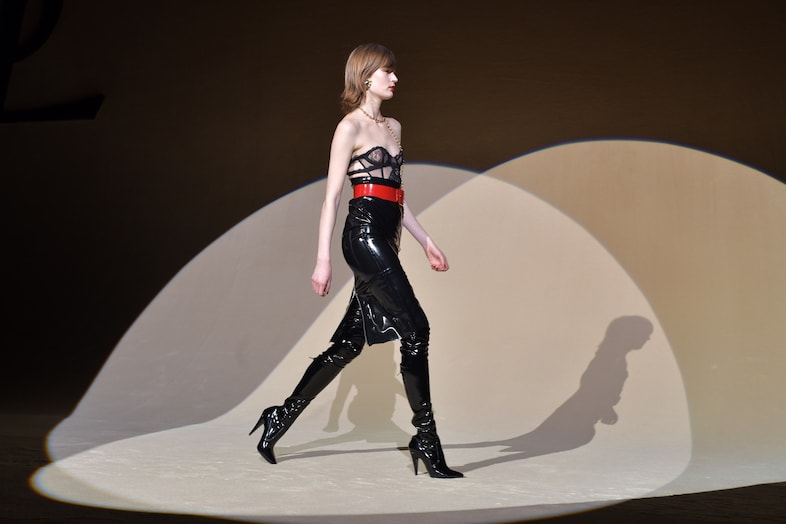
By Autumn/Winter 2020, Vaccarello reached a new peak of sexual expression, formally coining the term "bourgeois perversity." Drawing inspiration from Catherine Deneuve’s character in Luis Buñuel’s erotic psychodrama Belle de Jour—a film famously costumed by Monsieur Saint Laurent himself—the designer toyed with the friction between propriety and subversion. Tailored double-breasted blazers and prim pussy-bow blouses were paired with latex leggings, thigh-high boots, and second-skin turtlenecks. Crucially, this collection moved away from an exclusively all-black palette, introducing lurid jewel tones of purple, red, and blue just weeks before the global fashion industry entered the austere, restricted environment of pandemic lockdowns.
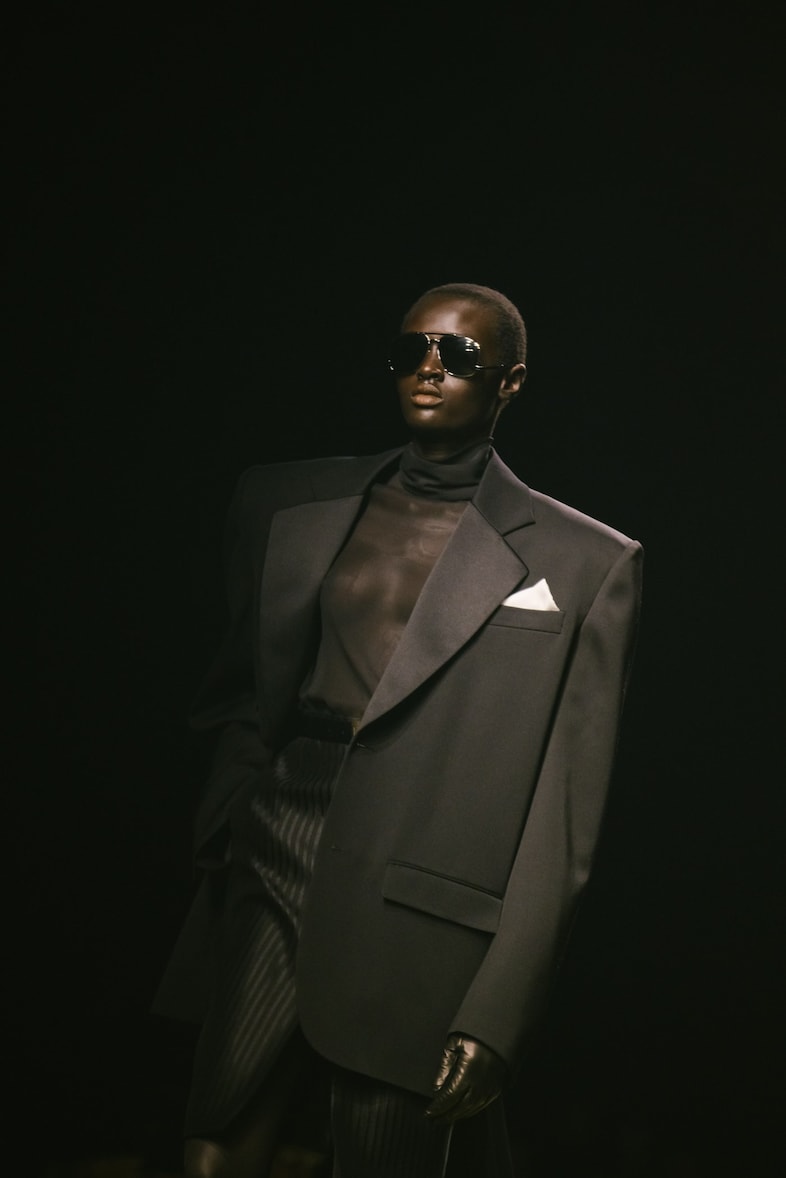
The Autumn/Winter 2023 collection transitioned this tension from the bedroom to the boardroom. Razor-sharp power dressing was reimagined as a tool of dominance. Sculptural blazers that commanded physical space were paired with knee-grazing pencil skirts featuring high, suggestive slits. This collection played a primary role in catalyzing the industry-wide "corpcore" and "office siren" trends, proving Vaccarello’s ability to dictate mainstream commercial movements. The culmination of this androgynous thread arrived a few seasons later at the Spring/Summer 2025 show, where model Bella Hadid opened the presentation dressed as Yves Saint Laurent himself in a black double-breasted suit and thick-rimmed glasses, cementing the house’s dedication to gender-fluid sensuality.
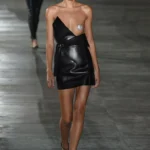
In Autumn/Winter 2024, Vaccarello challenged traditional notions of modesty by elevating opaque hosiery into outerwear. Utilizing the exact sheer, nude fabric typically reserved for tights, he constructed transparent micro-mini bodycon dresses that walked the delicate line between underwear and eveningwear. Citing inspirations as diverse as Bianca Censori, street-style yoga pants, and the iconic Jean Louis dress worn by Marilyn Monroe to sing to John F. Kennedy, the designer embraced ephemerality. Recognizing that tights ladder and tear easily, Vaccarello leaned into the vulnerability of the material, stating his desire to make people dream about something unrealistic in an era dominated by hyper-commercialism.
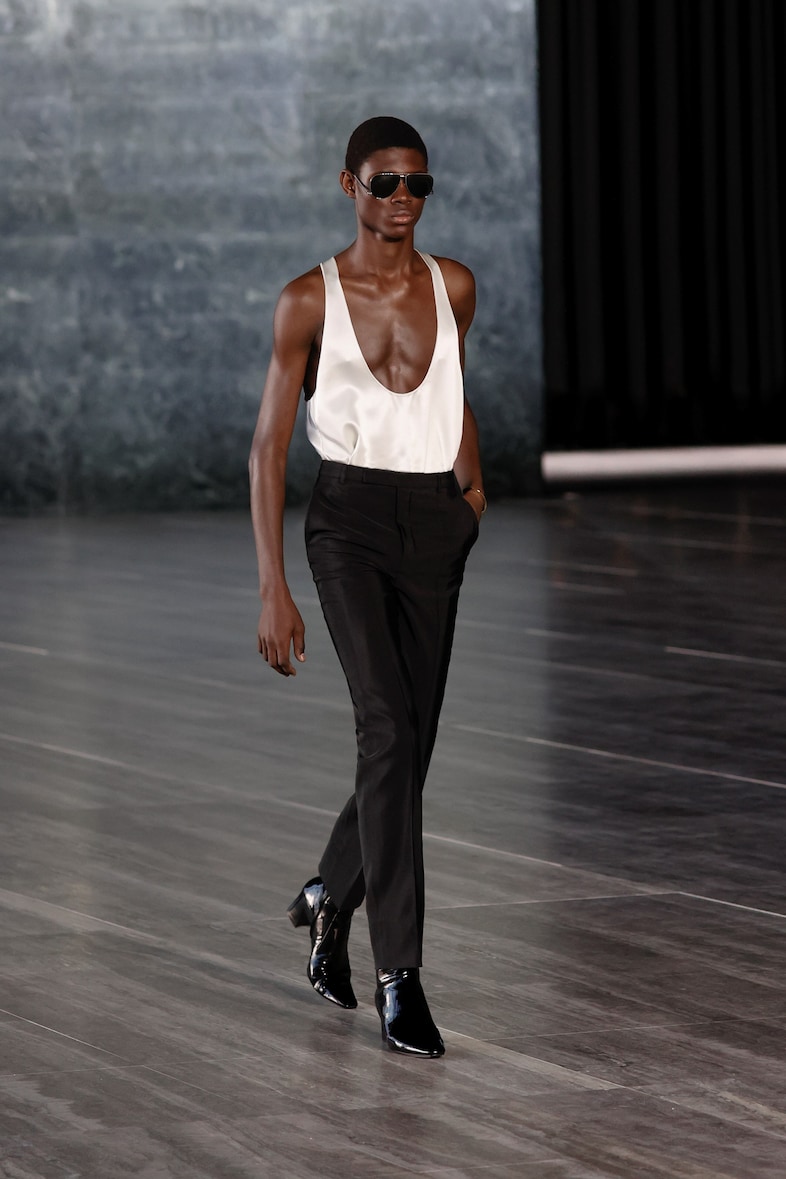
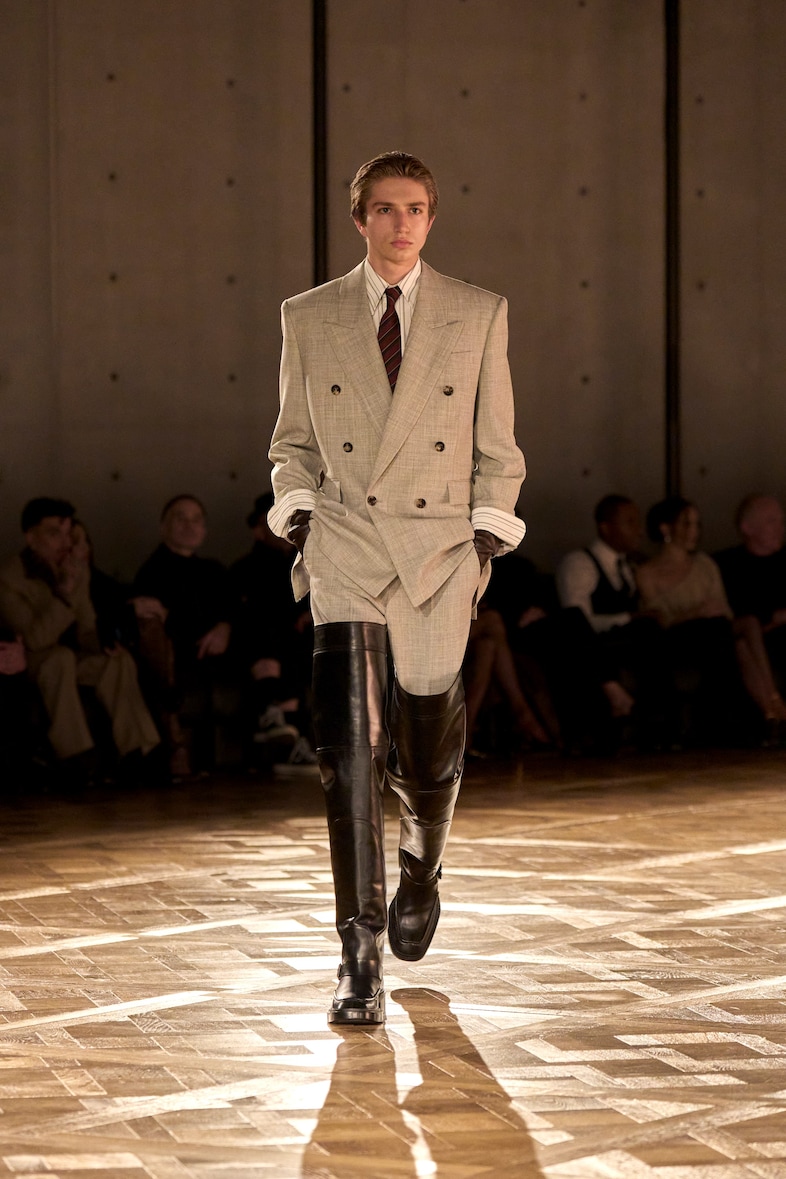
Menswear under Vaccarello experienced an equally rigorous evolution. For the Spring/Summer 2024 men’s presentation, the designer traveled to Berlin, paying homage to icons like Marlene Dietrich and David Bowie. The resulting gender-fluid tailoring—featuring skinny tuxedos, structured shoulders, and plunging necklines—demonstrated that the Saint Laurent man was just as liberated as his female counterpart. This exploration continued with the Autumn/Winter 2025 men’s collection, inspired by an imagined dialogue between legendary photographer Robert Mapplethorpe and Monsieur Saint Laurent. Marrying classic tailoring with fetishistic leather, Vaccarello summarized the aesthetic as "respectable on the top, but dirty on the way down," pairing office-appropriate blazers with thigh-high leather wader boots.
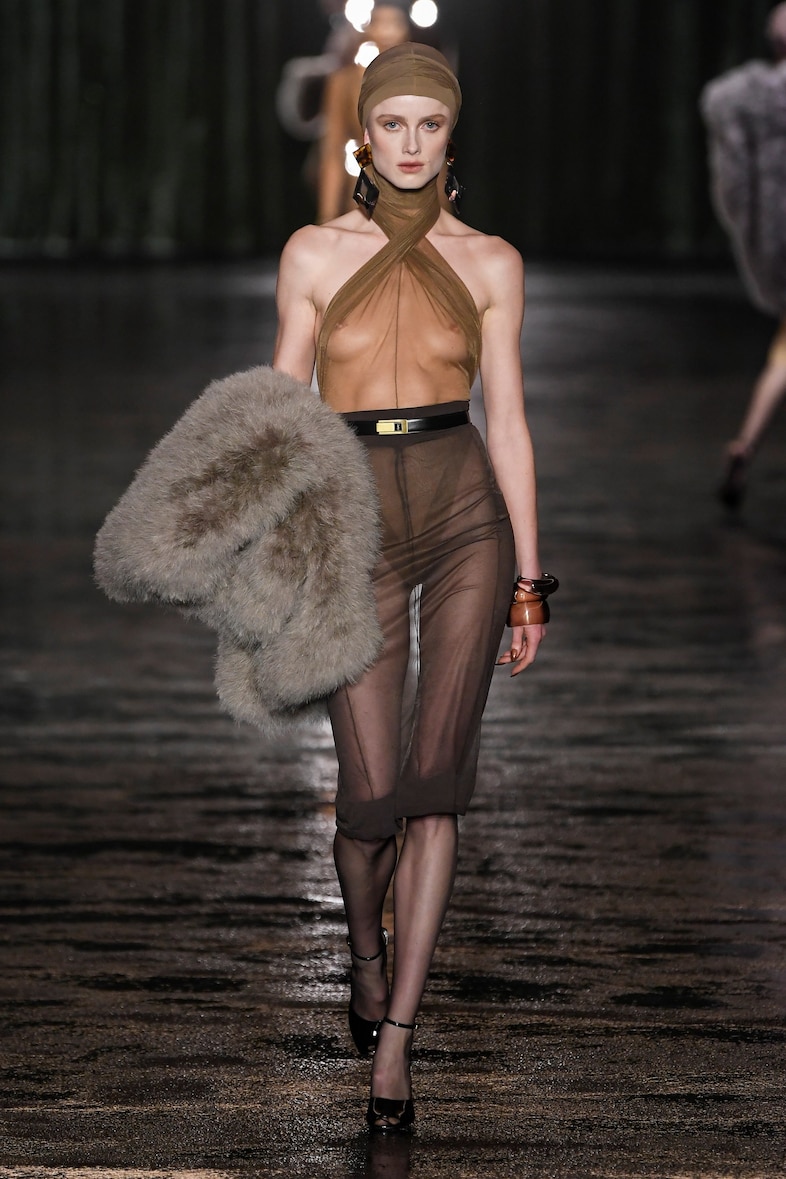
Finally, the Spring/Summer 2023 women’s collection demonstrated Vaccarello’s deep reverence for the Saint Laurent archive. Finding inspiration in Martha Graham’s 1930 modern dance piece Lamentation—in which the choreographer moved within a tubular jersey fabric to express grief—Vaccarello reinterpreted the form as a celebration of nocturnal Parisian elegance. He revived the hooded capuche dress that Yves Saint Laurent popularized in the mid-1980s. These languid, gossamer silk gowns, paired with oversized masculine tailoring, quickly became red-carpet staples worn by cultural figures such as Kate Moss, Jenna Ortega, and Beyoncé.
Industry Implications and the Road Ahead
The departure of a creative director of Vaccarello’s stature initiates a pivotal transitional phase for Kering, the luxury conglomerate that owns Saint Laurent. Over the past decade, Vaccarello’s collections have not only achieved critical acclaim but have also driven robust financial performance, consistently outperforming broader luxury market corrections through high-margin leather goods, footwear, and aspirational ready-to-wear.
Financial analysts note that Vaccarello’s ability to balance commercial viability with uncompromising, high-concept runway spectacles has made Saint Laurent one of Kering’s most reliable revenue generators. As the fashion industry faces shifting consumer preferences, economic headwinds in key Asian markets, and a broader fatigue regarding logo-driven commerce, the selection of a successor will signal Kering’s strategic priorities for the house’s next decade.
Industry observers and stakeholders anticipate that management will take a measured approach in naming a replacement, given the distinct clarity of vision Vaccarello instilled in the brand. Whether the house will choose to maintain this trajectory of high-octane sensuality and structured power dressing or pivot toward a more subdued minimalism remains to be seen.
For now, Anthony Vaccarello leaves behind a legacy defined by consistency, technical precision, and a rare ability to translate fetishistic subculture into the highest echelons of Parisian luxury. His final presentation at Paris Fashion Week served as a fitting valediction for a designer who proved that elegance and abandon are not mutually exclusive, but rather essential counterparts in the continuous evolution of modern style.