










The intersection of high fashion and generative artificial intelligence reached a new milestone during the most recent New York Fashion Week as Alta, the fashion technology startup founded by Jenny Wang, unveiled its latest integration with the storied New York City label Public School. This collaboration marks a significant evolution for a company that first captured public attention by promising to realize the "digital closet" concept famously depicted in the 1995 film Clueless. Since its inception, Alta has transitioned from a viral concept into a robust technological platform that aims to serve as the foundational identity layer for the future of agentic commerce. By allowing users to create personalized avatars and virtually trial complex outfits in seconds, Alta is addressing one of the most persistent challenges in the e-commerce sector: the gap between digital browsing and physical fit.
The Evolution of the Digital Closet and the $11 Million Seed Round
The trajectory of Alta shifted significantly last year following a successful $11 million funding round led by Menlo Ventures. The investment signaled a strong vote of confidence from both the venture capital community and the fashion elite. Notable participants in the round included the Anthology Fund—the venture arm of the AI research firm Anthropic—as well as high-profile figures from the modeling and retail worlds, such as Karlie Kloss, Jasmine Tookes, and Rent the Runway co-founder Jenny Fleiss. This diverse backing reflects the dual nature of Alta’s mission, which requires both sophisticated machine learning capabilities and a deep understanding of the aesthetic requirements of the luxury fashion industry.
Prior to this funding, the concept of a digital closet was largely relegated to the realm of science fiction or rudimentary 2D "paper doll" applications. Alta’s innovation lies in its use of proprietary AI to transform static images of clothing into dynamic, 3D-rendered assets that can be layered onto a user’s personalized avatar. This avatar is not a generic mannequin but a digital twin designed to reflect the user’s specific body measurements and likeness. The technical complexity required to achieve this is substantial, as the software must account for fabric drape, texture, and the interaction between multiple layers of clothing.
Milestone Achievements and Market Adoption
Since the official launch of the Alta app in 2023, the platform has seen explosive growth. According to founder Jenny Wang, the community has generated more than 100 million unique outfits on the platform. This volume of data provides Alta with unparalleled insights into consumer styling preferences and emerging trends, creating a feedback loop that benefits both the users and the brands integrated into the ecosystem. The platform’s success has not gone unnoticed by the industry’s gatekeepers; both Time and Vogue recognized Alta as one of the premier innovations of the past year, citing its potential to revolutionize how consumers interact with their wardrobes.
The company’s growth strategy has been bolstered by strategic partnerships with major industry players. Alta currently maintains formal relationships with the Council of Fashion Designers of America (CFDA) and the social commerce giant Poshmark. These partnerships serve a dual purpose: they provide Alta with a steady stream of designer inventory to digitize, and they offer platforms like Poshmark a way to increase user engagement through interactive styling tools. Currently, the Alta app features thousands of brands, ranging from fast-fashion staples to high-end luxury houses, allowing users to mix and match items they already own with pieces they are considering for purchase.
The Public School Collaboration: A Case Study in Brand Integration
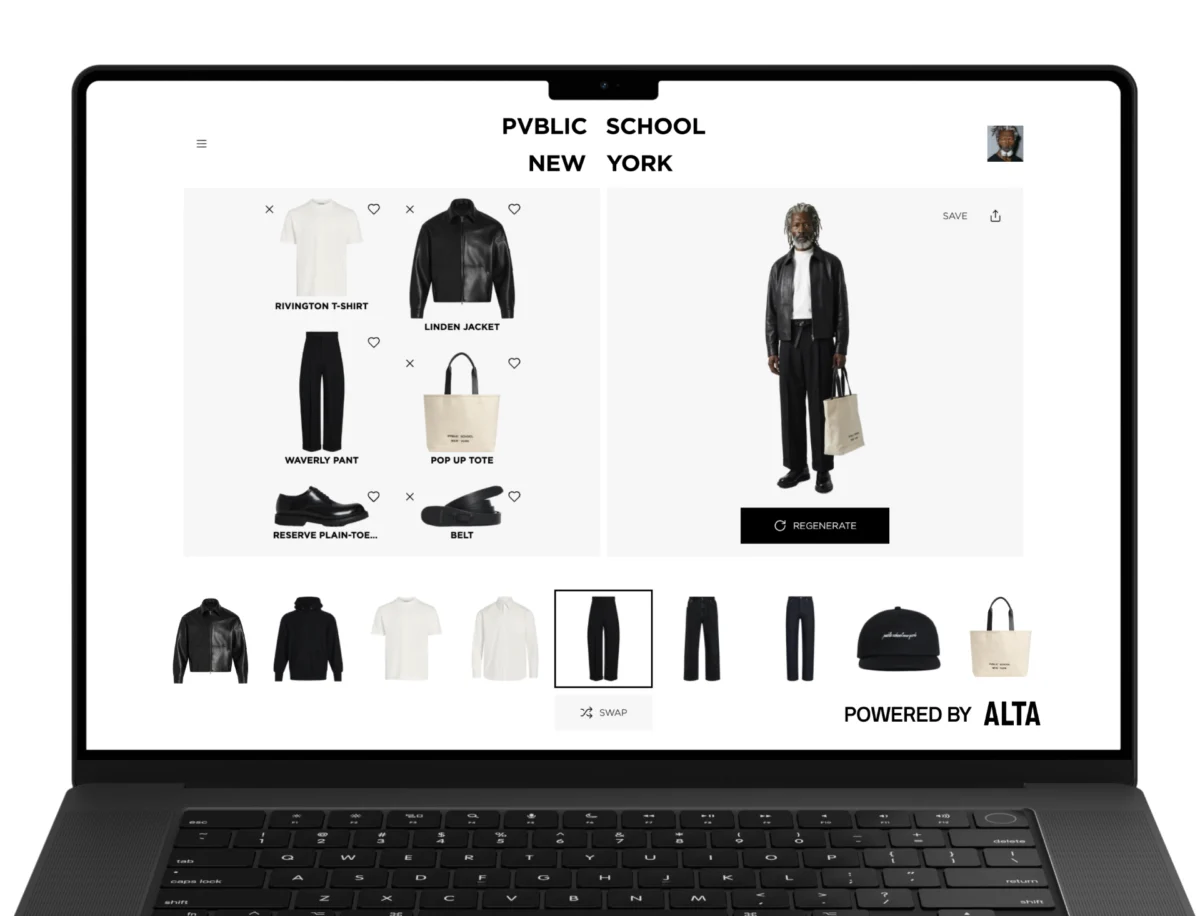
The collaboration with Public School New York, unveiled during New York Fashion Week, represents the first instance of Alta’s enterprise-grade integration. Public School, led by designers Dao-Yi Chow and Maxwell Osborne, chose this moment to mark their grand return to the fashion calendar after a multi-year hiatus. The decision to partner with Alta was born out of a mutual connection via the founder of Poshmark, an angel investor in both entities.

For Public School, the integration of Alta’s "Style with Alta" feature on their product pages is more than a marketing gimmick; it is a strategic business move. When a customer visits the Public School website, they can click a dedicated icon to instantly transport a garment onto their personal Alta avatar. This allows for a level of interaction that traditional photography cannot provide. Dao-Yi Chow emphasized that in the current retail climate, technology must be viewed as a fundamental partner. He noted that the goal was not to use AI as a design tool to replace human creativity, but as a medium to extend the brand’s storytelling and allow consumers to experience the collection’s silhouette and styling even if they cannot visit a physical showroom.
This integration is a significant departure from previous attempts at virtual try-on (VTO) technology. While brands like Zara and Balmain have experimented with digital avatars in the past, those experiences were often limited by technical bottlenecks. Wang points out that Alta’s engine can render up to eight different items on an avatar within seconds. In contrast, many legacy systems are limited to four items and can take up to two minutes to process a single outfit. In the fast-paced world of digital retail, where every second of latency increases the likelihood of a customer bouncing from the page, Alta’s speed is a critical competitive advantage.
Chronology of Alta’s Development and Future Objectives
The development of Alta can be viewed through a series of strategic phases that have moved the company from a consumer-facing app to a b2b infrastructure provider:
- 2023 Launch: Release of the consumer app, focusing on the "Clueless" closet experience where users could digitize their own physical clothing.
- Market Validation: Recognition by Time and Vogue, coupled with the milestone of 100 million outfits generated, proving the demand for high-fidelity virtual styling.
- Capital Infusion: The $11 million seed round led by Menlo Ventures, providing the runway to hire top-tier AI engineers and expand brand partnerships.
- Enterprise Pivot: The development of API and website integration tools, allowing third-party retailers to host Alta’s technology natively on their own domains.
- NYFW 2026 Integration: The Public School collaboration, serving as a proof-of-concept for the "Style with Alta" button.
Looking forward, Jenny Wang envisions Alta as the "personal identity layer" for the future of consumer AI. This vision aligns with the emerging trend of "agentic commerce," a term describing a future where AI agents act on behalf of consumers to find, style, and purchase products. For this to function effectively, the AI requires a deep understanding of the user’s physical form, existing wardrobe, and aesthetic preferences. Alta aims to be the repository for this data, ensuring that when an AI agent suggests a purchase, it is guaranteed to fit the user’s body and complement their existing closet.
Industry Implications and the Reduction of Retail Friction
The broader implications of Alta’s technology extend into the realms of sustainability and economic efficiency. The fashion industry is currently plagued by high return rates, with some e-commerce platforms reporting that up to 40% of apparel purchases are returned, often due to issues with fit or "style regret." This creates a massive logistical burden and a significant environmental footprint due to the carbon emissions associated with reverse logistics.
By providing a high-fidelity virtual try-on experience, Alta has the potential to significantly reduce these return rates. When a consumer can see exactly how a jacket drapes over their specific shoulder width or how a pair of trousers interacts with a specific pair of shoes, the uncertainty of the purchase is diminished. Furthermore, the "digital closet" aspect encourages more thoughtful consumption. If a user can see that a new item does not coordinate with any of their existing clothes, they may choose not to purchase it, leading to a more intentional and less wasteful approach to fashion.
The response from the tech and fashion sectors suggests that the "Clueless" closet is no longer a nostalgic dream but a functional necessity for modern retail. As more brands follow Public School’s lead in embedding these tools directly into their e-commerce platforms, the boundary between the physical and digital wardrobe will continue to blur. For Jenny Wang and the team at Alta, the goal remains clear: to build the data layer that understands the shopper better than any store clerk ever could, ushering in an era of personalized, frictionless, and intelligent commerce.