





The 2026 Met Gala, widely regarded as the most significant night in the global fashion calendar, served as a definitive platform for Saint Laurent, which acted as a primary fashion sponsor alongside Condé Nast. Under the creative direction of Anthony Vaccarello, the Parisian fashion house curated looks for thirteen high-profile celebrities, marking one of the most extensive single-brand presences in the history of the Costume Institute Benefit. While the brand is historically synonymous with a minimalist, monochromatic aesthetic, the 2026 showcase demonstrated a strategic expansion of its visual language, incorporating sculptural metalwork, vibrant color palettes, and avant-garde fabrications.
Strategic Sponsorship and the Met Gala Framework
The 2026 iteration of the Met Gala continued its tradition of merging high art with corporate philanthropy. As a main sponsor, Saint Laurent’s involvement extended beyond the red carpet, signaling a deepened alliance between the Kering-owned house and the Metropolitan Museum of Art’s Costume Institute. This partnership reflects a broader trend in the luxury sector where heritage brands leverage the gala’s massive digital and cultural reach to reinforce brand identity. By dressing thirteen distinct personalities, Vaccarello showcased the versatility of his design philosophy, moving from the house’s signature "Le Smoking" DNA toward more complex, theme-responsive couture.
The event’s logistics were managed with high precision, with the Saint Laurent "procession" becoming a central narrative of the evening. The brand’s ability to secure a diverse roster of talent—ranging from veteran supermodels and legendary musicians to contemporary pop icons—underscored its current dominance in the luxury market.
Architectural Innovation: The Gold and the Lapis
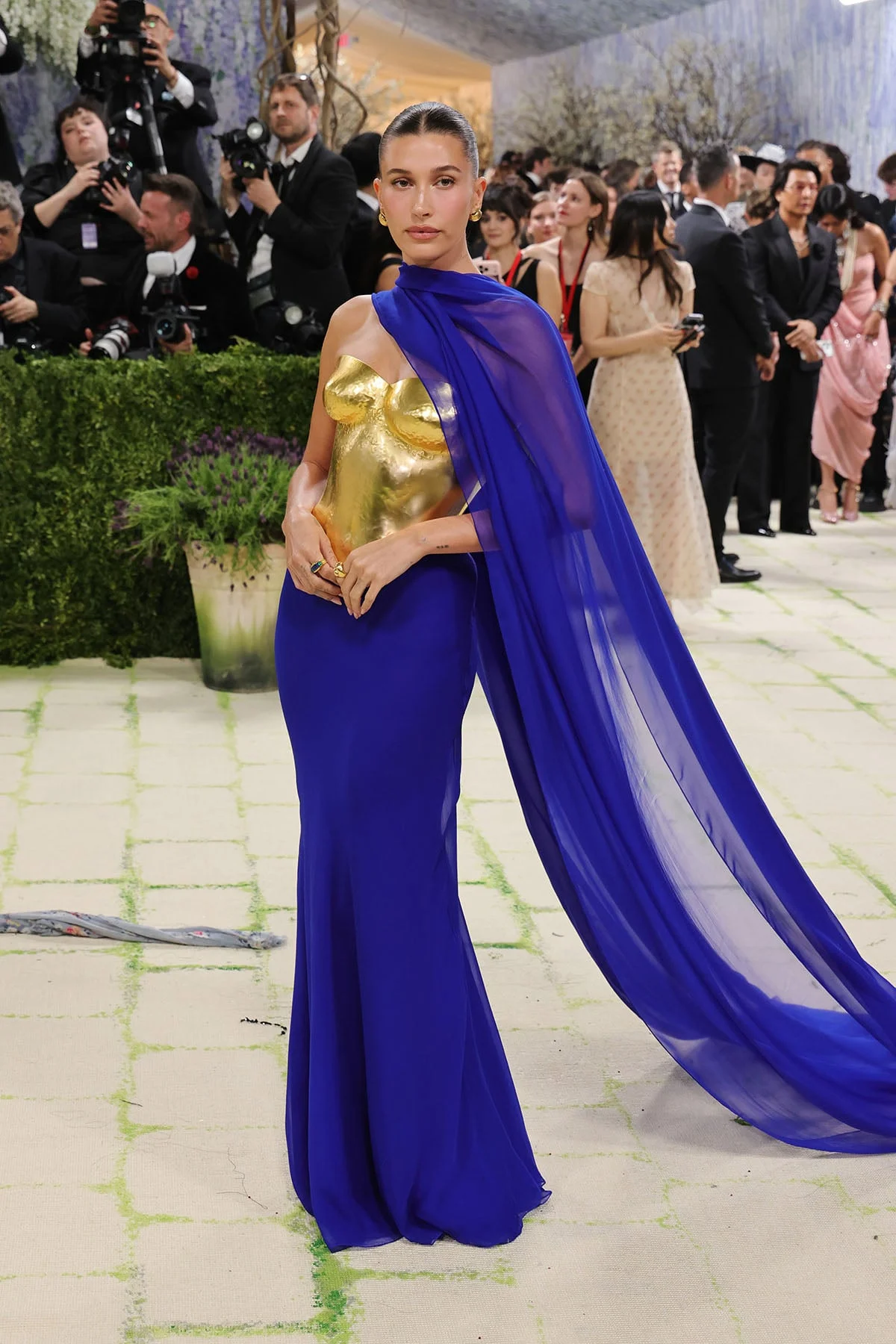
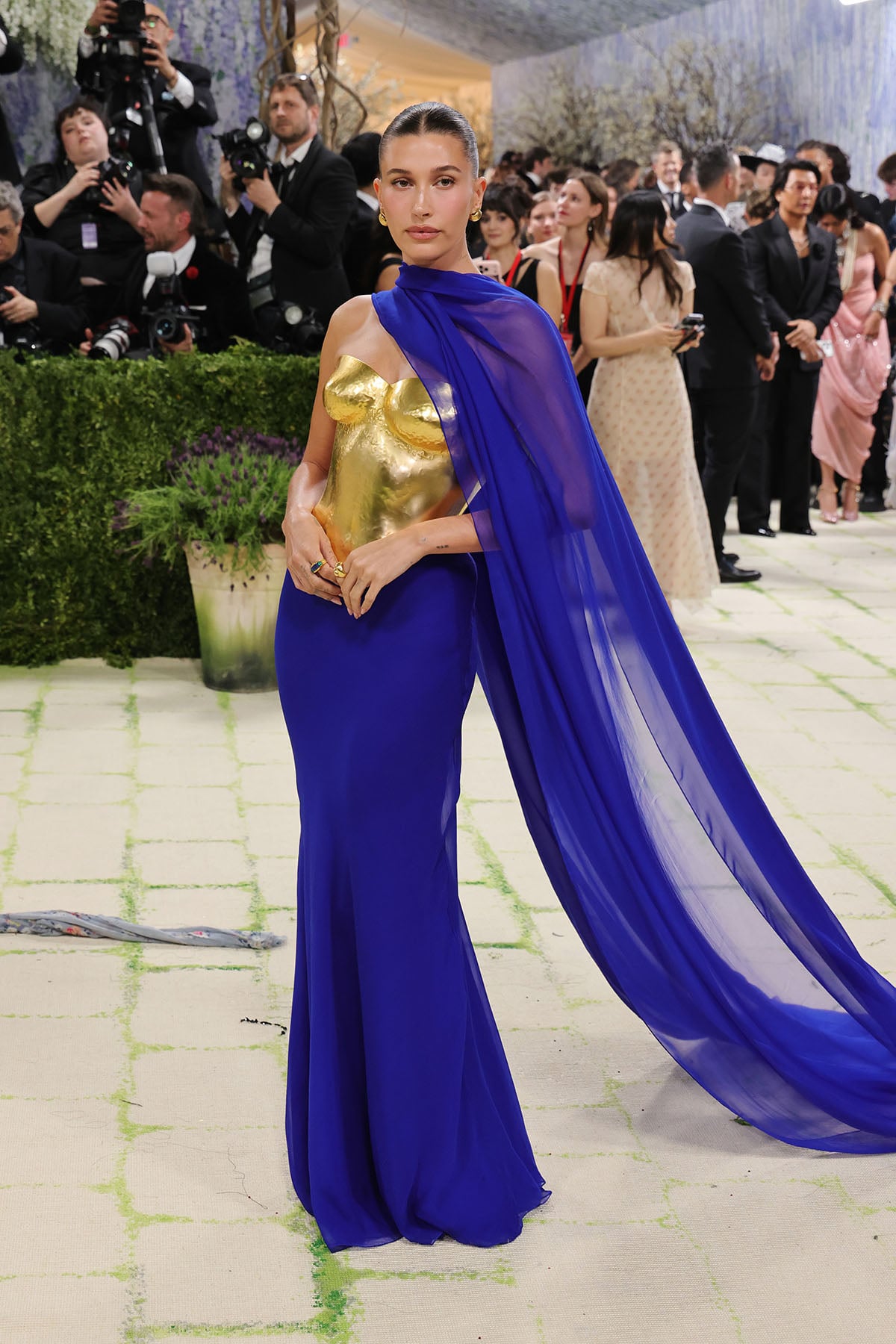
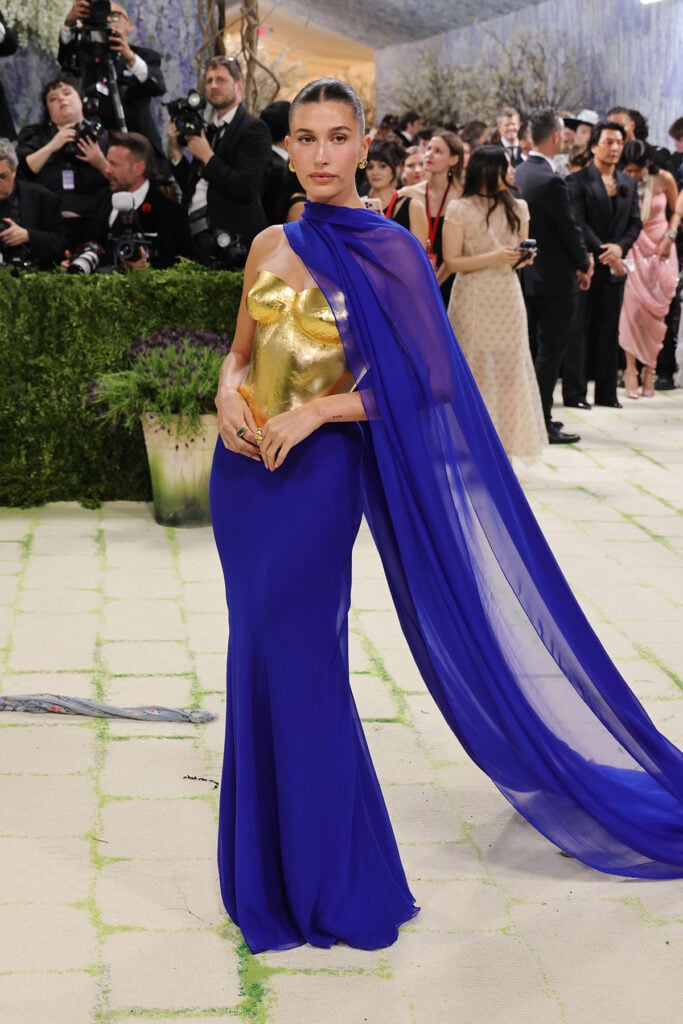
The most significant departure from Saint Laurent’s traditional red-carpet repertoire was seen in the ensemble designed for Hailey Bieber. Historically, Bieber has opted for minimalist silhouettes, often favoring the house’s sleek black mini dresses or classic tailoring. For 2026, however, Vaccarello introduced a highly structured, 24-carat gold sculpted breastplate. This piece of "wearable armor" represented a shift toward artisanal metalwork within the house.
To provide a textural and coloristic contrast, the breastplate was paired with a lapis-blue maxi skirt and a draped lavallière. The use of blue—a rarity in Saint Laurent’s gala history—was further emphasized through the inclusion of Belperron jewelry, which mirrored the gold and blue tones of the garments. This look is being cited by industry analysts as a pivotal moment for the brand, suggesting a move toward more daring, color-heavy commissions.

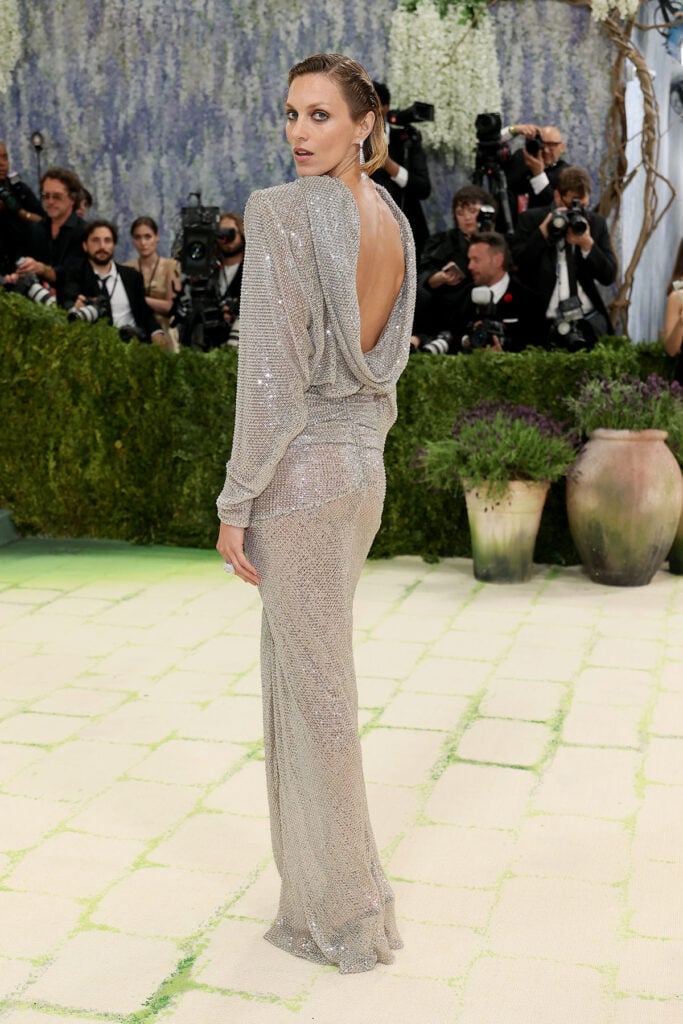
Similarly, Anja Rubik, a long-term muse for Vaccarello, deviated from her usual preference for the "Little Black Dress." Her 2026 look featured a backless silhouette constructed from draped rhinestones. The garment utilized light-reflecting properties to create a liquid-like effect on the red carpet, a technical achievement supported by the addition of high jewelry from Boucheron.
Materiality and Experimental Textures
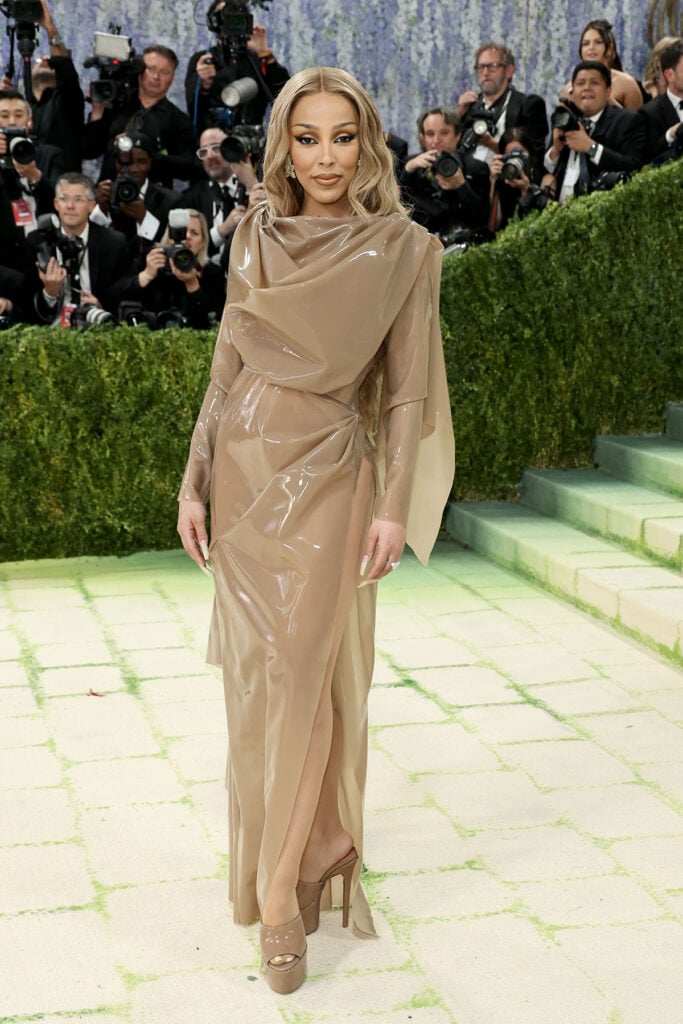
The 2026 collection also highlighted Vaccarello’s interest in non-traditional materials. Doja Cat’s appearance in a beige chiffon-silicone ensemble served as a case study in tonal experimentation. The outfit, which integrated the textures of the fabric with the properties of silicone, aimed for a seamless, statuesque aesthetic. While the monochromatic beige approach—extending from the hair and skin to the Saint Laurent Kika platform mules—offered a unified visual field, it sparked discussions among fashion critics regarding the necessity of contrast in high-concept gala dressing.
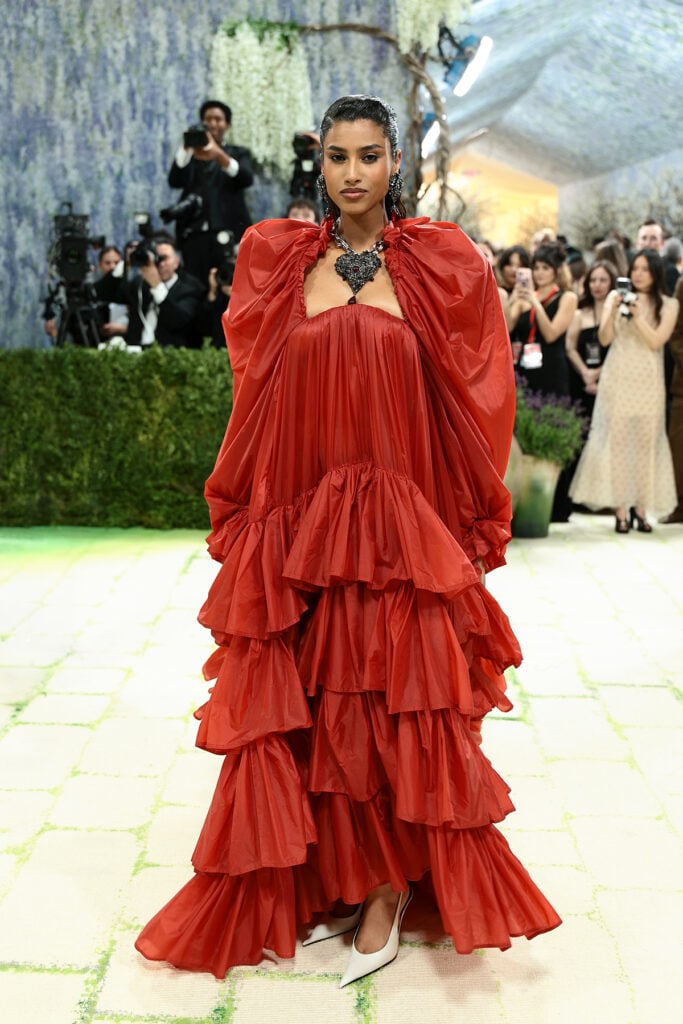
Imaan Hammam’s ensemble addressed the ongoing dialogue regarding the translation of runway proportions to the red carpet. Wearing a red ruffled gown from the Saint Laurent Spring 2026 collection, Hammam’s look provided a more balanced execution of a silhouette previously seen on other ambassadors. The styling was anchored by a Saint Laurent crystal heart necklace and Cassandra earrings, though the choice of white Saint Laurent P.A.R.I.S. pumps introduced a polarizing element to the otherwise monochromatic red look.
The Evolution of House Signatures
For several long-standing ambassadors, the 2026 Met Gala was an opportunity to refine rather than reinvent their established styles. Zoe Kravitz, often seen in sheer Saint Laurent lace, debuted a new silhouette featuring a basque waist. This structural adjustment provided a more architectural foundation to the delicate lace, signaling a maturation of the "naked dress" trend that has dominated recent years. Her look was accessorized with Phantom slingbacks and Jessica McCormack jewelry.
Charlotte Gainsbourg and Kate Moss, both integral to the Saint Laurent identity, maintained their signature aesthetics. Gainsbourg’s leather high-low dress utilized a cascading silhouette to convey the "insouciance" typically associated with French style, accented by a floral belt and coordinating earrings. Moss returned to a sheer black aesthetic, reinforcing the brand’s legacy of effortless, rock-and-roll-influenced elegance. These choices suggest that while Vaccarello is pushing boundaries with new talent, he remains committed to the core archetypes that define the Saint Laurent woman.
Contemporary Pop and the "Goth-Glam" Aesthetic
The inclusion of Charli XCX and Rosé highlighted the brand’s resonance with the current music industry. Charli XCX’s gown combined velvet and chiffon, incorporating floral details that aligned with the night’s artistic theme. The look, accessorized with David Yurman jewels, was a synthesis of the "goth" subculture and high-fashion glamour.
Rosé, a global ambassador for the house, opted for a sleek black gown defined by a singular sculptural embellishment. This minimalist approach, focusing on one dramatic focal point, has become a hallmark of Rosé’s partnership with the brand, emphasizing precision over ornamentation. Additionally, Amelia Gray represented the younger vanguard of the industry, wearing a Saint Laurent gown with subtle crystal embellishments and Chopard jewelry, balancing traditional gala sparkle with the brand’s sharp edge.
Menswear and Structured Tailoring
The menswear contingent for Saint Laurent at the 2026 Met Gala focused on texture and silhouette. Rami Malek wore a structured black coat featuring a prominent fur collar and a decorative brooch, a look that softened the house’s rigid tailoring with organic textures. Rauw Alejandro, conversely, leaned into a high-gloss aesthetic. His ensemble featured a shirt and trousers with a patent-like finish, bringing a futuristic, synthetic edge to classic evening wear. These two looks demonstrated the dualities of modern menswear: one rooted in traditional luxury materials and the other in contemporary, high-shine fabrications.

The Grand Finale: Madonna’s Performance Art
The evening concluded with a theatrical display by Madonna, whose long-standing relationship with the house of Saint Laurent culminated in a dramatic, multi-person procession. Her black ensemble featured an extended veil and a structured silhouette that transformed the red carpet into a performance space. This appearance was not merely a fashion statement but a cultural tableau, referencing decades of provocative style while adhering to the house’s elevated craft. The scale of the veil and the choreography of the arrival underscored the "theatricality" that the Met Gala demands from its most legendary attendees.
Broader Impact and Industry Implications
The presence of thirteen Saint Laurent looks at the 2026 Met Gala is expected to have a significant impact on the brand’s market positioning. By moving beyond the "all-black" expectation, Vaccarello has demonstrated that Saint Laurent can compete in the "maximalist" arena of the Met Gala without losing its identity.

Data from previous years suggests that a dominant presence at the gala correlates with a surge in digital engagement and "Earned Media Value" (EMV). For Saint Laurent, the diversity of the 2026 roster—spanning different generations and aesthetic preferences—ensures a wide demographic reach. Furthermore, the emphasis on jewelry partnerships (Boucheron, Chopard, David Yurman) highlights the collaborative nature of modern luxury marketing, where fashion houses and high-jewelry brands coordinate to create "total looks."
In conclusion, the 2026 Met Gala served as a robust validation of Anthony Vaccarello’s vision for Saint Laurent. By balancing experimental pieces like Hailey Bieber’s gold breastplate with the refined elegance of Zoe Kravitz’s lace, the brand successfully navigated the fine line between avant-garde art and wearable luxury. The event solidified Saint Laurent’s status not just as a purveyor of chic Parisian attire, but as a dominant force in the global cultural landscape, capable of defining the visual narrative of fashion’s most prestigious night.