









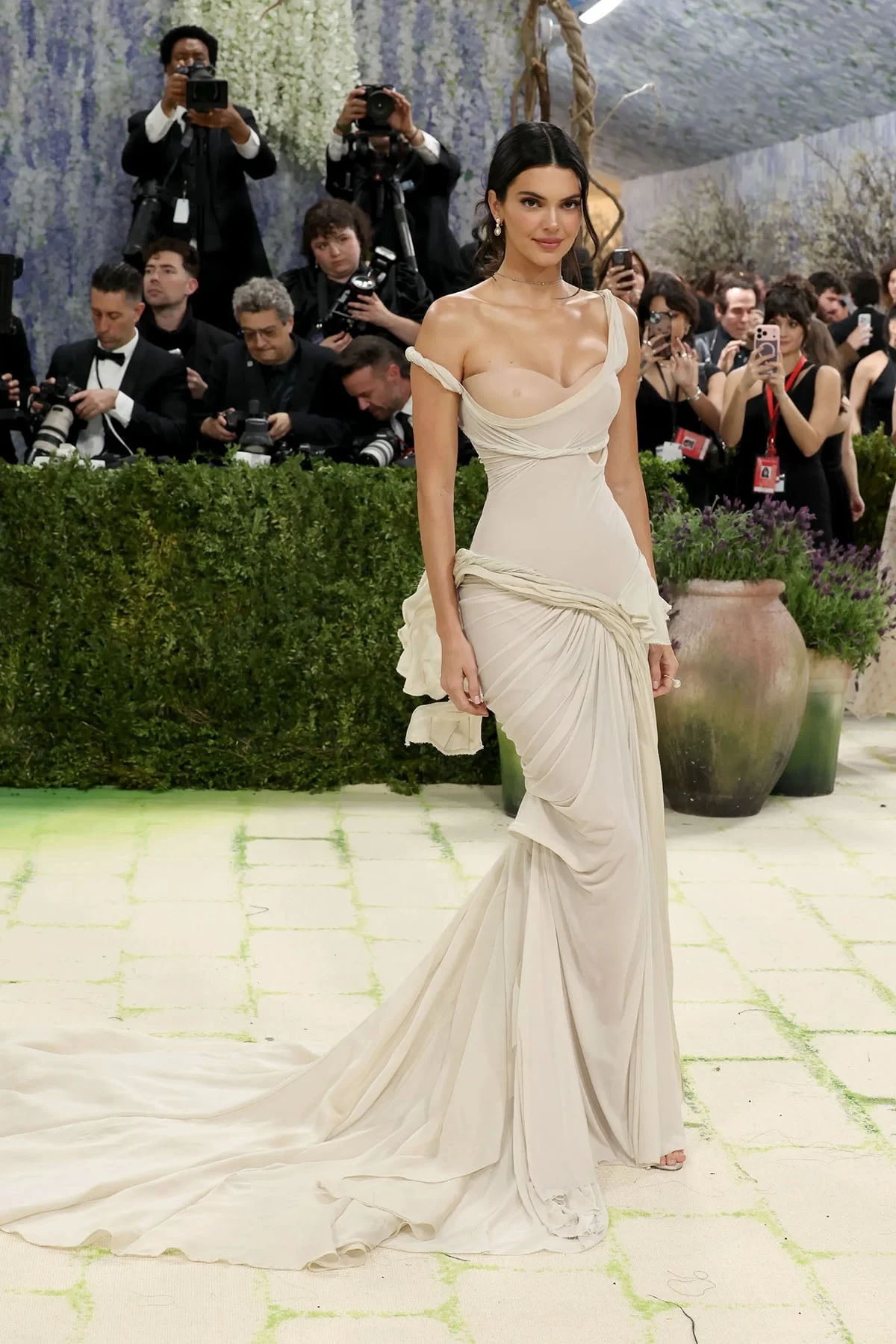
The 2026 Met Gala, an event synonymous with the intersection of high art and global celebrity, witnessed a coordinated aesthetic statement from Kendall and Kylie Jenner that centered on the anatomical form. Arriving at the Metropolitan Museum of Art, both sisters featured garments incorporating nipple-accented bodices, a provocative design choice that served as a visual anchor for their respective ensembles. While each look was executed by a different fashion house—Zac Posen for Gap and Daniel Roseberry for Schiaparelli—the shared motif established a dialogue between classical sculpture and contemporary surrealism. This thematic choice aligned with the gala’s overarching focus on the human body as both the subject of artistic inquiry and the fundamental structure of garment construction.
Thematic Context: The Body as Subject and Structure
The 2026 Costume Institute exhibition provided a conceptual framework that invited designers to explore the physical form beyond traditional tailoring. By emphasizing the body as the "foundation," the theme encouraged a departure from decorative concealment in favor of architectural exposure. The Jenner sisters’ choice to highlight anatomical features through molded leather and rigid corsetry reflected a broader movement in the fashion industry toward "anatomical realism." This trend, which has gained significant traction over the last several years, challenges traditional notions of modesty and garment utility, positioning the clothing as an extension of the wearer’s biology.
Industry analysts have noted that the nipple-accented bodice, while avant-garde in a red-carpet context, draws a direct line to commercial trends established by the sisters’ elder sibling, Kim Kardashian. The 2023 launch of the SKIMS nipple push-up bra was a pivotal moment in mainstreaming anatomical design, transitioning it from the runway to the retail market. At the 2026 Met Gala, this concept was elevated to the level of haute couture and custom-engineered apparel, signaling a maturation of the trend.
Kendall Jenner and the Evolution of the Gap Aesthetic
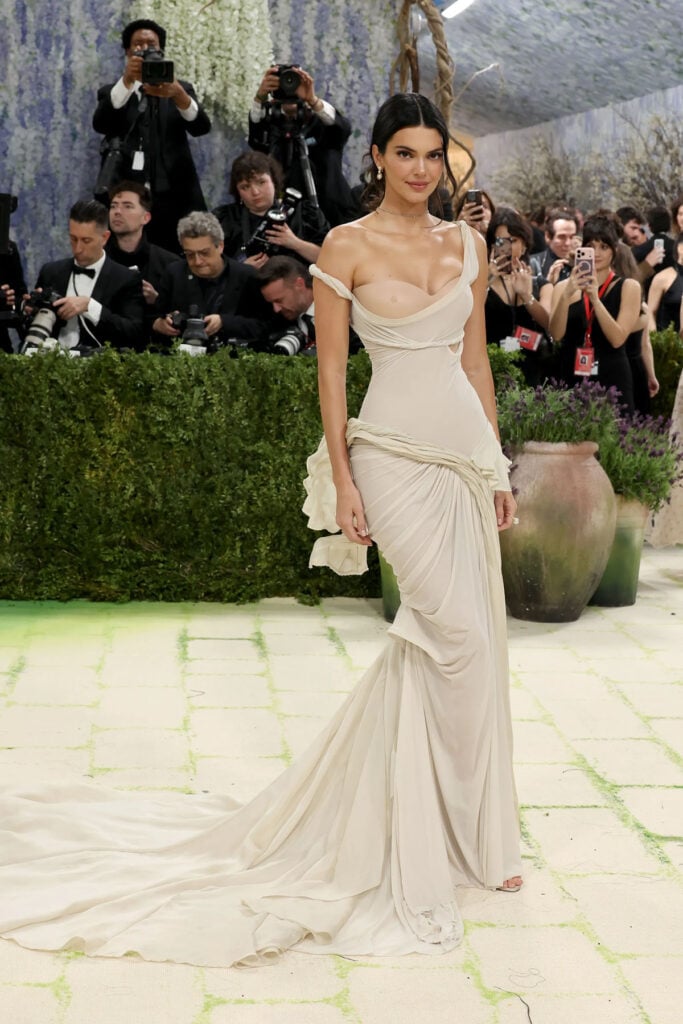
Kendall Jenner’s appearance marked a significant moment for American retail giant Gap, which has been undergoing a high-fashion transformation under the creative direction of Zac Posen. The collaboration between Jenner and Posen resulted in a white draped gown that merged mass-market accessibility with the technical rigor of custom couture.
The garment began with the fundamental DNA of a Gap white T-shirt, which was reimagined in a liquid jersey fabric. This material was meticulously draped over a custom-molded leather bodice, engineered to create a "second-skin" effect. The construction process was reportedly inverted; rather than building a dress and fitting it to the model, the bodice was sculpted to Jenner’s exact proportions first, serving as the structural base upon which the jersey was layered.

Design historians have identified the look as a modern interpretation of "wet drapery," a technique famously utilized in ancient Greek sculpture. By using fabric to trace and emphasize the musculature and form beneath, Posen’s design referenced classical antiquity while maintaining a minimalist, contemporary edge. The inclusion of the nipple-accented bodice served to ground the ethereal quality of the white jersey in the physical reality of the body, fulfilling the night’s thematic requirements of structural transparency.
Kylie Jenner and the Surrealist Vision of Schiaparelli
In contrast to the fluid classicism of her sister’s look, Kylie Jenner opted for a sharper, more architectural interpretation of the theme provided by Daniel Roseberry for Schiaparelli Haute Couture. Her ensemble consisted of a butter-toned duchesse satin embroidered ball gown paired with a sienna-toned rigid bustier.
The Schiaparelli look was designed to evoke the concept of "dressing in progress." The voluminous satin skirt was positioned low on the hips, creating the illusion of a garment caught in a state of mid-unraveling or assembly. This "mid-reveal" aesthetic shifted the focus to the internal architecture of the outfit—the corset. Unlike traditional corsetry intended to shape the body into a desired silhouette, this piece acted as an anatomical frame, emphasizing the natural contours of the torso through rigid, molded leather.
Daniel Roseberry’s work at Schiaparelli has frequently utilized gold leaf, molded resins, and trompe l’oeil effects to highlight the human form. For the 2026 Gala, the choice of a sienna-toned bustier provided a tonal contrast to the pale satin, ensuring that the structural element of the outfit remained the primary focal point. The look was finished with Schiaparelli Couture jewels, which echoed the metallic and structural themes of the garment.
Chronology of the Jenner Sisters’ Arrival and Impact
The arrival of the Jenner sisters followed a carefully orchestrated timeline designed to maximize media impact. Kendall Jenner arrived first, providing photographers with an opportunity to document the technical nuances of the Zac Posen-engineered Gap gown. Her appearance was followed shortly by Kylie, whose Schiaparelli ensemble provided a high-contrast companion piece.
- 6:15 PM: Kendall Jenner debuts the Zac Posen for Gap gown, highlighting the "second-skin" construction and the return of Posen to the Met Gala stage in a creative leadership role for a major American brand.
- 6:30 PM: Kylie Jenner arrives in Schiaparelli, showcasing the "mid-reveal" couture concept. The two sisters pose together on the grand staircase, allowing the shared nipple-accented motif to become a central narrative of the evening’s fashion coverage.
- 7:00 PM: Social media engagement metrics indicate that the "anatomical bodice" trend has become the most discussed design element of the night, surpassing more traditional floral or historical references.
- 8:30 PM: Designers Zac Posen and Daniel Roseberry release brief statements via their respective fashion houses, detailing the technical challenges of molding leather to achieve the desired anatomical precision.
Market and Industry Implications
The choice of Gap as a primary designer for Kendall Jenner carries significant weight within the retail industry. Under Zac Posen’s direction, Gap Inc. is seeking to bridge the gap between its heritage as a provider of American basics and its potential as a player in the luxury fashion space. Utilizing the Met Gala—the world’s premier fashion stage—to showcase a custom-engineered leather and jersey gown serves as a high-profile rebranding effort. It demonstrates that the brand can handle complex, theme-driven design while remaining true to its origins in simple textiles like the white T-shirt.
Furthermore, the dual appearance of the Jenner sisters in nipple-accented bodices underscores the Kardashian-Jenner family’s role as trend-setters who operate at the intersection of commerce and couture. By taking a concept popularized through a commercial venture (SKIMS) and re-contextualizing it within the framework of Schiaparelli and Zac Posen, they have validated the "body-as-structure" movement for a global audience.
Official Statements and Reactions
While the designers remained largely focused on the technical aspects of the garments, representatives for the fashion houses emphasized the collaborative nature of the projects. A spokesperson for Gap stated, "The goal was to take an icon of American fashion—the white T-shirt—and elevate it through the lens of the Costume Institute’s theme. Working with Zac Posen and Kendall Jenner allowed us to explore the intersection of comfort and construction."
In a statement released by Schiaparelli, Daniel Roseberry noted, "The 2026 theme offered an opportunity to look at the corset not as a tool of restriction, but as a piece of external architecture. Kylie’s look is about the beauty of the unfinished and the power of the human form as the ultimate canvas."
Conclusion: The Lasting Influence of Anatomical Fashion
The 2026 Met Gala will likely be remembered for the shift away from surface-level decoration toward a deeper exploration of the body’s role in fashion. Kendall and Kylie Jenner’s ensembles were not merely aesthetic choices; they were technical demonstrations of how modern materials—liquid jersey, molded leather, and duchesse satin—can be used to celebrate the human form.
By aligning their visual cues, the sisters presented a unified front that mirrored the night’s focus on subject and structure. Whether through the lens of Zac Posen’s classical romanticism or Daniel Roseberry’s surrealist couture, the message was clear: the future of fashion lies in its ability to integrate the garment with the wearer’s physical identity. As the "anatomical realism" trend continues to evolve, the Jenner sisters’ 2026 appearances will serve as a primary reference point for the fusion of celebrity influence, commercial branding, and high-art design.