









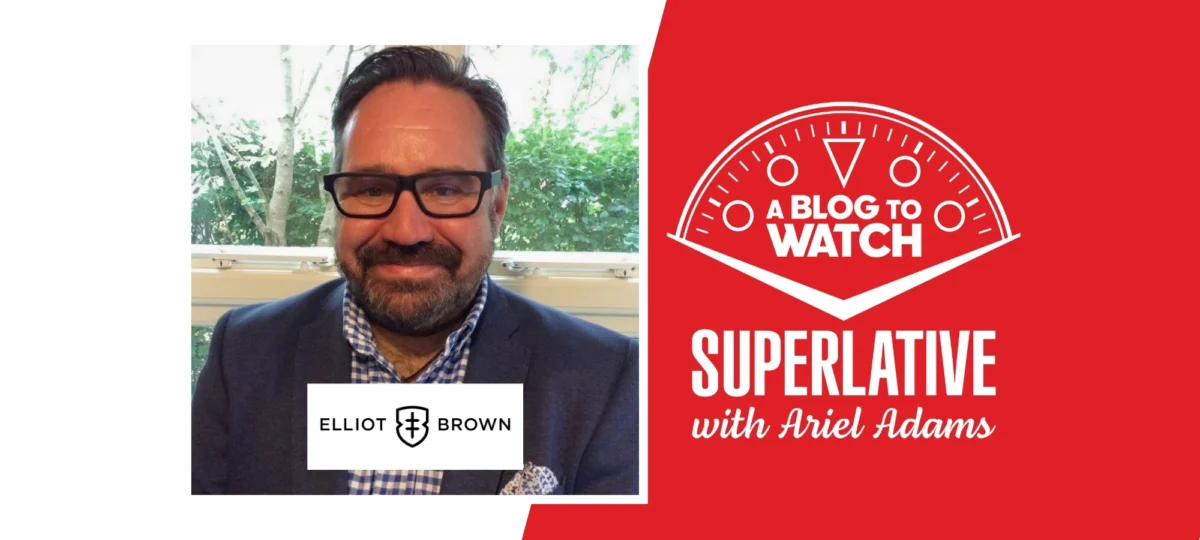
The landscape of the global watch industry is undergoing a structural realignment characterized by shifting consumer preferences, the rise of independent manufacturers, and a notable pivot away from traditional retail models. In the latest installment of the Superlative podcast, aBlogtoWatch founder Ariel Adams hosted Guy Allen, the Head of Sales at British watchmaker Elliot Brown, to dissect these trends. The conversation provided a comprehensive overview of the current state of horology, drawing on Allen’s extensive four-decade career that spans from the early days of novelty watch manufacturing to the high-stakes world of tactical, military-grade timekeeping.
A Chronology of Industry Transformation
Guy Allen’s career serves as a historical lens through which to view the evolution of the watch market. His entry into the industry began during an era dominated by high-volume, licensed, and novelty-driven products, including an early tenure involving LEGO-branded timepieces. This period preceded the modern "renaissance" of mechanical horology that began in earnest in the early 2000s.
The timeline of Allen’s professional trajectory highlights a significant transition: the movement from mass-market fashion watches toward the current obsession with "tool" watches. As Elliot Brown solidified its position as a British independent brand, it carved out a niche by focusing on durability and real-world utility. A defining moment in this trajectory was the brand’s collaboration with the United Kingdom’s Tier One Special Forces. This partnership led to the development of the Holton, a timepiece engineered specifically to meet the stringent demands of military operators. This move signaled a broader industry trend where authentic, performance-tested gear is increasingly valued over status-oriented luxury objects.
The Rise of the Independent and the "Tool Watch" Ethos
The success of Elliot Brown highlights a crucial shift in how enthusiasts define value. In the past, brand equity was largely determined by historical prestige and Swiss provenance. Today, independent brands are successfully challenging this hegemony by emphasizing transparency, extreme durability, and direct-to-consumer (DTC) engagement.
According to data presented during the discussion, the "tool watch" segment—timepieces designed to withstand extreme environmental conditions—has seen a surge in interest. This interest is driven by a collector base that is increasingly indifferent to traditional brand hierarchy. Collectors now routinely exhibit "multi-tier" purchasing habits, where a single individual might own a high-end luxury watch alongside a rugged, utilitarian piece like an Elliot Brown Holton. This behavior suggests that "authenticity" has become a new currency in the watch world, replacing the legacy of heritage with the reality of engineering excellence.
Economic Realignment and the Swiss Price Paradox
One of the most pressing topics addressed by Adams and Allen was the recent aggressive pricing strategy employed by major Swiss watch conglomerates. Over the past five years, the luxury watch sector has experienced unprecedented price hikes, often outpacing inflation. Ariel Adams noted that major Swiss houses have intentionally moved toward a model of "higher prices, lower volume." This strategy seeks to position these brands as "Veblen goods"—items for which demand increases as the price rises—thereby protecting exclusivity.
However, this strategy has created a vacuum in the mid-market. As legacy brands move further into the luxury stratosphere, independent makers are capturing the segment left behind. Guy Allen raised a critical point regarding the "value proposition" of familiar, mass-market luxury watches. He suggested that as prices climb without proportional increases in technical innovation or finishing quality, consumers are beginning to question the justification for these costs. This skepticism is fueling the growth of independent watchmaking, which offers more tangible value for every dollar spent.

The Movement Supply Crisis
Beyond consumer behavior, the discussion turned to the technical realities of the industry, specifically the ongoing movement supply crisis. Smaller, independent brands have long relied on external suppliers like the Swatch Group’s ETA or the Japan-based Miyota (Citizen Group) and Seiko.
Current market data indicates that the supply chain for reliable, entry-level mechanical movements has tightened significantly. As major groups prioritize their own internal brands, smaller manufacturers are facing two primary hurdles: reduced availability and rising costs. The increased price of popular Japanese movements, often considered the "workhorses" of the industry, has forced independent brands to innovate. This constraint is driving a secondary trend: the rise of proprietary or customized movements, as brands realize that relying solely on third-party supply chains is no longer a viable long-term strategy.
The Shift Toward Direct-to-Consumer Models
The traditional retail model—relying on third-party boutiques and high-street jewelers—is being rapidly supplanted by direct-to-consumer (DTC) channels. For brands like Elliot Brown, the move toward DTC is not merely a cost-saving measure; it is a strategic decision to maintain control over the customer experience.
By bypassing traditional retail, brands gain access to valuable consumer data, allowing for more precise product development and direct feedback loops. Allen emphasized that this model allows for a more "authentic" relationship between the watchmaker and the user. The modern enthusiast is no longer content to simply purchase a watch from a display case; they want to engage with the brand’s narrative, participate in community events, and feel a sense of ownership in the brand’s mission.
Broader Implications for the Horological Market
The synthesis of these factors—rising luxury prices, the bottleneck in movement supply, and the rise of DTC—points toward a future where "brand name" matters less than "brand substance." The industry is moving away from the centralized model of the late 20th century toward a decentralized, community-driven ecosystem.
The implications for investors and collectors are clear:
- Diversification of Value: The market is bifurcating. One segment will continue to chase the high-end luxury icons, while another, perhaps larger, segment will prioritize high-performance, independent watches that offer superior technical specifications for the price.
- Operational Resilience: Brands that control their supply chains and maintain direct relationships with their customers are better positioned to weather economic downturns than those reliant on traditional retail networks.
- The Authenticity Premium: As consumers become more educated, they are increasingly able to distinguish between marketing-driven heritage and engineering-driven performance. Brands that can demonstrate real-world utility—like the military partnerships forged by Elliot Brown—will likely see sustained demand.
Concluding Perspectives
The dialogue between Ariel Adams and Guy Allen serves as a case study for the current state of horology. The industry is in the midst of a generational shift. While the prestige of Swiss watchmaking remains a cornerstone of the market, the narrative is being rewritten by independent players who prioritize agility, authenticity, and transparent value.
As the industry moves into the next decade, the ability to navigate the complexities of global supply chains while maintaining a direct, meaningful connection with the consumer will be the primary determinant of success. The "Swiss Price Paradox" may continue to alienate a portion of the market, but this, in turn, provides the necessary oxygen for independent brands to flourish. Whether through the development of specialized tactical tools or the adoption of new digital retail paradigms, the future of the watch industry appears to be one where the brand is defined not by its history alone, but by its relevance to the modern user’s lifestyle.