





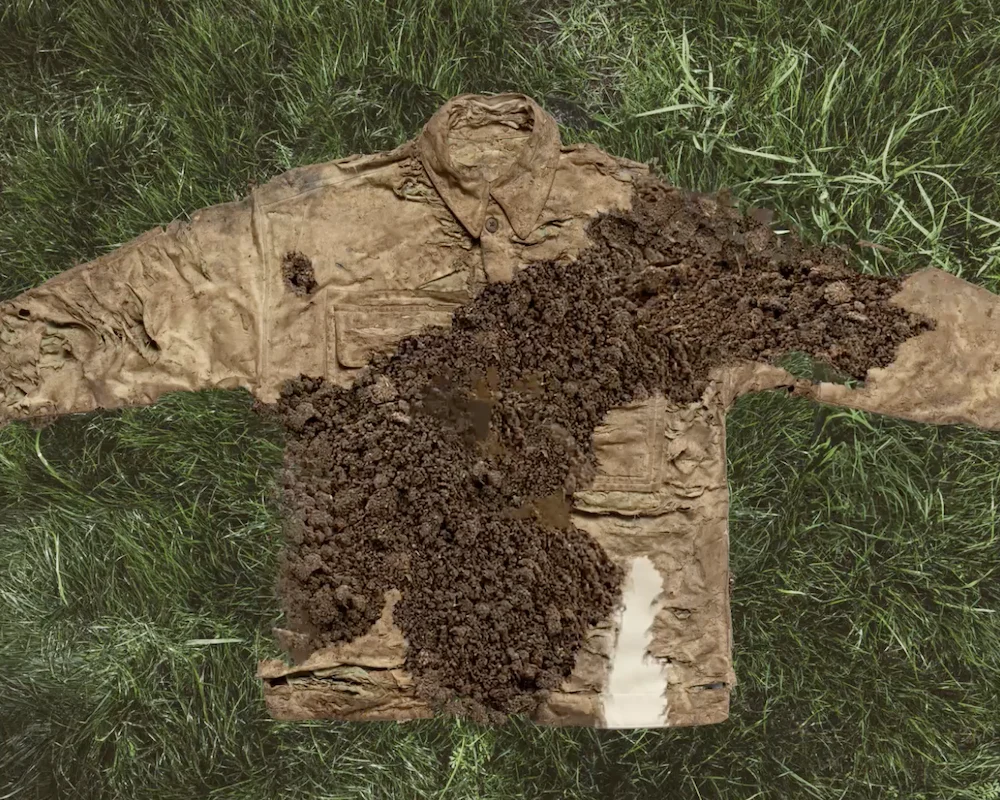
A growing number of brands are now championing clothes and shoes designed to decompose and return to the earth, a movement often dubbed "soilpunk." This vision is undeniably appealing, offering a tangible antidote to the mounting crisis of textile waste. However, as analyst and researcher Fru Bekefi explores in this comprehensive report, the practicalities of compostable fashion—from certification ambiguities and consumer misunderstanding to the inherent limitations of home composting—reveal a complex landscape where marketing narratives often outpace tangible systemic change.
The Mounting Crisis of Fashion Waste and the Allure of Circularity
The global fashion industry, valued at over $3 trillion, is a significant contributor to environmental degradation, with its linear "take-make-dispose" model generating colossal amounts of waste. Annually, an estimated 92 million tons of textile waste are generated worldwide, with a staggering 87% of all textile waste incinerated or ending up in landfills, where synthetic fibers can persist for hundreds of years. This grim reality fuels widespread "eco-anxiety," exacerbated by images of discarded fast fashion piling up in locations from Accra, Ghana, to Chile’s Atacama Desert, and dire warnings about irreversible climate tipping points. In this context, the concept of composting—an alchemical process that transforms waste into valuable resources—has gained significant cultural and material resonance. The idea of a garment, once a cherished companion, gently returning to the soil to nourish new life offers a powerful, comforting narrative that contrasts sharply with the images of ecological collapse.
This burgeoning interest in regenerative practices and soil health has birthed the "soilpunk" movement, a niche but influential current in art, design, and culture. Soilpunk advocates for a deep connection to the earth, emphasizing regenerative agriculture and the vital role of healthy soil. Its influence is apparent across various domains, from ecological restoration gaming simulations like "The Regreening" to exhibitions, tarot decks, and even music tracks celebrating soil’s life-sustaining properties. Composting itself has transcended its utilitarian origins, evolving into a cultural statement, even a "status" symbol, particularly in regions like New York and France, where separating food waste has become mandatory. This societal shift provides fertile ground for the fashion industry to explore and promote compostable collections.
Industry’s Tentative Steps: Pilot Projects and the "Innovation Halo"
Despite the entrenched dominance of fossil-fuel fibers and synthetic blends in the material mix, and the relentless pace of ultra-fast fashion, a small but dedicated group of designers, material innovators, and brands are actively exploring soilpunk circularity. These pioneers are questioning whether the aspirational vision of compostable fashion can withstand rigorous scrutiny and scale beyond experimental pilots.
The irresistible appeal of clothing that "returns to the earth" makes compostable fashion a powerful tool for brands seeking to signal regenerative intent. As design futurist and author Sarah Housley observes, "Compostable fashion is having an extended moment because consumers have become aware of low rates of recycling, particularly for textiles. They’re seeking alternatives that still feel ecologically responsible, and the idea that your clothing can return to the earth is so irresistible. It’s popular with brands for similar reasons." Housley notes that while textile recycling demands daunting systemic changes, compostable designs might appear "a little easier to crack." This perception has led to a flurry of small-scale initiatives that, while commendable, often serve to create an "innovation halo" around companies.
One notable example is the "regenerative sportswear collection" debuted by Under Armour and Unless Collective during Milan Design Week in April 2025. With the evocative tagline "Make Good Dirt," this pilot project teased a future where worn-out athletic gear could simply be buried in a backyard. Similarly, Stella McCartney, a long-standing advocate for sustainable fashion, has been pushing boundaries with its S-Wave sneakers. Her latest upgrade, developed in collaboration with material science startup Balena, features BioCir Flex soles crafted from leftover cinnamon from the spice industry, imbuing the shoes with a comforting, earthy fragrance. This multi-year R&D project marks a significant step, moving beyond earlier S-Wave versions that relied on recycled TPU (thermoplastic polyurethane) for soles, which were not fully circular. The BioCir Flex soles are designed to be durable and, ultimately, industrially compostable through Balena’s global network, serving as a last resort in the product’s life cycle after reuse and recycling options are exhausted.
Beyond full garments, biodesigners are also leveraging "incentive aesthetics"—a concept by Oonagh O’Hagan that uses speculative design to envision sustainable luxury fashion futures—to forge deeper connections with consumers. Startup Cell Sense, founded by materials designer Aradhita Parasrampuria, exemplifies this approach. Cell Sense creates compostable biodesigned embellishments, such as jade-like bioluminescent beads, to combat microplastic pollution and the health impacts of toxic dyes. These beads boast a 15-year lifespan yet decompose in kitchen compost within four weeks. Cell Sense’s collaboration with personal care company Dulcie (formerly Haeckels) on a durable yet compostable exfoliating face cloth, framed as a limited-edition experiment, showcased transparency by offering audiences a behind-the-scenes look at the biomineral-inspired design process through blogs and social media.
Distinguishing Compostable from Biodegradable: Critical Nuances
The journey towards genuine compostable fashion is fraught with definitional complexities and practical challenges. A crucial distinction must be made between "compostable" and "biodegradable," terms often conflated in marketing. "Compostable" implies breaking down into organic matter within a specific timeframe under defined conditions (either home or industrial). "Biodegradable," however, can occur over an unspecified period, potentially in environments that offer no ecological benefit, leading to its unvalidated use being prohibited by the EU, and outright banned in marketing by some member states like France and Belgium.
Research underscores this problem. A recent paper in iScience, co-authored by Fashion Revolution co-founder Carry Somers, revealed that cotton, often perceived as universally environmentally benign, accounted for over 70% of the 150-year fiber record in sediment from a UK lake historically fed by textile mills. This demonstrates that even natural fibers can persist far longer than expected in certain environments. Asha Singhal, director of the Nature of Fashion Initiative at the Biomimicry Institute, emphasizes, "Biodegradation is not just about the material itself. It depends on the ecosystem around it, from temperature and moisture to the presence of the right microbes." Simply put, a 100% cotton T-shirt thrown into an unsuitable environment is not guaranteed to biodegrade effectively.
The Practicalities of Composting Fashion: Materials, Conditions, and Impact
For a garment to be truly compostable, its material composition is paramount. Becca Willcox, ratings analyst at Good On You, identifies the most suitable fabrics as organic cotton, linen, kapok, hemp, organic bamboo, jute, wool, and some man-made cellulosic fibers like viscose and Lenzing Tencel. However, this is just the starting point. Dyes and chemical treatments can render these otherwise natural fibers non-compostable. Furthermore, functional and decorative trims—zippers, buttons, sequins, synthetic threads, and labels—must all be completely removed before a garment can enter the composting stream. This often overlooked detail presents a significant hurdle for consumer engagement.
The composting process itself is highly variable, especially in home settings. "The conditions in home composting systems are highly variable, in terms of temperatures, moisture levels, and the microbes that are present," explains Willcox. "Without the right conditions, textiles may take a lot longer than expected to break down, and perhaps much longer than achieved under the test conditions. The items won’t necessarily break down quickly if they are just left and forgotten about." Industrial composting facilities, with their controlled environments, higher temperatures, and optimized microbial activity, offer a more reliable breakdown process.
Crucially, composting is not a universal panacea for fashion waste. Willcox points out, "Composting isn’t always the solution with the lowest impact. You are completely destroying the fibre rather than extending the lifespan of clothing, while failing to cut the demand for new items." Therefore, composting is best suited for items that cannot be reused, repaired, or recycled—such as underwear, socks, or heavily damaged garments where fiber integrity is compromised. This hierarchical approach prioritizes extending product life, with composting acting as a valuable end-of-life solution for specific categories.
Footwear presents a particularly compelling, yet complex, case for compostable design. An estimated 90% of the 23.8 billion pairs of shoes produced annually end up in landfill or are incinerated, largely due to their intricate construction involving multiple glued layers of foam, rubber, mesh, and synthetic leather, which makes them nearly impossible to recycle. Initiatives like Fashion For Good’s "Closing the Footwear Loop," launched in February, bring together global brands like Adidas, Zalando, Inditex, and Target to address these circularity challenges. While improving recycling is a priority, exploring bio-based polymers for soles to phase out fossil fuel-derived materials is a key research stream, aligning with Stella McCartney’s efforts.
Overcoming Systemic Hurdles: Infrastructure, Certification, and Consumer Behavior
The vision of compostable fashion, however seductive, confronts significant systemic hurdles related to infrastructure, credible certification, and consumer behavior. One of the most glaring issues is the "huge amount of behaviour change for brands to engineer into place," as Sarah Housley notes. This includes incentivizing customers to return products for professional disposal, or guiding them through the often-complex process of home composting.
Underwear brand Kent provides a leading example with its "Compost Club," the fashion industry’s first take-back program for textile waste. Relaunching in summer 2026, the program allows US-based customers to purchase a $5 shipping label and return kit for their washed, cut-up briefs. These are then sent to a community composting organization in Southern California, transforming textile waste into nutrient-rich soil and diverting it from landfills, while customers receive a $10 credit. This model successfully addresses the collection and processing challenge, particularly for an item like underwear that is frequently replenished, has limited reuse/recycling potential, and no resale value.
However, such initiatives are still niche. The broader infrastructure for composting textiles, especially at a consumer-friendly scale, is largely absent. Consumers surveyed for this report expressed strong interest in composting items like underwear, socks, tights, and shoes, but almost none had actually tried it, citing lack of suitable facilities and concerns about durability.
Certification schemes designed to guarantee home composting are rare and not widely adopted. While certifications like OK compost HOME by TÜV AUSTRIA and Cradle to Cradle (C2C) offer useful indicators, they have limitations. TÜV’s certification, for instance, validates individual fibers rather than finished garments. C2C-certified products may guarantee compostability, but the organization itself acknowledges that textiles are "most likely" to be recycled into new products rather than composted. This highlights a significant "composting literacy" gap. "Explaining the difference between home compostable and industrially compostable is crucial," Housley emphasizes, "because people who haven’t gone to the effort of educating themselves will not see any difference between the two, and will think that any compostable item can go in their food waste bin when that’s not the case."
The Future of Compostable Fashion: Complementary Solutions and Transformative Potential
Currently, compostable clothing remains in its experimental phase, largely appealing to curious and committed early adopters seeking regenerative alternatives. Research suggests that small, vocal minorities can catalyze significant social change, with a "tipping point" of roughly 25% needed to shift norms. The dedicated early adopters of compostable fashion could represent this minority, provided the underlying systems evolve to support them.
However, the future landscape for sustainable fashion is dynamic. Consumer sentiment and industry priorities will heavily influence the trajectory of compostable design. There’s a risk that if compostable designs don’t scale up quickly, the public may increasingly perceive them as greenwashing. Moreover, advancements in textile-to-textile recycling are becoming more commercially viable and may draw some of the spotlight away from alternative strategies like composting. For example, in 2023, the European Union proposed targets for textile waste reduction and recycling, pushing for extended producer responsibility (EPR) schemes that incentivize brands to invest in robust recycling infrastructure.
Ultimately, compostable propositions are not a standalone "cure-all" but a valuable, complementary strategy within a broader circular economy framework. They are best deployed in a targeted, intentional manner, supporting—rather than replacing—reuse and recycling. Their enormous potential lies in specific apparel categories, such as replacing seductive but toxic embellishments with biodesigned alternatives, or transforming materials that are beyond their original purpose into a valuable resource for soil regeneration.
The true power of compostable design resides in its promise of metamorphosis. It challenges us to imagine what an object or material can become through decomposition, transforming waste into nourishment. As the industry matures and infrastructure catches up, the "soilpunk" dream could evolve from a niche aspiration into a tangible reality, allowing us to witness the cyclical unfolding of fashion in our own gardens, contributing to a truly regenerative future.
Editor’s Note: Lead image is a collage by JD Shadel. Decomposing jacket is a still from an Under Armour x Unless promotional video. And the third image is courtesy Kent. Good On You publishes the world’s most comprehensive ratings of fashion brands’ impact on people, the planet, and animals. Use our directory to search thousands of rated brands.