









In an increasingly globalized economy, where supply chains stretch across continents and "fast fashion" dominates consumer habits, the pursuit of truly "Made in USA" apparel has evolved from a commonplace expectation into a deliberate and often costly endeavor. For decades, iconic American brands like Brooks Brothers and Ralph Lauren set the standard for domestic sartorial excellence, their names synonymous with American craftsmanship. However, economic pressures, the allure of lower production costs overseas, and shifting market dynamics have led many to relocate manufacturing, making the "Made in USA" label increasingly rare in the contemporary menswear landscape. This shift raises a pertinent question for the discerning modern gentleman: Is it still genuinely possible to construct a complete, high-quality, ready-to-wear outfit using only American labor and materials? A recent investigation delved into the digital marketplace to uncover the reality of this challenge.
The Historical Context of American Manufacturing
The mid-20th century marked the zenith of American manufacturing, particularly in textiles and apparel. Following World War II, a booming domestic economy, coupled with a lack of significant overseas competition, fostered a vibrant manufacturing sector. Towns across the Northeast and South thrived on textile mills, garment factories, and skilled labor. Brands proudly stamped "Made in USA" on their products, a mark of national pride and a guarantee of local employment. However, beginning in the 1970s and accelerating through the 1990s with trade agreements like NAFTA and the subsequent integration of China into the global economy, American manufacturing faced unprecedented competition. Companies, seeking to reduce labor costs and increase profit margins, began a mass exodus of production facilities overseas. This era witnessed the closure of countless factories, the decline of once-bustling textile towns, and a significant loss of specialized skills in the domestic workforce. Today, only a fraction of clothing sold in the U.S. is domestically produced, making the search for American-made goods a niche pursuit.
Defining "Made in USA": Federal Trade Commission Standards
To ensure clarity and maintain adherence to consumer protection regulations, the exploration of American-made apparel strictly followed the Federal Trade Commission (FTC) guidelines for "Made in USA" claims. The FTC mandates that for a product to be labeled as "Made in USA" without qualification, "all or virtually all" of the product must be made in the United States. This rigorous standard implies that all significant parts, processing, and labor that go into the final product must originate from the U.S. This includes not just assembly but also the sourcing of raw materials to the greatest extent possible. For the purpose of this investigation, products explicitly carrying the "Made in USA" label or confirmed to be manufactured domestically, often with a commitment to U.S.-sourced components where feasible, were considered.

The All-American Ensemble: A Component-by-Component Analysis
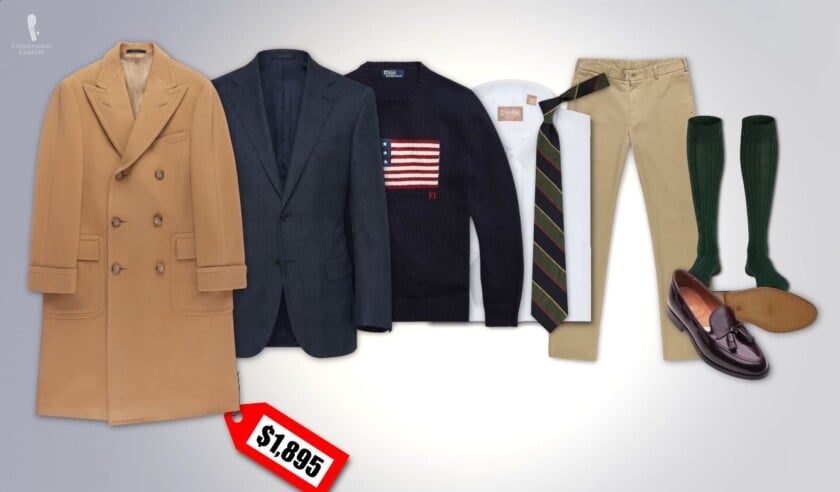
The objective was to assemble a sophisticated, classic men’s outfit, encompassing shoes, socks, trousers, shirt, tie, sweater, sport coat, overcoat, and a hat, all adhering to the strict "Made in USA" criteria.
Foundation: Footwear & Socks
-
Alden 563 Tassel Moccasin: $967
Alden Shoe Company, established in 1884 in Middleborough, Massachusetts, stands as one of the last remaining American shoemakers committed to traditional bench-made construction. Their dedication to quality and time-honored techniques has cemented their reputation among connoisseurs. The 563 Tassel Moccasin, crafted from Color 8 shell cordovan, exemplifies this legacy. Shell cordovan, a rare and durable equine leather, is renowned for its rich patina and longevity, making it a significant investment. Alden’s meticulous 212-step process, performed entirely in their Massachusetts factory, ensures exceptional comfort, fit, and repairability. This choice represents not just a shoe, but a commitment to an artisanal tradition that has largely vanished from American shores, reflecting a heritage premium. -
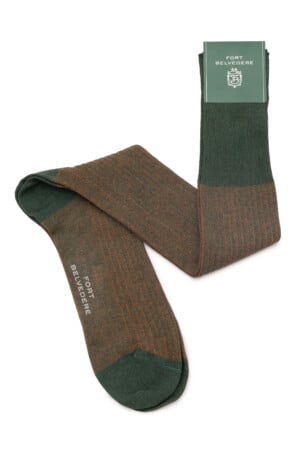
Boardroom Socks (74% Cotton / 23% Nylon / 3% Spandex): $19.50
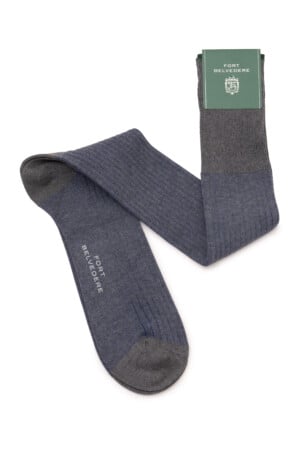
Over-the-calf socks are a fundamental element of a properly dressed gentleman’s wardrobe, ensuring comfort and preventing unsightly gaps between trousers and shoes. Boardroom Socks, a North Carolina-based company, offers American-made options. However, their standard blend, which includes a significant proportion of artificial fibers (nylon and spandex), is a common industry practice to enhance durability and elasticity. While functional, this blend can compromise breathability, potentially leading to discomfort and increased perspiration, particularly in warmer climates or for extended wear. The challenge of sourcing 100% natural fiber socks domestically highlights the complexities of achieving pure American-made garments, as many specialized yarns are no longer produced in the U.S. Alternatives, such as Fort Belvedere’s midweight cotton socks, which prioritize 100% natural cotton yarns for enhanced breathability and comfort, indicate a conscious effort by some brands to address these material considerations, offering diverse options for discerning consumers.
Mid-Section: Shirt & Trousers
-
Gitman Brothers Gold Oxford Cloth Button Down (OCBD): $235
The Oxford Cloth Button Down shirt is an undisputed cornerstone of American menswear, famously associated with the Ivy League style. Gitman Brothers, with a history tracing back to the 1930s in Ashland, Pennsylvania, is one of the few remaining U.S. manufacturers that continues to produce these shirts with an unwavering commitment to quality. The "Gold" line signifies their premium offering, often featuring superior fabrics and construction. Key to the classic "Ivy look" is the shirt’s soft collar roll, a detail meticulously preserved by Gitman Brothers, differentiating their shirts from mass-produced alternatives. Their continued domestic production not only supports American labor but also maintains an authentic connection to this iconic style. -
Bill’s Khakis Original Twill: $195
Inspired by the rugged and functional military chinos worn during World War II, Bill’s Khakis, founded in Reading, Pennsylvania, carved a niche by recreating the authentic American khaki. Their Original Twill trousers are celebrated for their durability, substantial fabric weight, and a higher rise that offers a more comfortable and traditional fit than many contemporary low-rise options. The brand’s commitment to U.S. manufacturing ensures a product that harks back to an era of robust, long-lasting garments. These khakis provide a versatile foundation, pairing seamlessly with both casual knitwear and more formal tailoring, embodying a practical yet refined American aesthetic.
Layering: Knitwear & Tailoring
-
Ralph Lauren Flag Sweater: $398
While Ralph Lauren operates on a global scale with a vast international supply chain, certain iconic pieces, particularly those imbued with strong American symbolism, retain domestic production. The Iconic Flag Sweater is a prime example. This recognizable garment, often featuring the American flag intarsia-knitted, serves as a patriotic statement and a nod to classic American preppy style. Its navy crew neck design makes it a versatile layering piece, adding warmth and visual interest when worn over a shirt and tie. The domestic manufacturing of such a high-profile item underscores its symbolic value within the brand’s identity, even as much of its broader collection is produced elsewhere. -
Joseph Abboud Plaid Sport Coat: $460
The scarcity of major tailoring facilities in the United States makes Joseph Abboud’s commitment to domestic production particularly noteworthy. Produced in the historic New Bedford, Massachusetts factory (part of the Tailored Brands network), this plaid sport coat represents a tangible link to America’s tailoring heritage. The New Bedford facility is one of the largest and most significant tailoring operations remaining in the U.S., employing skilled artisans who craft tailored garments. A plaid jacket offers inherent versatility, allowing for a sophisticated yet less formal alternative to a full suit, making it an essential component for a modern gentleman’s wardrobe that values flexibility and classic style. -
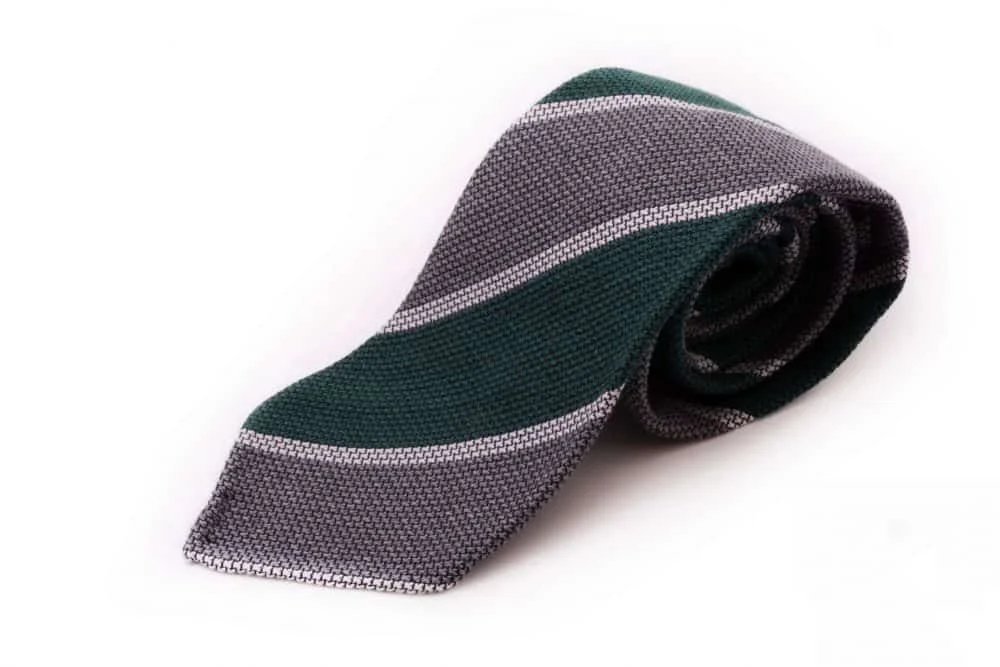
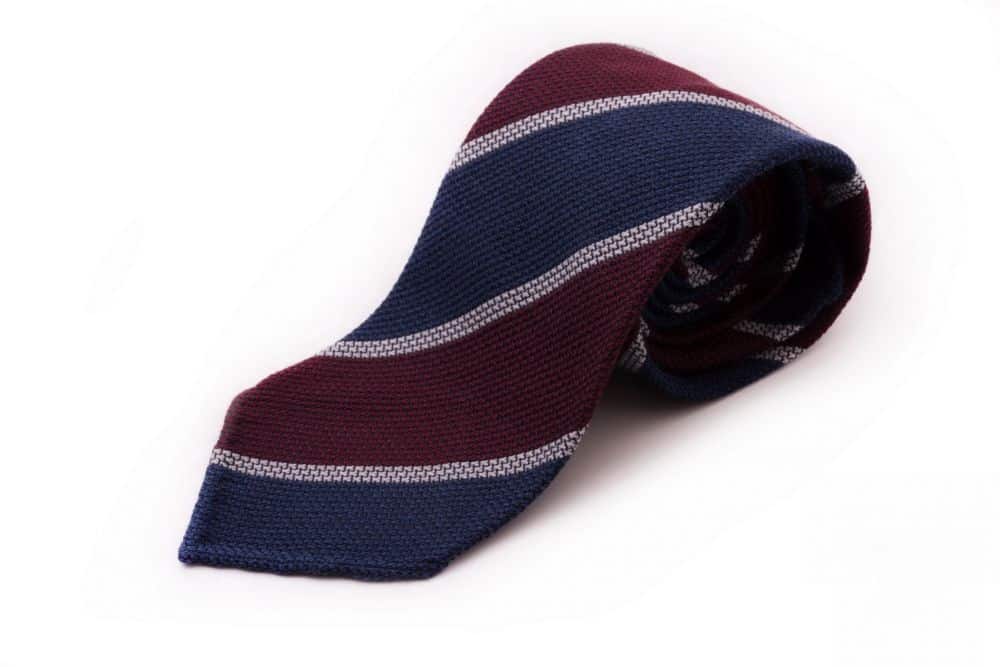
J. Press Rep Stripe Tie: $165
J. Press, established in 1902 adjacent to Yale University, is an institution of Ivy League style. Their rep stripe ties are a true staple of this aesthetic, reflecting decades of collegiate and traditional American dress. The brand’s continued production of these classic ties, often using traditional weaving and construction methods, helps preserve a specific sartorial tradition. The craftsmanship involved in creating a high-quality necktie, from silk selection to hand-finishing, is a specialized skill. While many tie manufacturers have moved production overseas, J. Press maintains a commitment to the enduring quality and authenticity of American-made accessories.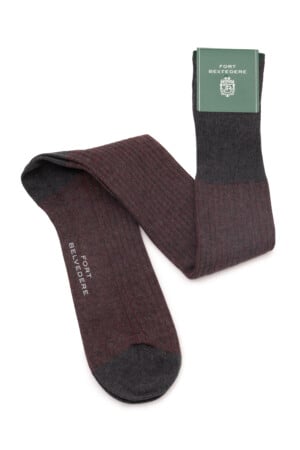
Outerwear & Finishing Touches
-
J. Press Camel Hair Polo Coat: $1,895
The polo coat holds a storied place in American outerwear history, originally designed for polo players in England and later embraced and refined in the United States. J. Press’s camel hair polo coat is a defining piece, combining warmth, luxurious texture, and a structured silhouette. Its double-breasted design and distinctive features make it a sophisticated investment piece, providing both protection from the elements and a powerful sartorial statement. The high cost reflects the premium nature of camel hair, the complex tailoring required for such a substantial garment, and the rarity of domestic production for a coat of this caliber. -
Stetson Whippet Fedora: $265
Stetson, founded in 1865 by John B. Stetson, is synonymous with American hat-making. While globally recognized for its iconic cowboy hats, Stetson also maintains a strong heritage in crafting refined dress hats. The Whippet Fedora, with its elegant silhouette and classic proportions, complements tailored clothing with a touch of timeless sophistication. The specialized skills involved in felt hat production, from shaping and blocking to finishing, are part of a craft tradition that Stetson has meticulously preserved within the United States.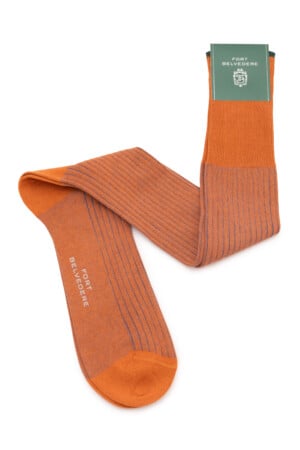
The Economic Reality: What Does It Cost to Dress American Today?
The cumulative cost of this carefully curated ensemble, totaling $4,619.50, underscores the significant premium associated with exclusively American-made high-quality apparel. This figure represents the true cost of domestic craftsmanship, reflecting higher labor wages, stringent regulatory compliance, and often smaller production runs compared to globalized mass manufacturing.
Beyond the Price Tag: The Value Proposition of "Made in USA"
The question of whether the "Made in USA" premium is justified often arises. While the upfront investment is substantial, the value proposition extends beyond mere cost.
- Supporting Domestic Labor and Economy: Purchasing American-made goods directly contributes to job creation within the United States, supporting skilled artisans, factory workers, and local communities. This economic impact is a primary driver for consumers prioritizing domestic products.
- Perceived Quality and Craftsmanship: While not an automatic guarantee, a "Made in USA" label often correlates with a higher standard of quality control and craftsmanship. Many domestic manufacturers leverage generations of expertise and adhere to meticulous production standards, resulting in durable, well-finished garments designed for longevity. The investment in such pieces often translates to a lower cost-per-wear over time.
- Ethical Production and Transparency: Domestic manufacturing typically operates under U.S. labor laws, ensuring fair wages, safe working conditions, and ethical practices that may not always be guaranteed in overseas facilities. This transparency appeals to consumers increasingly concerned with the social and environmental impact of their purchases.
- Preservation of Heritage and Skills: Supporting American brands that maintain domestic production helps preserve traditional manufacturing skills and cultural heritage that are at risk of disappearing in a globalized market. These skills, often passed down through generations, are vital to the identity of American craftsmanship.
Challenges and the Future Landscape of Domestic Production
Despite a growing consumer interest in "Made in USA," manufacturers face significant hurdles. High labor costs remain a primary challenge, making it difficult to compete with countries where wages are substantially lower. Furthermore, the decline of the domestic textile industry means that even U.S.-based apparel manufacturers often rely on imported raw materials (e.g., specialized fabrics, threads, buttons), complicating the "all or virtually all" FTC standard. Smaller production volumes also lead to higher per-unit costs compared to the economies of scale enjoyed by large international operations.

Conclusion: A Conscious Choice
Building a 100% Made-in-USA outfit today is unequivocally possible, but it demands diligent research, a commitment to supporting domestic brands, and a willingness to invest a significant sum. The "heritage premium" is a reflection of the true costs of maintaining manufacturing within the U.S., encompassing skilled labor, quality materials, and adherence to rigorous standards. For some, this premium is a worthwhile expenditure, aligning with personal values of economic patriotism, ethical consumption, and an appreciation for enduring quality. For others, a more pragmatic approach combining select American-made pieces with high-quality imported garments may be a more accessible path to a well-dressed wardrobe. Ultimately, a stylish and functional wardrobe is not solely dependent on a single country of origin but rather on the quality, fit, and timeless appeal of its individual components, and how thoughtfully they are assembled. The journey to dress entirely in American-made apparel is less about necessity and more about a deliberate choice to support a specific segment of the global economy and its inherent values.