







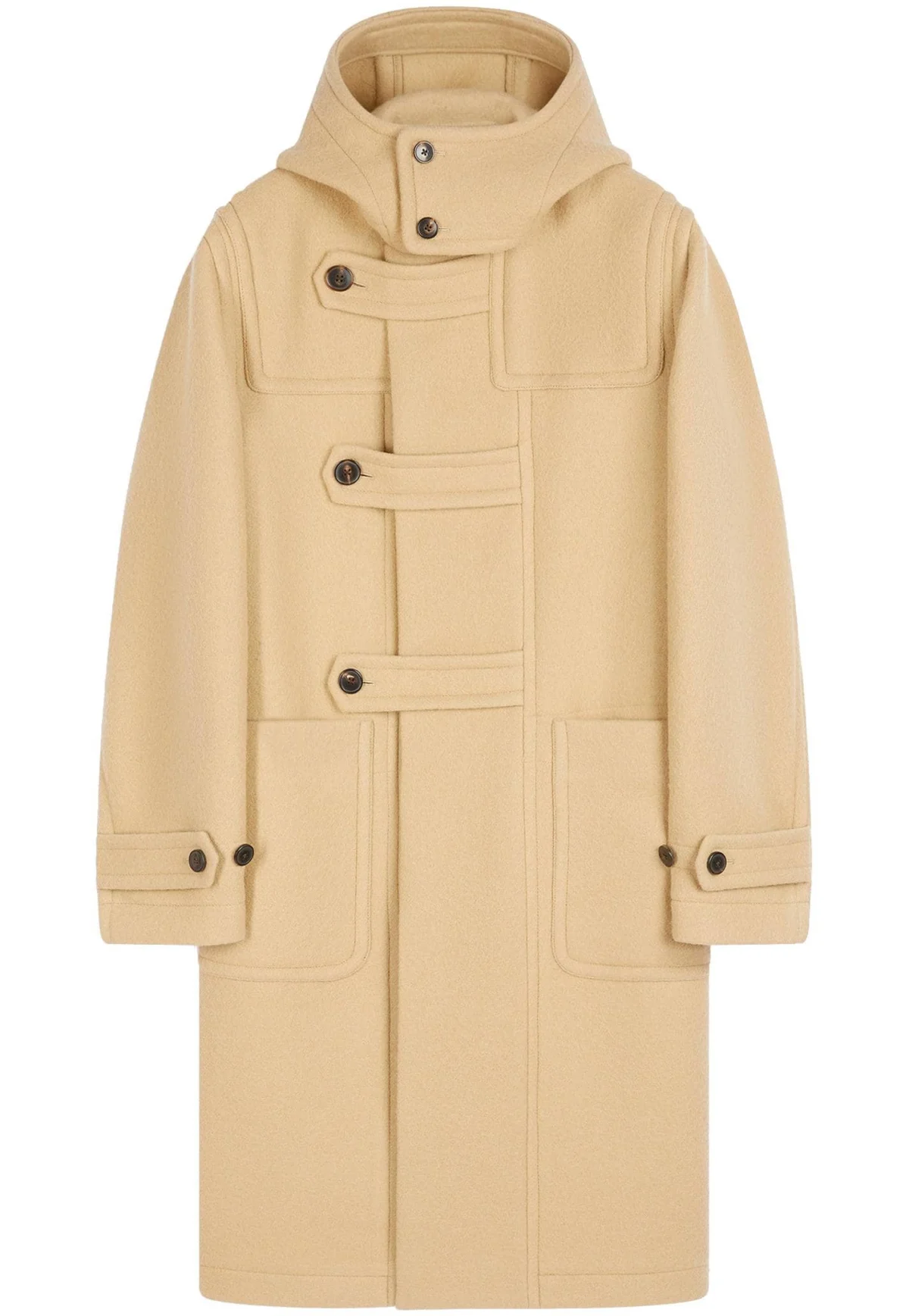
The duffle coat has firmly reasserted its status as a cornerstone of modern menswear, experiencing a significant resurgence across global runways and retail markets. Spanning well over a century of sartorial history, this functional garment balances historic pedigree with practical utility. As contemporary designers turn toward heritage silhouettes, the duffle coat—traditionally defined by its coarse wool construction, distinctive buffalo-horn toggles, and oversized hood—has transitioned from niche military surplus to a defining piece of cold-weather attire. Industry analysts note a broader consumer shift toward durable, sustainable, and timeless wardrobe investments, further accelerating the garment’s return to favor.
Historical Evolution and Military Origins
The lineage of the duffle coat is deeply rooted in maritime and military history, sharing space with foundational menswear staples such as the trench coat and the bomber jacket. Originating in the late 19th century, the design was officially adopted by the British Royal Navy to protect sailors from the harsh, freezing conditions encountered on the open decks of warships. The heavy, boiled wool fabric was specifically chosen for its natural weather-resistant properties. Enriched with lanolin—a natural oil secreted by sheep—the fabric effectively repels moisture while retaining body heat, ensuring insulation even in relentless wet weather.
During World War II, the garment saw widespread distribution among Allied forces. Field Marshal Bernard Montgomery famously championed the coat, frequently wearing it during campaigns, which inadvertently cemented its association with British military leadership. Following the conclusion of the war, surplus military stocks were released to the civilian market. These inexpensive, rugged coats quickly found favor among artists, intellectuals, and university students across the United Kingdom. This migration from naval frigate to academic campus imbued the duffle with an enduring preppy aesthetic, bridging the gap between utilitarian toughness and intellectual style.

Anatomical Design and Functional Specifications
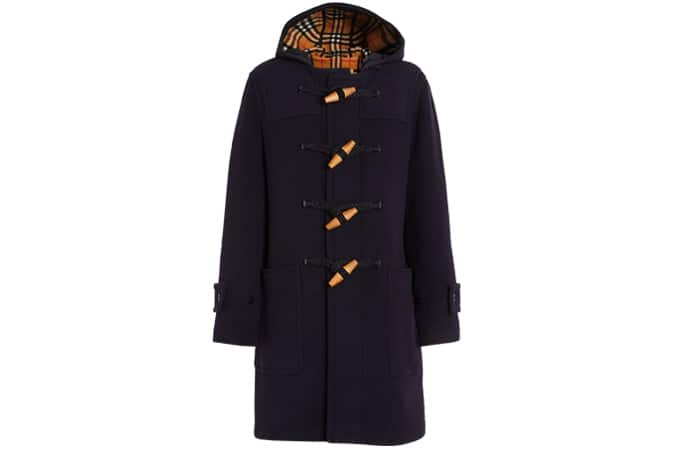
Unlike the peacoat, with which it is frequently confused, the traditional duffle coat is characterized by a generous, boxy silhouette designed to accommodate heavy layering underneath. Its structural features were engineered entirely for utility. The signature oversized hood—often compared in historical texts to a monk’s habit or a Jedi cloak—was originally built to fit comfortably over standard-issue military caps and headgear.
Further functional elements include a button-up collar bar designed to shield the neck from biting coastal winds, deep patch pockets for essential gear, and robust wooden or buffalo-horn toggles paired with jute or leather fastenings. These closures were specifically designed to be manipulated by sailors wearing thick, frozen gloves. While traditional iterations frequently extend downward to the knee to provide maximum coverage, contemporary adaptations frequently feature cropped or waist-length cuts tailored to modern urban preferences.

Market Analysis and Leading Brands
The resurgence of the duffle coat has prompted both heritage outerwear specialists and high-fashion luxury houses to reintroduce and refine the silhouette. Market segmentation currently offers consumers a diverse array of options, balancing traditional manufacturing techniques with modern styling requirements.
Gloverall
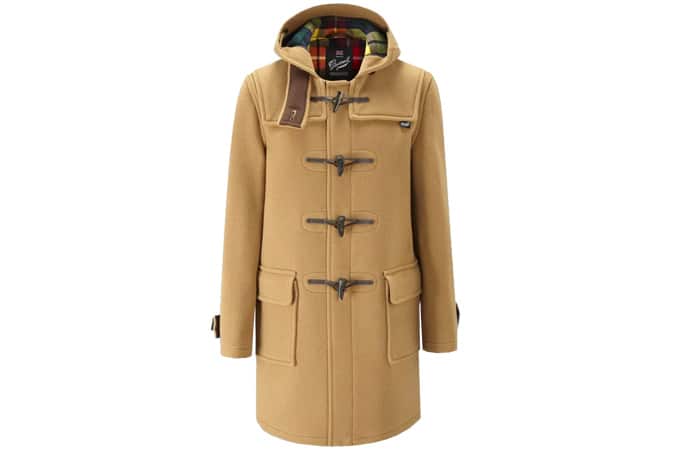
Tracing its commercial origins back to the 1950s when it acquired a massive surplus of British Admiralty duffle coats, Gloverall stands as the preeminent name associated with the garment. After successfully liquidating the military stock, the brand initiated production of civilian variations featuring trimmer bodies and updated colorways. Today, Gloverall remains the benchmark for traditional duffle manufacturing, offering classic designs alongside modernised fits and high-profile fashion collaborations.
Original Montgomery
Claiming a heritage that stretches back to the 1890s, Original Montgomery asserts itself as the oldest surviving manufacturer to have originally supplied duffle coats to the British armed forces. Operating exclusively out of England, the company maintains strict adherence to traditional craftsmanship, utilizing heavy wool blends while simultaneously updating select lines with slimmer, more contemporary silhouettes tailored to modern consumer demands.
Burberry
As a luxury house with an extensive history in British military outerwear, Burberry consistently integrates the duffle coat into its seasonal collections. Alongside traditional camel and navy offerings, the brand incorporates signature design codes, including internal tartan linings, bold patterns, and premium shearling-lined hoods, positioning the duffle firmly within the high-fashion luxury segment.

Brooks Brothers and Ralph Lauren
Representing the American preppy tradition, both Brooks Brothers and Ralph Lauren have embraced the duffle coat as a natural extension of collegiate heritage. Brooks Brothers offers tailored, 100-percent wool iterations with subtle hardware details, whereas Ralph Lauren utilizes the silhouette to experiment with bolder colors, rich textures, and statement-making seasonal patterns.
Contemporary and High-Street Offerings
Fast-fashion and contemporary labels such as Topman, Mango, and Mackintosh have also expanded their cold-weather inventories to include accessible interpretations of the duffle coat. While lower-priced high-street alternatives often incorporate synthetic blends like polyester to manage costs, they successfully replicate key aesthetic markers such as the toggle closures and structured hoods. Conversely, high-end European designers including Dries Van Noten and Golden Goose focus on sustainability and longevity, emphasizing hard-wearing, ethically sourced materials and relaxed, lived-in aesthetics.
Styling and Practical Application
According to menswear authorities, successfully integrating a duffle coat into a contemporary wardrobe requires understanding its inherently casual nature. Olie Arnold, style director at Mr Porter, notes that the garment is fundamentally designed as a relaxed outer layer rather than a sharp, tailored overcoat.
"The duffle coat is perhaps the most casual of coat styles to adopt for the winter season," Arnold explains. "They traditionally finish just above the knee and are not supposed to be a tailored style, so when shopping for one, ensure it’s not too fitted so that layers can be worn underneath."

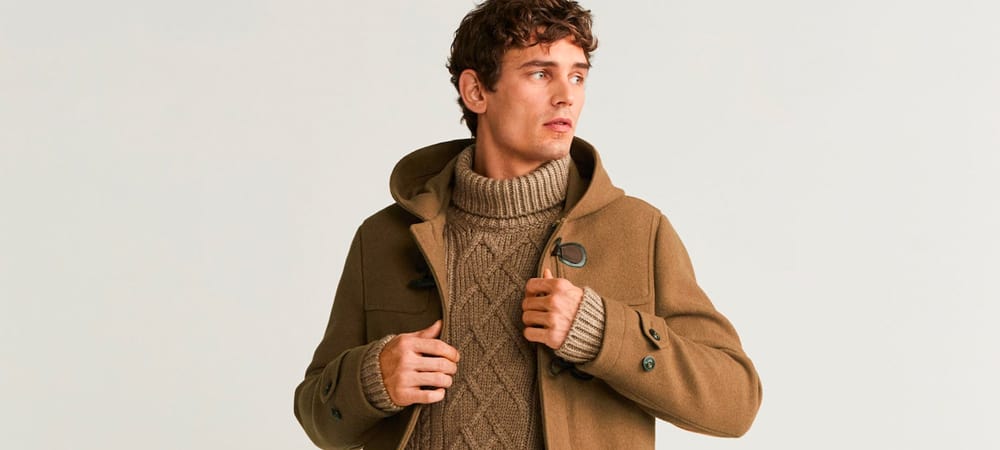
While the traditional palette of camel, navy, olive, and charcoal remains dominant, lighter shades of blue and green have gained traction in recent seasons. Stylists recommend pairing the heavy wool texture of the coat with similarly robust fabrics, such as raw denim jeans, corduroy trousers, and commando-soled boots, effectively balancing the garment’s military roots with its academic associations. For a contemporary urban look, fashion directors suggest layering the duffle over a denim trucker jacket, complemented by casual chinos, premium leather sneakers, and cold-weather accessories like chunky knitted beanies and wool scarves.
Industry Implications and Sustainability
The current market focus on the duffle coat aligns with broader industry trends favoring slow fashion, durability, and garments with verifiable provenance. Because traditional duffle coats are constructed from thick, boiled wool featuring natural water-repellent properties, they possess an exceptionally long lifecycle compared to synthetic fast-fashion outerwear.

Textile economists note that consumer demand for durable garments has risen steadily, driven by a growing preference for sustainable purchasing habits. By investing in a high-grade wool duffle coat, consumers are increasingly opting for timeless style over transient seasonal trends. As global supply chains and manufacturing sectors continue to adapt to demands for environmental responsibility, the duffle coat stands as a rare example of a historic garment that is simultaneously functional, sustainable, and permanently relevant in modern menswear.