












The global textile industry witnessed a significant technological leap at the recent Texprocess exhibition in Frankfurt, Germany, where Eton Systems, a prominent member of the Swedish Textile Machinery Association (TMAS), officially unveiled its groundbreaking aUPS module. Designed specifically for the rapid, automated sorting of used garments, the aUPS (Automated Unit Production System) represents a pivotal shift in how the industry approaches the burgeoning resale market and the complexities of textile waste management. As the industry faces mounting pressure to transition toward a circular economy, this innovation from Stockholm-based Eton Systems offers a scalable solution to one of the most labor-intensive bottlenecks in the apparel lifecycle: the identification, grading, and valuation of secondhand clothing.
The Technological Core of the aUPS System
The aUPS module is built upon the foundation of Eton’s globally recognized UPS transport system, a staple in material handling for garment manufacturing for decades. However, the new module integrates the company’s advanced ETONingenious Factory 4.0 software, elevating the hardware from a simple conveyor mechanism to an intelligent, data-driven diagnostic tool. By leveraging the latest developments in artificial intelligence and computer vision, the aUPS is capable of instantly grading individual garments based on a multitude of parameters, including color, size, style, and, where identifiable, the original manufacturer.
Beyond simple identification, the system performs a high-resolution analysis of the garment’s physical condition. It utilizes specialized sensors and AI algorithms to highlight damage—such as tears, stains, or missing buttons—and provides instantaneous recommendations for potential repairs. This diagnostic capability is linked to a sophisticated calculation model that analyzes current market data to suggest an optimized resell price. This end-to-end automation ensures that garments are not only sorted but are also prepared for the digital marketplace with minimal human intervention.
During the demonstration in Frankfurt, Sven Sørbo, Eton’s Sales and Marketing Manager, explained the seamless nature of the workflow. The collected data is fed into a model that determines the garment’s value based on real-time market trends. Simultaneously, the system captures professional-grade photographs of the item, which are automatically uploaded for marketing purposes before the garment is transported to a designated warehouse location to await sale. This integration of physical logistics and digital commerce addresses the high overhead costs that have historically hindered the profitability of the secondhand apparel sector.
A Chronology of Collaborative Innovation
The development of the aUPS module is the culmination of years of focused research and cross-sector collaboration. It was conceived as a primary component of the Microfactories System Innovation project, an ambitious initiative aimed at reshaping the textile value chain. This project brought together a diverse group of experts, including researchers from the Swedish School of Textiles in Borås, the Automation Region innovation cluster at Mälardalen University, and iHubs Sweden, a national platform for collaborative innovation.
The project’s timeline reveals a strategic pivot in Swedish textile research. Initially, the Microfactories initiative focused on developing small-scale, local, and needs-based production systems designed to reduce the lead times and environmental impact of "fast fashion." However, as global market trends shifted toward sustainability, the project’s focus expanded in 2024 to address the "reverse logistics" of the industry. The focus moved from how to make clothes more efficiently to how to manage them once they have been discarded by the first consumer.
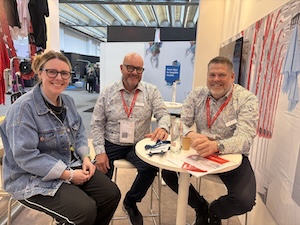
By early 2025, the consortium recognized that the manual sorting of used textiles was the primary barrier to circularity. The aUPS was developed throughout 2025 as the hardware solution to this problem, undergoing rigorous testing in pilot environments before its public debut in May 2026. This collaborative approach allowed Eton Systems to integrate visionary academic research with practical industrial engineering, ensuring the technology was ready for immediate commercial application.
Market Drivers: The Surge of the Resale Economy
The launch of the aUPS comes at a time of unprecedented growth in the global secondhand apparel market. Industry data suggests that the online resale segment is currently expanding at a rate far exceeding traditional retail. Market analysts forecast that the resale market will double in volume over the next five years, driven by a combination of consumer demand for sustainable options and economic shifts.
Ellen Flybäck, a consultant affiliated with the Swedish School of Textiles in Borås, emphasized that the sheer volume of used clothing entering the system has rendered manual sorting obsolete. In 2025, it was estimated that millions of tons of textiles were discarded annually, with only a small fraction being effectively recirculated. The introduction of automated systems like the aUPS is viewed by many as the only way to handle these volumes profitably.
Furthermore, the regulatory landscape in Europe is providing a powerful catalyst for this technology. New European Union regulations, which came into full effect in 2025, mandate the separate collection of textile waste across all member states. This has resulted in a massive influx of used garments into sorting centers, creating an urgent need for the "Industrial Revolution 4.0" to meet the challenges of the "Circular Economy 1.0."
Industry Response and Strategic Implications
The potential of the aUPS module has already resonated with major players in the retail sector. Several prominent global brands are currently trialling the system within their own "take-back" programs, where they incentivize customers to return used clothing for credit or recycling. These brands view the aUPS as a tool to maintain brand integrity in the secondhand market while capturing a share of the resale revenue that was previously lost to third-party platforms.
Jan Johansson, Eton’s Sales and Marketing Director, noted that the company’s involvement in innovation clusters like iHubs Sweden has been vital. By participating in "freer and more visionary development," Eton has been able to anticipate market needs rather than merely reacting to them. Johansson stated that the ultimate goal is to contribute to a smarter, more circular industry where materials are utilized for their maximum possible lifespan.
Therese Premler-Andersson, Secretary General of TMAS, highlighted that Eton’s success is emblematic of a broader trend within the Swedish textile machinery sector. Swedish companies are increasingly moving beyond traditional manufacturing efficiency and are instead focusing on the creation of entirely new value chains. This shift toward automation and AI-driven circularity positions Sweden as a global leader in sustainable textile technology.

Analysis of Broader Impacts on the Textile Value Chain
The implications of the aUPS module extend far beyond the sorting floor. By providing an automated way to repair and price garments, the technology effectively lowers the barrier to entry for retailers looking to adopt circular business models. When the cost of processing a used garment drops, the economic viability of "Repair and Resell" increases, potentially diverting millions of garments from landfills or low-value downcycling.
From a data perspective, the ETONingenious Factory 4.0 software provides manufacturers with a "feedback loop" that was previously non-existent. By analyzing which garments are being returned and the specific types of damage they have sustained, manufacturers can gain insights into the durability and longevity of their products. This data-driven approach could lead to a "design for durability" movement, where the lessons learned from the end-of-life stage are used to improve the beginning of the product lifecycle.
Moreover, the integration of AI in price calculation helps stabilize the secondhand market. By basing prices on real-time demand and the specific condition of the item, the system provides transparency for both the retailer and the consumer. This level of sophistication is expected to build greater trust in the secondhand market, further accelerating its growth.
Conclusion: A New Era for Textile Machinery
As Texprocess 2026 concluded, the consensus among industry experts was that the era of "linear" textile machinery—focused solely on production—is coming to an end. The success of Eton Systems and the aUPS module demonstrates that the future of the industry lies in flexible, intelligent systems that can navigate the complexities of both production and recovery.
With the backing of TMAS and the continued collaboration between Swedish academia and industry, the aUPS is likely the first of many innovations that will redefine the global textile landscape. As the industry moves toward 2030, the focus will remain on resource efficiency, the reduction of environmental footprints, and the seamless integration of AI into every stage of the garment’s journey. For Eton Systems, the aUPS is not just a product; it is a declaration that the circular economy is no longer a theoretical concept but a practical, automated reality.