









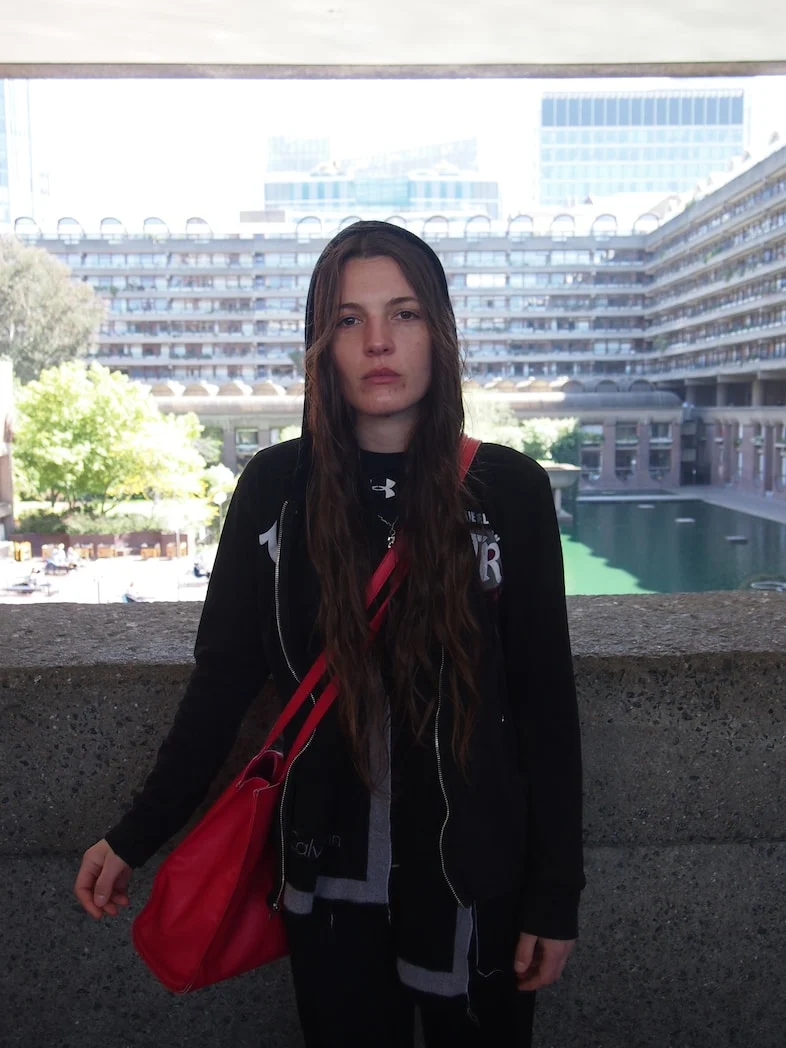
It feels fitting to meet with Sophia Stel during Lesbian Visibility Week, a time dedicated to celebrating and raising awareness of lesbian women and their contributions. As we navigate the labyrinthine concrete pathways of London’s brutalist Barbican Centre, an architectural marvel known for its diverse cultural programming, ahead of her highly anticipated show later in the evening, Stel exudes an infectious energy. She eagerly leans in, conspiratorially suggesting I acquire a pair of her signature boxer shorts merchandise, emblazoned with "Sophia Stel" in a font that cleverly nods to the iconic Calvin Klein aesthetic. Hours later, at the bustling merch stand, the prediction proves accurate: they are already completely sold out, a testament to her fervent fanbase, particularly among her lesbian admirers, who clearly share her keen sense of style and solidarity.
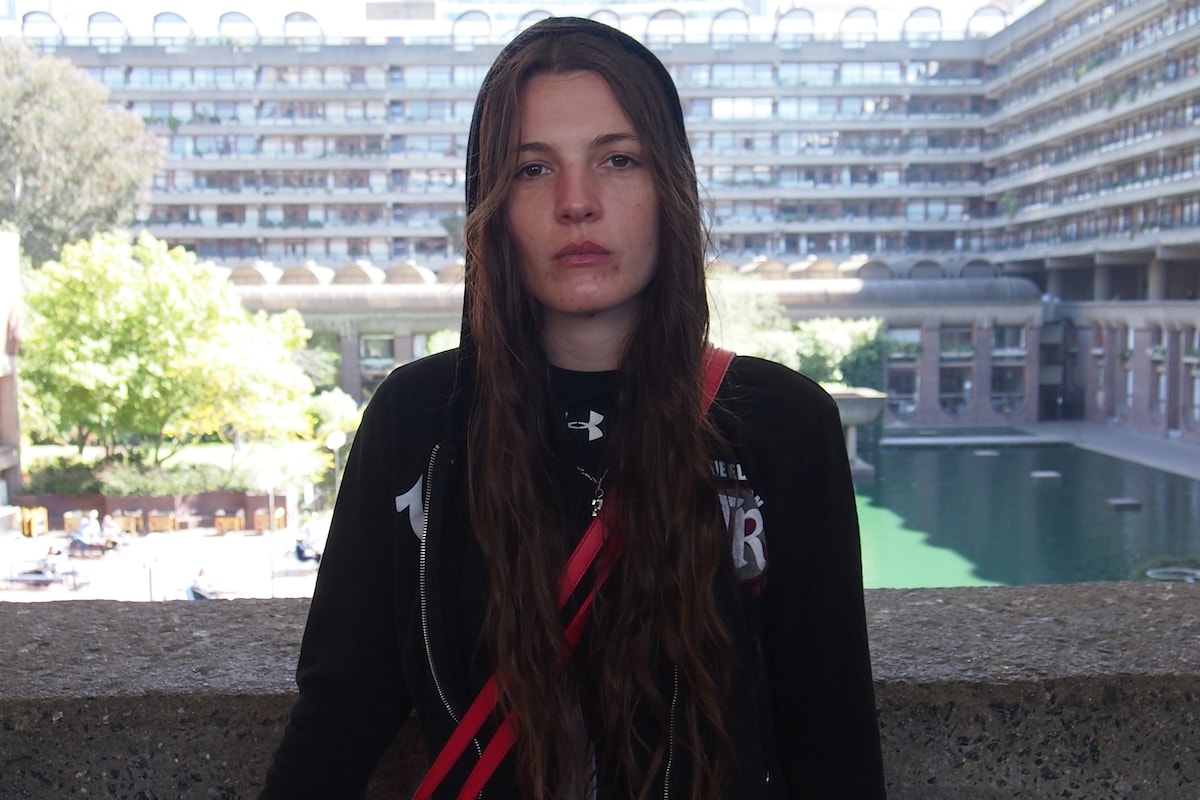
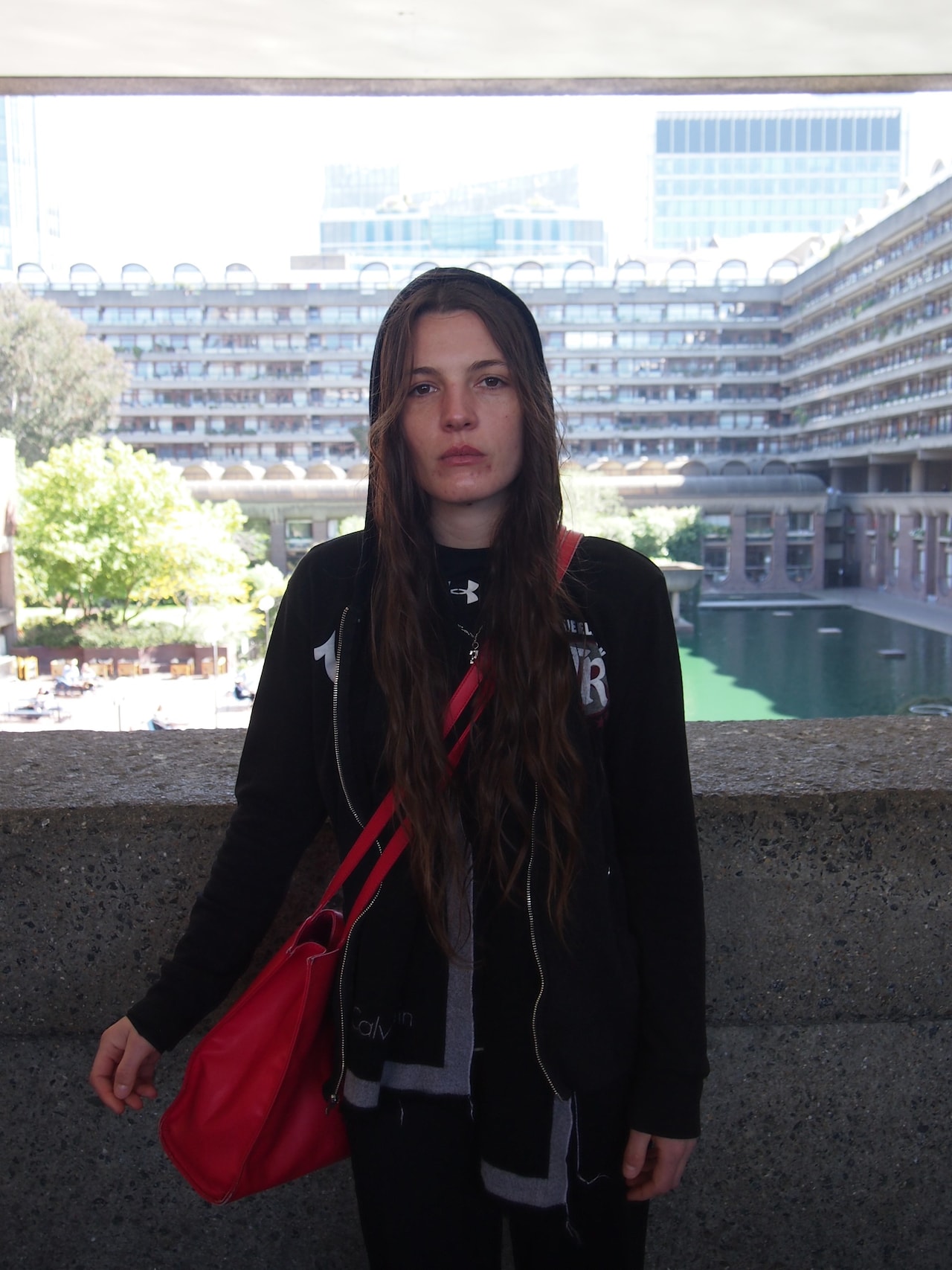
Stel arrives for our interview embodying her signature aesthetic: a comfortable yet distinctive uniform comprising Adidas track pants, of which she confesses to owning an impressive collection of roughly 25 pairs, paired with a True Religion hoodie. Her vibrant red Superstars perfectly complement the low-slung, matching red Telfar bag she is currently rummaging through, searching for a pack of Belmont Kingsize cigarettes. Once located, the pack remains a constant fixture in her hand, a small, tangible anchor amidst the whirlwind of her rapidly escalating career.
Over the past year, Stel’s distinctive blend of moody electronic tracks has quietly but powerfully permeated the playlists and headphones of the most discerning and "tapped-in" music enthusiasts. Her ascent has been remarkably swift, a trajectory marked by a series of undeniable milestones. The initial spark came with the breakout virality of her track "I’ll Take It," which garnered over 15 million streams across major platforms within its first three months, propelled by organic social media trends and influential tastemaker endorsements. This digital explosion paved the way for her significant recent signing to A24’s burgeoning music division, a move that signals a strategic expansion for the acclaimed independent entertainment company known for its distinctive cinematic output. The physical manifestation of her growing influence is evident in the consistently packed-out crowds at her shows, often immortalized in the grainy, authentic camcorder footage captured by her best friend and creative collaborator, Scarlet Ross, who accompanies us today, an ever-present force in Stel’s artistic journey.
Yet, beyond streaming numbers and sold-out venues, Stel’s rise can also be measured by a more unconventional, yet surprisingly material, metric: the evolving quality of tequila stocked on her tour rider. As we ascend the Barbican’s seemingly endless staircases, a metaphor perhaps for her own climb, she recounts how her earliest, more intimate shows were accompanied by the standard, often budget-friendly bottles. Over time, however, a noticeable shift occurred, with increasingly premium brands of tequila now consistently gracing her backstage accommodations. This subtle but significant upgrade, she explains with a wry smile, serves as a tangible indicator of her burgeoning market value and the industry’s growing recognition of her undeniable draw.
The Sonic Landscape of Sophia Stel: Crafting Authenticity in Electronic Music
Sophia Stel’s musical style is a captivating tapestry woven from introspective lyricism, atmospheric electronic soundscapes, and vocals that oscillate between a haunting croon and a defiant chant. Her tracks are characterized by their "moody production" and "warped, low-lit electronics," creating an immersive sonic environment that perfectly complements her lyrical narratives of "lovesick longing and late-night spirals." This signature sound, while distinctly modern, carries an underlying emotional depth that resonates deeply with her audience. Industry analysts point to Stel’s ability to blend vulnerability with a raw, unpolished edge as a key factor in her rapid connection with listeners. "Her music feels incredibly personal, almost like reading pages from a diary," notes Dr. Eleanor Vance, a musicologist specializing in contemporary electronic artists. "It’s this unfiltered authenticity, combined with sophisticated, yet accessible, production, that sets her apart in a crowded landscape."
Her creative process is rooted in genuine self-expression. "I try to write things that are very reflective of my life and current experiences – that’s my north star," Stel affirms. This commitment to honesty in her songwriting is a cornerstone of her appeal, allowing fans to find their own experiences mirrored in her art. The visual element, often curated by Scarlet Ross, further enhances this authenticity. The use of "grainy camcorder footage" for her live performances and music videos creates a lo-fi, intimate aesthetic that counteracts the polished, often hyper-produced imagery prevalent in mainstream pop. This deliberate choice fosters a sense of raw immediacy, making her audience feel less like passive spectators and more like active participants in her world.
A Journey from Classical Roots to Club Basements
Stel’s musical origins diverge significantly from the typical path of many contemporary artists. While many of her peers can trace their influences back to the Lorde-era pop and the eclectic, often illicit, downloads of LimeWire, Stel’s early exposure to music was remarkably different. "Honestly, I did not grow up listening to a lot of music," she reveals, her candor striking. "I grew up religious, so it was mostly religious music and classical. I was actually really into opera as a child." This confession elicits a moment of shared amusement as she recalls her youthful aspirations. When asked if she ever envisioned herself as an opera singer, she laughs, "Yes. Badly. I thought that was my whole direction."
This unconventional foundation, however, appears to have subtly shaped her unique artistic voice. The discipline and melodic complexity inherent in classical music and opera may have unconsciously informed the structural integrity and emotional range of her current electronic compositions. Despite the religious backdrop, a natural inclination towards musical creation manifested early. Stel recounts writing songs as young as seven, a testament to an innate creative drive. Later, in high school, she transitioned to crafting trap beats, showcasing an early adaptability and willingness to explore diverse genres.
Before her breakout moment, Stel honed her craft while working shifts at Paradiso, a Vancouver club that became an unexpected crucible for her nascent talent. The "Vancouver scene," she explains, is characterized by a "lot of people trying their best – there’s a lot of room for experimentation because people are quite isolated from other scenes." This isolation, rather than being a hindrance, appears to have fostered a fertile ground for unique artistic development, free from the immediate pressures and trends of larger music hubs. It was within the gritty, pulsating confines of Paradiso’s basement that Stel began recording her debut album, Object Permanence, painstakingly piecing tracks together after the club had closed its doors for the night. This period of intense, solitary creation, fueled by passion and limited resources, underscores the independent spirit that continues to define her. Her phone notes, filled with lyrics scribbled between shifts, served as the initial repository for the raw emotions and observations that would eventually coalesce into her acclaimed songs.
Milestones and Momentum: A Chronology of Sophia Stel’s Ascent
Sophia Stel’s journey from an emerging artist to a significant voice in the electronic music scene can be mapped through a series of key events:
- Early 2020s: Working at Paradiso club in Vancouver, writing lyrics and making trap beats. Begins recording Object Permanence in the club basement.
- Late 2024: Release of debut album Object Permanence, gaining traction in independent music circles and online communities.
- Early 2025: Breakout single "I’ll Take It" achieves viral status, accumulating millions of streams and becoming a fixture on youth-centric social media platforms.
- Mid-2025: Signs with A24 Music, signaling a major industry endorsement and providing significant resources for future projects. This partnership is particularly noteworthy as A24, traditionally known for film and television, has been selectively expanding its music division, seeking artists with a distinct artistic vision and cultural resonance. Stel’s signing positions her as a flagship artist in this new venture.
- Late 2025 – Early 2026: Embarks on initial headlining tours, selling out mid-sized venues across North America and Europe, building a dedicated international fanbase.
- June 26, 2026: Releases new track "Bitches Talk Shit," accompanied by a characteristic grainy, handheld video, generating significant buzz.
- June 27, 2026 (Day of Interview): London show at the Barbican Centre during Lesbian Visibility Week, a cultural moment aligning with her public identity.
- June 28, 2026: Scheduled to play buzzy South London club Lost, further solidifying her presence in the UK music scene.
- Upcoming Dates (Post-UK Tour): Set to open for pop royalty Lorde, marking her biggest stage yet and significantly elevating her profile to a global audience. This slot is a coveted opportunity, exposing her to tens of thousands of new potential fans.
- Today (Following Interview): Releases her latest track, "Molly In The Club," continuing her prolific output.
Industry Recognition and Broader Implications
The music industry has taken notice of Stel’s rapid rise. A spokesperson for A24 Music, speaking on background, commented on their strategic approach: "We are always looking for artists who possess a truly unique voice and a clear, unfiltered vision. Sophia embodies that. Her ability to connect authentically with an audience, coupled with her distinct sound, made her an undeniable talent we wanted to support." This highlights A24’s discerning curation process, suggesting Stel fits into a niche of artist-driven, culturally significant creators they aim to champion.
Stel’s upcoming role opening for Lorde is not merely a career highlight but a significant indicator of her growing influence. Lorde herself is renowned for her distinctive artistry and a fanbase that values depth and authenticity. For Stel to be personally DM’d by Lorde and offered the slot speaks volumes about the mutual respect between artists and the resonance of Stel’s music within the broader pop landscape. "She DM’d me and I was super nervous to respond," recalls Stel, her voice still holding a hint of disbelief. "I was really baked at the time, and me and my roommate couldn’t believe it was real." This candid anecdote humanizes her success, making her relatable to a generation that values transparency and genuine reactions over curated perfection.
The implications of Stel’s journey are multifaceted. Her success underscores the power of authenticity and the continued relevance of grassroots, independent artistry in an era dominated by algorithmic recommendations. Her unconventional background, blending religious upbringing with classical training and then pivoting to electronic music, positions her as a unique voice capable of transcending traditional genre boundaries. Furthermore, her open embrace of her identity, particularly within the context of Lesbian Visibility Week and the enthusiastic response to her "Sophia Stel" boxers, positions her as an important figure for LGBTQ+ representation in music. She is not just an artist; she is a visible icon for a community that often seeks genuine reflection in popular culture.
Personal Reflections and Future Horizons
As soundcheck for her Barbican show rapidly approaches, we relocate to a nearby beer garden, a brief respite before the evening’s performance. Over a tequila soda – a drink that has, perhaps ironically, become a symbol of her elevated status – Stel shares more personal insights. Her current "dream collab" is with Cash Cobain, a choice that hints at her continued engagement with cutting-edge hip-hop and electronic production. In a moment of candid revelation, she identifies Jennifer Lawrence’s portrayal in The Hunger Games as her "gay awakening," a relatable and specific detail that further endears her to her audience and reinforces her connection to contemporary queer culture. She also reveals that Future’s "Purple Reign" is currently the track she’s "bumping on repeat," offering a glimpse into her personal soundtrack and the influences that fuel her creative output.
Her recently released track, "Bitches Talk Shit," exemplifies her self-aware and defiant lyrical style. The accompanying grainy handheld video, cutting between the harsh kitchen light and the hazy cigarette smoke of a house party, further solidifies her aesthetic of raw, unfiltered reality. On the track, she chants, "Cause you’re a rockstar you should have a lot of money / Course I am a popstar but I’m still very up and coming," a line that perfectly encapsulates her current position: on the cusp of major stardom, yet still grounded in the realities of her journey. This lyrical honesty, coupled with her growing visibility, resonates deeply with fans who appreciate her refusal to gloss over the struggles or premature celebrations of her ascent.
Just a few hours after our interview concludes and we leave her to prepare for soundcheck, Stel posts a blurry shot of a Patrón bottle from her rider to Instagram. It’s a subtle but powerful visual echo of our earlier conversation about the evolving quality of her backstage provisions. The image, devoid of filters or overly curated framing, serves as a quiet confirmation: for Sophia Stel, things are unequivocally on the up. Her latest track, "Molly In The Club," released today, promises to continue this upward trajectory, cementing her status as a vital and compelling voice in the contemporary music landscape, an artist whose journey is as authentic and captivating as her sound.