









The global fast fashion landscape is witnessing a significant and controversial shift as industry behemoth SHEIN moves to acquire Everlane, a brand that has historically positioned itself on principles of transparency and ethical production. This acquisition, which comes amidst intensified scrutiny of SHEIN’s environmental and labor practices, is widely interpreted by observers as a strategic maneuver by the ultra-fast fashion giant to enhance its sustainability image and potentially smooth its path towards a public listing. However, critics are quick to caution against viewing this as a genuine step towards sustainability, reiterating concerns that SHEIN continues to exemplify and accelerate the race to the bottom in the fashion industry.
SHEIN’s Meteoric Rise and Persistent Controversies
Founded in 2008, SHEIN has rapidly ascended to become one of the world’s largest and fastest-growing online fast fashion retailers. Its business model is characterized by an astonishingly high volume of new product introductions daily, extremely low price points, and a reliance on agile supply chains. This "ultra-fast fashion" approach allows it to quickly capitalize on fleeting trends, but it has also drawn severe criticism for its environmental impact and labor practices. The quality of its garments has frequently been described as dubious, contributing to a culture of disposability that fuels consumption.
SHEIN is no stranger to allegations of greenwashing, having faced multiple controversies in recent years. In 2023, the brand sparked widespread online outrage after sponsoring an influencer trip to one of its factories and innovation centers in China. Videos from these influencers, which praised SHEIN’s operational practices and dismissed long-standing child labor allegations as unfounded rumors, were met with significant backlash. As reported by Forbes, "The controversy stems from criticism that SHEIN has received as investigative reporting revealed the company’s use of quick, cheap labor violates Chinese labor laws and negatively impacts the environment." These allegations have contributed to a pervasive perception of the brand prioritizing profit over ethical conduct and environmental stewardship.
A Troubling Environmental and Labor Record
The independent rating system Good On You, which assesses fashion and beauty brands based on their impact on people, the planet, and animals, consistently assigns SHEIN its lowest possible rating: "We Avoid." This rating was most recently reaffirmed in February 2025. Despite publishing some sustainability information on its website in recent years – a move likely aimed at addressing public criticism and enhancing its appeal for an impending stock market listing – SHEIN’s actions often contradict its stated intentions.
For instance, its most recent sustainability report highlighted a concerning trend: its shipping emissions increased by 137% in 2024. This substantial rise indicates a regression in its environmental performance, demonstrating that the brand’s growth trajectory continues to override any declared commitments to reducing its planetary footprint. Furthermore, an independent report by Greenpeace in 2025 revealed that SHEIN’s clothing still contained hazardous substances at unsafe levels, violating EU limits, despite the company’s prior assurances to improve chemical management.
Beyond environmental concerns, SHEIN’s labor practices remain a critical point of contention. Good On You’s rating review found no credible evidence that the company ensures living wages are paid to workers across its extensive supply chain. This lack of transparency and verifiable commitment to fair labor practices, alongside other unresolved issues, underscores the systemic challenges inherent in its ultra-fast fashion model.
The Everlane Acquisition: A Strategic Play for Legitimacy?
The acquisition of Everlane, a brand long celebrated for its "radical transparency" and commitment to ethical manufacturing, marks a pivotal moment for SHEIN. Industry analysts suggest that this move is a calculated attempt by SHEIN to rapidly acquire a veneer of sustainability and ethical credibility that it has struggled to cultivate organically. With its ongoing efforts to list on the stock market – a process that stalled in London and saw the company reportedly considering a return to China for a Hong Kong listing by August 2025 – improving its ESG (Environmental, Social, and Governance) profile is paramount. An acquisition like Everlane could be presented to investors and regulators as tangible evidence of a commitment to more responsible business practices.
However, the stark contrast between SHEIN’s and Everlane’s established reputations raises significant questions about the authenticity of this shift. Everlane, founded in 2010, built its brand identity on detailing its factory partners, cost breakdowns, and environmental initiatives. Its marketing often focused on timeless designs made with quality materials and a lower environmental impact, aiming to offer an alternative to fast fashion. Integrating such a brand into SHEIN’s high-volume, low-cost, and rapid-production model presents immense operational and philosophical challenges.
Inferred Reactions and Broader Implications
The acquisition is likely to be met with a mixture of skepticism and concern from various stakeholders. Environmental advocacy groups, such as Greenpeace and the very editors of Good On You, are expected to view this development as a sophisticated form of greenwashing rather than a genuine transformation. They would likely argue that a single acquisition cannot fundamentally alter the deeply ingrained, unsustainable practices of an ultra-fast fashion giant. Their stance would emphasize the need for systemic change across SHEIN’s core operations, not merely the absorption of a smaller, ethically-marketed brand.
Fashion industry analysts, while acknowledging the strategic business rationale for SHEIN, might also express doubt about the long-term viability of maintaining Everlane’s original values under SHEIN’s ownership. The pressure to reduce costs and increase output, characteristic of SHEIN’s model, could inevitably dilute Everlane’s commitment to transparency and higher ethical standards. Consumers who previously supported Everlane for its ethical stance may feel betrayed or confused, questioning the future integrity of the brand.
This acquisition also highlights the ongoing struggle within the fashion industry to genuinely embrace sustainability. It underscores the immense power of ultra-fast fashion players and their ability to influence market perceptions. The risk is that such moves could normalize superficial attempts at sustainability, allowing brands with poor track records to simply buy their way into a "greener" image without making fundamental changes to their damaging business models. This could further erode consumer trust and make it harder for truly sustainable brands to differentiate themselves.
The Imperative for Genuine Change and Conscious Consumption
The situation surrounding SHEIN and Everlane reinforces the critical need for consumers to remain informed and vigilant. While the allure of low prices is strong, the environmental and social costs associated with ultra-fast fashion are increasingly evident. Genuine sustainability in fashion necessitates a departure from disposable trends towards durable, ethically produced garments, and a greater emphasis on circularity—resale, repair, and mindful consumption.
For those seeking to make more responsible choices, numerous brands are committed to ethical production, fair labor, and reduced environmental impact. These brands demonstrate that stylish clothing can be produced in a way that respects both people and the planet. They offer a tangible alternative to the unsustainable practices of ultra-fast fashion, promoting a more responsible approach to consumption by encouraging consumers to buy only what they need, support brands with verifiable ethical credentials, and consider secondhand options.
Top-Rated Alternatives to SHEIN
Here are some of our favorite more sustainable alternatives to SHEIN, all rated "Good" or "Great" by Good On You. These brands are committed to respecting the planet, people, and animals, while creating stylish and durable clothes:
- Whimsy + Row: A US-based lifestyle brand founded in 2014, known for its love of quality goods and responsible practices. Whimsy + Row utilizes deadstock fabrics, employs short production runs to minimize waste, reduces packaging, and conserves water resources. Most products are available in sizes XS-XL, with extended sizing up to 3XL.
- Kotn: A Canadian-based Certified B Corp that actively works with local NGOs in the Nile Delta. With every purchase, Kotn contributes to funding school infrastructure, materials, and teacher salaries, aiming to improve literacy rates in farming communities. Their beautifully made garments are available in sizes XS-2XL.
- ABLE: A US-based clothing and accessories brand dedicated to making a meaningful impact globally. ABLE produces slow fashion, ensuring living wages for women who have overcome extraordinary circumstances. The brand uses lower-impact materials, reuses water and materials to minimize waste, and offers thoughtfully designed, quality pieces guaranteed for life. Available in sizes 2XS-2XL.
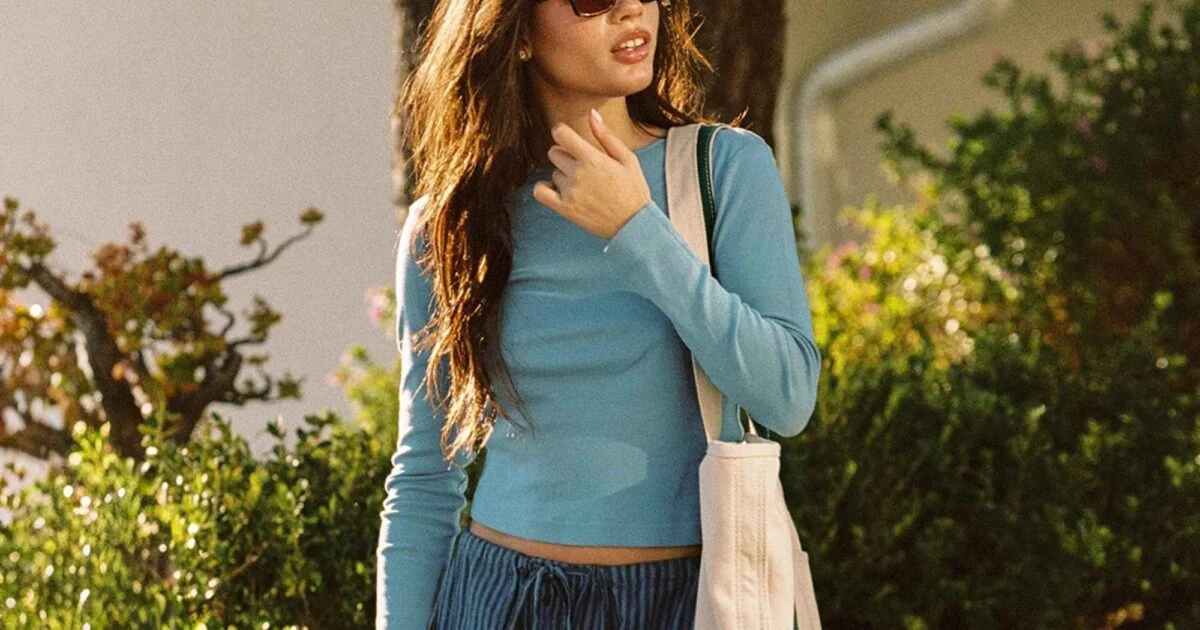
- LA Relaxed: Operating under the motto "Simplicity, sustainability, style," LA Relaxed focuses on reducing its climate impact through renewable energy in its supply chain. The brand incorporates lower-impact materials such as organic cotton and TENCEL Lyocell. Its collection is available in sizes XS-XL.
- OMNES: A UK-based brand committed to creating more responsible and affordable high-quality womenswear. OMNES aims to change how people shop, wear, and think about clothing, encouraging industry-wide change. Most items are available in sizes 6-20.
- Happy Earth: A US organic clothing brand inspired by and dedicated to preserving nature. Through partnerships with non-profits and ambassadors, Happy Earth actively plants trees, combats climate change, and participates in trash clean-up initiatives. Most items are available in sizes XS-3XL.
- Purusha People: This brand infuses dainty details into its range of activewear. Purusha People offers organic, plant-based pieces designed to wick away sweat, ensuring comfort during practice. Purusha pieces are stocked in sizes XS-4XL.
- CHNGE: A US-based sustainable fashion brand that uses 100% organic materials, creating durable pieces that make a statement. CHNGE offers inclusive clothing in sizes 2XS-4XL.
- Yes Friends: A UK-based fashion brand focused on making more affordable clothing accessible to everyone. By utilizing large-scale production and direct-to-consumer margins, Yes Friends provides responsible clothing at budget-friendly prices. The range is inclusively sized in 2XS-4XL.
- Jyoti – Fair Works: Based in Germany, Jyoti – Fair Works produces GOTS certified cotton products. The brand provides employment opportunities for marginalized or disadvantaged groups in India. Sizes available are S-XL.
- Toad&Co: A US brand committed to socially and environmentally conscious practices. Toad&Co’s women’s and menswear is versatile, suitable for both outdoor adventures and casual wear. Most items are available in sizes XS-2XL.
- Joyya: Joyya creates organic apparel that fosters good jobs in communities in Kolkata, India. Founded in 2001, the New Zealand-based brand aims to create opportunities and combat extreme poverty and human trafficking. Most items are available in sizes XS-4XL.
- Afends: Born in Byron Bay, Australia, Afends is a responsible brand pioneering hemp fashion. Inspired by the environment, streetwear, and surf culture, Afends cultivates its own hemp crops to drive a sustainable clothing revolution. Most of the range is available in sizes XS-XL.
- Natasha Tonic: Specializing in hemp swimwear, Natasha Tonic’s fabric is antimicrobial, UV resistant, durable, and a healthier choice for skin and oceans. Each piece is hand-printed, ensuring uniqueness. Find its swimwear in sizes XS-XL.
- WAWWA: This UK brand prioritizes the Earth and its inhabitants by creating organic, fair trade, and vegan-friendly clothing with a positive social impact. WAWWA uses lower-impact materials, non-toxic dyes, and reuses offcuts to minimize textile waste. The range is available in sizes XS-2XL.
- Brothers We Stand: A UK-based online store offering responsible men’s clothing. Brothers We Stand aims to help consumers build a stylish and sustainably-made menswear wardrobe that is 100% vegan. Sizes available are S-XL.
- Spell: An Australian fashion brand drawing inspiration from global cultures, vintage items, and childhood memories. Spell’s clothes are designed and sampled in Byron Bay and produced responsibly in factories worldwide. Most garments are available in sizes 2XS-2XL.
- SeamsFriendly: This brand creates tailored pieces for all body types, focusing on function and utility with lower-impact materials like organic cotton and linen. Shoppers can customize designs to their exact preferences, including neck style, depth, sleeve length, garment length, fabric, and more. The brand offers custom sizing for womenswear (bust: 26″-70″, waist: 19″-63″, including petite, regular, and tall heights), menswear (chest: 34″ to 76″ and above with free custom sizing), and a kids range (bust: 18″-28″, waist: 19″-26″).
Editor’s note
Feature image via LA Relaxed, all other images via brands mentioned. Good On You publishes the world’s most comprehensive ratings of fashion and beauty brands’ impact on people, the planet, and animals. Use our directory to search thousands of rated brands.
We updated this article on 15 June 2026: Our editors frequently make updates to articles to ensure they’re up to date. We updated this list to reflect brands with recent ratings.