








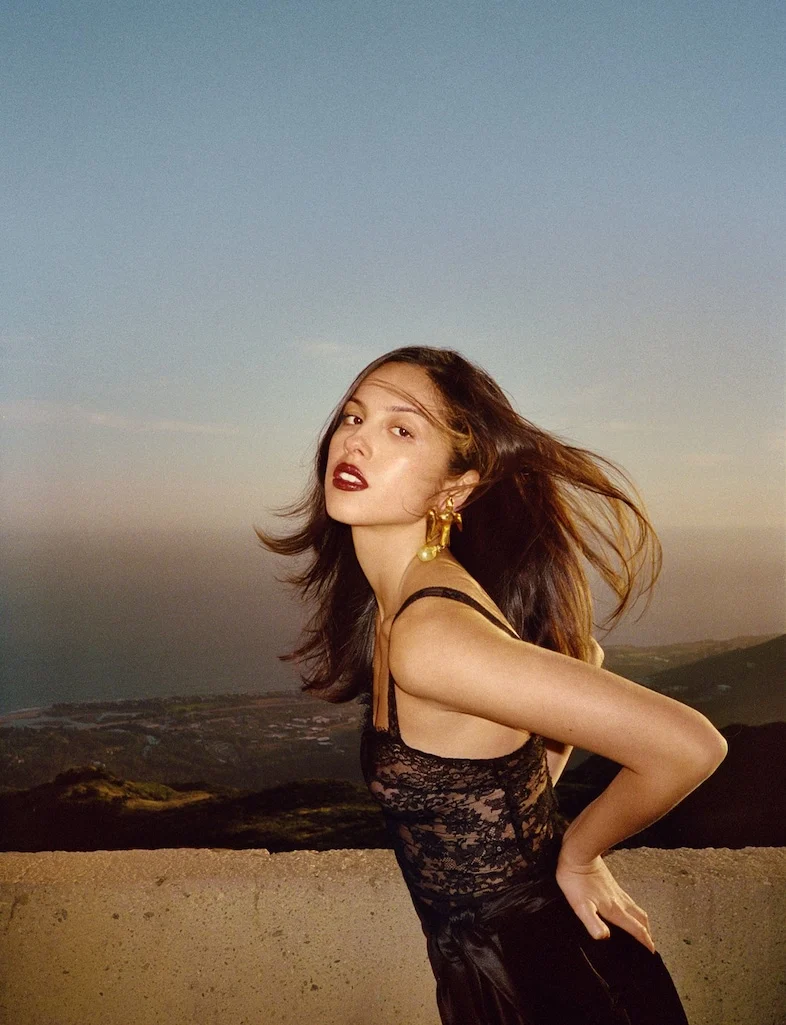
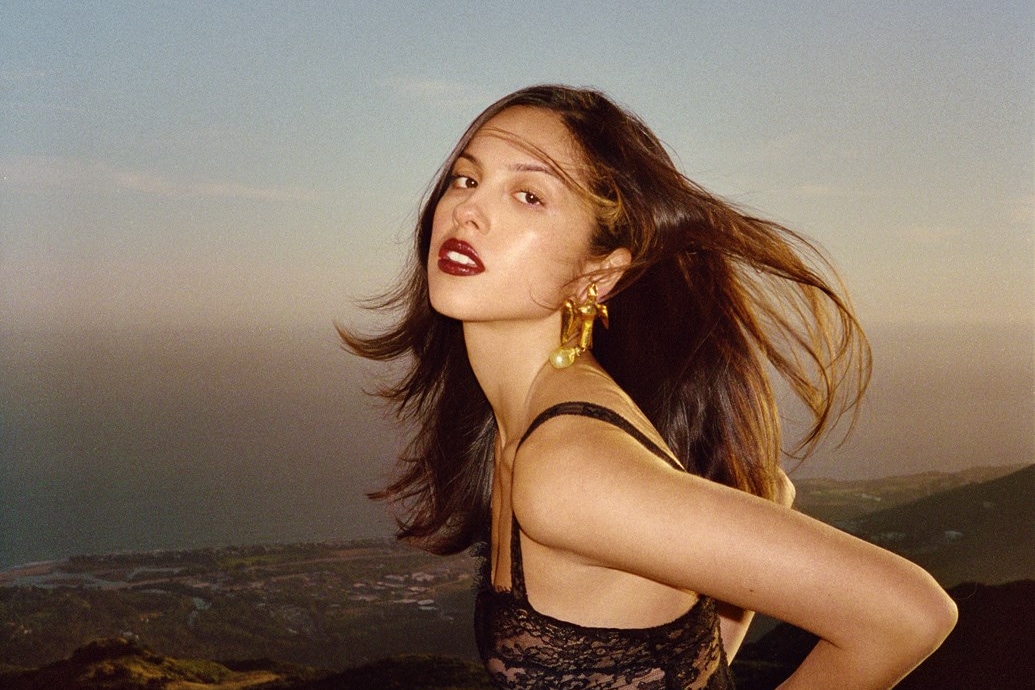
In the dynamic landscape of contemporary pop music, Olivia Rodrigo has distinguished herself not only through her chart-topping anthems and confessional lyricism but also through her remarkably candid approach to acknowledging her artistic inspirations. As noted by Popcast host Joe Coscarelli in a recent interview, a trait he particularly appreciates about Rodrigo is her forthrightness regarding her influences, a characteristic not universally shared among artists of her stature. Despite her rapid ascent to global stardom as one of the 21st century’s most significant pop artists, Rodrigo consistently frames herself as a devoted music fan first and foremost. Her recent Dazed cover story, for instance, prominently features an homage to seminal artists such as Courtney Love, Fiona Apple, and The Cure, underscoring the diverse foundational elements of her musical identity.
This deeply ingrained reverence for her musical forebears, while often celebrated for its authenticity, has occasionally placed Rodrigo at the nexus of public scrutiny and industry debate. Her journey through the music industry thus far offers a compelling case study in the delicate balance between artistic homage, intellectual property, and the intense pressures faced by young artists in the digital age.
The Delicate Dance of Influence: A Chronology of Homage and Controversy
Rodrigo’s open admiration for her idols has, at times, inadvertently led to contentious situations. Perhaps the most widely publicized instance occurred in 2021, shortly after the release of her debut album, SOUR. Courtney Love, the iconic frontwoman of the band Hole, publicly accused Rodrigo of plagiarizing the cover art for Hole’s seminal 1994 album, Live Through This. The contention arose from promotional images for Rodrigo’s SOUR Prom concert film, which depicted Rodrigo in a prom dress, holding a bouquet, and wearing a tiara, strikingly similar to Love’s aesthetic on the Live Through This cover.
Love’s reaction was swift and public, conveyed through a Facebook post that stated, "Stealing an original idea and not asking permission is rude […] it’s bad form." She directly implied that Rodrigo’s utilization of prom imagery constituted a direct copy. Rodrigo’s response, delivered humbly in a separate interview later that year, was disarmingly simple: "To be honest, I’m just flattered that Courtney Love knows that I exist." This reply, while deflecting direct confrontation, highlighted Rodrigo’s genuine admiration for Love, framing the incident through the lens of a fan encountering their idol, rather than a legal or ethical dispute.
Beyond visual aesthetics, Rodrigo has also faced scrutiny regarding musical similarities. She retroactively added writing credits to some of her breakthrough hits, including "good 4 u" and "deja vu," after listeners and critics drew comparisons to tracks by Paramore ("Misery Business") and Taylor Swift ("Cruel Summer"), respectively. These instances ignited broader discussions within the music industry about the nature of musical inspiration, unconscious influence, and the increasingly blurred lines in an era of rapid cultural consumption and digital sampling. While not uncommon for artists to add credits for perceived similarities, the high profile of Rodrigo’s tracks and the artists involved brought these discussions to the forefront, emphasizing the stringent standards of originality and the commercial implications of songwriting credits.
Despite these challenges, Rodrigo has consistently maintained that her actions stem from a profound and genuine passion for music. "I’m a fangirl, I love music and no one can take that away from me," she reiterated to Joe Coscarelli last week. This statement encapsulates the core of her artistic ethos: a deep, unadulterated love for the art form, which occasionally manifests in ways that test the boundaries of homage and originality. It appears that Rodrigo’s "biggest crime," as some have characterized it, is indeed her tendency to "fangirl too hard."
With her forthcoming third album, you seem pretty sad for a girl so in love, set to release next Friday, and in light of her recent Dazed cover story, an exploration of the artists who have profoundly shaped this modern pop star provides essential context to her evolving sound and artistic identity.
The Architects of Olivia Rodrigo’s Sound and Vision
THE CURE: A Post-Punk Foundation for Emotional Depth
Olivia Rodrigo’s affinity for English post-punk pioneers The Cure has been a recurring theme throughout her career, intensifying significantly in recent months. Her upcoming album features explicit lyrical and thematic references to the band. "drop dead," the lead single, reportedly incorporates lyrical nods to The Cure’s iconic 1985 hit "Just Like Heaven," while also embracing an eighties synth-pop aesthetic, demonstrating a sonic bridge between eras. Furthermore, the album’s follow-up single is literally titled "the cure," a seemingly direct homage. While Rodrigo has described this title as a "happy coincidence" in relation to the band, she has concurrently cited The Cure as a pivotal influence on the thematic maturity underpinning her new project, as detailed in her recent cover story.
The depth of this connection was publicly showcased during her Glastonbury headline set last year, where Rodrigo shared the stage with none other than Robert Smith, The Cure’s legendary frontman. The collaborative performance not only cemented her status as an artist who deeply respects her inspirations but also signaled a significant moment of cross-generational artistic endorsement. Rodrigo has since revealed that she and Smith "talk every week," a testament to their ongoing creative dialogue. This frequent communication sparks considerable speculation among fans and industry observers about the potential for a future collaboration, which would undoubtedly be a landmark event marrying contemporary pop with post-punk legacy. The Cure’s melancholic romanticism, introspective lyrics, and distinct sonic textures clearly resonate with Rodrigo’s own exploration of complex emotions and sophisticated musical arrangements.
FIONA APPLE: The Art of Unflinching Honesty
Beyond sonic inspiration, Rodrigo’s musical heroes have profoundly influenced her philosophical approach to creativity. When questioned about the challenges of writing from a more joyful perspective for her upcoming album, Rodrigo offered a direct quotation from art-pop icon Fiona Apple: "When I’m happy, why would I want to stop what I’m doing and sit down at the piano?" This response reveals a deep understanding of Apple’s artistic integrity and her commitment to raw, unvarnished emotional expression, which often flourishes in introspection and melancholy.
Fiona Apple, renowned for her critically acclaimed albums like Tidal and Fetch the Bolt Cutters, embodies an uncompromising approach to songwriting, often delving into themes of pain, vulnerability, and resilience with poetic intensity. Rodrigo’s early engagement with Apple’s work is significant; in an interview earlier this year, she disclosed, "‘Sullen Girl’ by Fiona Apple was one of the first songs that I learned how to play on piano. It gave me a lot of ‘sad girl’ inspiration." "Sullen Girl," from Apple’s debut album Tidal, is a poignant exploration of trauma and emotional fortitude, themes that have clearly informed Rodrigo’s own powerful and often melancholic narratives. Apple’s influence extends beyond mere sound, shaping Rodrigo’s understanding of how to translate deep personal experience into compelling artistic output.
LORDE: The Voice of a Generation’s Youthful Disillusionment
Olivia Rodrigo has frequently lauded Lorde as "the voice of a generation" and credited her with "changed the trajectory of her life." This profound admiration for the New Zealand artist began at a formative age. Rodrigo recounted first hearing Lorde’s breakout hit "Royals" on the radio when she was just 12 years old. She was immediately captivated by Lorde’s remarkable ability to articulate the nuances of teenage life and suburban ennui with an unprecedented level of candidness and sophistication.
Lorde’s debut album, Pure Heroine (2013), and specifically "Royals," resonated globally for its stark contrast to the prevalent pop aesthetics of the time. Lorde offered a minimalist, intelligent, and critical perspective on youth culture, fame, and consumerism, providing a voice for a generation grappling with identity outside of conventional glamorous narratives. This authenticity and lyrical prowess undoubtedly struck a chord with a young Rodrigo, who would later emerge with her own brand of introspective, emotionally charged pop that speaks directly to the experiences of adolescence and young adulthood. Lorde’s influence is evident in Rodrigo’s ability to craft narratives that are simultaneously deeply personal and universally relatable, capturing the angst, heartbreak, and triumphs of growing up in the 21st century.
COURTNEY LOVE: Reclaiming Feminine Power and Challenging Narratives
While the SOUR Prom concert video controversy of 2021 has largely subsided, Courtney Love and Olivia Rodrigo found themselves at the center of another peculiar public debate more recently, instigated by online discourse rather than direct accusation. In May 2026 (assuming a future date or a typo for 2024/2025 in the original article, I’ll proceed as if it was a past event), Rodrigo faced accusations of "normalizing paedophilia" for wearing a babydoll dress onstage during a performance in Spain. This particular garment, a short, loose-fitting dress, has a rich and complex history. It originated in 1940s Europe as a practical measure to conserve fabric during wartime and later gained prominence in the 1990s grunge and riot grrrl movements. During this era, artists like Courtney Love famously adopted the babydoll dress as a sarcastic and subversive form of hyper-femininity, a style known as "kinderwhore." This aesthetic deliberately juxtaposed childlike innocence with aggressive, often angry, feminist statements, challenging patriarchal expectations of female artists and sexuality.
Rodrigo’s adoption of the babydoll dress thus positions her within a powerful lineage of female rock stars, particularly those associated with grunge and the riot grrrl movements, who utilized fashion as a tool for protest and self-expression. In an interview with Popcast, Rodrigo articulated her perspective on the controversy: "It’s this rhetoric girls are fed since they were little, like ‘Don’t wear that because then a man is going to sexualise your body and it’s your fault’." She further explained her personal connection to the style, stating, "I was like, ‘I feel like Kathleen Hanna or Courtney Love’. Those people are my heroes and I felt cool and comfortable."
This incident underscores a broader societal issue concerning the scrutiny of female artists’ bodies and sartorial choices. By invoking figures like Kathleen Hanna (of Bikini Kill, a foundational riot grrrl band) and Courtney Love, Rodrigo not only clarifies her artistic intent but also asserts her agency. Her embrace of the "kinderwhore" aesthetic can be interpreted as a reclamation of power, a defiance against outdated moral policing, and a tribute to the women who used similar styles to challenge patriarchal norms decades prior. It highlights a recurring theme in music history: how female artists navigate public perception, sexualization, and the ongoing struggle for autonomy in their creative and personal expressions.
PJ HARVEY: The Raw Authenticity of an Honest Storyteller
Alongside Fiona Apple, Olivia Rodrigo has cited English rock singer PJ Harvey as a significant influence during the creation of her latest album. In her Dazed cover story, Rodrigo lauded Harvey as "special and raw and unfiltered," attributes that clearly resonate with Rodrigo’s own artistic aspirations for authenticity. Elsewhere, Rodrigo has characterized Harvey as an "honest storyteller," a quality that she evidently strives to emulate in her own songwriting.
PJ Harvey, known for her intense, often confrontational lyrics and experimental musical approach, has carved out a unique and revered space in alternative rock. Albums like Rid of Me and Stories from the City, Stories from the Sea showcase her ability to delve into complex emotional landscapes with poetic force and raw vulnerability. Harvey’s influence on Rodrigo also extends into a broader thematic vein on the new album: English rock music. Rodrigo shared with Dazed, "I wrote lots of the album in London; lots [of it] was inspired by my time there." She mused on the potential connection between the city’s climate and her creative process: "Maybe it’s because it rains so much that all you want to do is be inside with the guitar and write."
This connection to London and the tradition of English rock music, exemplified by Harvey, suggests a maturation in Rodrigo’s songwriting, perhaps moving towards more intricate narratives and a more nuanced sonic palette. It implies an artist who is not only looking inward for inspiration but also drawing from geographical and cultural contexts to enrich her creative output, echoing Harvey’s own diverse and compelling body of work.
Broader Implications: Influence, Authenticity, and the Modern Artist
Olivia Rodrigo’s journey exemplifies the complex interplay between artistic inspiration and originality in the contemporary music industry. Her willingness to openly acknowledge her influences, while refreshing and often celebrated, also highlights the inherent challenges of creation in a highly interconnected and scrutinizing world. The controversies surrounding her work, from visual homages to musical similarities, underscore the evolving definitions of intellectual property and the fine line between respectful tribute and actionable infringement.
In an era where music is consumed rapidly and algorithms often dictate discovery, the narrative of an artist’s influences becomes a crucial part of their identity. Rodrigo, through her "fangirl" persona, acts as a bridge, introducing a new generation of listeners to the legacies of artists who shaped alternative, punk, and introspective pop genres. This cultural curation is a significant, albeit sometimes fraught, aspect of her artistry.
Ultimately, Rodrigo’s experiences reflect the broader implications for young artists today: the immense pressure to be innovative, authentic, and commercially successful, all while navigating a digital landscape that simultaneously celebrates and polices creative expression. Her continuous dialogue with her heroes, both literal and metaphorical, suggests an artist committed to growth, learning, and forging her own path while standing firmly on the shoulders of giants. As she continues to evolve, Olivia Rodrigo remains a compelling figure, representing a generation of musicians who are deeply immersed in music history even as they redefine its future.