







The 2026 FIFA World Cup, a tournament marked by both fervent global unity and undercurrents of controversy, concluded recently, leaving an indelible mark on football history with an unprecedented goal tally and a significant performance narrative centered around Nike’s Mercurial boots. Hosted across North America, the expanded 48-team format delivered a spectacle of diverse footballing styles, breathtaking individual brilliance, and moments of profound sportsmanship. While the tournament wrestled with pre-existing concerns regarding alleged corruption within FIFA and occasional fan discontent, such as the widely booed hydration breaks during intense matches, it ultimately underscored football’s enduring power to connect cultures and inspire millions. From the captivating debut journey of Cape Verde, defying expectations, to the celebrated camaraderie between rival players like Jude Bellingham and Erling Haaland, and the poignant scenes of England and France players praying together after their third-place playoff, the event transctended mere competition. Amidst this rich tapestry of events, one statistic emerged as particularly striking: a record-breaking 308 goals were scored, the highest in World Cup history, with an astounding 105 of these—representing 34 percent, or more than one in three—attributed to players wearing Nike’s latest Mercurial boots.
Unprecedented On-Pitch Dominance: The Mercurial’s Scoring Prowess
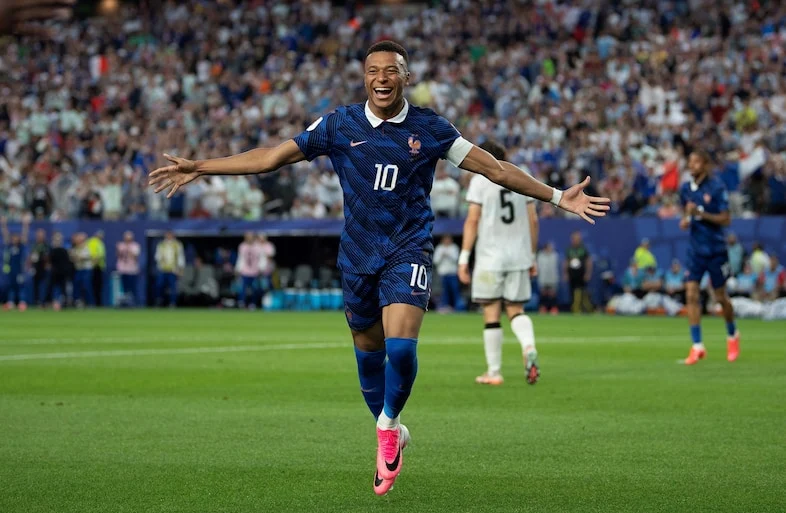
This remarkable statistical dominance by the Mercurial series is not merely a testament to Nike’s market presence but suggests a profound influence on player performance at the highest level. Golden Boot winner Kylian Mbappé, whose blistering pace and clinical finishing defined much of the tournament, contributed a significant 10 goals while sporting the Superfly 11 iteration of the Mercurial. Other top-tier talents, including Brazil’s Vinicius Junior, France’s rising star Désiré Doue, and England’s Marcus Rashford, also added substantially to the Mercurial’s impressive tally. Even Cristiano Ronaldo, who was honored with a special gold edition of the boot for his historic achievement of scoring in six consecutive World Cups, netted three goals in his Mercurials, further cementing the boot’s reputation among football’s elite.
Industry analysts have quickly highlighted the implications of such concentrated scoring power. "To have over a third of all goals, particularly in a tournament with a record number of goals, coming from a single boot silo is extraordinary," commented Dr. Liam Fitzgerald, a sports marketing expert at the Global Institute of Football Studies. "It speaks volumes about player trust, the efficacy of the boot’s design, and potentially, Nike’s strategic endorsement deals with the most prolific attackers in the game. This isn’t just about branding; it’s about perceived and actual performance advantage." This performance data will undoubtedly serve as a powerful marketing tool for Nike, reinforcing the perception that the Mercurial is not just a boot, but a catalyst for goal-scoring success.
A Quarter-Century of Speed: The Mercurial’s Evolutionary Journey
The Mercurial’s meteoric rise to prominence in the 2026 World Cup is the culmination of over 25 years of relentless innovation and a consistent focus on speed, agility, and lightweight design. Its story began at the 1998 World Cup in France, when Nike unveiled the original Mercurial R9, specifically engineered for the legendary Brazilian striker Ronaldo Luís Nazário de Lima, then arguably the most explosive player in the world.
1998: The Genesis of Speed
Prior to the R9, football boots were predominantly crafted from leather, prioritizing durability and ball feel over sheer speed. Nike’s introduction of a lightweight, synthetic upper was a radical departure, a bold move that prioritized a player’s acceleration and dribbling ability. The Mercurial R9 was not just a boot; it was a statement of intent, designed to enhance Ronaldo’s already devastating pace and goal-scoring prowess. This foundational design principle—lightweight construction for explosive speed—would become the bedrock of every subsequent Mercurial iteration. Its initial success with Ronaldo immediately put Nike on the map as a serious innovator in football footwear, challenging the long-standing dominance of traditional brands.
Evolution Through the Millennia
Following its groundbreaking debut, the Mercurial line continued to evolve, integrating new technologies and materials. Throughout the early 2000s, players like Ruud van Nistelrooy, Thierry Henry, and Didier Drogba adopted the Mercurial, drawn by its promise of enhancing their attacking capabilities. Each new model saw refinements in fit, traction, and weight, gradually pushing the boundaries of what was considered possible in football boot design. While the core philosophy remained consistent, Nike continuously experimented with stud configurations, soleplate materials, and upper constructions to deliver marginal gains in performance, keeping the Mercurial at the forefront of the speed boot category.
2008: The Pink Revolution and a Cultural Shift
A pivotal moment in the Mercurial’s history, and indeed in football boot aesthetics, arrived in November 2008 with the launch of the "Rosa" Mercurial Vapor IV. Up until this point, football remained largely conservative in its visual expression, with black or muted-colored boots being the norm. The sight of Arsenal striker Nicklas Bendtner stepping onto the pitch in bright pink Mercurials sent shockwaves through the football world. Tabloid media derided it as a "stunt," and some high-profile Premier League managers, most notably Sir Alex Ferguson, reportedly banned their younger players from wearing anything other than traditional black boots, fearing it would distract or undermine their seriousness.
Initially, these "Pink Panthers" were often associated with the game’s more flamboyant or controversial figures—the "chaos merchants" like Neymar Jr or Mario Balotelli—players known for their audacious style as much as their skill. However, what began as a controversy quickly morphed into a cultural phenomenon. The audacious colourway challenged conventional norms, forcing a reevaluation of what was acceptable on the pitch. Over the next decade, the influence of the "Rosa" grew steadily, gradually eroding the conservative aesthetic of football.
Fast forward 18 years to the 2026 World Cup, and the transformation is complete. Flashy, vibrant footwear is now not just commonplace but expected. Pink, in particular, dominated the tournament, a clear heir to the "Rosa" legacy. A staggering 22 out of 26 players in the England squad wore pink boots, and all four major sportswear brands featured the colour prominently in their tournament collections. This visual shift represents more than just a fashion trend; it symbolizes a broader acceptance of individuality and expression within the sport, a direct lineage tracing back to Nike’s bold move in 2008.
The 2026 Vanguard: Vapor 17 and Superfly 11
For the 2026 World Cup, Nike presented two updated Mercurial models: the Vapor 17 and the Superfly 11, each meticulously engineered for distinct aspects of speed and agility, and both prominently featuring the now-iconic pink colourway.
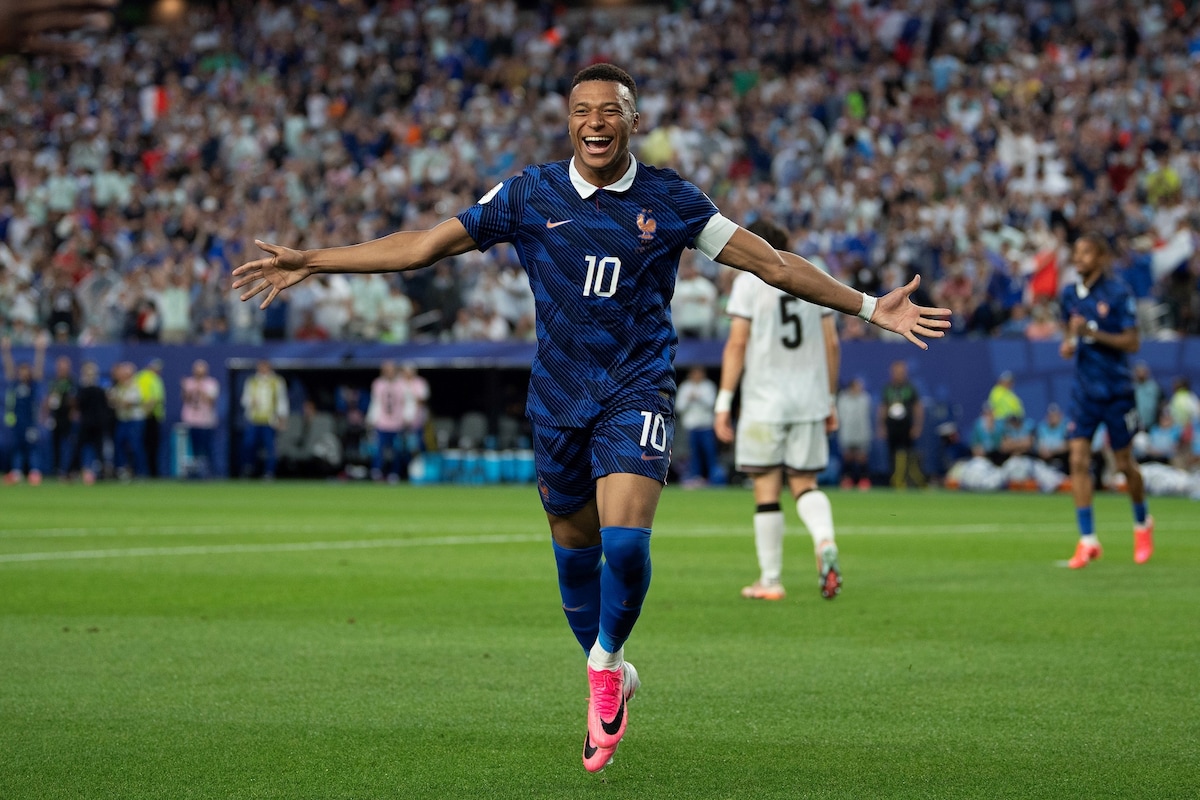
Superfly 11: Built for Breakaway Speed
The Superfly 11, famously worn by Golden Boot winner Kylian Mbappé, is purpose-built for players who thrive in open spaces and rely on breakaway speed. Phil McCartney, Nike’s EVP Chief Innovation, Design & Product Officer, described it as being "for lightweight propulsion." At its technological heart lies an external Air Zoom unit, strategically placed to compress under the immense pressure of real play loads, then rapidly respond as the foot leaves the ground. This innovative system provides an unparalleled sensation of propulsion, giving players that critical extra burst of acceleration. The Air Zoom unit is stabilized by a newly engineered internal structure, which not only secures the foot but also preserves crucial forefoot flex, agility, and control during braking and cutting maneuvers. This combination allows elite players to maintain top speed, make sharp directional changes without losing momentum, and remain a constant threat, even in the dying minutes of a match.
Vapor 17: Explosive Agility in Tight Spaces
Complementing the Superfly 11, the Vapor 17 holds the distinction of being the lightest Mercurial to date. It is engineered for explosive speed in confined areas, catering to players who rely on quick feet, razor-sharp cuts, rapid pivots, and instantaneous bursts of acceleration. McCartney detailed the meticulous design choices aimed at minimizing weight without compromising structural integrity or performance. "We’ve perforated things, we’ve used the new Atomknit, we’ve cored the plate out. Everything to be lightweight and fast," he explained. The Atomknit upper provides a lightweight, form-fitting embrace for the foot, while strategic perforations and a "cored out" soleplate drastically reduce overall mass. The Vapor 17 features rounded chevron studs, specifically aligned to optimize start-stop traction and facilitate swift changes in direction, crucial for weaving through congested defenses.
The decision to feature the pink colourway so prominently across both new models was deliberate. "We want incredible designs, we want amazing colour. We want them to show up on the pitch with the iridescent plate and the pink fades and the black swoosh," McCartney stated, emphasizing a blend of aesthetic appeal and on-field visibility. This reflects a deep understanding of modern football culture, where performance and personal expression are inextricably linked.
The Science of Speed: Nike’s Innovation Pipeline
The development of the Vapor 17 and Superfly 11 was a rigorous, three-year process, a testament to Nike’s commitment to pushing the boundaries of sports engineering. This intricate journey begins in Nike’s state-of-the-art sports research lab, where what McCartney refers to as "the science of speed" is meticulously studied. This involves in-depth biomechanical analysis of elite athletes, material science research, and advanced computational modeling to understand every nuance of foot movement, force distribution, and energy return during high-performance football.
Once initial concepts and theories are developed, numerous prototypes are created. These prototypes are then put through their paces by professional players, Nike’s most discerning critics. This athlete-centric feedback loop is crucial. "They tell us the good, the bad, things blow up that aren’t very good. Players hate them and so then you take them back and say, ‘Okay but you liked that part,’" McCartney described, highlighting the iterative and often challenging nature of the design process. This constant dialogue between engineers, designers, and athletes ensures that the final product meets the exact demands of elite-level play. "We just keep obsessing and obsessing and obsessing," he concluded, underscoring the relentless pursuit of perfection that defines Nike’s innovation strategy.
Recognizing the accelerating pace of the sport and the rapid evolution of player attributes, Nike is actively working to shorten this development timeline. The goal is to bring cutting-edge innovations to market faster, ensuring that players always have access to the most advanced footwear possible, tailored to the contemporary demands of the game.
Broader Implications and Future Outlook
The Nike Mercurial’s dominant performance at the 2026 World Cup carries significant implications for the global sportswear market and the future trajectory of football boot design. Its unprecedented goal contribution solidifies Nike’s position as a leader in performance football footwear, likely boosting sales and market share in the coming years. Competitors such as Adidas, Puma, and New Balance will undoubtedly scrutinize Nike’s success, prompting intensified research and development efforts to counter the Mercurial’s perceived performance advantage. This competitive drive will ultimately benefit players, as brands push the envelope of innovation.
Furthermore, the "luckiest boots on the pitch" narrative, fueled by Mbappé’s Golden Boot and the sheer volume of goals, will influence player choices at all levels of the sport. Aspiring young footballers, looking to emulate their heroes, will be drawn to the Mercurial, associating it with success and high performance. This aspirational appeal reinforces the cultural impact Nike has cultivated over decades.
The 2026 World Cup also confirmed the definitive shift in football aesthetics initiated by the Mercurial’s pink predecessors. The widespread adoption of vibrant colors, particularly pink, by national teams and across major brands, signals a permanent departure from traditional, conservative boot designs. Football has embraced individuality and expressive flair, with footwear now serving as a canvas for both technological prowess and personal style.
In conclusion, the 2026 World Cup was more than just a tournament; it was a stage where the Nike Mercurial demonstrated a profound impact, marrying a quarter-century of design evolution with cutting-edge technology to redefine goal-scoring potential. With one out of every three goals scored in its various iterations, the Mercurial has once again proven its mettle, cementing its legacy not just as a boot, but as a pivotal force shaping the performance and visual identity of modern football. As Phil McCartney aptly puts it, "Players love these boots," and after their historic showing in 2026, it’s clear the feeling is mutual from fans and statisticians alike.