





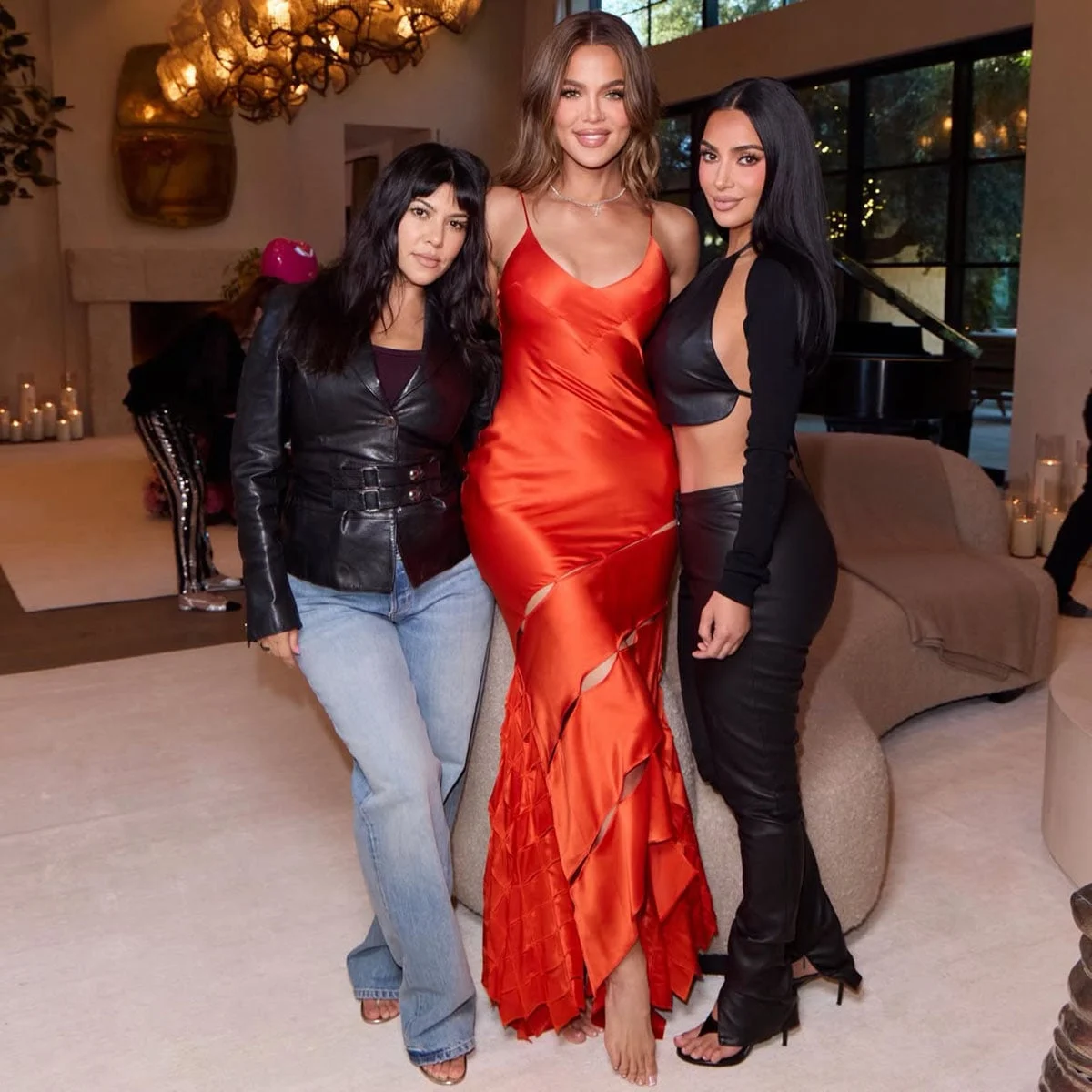
Khloé Kardashian celebrated her 42nd birthday by selecting a notable piece from the Roberto Cavalli fashion archives, opting for a burnt-orange silk slip dress originally debuted during the brand’s Spring/Summer 2004 runway presentation. The garment, characterized by its luminous silk fabric, intricate asymmetric cut-outs, and a sculptural ruffled hem, represents a pivotal era in Italian luxury design. This choice continues a long-standing tradition within the Kardashian-Jenner family of utilizing archival high-fashion pieces to mark significant personal milestones, effectively blending contemporary celebrity culture with fashion history.
The birthday celebration, which saw Kardashian joined by her sisters Kim and Kourtney, highlighted a specific aesthetic shift that has dominated the luxury market over the last several years. By reaching back more than two decades into the Cavalli archives, Kardashian utilized a design created during the tenure of the late Roberto Cavalli himself, a period defined by unapologetic glamour, Mediterranean sensuality, and technical mastery of silk drapery. The dress remains a quintessential example of the "glamazon" aesthetic that Cavalli championed throughout the early 2000s, featuring a silhouette that prioritizes movement and body-conscious tailoring.
Historical Context of the Roberto Cavalli Spring/Summer 2004 Collection
The Spring/Summer 2004 collection from which this dress originates was a landmark moment for the Roberto Cavalli house. During this period, the brand was at the height of its global influence, synonymous with a high-octane lifestyle and a "more is more" philosophy. The collection featured a heavy emphasis on earth tones, liquid-like silks, and the innovative use of animal prints—elements that have since become the house’s signature.
Fashion historians often point to the mid-2000s as a transformative era for Cavalli, where the designer successfully bridged the gap between haute couture sensibilities and ready-to-wear accessibility. The specific dress worn by Khloé Kardashian utilizes a bias-cut technique, a difficult tailoring method that allows the fabric to drape naturally over the curves of the body. The inclusion of ruffles and strategic cut-outs served to modernize the classic slip dress, a staple of the 1990s, by adding the structural complexity that defined the early 2000s.
The Kardashian-Jenner Affinity for Archival Luxury
Khloé Kardashian’s decision to wear vintage Cavalli is not an isolated event but rather part of a documented strategic approach to fashion curation shared by her siblings. The Kardashian-Jenner family has played a significant role in the mainstreaming of "archival dressing," a trend where celebrities forgo new collections in favor of historically significant pieces from a brand’s past.

Kim Kardashian has previously utilized the Roberto Cavalli archives for high-profile appearances, as has Kourtney Kardashian and Kendall Jenner. For instance, Kim Kardashian’s history with vintage Cavalli includes a notable 2020 appearance in a piece from the designer’s 2003 collection. Similarly, Kendall Jenner has frequently turned to the brand’s most recognizable animal-print designs for high-visibility social media posts.
Industry analysts suggest that this preference for archival pieces serves two purposes: it establishes the wearer as a serious collector with an appreciation for fashion history, and it ensures exclusivity. In an era where new collections are instantly accessible and widely replicated, archival pieces offer a level of rarity that current-season items cannot provide. This "archive fever" has fundamentally changed the secondary luxury market, with pieces from the early 2000s—often referred to as "Y2K fashion"—seeing a massive surge in valuation.
The Economics of the Archival Fashion Market
The resurgence of interest in Roberto Cavalli’s early work coincides with a broader economic trend in the fashion industry. According to data from luxury resale platforms such as The RealReal and Vestiaire Collective, the demand for vintage Italian luxury goods has grown by over 35% annually over the past three years. Specific designers, including Cavalli, Tom Ford for Gucci, and John Galliano for Dior, have seen their archival pieces appreciate in value, often selling for several times their original retail price.
The "Kardashian Effect" is a recognized phenomenon within this market. When a member of the family wears an archival piece, search volume for that specific designer typically spikes by 40% to 80% within 48 hours. This increased visibility often leads to a direct reduction in available inventory across global resale sites, further driving up the market price for similar garments. By choosing a 22-year-old dress for her 42nd birthday, Khloé Kardashian has effectively participated in a cycle that reinforces the investment value of luxury vintage.
Analysis of the Y2K Fashion Resurgence
The relevance of the Spring/Summer 2004 collection in 2026 is rooted in the 20-year fashion cycle, a theory suggesting that trends typically return to the forefront of culture every two decades. The early 2000s aesthetic, characterized by daring cuts, low-rise silhouettes, and maximalist embellishments, has resonated strongly with younger consumers while maintaining nostalgic appeal for older demographics.
Roberto Cavalli’s designs from this era are particularly sought after because they represent a specific type of high-glamour femininity that was temporarily sidelined by the "minimalist" and "quiet luxury" trends of the 2010s. The burnt-orange silk slip dress serves as a counterpoint to minimalism, offering a vibrant color palette and dynamic structural details that photograph exceptionally well for digital platforms—a crucial consideration for modern celebrity branding.

Event Logistics and Social Cohesion
Observers of the birthday event noted the visual coordination between the Kardashian sisters. While Khloé took center stage in the vibrant Cavalli piece, Kim and Kourtney Kardashian opted for more muted or complementary tones, a move that fashion commentators interpret as a deliberate attempt to allow the birthday celebrant to stand out. This level of visual curation is a hallmark of the family’s public appearances, where fashion is used to denote hierarchy and narrative focus within the group.
The event took place against a backdrop of increasing interest in the legacy of Roberto Cavalli following the designer’s passing in 2024. The brand, now under the creative direction of Fausto Puglisi, has been actively celebrating its heritage, often reinterpreting motifs from the very archives that the Kardashians are currently wearing. This synergy between a brand’s current trajectory and the celebrity-driven revival of its past is a powerful marketing tool in the luxury sector.
Broader Implications for the Fashion Industry
Khloé Kardashian’s 42nd birthday look reflects a broader shift in how luxury is consumed and perceived. The move away from "newness" toward "provenance" suggests that the future of high fashion may lie increasingly in its past. For brands like Roberto Cavalli, the celebrity-endorsed revival of archival pieces provides a secondary life for their designs, cementing their status as "classics" rather than seasonal trends.
Furthermore, this trend highlights the growing importance of the fashion stylist as a curator and historian. Sourcing a pristine condition silk dress from 2004 requires a deep network of vintage dealers and private collectors. The logistical effort involved in securing such a piece adds to the prestige of the final look.
In conclusion, Khloé Kardashian’s choice of a Roberto Cavalli Spring/Summer 2004 dress for her 42nd birthday is more than a personal style preference; it is a calculated engagement with fashion history and market trends. By highlighting a piece that is over two decades old, she reinforces the longevity of Italian craftsmanship and the enduring appeal of the early 2000s aesthetic. As archival fashion continues to dominate the cultural conversation, such moments serve as a bridge between the runway legacies of the past and the digital-first fashion landscape of the present. The burnt-orange silk gown remains as dynamic and captivating in 2026 as it was when it first appeared on the runway, proving that true design innovation is immune to the passage of time.