



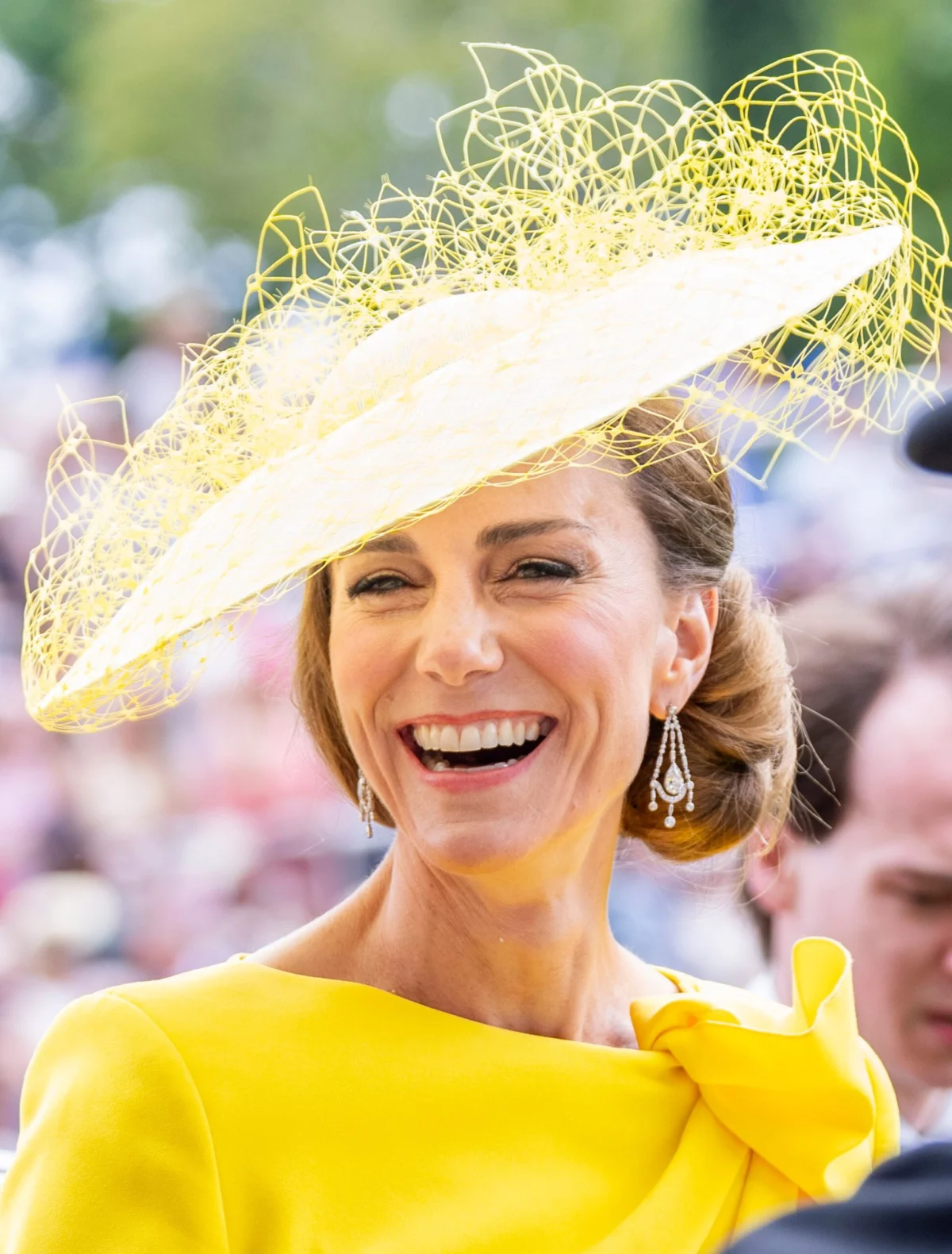
The return of Catherine, Princess of Wales, to the prestigious Royal Ascot event after a three-year hiatus was met with considerable public anticipation, not least for her sartorial choices and signature hairstyles. Contrary to expectations that she might favor her well-documented, glossy, loosely waved blowouts, the Princess opted for a sophisticated and impeccably crafted updo for the second day of the races. This decision marked a departure from her usual open-hair styles for the occasion, signaling a preference for polished elegance befitting the formal atmosphere of Britain’s premier horse racing event. The chosen hairstyle, a voluminous chignon, has drawn particular attention for its architectural precision and striking resemblance to a perfectly formed cinnamon roll, a comparison offered with admiration for its artistry.
The Architectural Brilliance of a Royal Hairstyle
While Middleton’s radiant appearance is undeniable from all vantage points, it is the side and rear views of her chignon that truly highlight its structural ingenuity. Positioned not at the nape of the neck as is traditional, but rather jauntily off-center, the hairstyle features a distinct roll that originates behind one ear and sweeps gracefully across to the opposite side. This asymmetrical arrangement imbues a classic style with a contemporary flair and visual interest, all while adhering to the strictures of royal protocol. Such a deliberate placement offers a subtle yet impactful deviation from convention, demonstrating a keen understanding of modern aesthetics within a formal framework.
The bun itself possesses remarkable volume, yet it achieves this without any visible signs of teasing or fluffiness. Instead, it presents a dense, smooth, and seemingly solid structure. From certain perspectives, the chignon appears almost woven, meticulously constructed from broad sections of hair that are folded and sculpted to create an illusion of exceptional thickness and density. This level of detail suggests a highly skilled hairstylist, likely working with a meticulous approach to achieve such a flawless and enduring finish throughout a day of public engagements.
Complementing the Ensemble: Hat, Dress, and Hairstyle Synergy
The Princess’s chosen headwear, a dramatic creation by renowned milliner Philip Treacy, a piece of art in itself, was strategically placed to enhance rather than overshadow the intricate hairstyling. The chignon’s low and slightly off-center positioning allowed the statement hat to rest securely above it, ensuring that the elaborate hair design remained visible and celebrated. This careful coordination between millinery and hairstyle is a hallmark of royal dressing, where every element is considered for its contribution to the overall visual impact and adherence to established standards of elegance.
The Princess of Wales completed her look with a vibrant yellow Roksanda dress, a piece she has publicly worn on two previous occasions. This choice underscores a practical yet elegant approach to royal fashion, demonstrating that even princesses recognize the value of re-wearing well-loved garments. Having previously styled this sunshine-hued dress with her hair down and in a ponytail, the third public appearance marked a definitive moment for those who admire the future queen in an elegant, hat-adorned updo. The combination of the bold dress, the striking hat, and the meticulously styled chignon created a memorable and impactful ensemble, perfectly suited for the grandeur of Royal Ascot.

Royal Ascot: A Tradition of Style and Spectacle
Royal Ascot, held annually in June, is one of Britain’s most historic and esteemed horse racing events, boasting a lineage stretching back over 300 years. Founded by Queen Anne in 1711, the five-day festival is steeped in tradition and attended by members of the Royal Family, most notably the reigning monarch. The event is renowned not only for its world-class racing, attracting top thoroughbreds and jockeys from around the globe, but also for its stringent dress code, which dictates formal attire for attendees, particularly in the Royal Enclosure. This emphasis on sartorial elegance has cemented Royal Ascot’s status as a prominent fixture in the social calendar, where fashion is as much a part of the spectacle as the racing itself.
The dress code at Royal Ascot is famously strict, with specific guidelines for men and women. Women are typically required to wear dresses or skirts of a modest length (falling just above the knee or longer), with straps of an appropriate width. Fascinators and hats are a mandatory accessory, with elaborate and often artistic designs being a common feature. Men are expected to wear morning dress, including a waistcoat and tie, with a black or grey top hat. The adherence to these sartorial norms contributes to the event’s unique atmosphere of dignified celebration.
The Princess of Wales’s Royal Ascot Style Evolution
Catherine, Princess of Wales, has been a consistent and admired attendee at Royal Ascot, often setting trends with her fashion choices. Her appearances have showcased a range of styles, from elegant midi dresses to more formal ensembles, invariably complemented by sophisticated millinery. Historically, her hair has often been worn down, styled in soft waves that highlight her lustrous locks. This consistent approach has made her signature loose blowouts a recognizable element of her public persona.
Her decision to wear an updo for this year’s event, therefore, represents a notable shift. This strategic choice not only aligns with the formal demands of the occasion but also allows for a different kind of aesthetic expression. Updos, by their nature, convey a sense of refined elegance and poise, drawing attention to the wearer’s facial features and neckline. The specific style chosen – a voluminous, sculpted chignon – suggests a deliberate effort to present a particularly regal and polished image, one that commands attention through its understated yet undeniable sophistication.
Supporting Data and Inferred Significance
The Princess of Wales’s engagement at Royal Ascot underscores her role as a key figure in public life and a significant influencer of fashion and style. Her appearances at such high-profile events are closely scrutinized and widely reported, often leading to increased interest in the brands she wears and the trends she sets. Data from fashion analytics firms frequently shows a surge in searches and sales for items worn by members of the Royal Family, a phenomenon often referred to as the "Kate effect."
The choice of a classic Roksanda dress, a designer whose pieces the Princess has worn previously, further exemplifies a conscious approach to royal wardrobe management. This practice of re-wearing outfits challenges the notion of disposable fashion and promotes a message of sustainability and practicality, resonating with a growing public awareness of environmental concerns. The fact that this particular dress has now been styled in three distinct ways – loose hair, ponytail, and updo – demonstrates its versatility and the Princess’s ability to adapt and refresh her look through different hairstyles and accessories.

Expert Analysis and Royal Protocol
From a hairstyling perspective, the creation of such a substantial and structured chignon requires significant technical skill. It involves carefully sectioning the hair, smoothing each section to remove any flyaways, and then meticulously rolling and pinning it into place to achieve the desired volume and shape. The absence of visible teasing indicates that the volume is likely achieved through clever folding and sculpting of the hair itself, possibly with the aid of internal volumizing products or techniques that create a dense, cohesive structure.
Royal protocol, while evolving, generally emphasizes decorum and a certain level of conservatism in public appearances. Hairstyles that are overly elaborate, excessively trendy, or potentially distracting are typically avoided. The Princess’s chignon, while striking in its artistry, remains firmly within the bounds of acceptable elegance for a formal royal event. Its off-center placement adds a modern twist without being ostentatious, striking a balance between tradition and contemporary style.
Broader Impact and Implications
The Princess of Wales’s fashion and beauty choices at events like Royal Ascot have far-reaching implications. They not only influence trends in the fashion and beauty industries but also contribute to the public image and perception of the monarchy. By consistently presenting a polished and elegant demeanor, the Princess reinforces a sense of continuity and tradition, while her subtle modern touches ensure her relevance to contemporary audiences.
The meticulous attention to detail in her presentation, from the choice of designer to the execution of her hairstyle, speaks volumes about her understanding of her role and the importance of public perception. The success of the chignon in complementing her entire look – the dress, the hat, and the overall aura of regal grace – highlights the power of cohesive styling. This event’s sartorial success, particularly the celebrated updo, serves as a reminder that even within established traditions, there is always room for refined personal expression and masterful execution. The Princess of Wales continues to demonstrate her adeptness at navigating the complexities of royal representation, blending timeless elegance with a modern sensibility, and her Royal Ascot hairstyle has become a testament to this skill.