











The global fashion industry currently finds itself entangled in a severe logistical and ecological paradox. While top-tier apparel brands grapple with billions of dollars’ worth of unsold inventory—frequently resorting to incineration or deep-discount liquidations that risk brand cannibalization in core Western markets—emerging economies face an entirely different crisis. Developing nations have historically relied on secondhand clothing imports to supply affordable apparel, yet a staggering 30% to 40% of these textile shipments arrive completely unusable. This influx of unwearable garments places a heavy environmental burden on local ecosystems, contributing to massive landfill overflows and localized pollution.
Enter the burgeoning global recommerce sector, a market projected to skyrocket to approximately $350 billion by 2027. Amid this landscape of surplus and waste, South African startup FARO has emerged as a disruptive force. Launched last year by co-founders David Torr, Will McCarren, Chris Makhanya, and Amber Penney-Young, FARO recently secured $6 million in venture backing to execute its ambitious vision: making authentic, branded fashion affordable across emerging markets while actively mitigating textile waste.
By marrying localized physical retail infrastructure with advanced artificial intelligence, FARO is attempting to rewrite the rules of off-price fashion distribution, proving that circular economy models can thrive outside of traditional e-commerce paradigms.
The Origins and Rapid Expansion of FARO
The genesis of FARO traces back to a humble, high-stakes experiment in early 2023. The founding team—whose members boast prior operational experience at industry heavyweights such as Amazon, Jumia, Superbalist, and Zumi—opened an experimental pop-up retail store in South Africa. The results defied conventional retail forecasts. Within its first month of operation, the single pop-up location generated an impressive $100,000 in revenue.
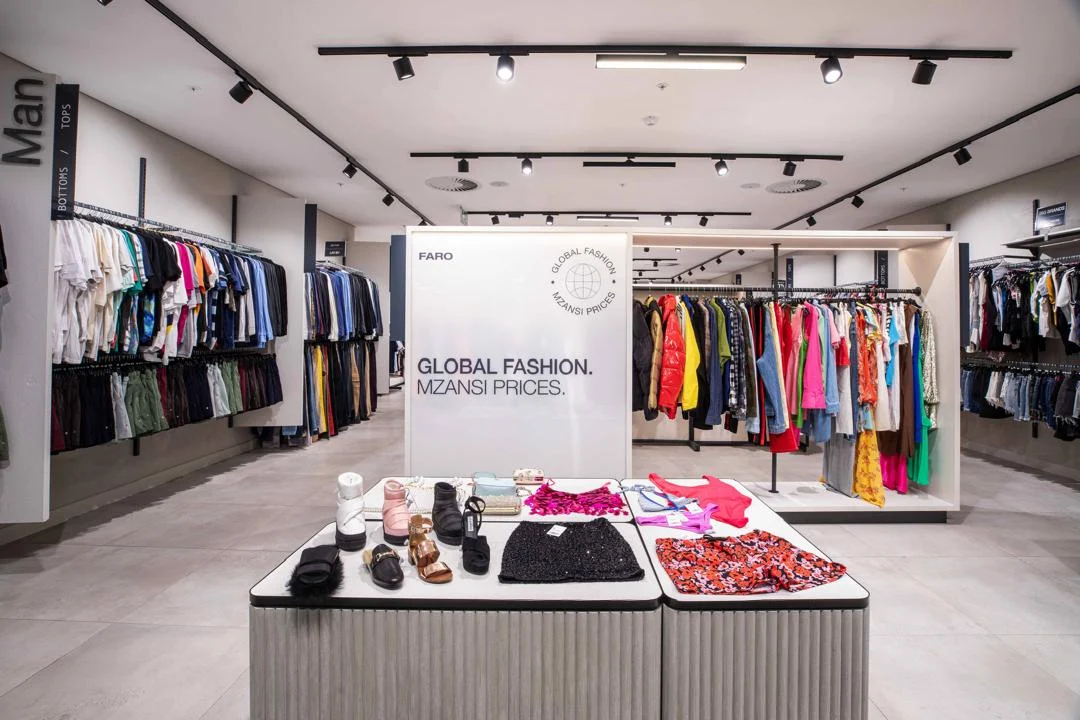
Relying on traditional retail benchmarks, the leadership team initially projected that they would need to open at least seven stores to achieve $2 million in annual revenue. Instead, operating through a mix of urban hubs, mid-market shopping centers, and formal retail spaces, FARO shattered expectations. The company reached $2.3 million in annual revenue utilizing just four physical storefronts, translating to a remarkable 20-fold revenue growth in its first full year.
Capitalizing on this momentum, the startup closed a $6 million funding round led by JP Zammitt, president of Bloomberg. The investment syndicate also included prominent venture capital firms such as Presight Capital, Gharage Ventures, and E4E Africa, alongside a roster of strategic individual angel investors including Mato Perić (MPGI), Leonard Stiegeler (Pulse), Oliver Merkel (Flink), Vikram Chopra (Cars24), Tushar Ahluwalia (Razor Group), Sudeep Ramnani (885 Capital), and Kresten Buch (88mph). With fresh capital secured, FARO has set its sights on a monumental long-term goal: scaling its retail footprint to 1,000 stores over the next decade across Africa, South America, Asia, and the Middle East.
Solving the Brand Dilemma: From Consumer Returns to High-Street Value
To understand FARO’s operational model, one must examine the friction points inherent in modern fashion supply chains. Major global labels—including household names like ASOS, Boohoo, G-Star, Jack & Jones, Levi’s, Calvin Klein, Tommy Hilfiger, and Zara—generate massive volumes of consumer returns and manufacturing overstock. Often, items returned with minor defects or slight handling wear are treated as operational write-offs. Due to high domestic labor costs in Western markets for sorting, mending, and recataloging, these garments are frequently discarded or incinerated to protect brand equity.
FARO intercepts this inventory stream at the source. Through direct partnerships with major fashion brands, the startup acquires surplus and minor-defect merchandise at ultra-low wholesale prices, sometimes paying as little as £1 per piece. Rather than shipping these goods back into saturated U.S. or European markets, FARO funnels them directly into South Africa and other developing regions where formal retail stores carrying these brands are financially out of reach for the average consumer, yet the cultural aspiration for authentic, high-quality labels remains intensely strong.
Once the inventory arrives at FARO’s fulfillment hubs, it undergoes a rigorous restoration process. The startup utilizes specialized facilities outfitted with industrial laundries, steam tunnels, and cost-effective local labor to clean, repair, and recondition the garments. Approximately 40% of FARO’s inventory consists of these reconditioned consumer returns, while the remaining 60% comprises pristine factory overstock. By the time these items hit the sales floor, customers can purchase them at discounts of up to 70% off original retail prices.
The Offline Advantage and the Inefficiencies of Legacy Retail
In an era where retail tech discourse is dominated by direct-to-consumer e-commerce apps and digital marketplaces, FARO has made a deliberate, calculated bet on brick-and-mortar retail. E-commerce expansion across the African continent faces persistent structural hurdles, including fragmented logistics networks, low population density outside major cities, and high last-mile delivery costs. While established platforms like Takealot and Jumia have carved out sustainable niches, and aggressive cross-border ultra-fast-fashion giants like Shein and Temu exert increasing pressure on price-sensitive shoppers, digital-only models struggle with the unique complexities of off-price inventory.
Off-price retail inventory is fundamentally distinct from standard retail merchandise. Because consumer returns and overstock items arrive as uncoordinated, single-item pieces with unpredictable sizing and varied conditions, the cost of photographing, digitizing, and listing each unique SKU online is prohibitively expensive. Even legacy off-price giants in developed economies, such as TJX Companies, rely overwhelmingly on physical storefronts backed by established, offline supplier relationships.
However, these traditional off-price systems are far from optimized. Across the global retail industry, inventory management and merchandise buying remain mired in outdated, highly manual workflows. Thousands of corporate employees spend their days manually processing massive, chaotic inventory manifests using basic spreadsheet software like Microsoft Excel.
Harnessing Artificial Intelligence to Streamline Supply Chains
Recognizing the immense operational bottlenecks embedded within traditional retail administration, FARO is actively developing proprietary artificial intelligence tools to automate its supply chain workflows. According to co-founder David Torr, the startup has begun deploying AI-powered agents designed to deconstruct complex buyer decisions into manageable micro-tasks.
"Some brands have over 15,000 people employed at a head office level who are just manipulating data on Excel," Torr notes. By deploying advanced buy models, FARO’s AI systems can analyze and process complex inventory manifests not in hours or days, but in a matter of seconds. Furthermore, Torr emphasizes that the machine learning models yield a higher level of analytical accuracy than human operators performing the same tasks manually.
Beyond internal inventory processing, FARO is developing customer-facing AI applications designed to elevate the in-store shopping experience. The startup plans to introduce personalized notification tools that alert shoppers when specific brands, styles, or sizes matching their preferences are en route to a local store. This capability aims to foster deeper customer loyalty without requiring a costly digital e-commerce shipping infrastructure.
Economic Models and Governance
A cornerstone of FARO’s corporate strategy is its commitment to transparent, disciplined pricing. The company operates on a strict fixed-margin business model designed to cap profitability at 45% after accounting for all operational expenditures, including processing, logistics, and swing tags. Crucially, when operational efficiencies push margins beyond this target threshold, FARO management intentionally channels those gains back into lower retail prices for the consumer rather than inflating corporate profits.
"Our fundamental belief is if we can be the most exciting driver of great value for the customer, that is how we create loyalty and stickiness," Torr explains. "And how we just get to 1,000 stores is by being 100% focused on customer centricity."
Scaling Challenges and Regional Nuances
As FARO looks beyond its current footprint in South Africa—a market uniquely suited for off-price physical distribution due to its dense network of more than 2,000 modern shopping centers—the company faces the complex task of cross-border expansion. Scaling a recommerce model across emerging markets requires an acute understanding of localized consumer behavior, economic profiles, and cultural preferences.
Retail analysts point out that a commercial playbook optimized for South Africa’s urbanized, formal retail environment may not translate seamlessly to markets like Kenya, Nigeria, or nascent economies in South Asia and Latin America. Consumer purchasing power, brand familiarity, and regulatory frameworks regarding textile imports vary widely from one nation to another. Consequently, FARO’s long-term viability will depend heavily on its ability to build highly localized price profiles and forge adaptable supply chain partnerships tailored to regional demand.
Broader Industry Implications and the Future of Recommerce
FARO’s rapid ascent underscores a wider structural shift occurring within the global fashion industry. For decades, the linear take-make-dispose model dominated fashion economics, leaving emerging markets to absorb the ecological fallout of Western overconsumption. By positioning itself as a circular bridge between excess inventory in developed economies and unmet consumer demand in the Global South, FARO demonstrates that financial profitability and environmental sustainability are not mutually exclusive.
The startup’s hybrid approach—combining industrial-scale garment reconditioning, physical retail distribution in underserved urban centers, and AI-driven administrative automation—presents a compelling blueprint for the future of off-price retail. As fashion brands face mounting regulatory scrutiny over textile waste and consumer demand shifts toward circular shopping alternatives, ventures like FARO illustrate how technological innovation can transform supply chain liabilities into scalable commercial opportunities. Whether the company can successfully navigate its path to 1,000 stores across multiple continents remains to be seen, but its early trajectory signals a profound evolution in how surplus fashion is managed on a global scale.