









The fashion industry stands at a significant crossroads as changing consumer behavior, economic pressures, and technological innovations reshape the global retail landscape. Atorie, an emerging AI-powered fashion startup, announced on Thursday that it has successfully closed a $9.5 million seed funding round. The investment was backed by prominent venture capital firms and industry leaders, including a16z Speedrun, Night Capital, and Jeremy Liew of Lightspeed Ventures. This fresh infusion of capital highlights a growing investor appetite for disruptive business models that bypass traditional retail markups and connect high-end manufacturing facilities directly with everyday shoppers.
Atorie’s core value proposition centers on offering high-quality apparel and accessories—such as Italian leather handbags and finely tailored garments—crafted from the exact same materials and in the same elite European and global factories utilized by premier luxury houses like Prada and Louis Vuitton. However, while a luxury handbag from an established designer label often retails for thousands of dollars, Atorie prices comparable items at a fraction of that cost, typically just a few hundred dollars. This operational strategy places the startup in direct conversation with the modern "dupe culture" and positions it as a viable alternative to traditional fast-fashion giants like Zara, while actively distancing itself from the environmental pitfalls associated with disposable apparel.
The Genesis of Atorie and the Evolution of Luxury Manufacturing
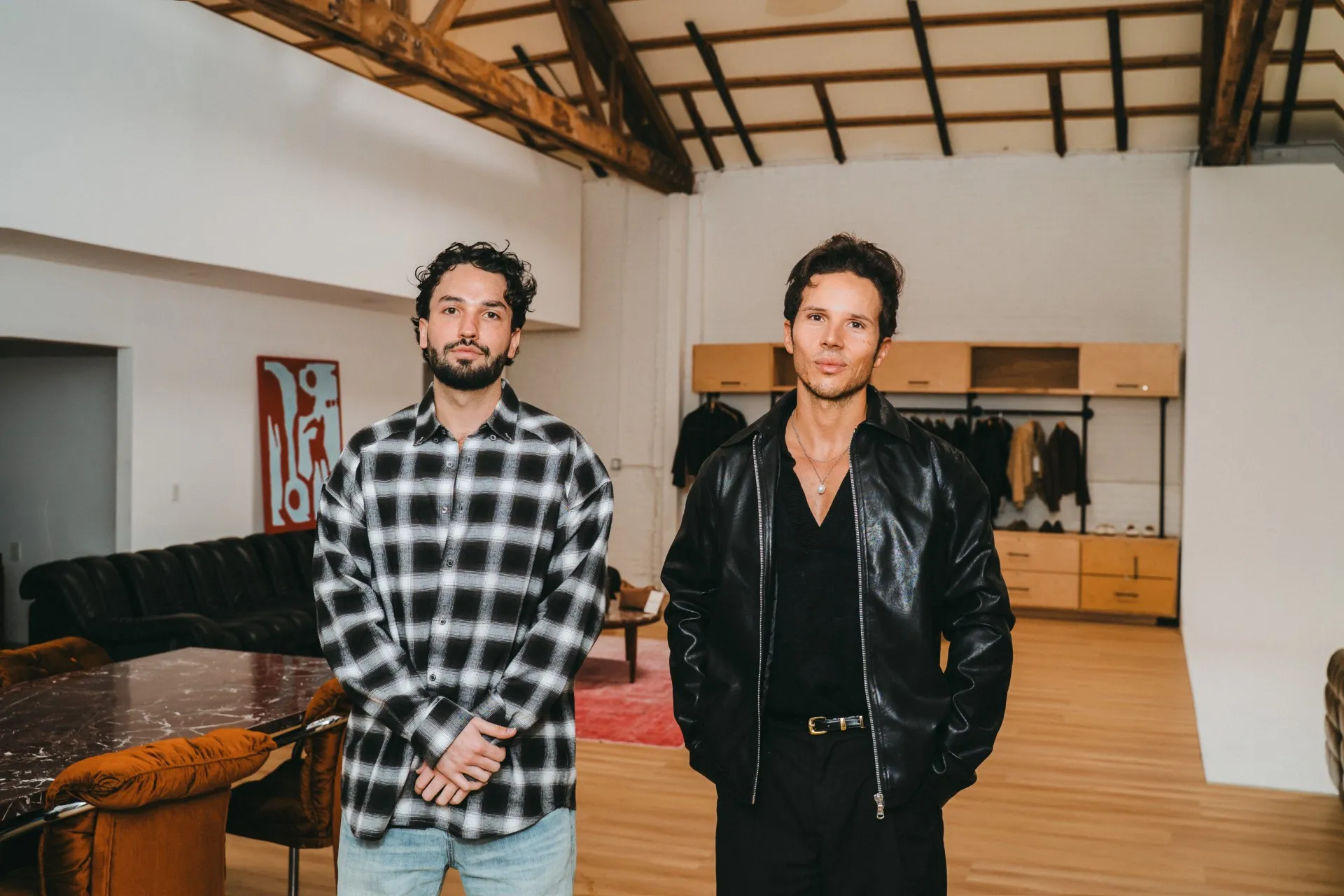
The groundwork for Atorie was laid by co-founder and serial entrepreneur Redouane Ramdani, whose professional background includes building the creator platform Snipfeed prior to its successful acquisition in 2024. Growing up in France within a family deeply embedded in the luxury manufacturing sector, Ramdani harbored a lifelong ambition to enter an industry he had admired since childhood. When he eventually turned his full attention to the fashion space, however, he observed a fundamental structural shift in how high-end goods were produced.
Historically, the relationship between luxury brands and manufacturing facilities followed a rigid paradigm. Renowned fashion houses would conceptualize designs, procure raw materials, and commission external factories to execute the production process under strict confidentiality agreements. This traditional model required brands to commit to exceptionally high minimum order quantities (MOQs). While this system ensured large-scale production, it frequently resulted in severe overproduction, leaving brands and manufacturers vulnerable to unsold inventory, shifting consumer trends, and sudden contract cancellations from primary corporate clients. Factories dependent on a small handful of large brand partners often faced acute financial risks if a major customer altered its purchasing strategy.
Over time, however, top-tier manufacturing facilities began developing in-house design and product-development capabilities. Recognizing this evolution, Ramdani partnered with co-founder Luis Angulo to establish Atorie. Rather than acting as a traditional middleman, Atorie leverages these modern manufacturing capabilities, enabling factories to design, adapt, and produce items in smaller, demand-driven batches. This operational flexibility allows the startup to maintain the stringent quality standards of luxury goods while drastically reducing inventory waste and financial exposure for the manufacturing partners.
Harnessing Artificial Intelligence for Demand Forecasting and Design
A cornerstone of Atorie’s operational efficiency and rapid market penetration is its heavy reliance on artificial intelligence. The startup utilizes advanced AI algorithms not only to optimize the consumer shopping experience but also to streamline back-end supply chain logistics. By aggregating and analyzing global fashion trends, historical sales data, and consumer preference metrics, Atorie’s proprietary AI models can forecast demand with high precision before committing to large-scale production runs.
Furthermore, Atorie employs AI agents to monitor raw material availability, predicting potential supply bottlenecks so that partner factories can secure necessary fabrics and components well in advance. This predictive capability mitigates the supply chain volatility that frequently plagues the apparel industry, ensuring consistent product availability without generating excess stock.
On the consumer-facing side of the platform, Atorie integrates generative AI to personalize the shopping journey. Visitors to the Atorie website can interact with an AI-powered styling assistant capable of curating complete outfits based on user-defined inspirations, aesthetic preferences, or celebrity styles. Over time, the platform’s machine learning algorithms analyze individual purchasing habits and browsing behaviors to deliver tailored recommendations. This technological integration has already yielded tangible results for the company, which reports a noticeable increase in direct sales referrals originating from external generative AI platforms such as OpenAI’s ChatGPT and Anthropic’s Claude.
Riding the Wave of Post-Pandemic Luxury Backlash and Dupe Culture

Atorie’s market entry coincides with a turbulent period for the traditional luxury sector. In the post-pandemic era, legacy fashion houses implemented swift and aggressive price hikes, alienating a significant portion of their consumer base. This pricing strategy created a widening chasm between aspiration and affordability, particularly among younger demographics such as Millennials and Generation Z.
Rather than abandoning fashion trends altogether, younger consumers have fueled the meteoric rise of "dupe culture," seeking out near-identical, lower-cost alternatives to high-end designer items. For many consumers, acquiring and sharing these affordable alternatives has transformed into a modern status symbol, signaling financial pragmatism paired with style consciousness.
While items sold on Atorie are frequently compared to luxury goods, Ramdani emphasizes that the startup’s inventory transcends standard fast-fashion or low-quality knockoffs. "It’s the same material, same craftsmanship," Ramdani noted, highlighting that the merchandise originates from the identical production lines as high-end designer goods. By framing Atorie as a "slow fashion" alternative that prioritizes durability, ethical manufacturing, and accessibility, the founders are targeting a demographic increasingly fatigued by the environmental degradation and ephemeral nature of ultra-fast fashion. In this regard, industry analysts frequently draw strategic parallels between Atorie and successful direct-to-consumer retailers like Quince, which built widespread consumer loyalty by offering premium home goods and apparel at transparent, low price points.
Rapid Financial Growth and Global Factory Partnerships
Atorie’s operational model has translated into substantial commercial momentum. The company concluded the previous fiscal year with approximately $5 million in total sales. Driven by accelerating consumer demand and viral digital marketing, the startup projects its annualized revenue run rate to exceed $55 million in the current year.
This financial trajectory reflects an aggressive expansion strategy. Atorie currently collaborates with a global network of over 40 specialized manufacturing facilities. By diversifying its production base across multiple international hubs, the company minimizes geopolitical and logistical risks while scaling its product catalog efficiently.
Strategic Allocation of the $9.5 Million Seed Capital
With the successful closure of its $9.5 million seed round, Atorie leadership plans to allocate the fresh capital across several key operational pillars:
- Logistics and Supply Chain Optimization: Enhancing international freight, warehousing, and fulfillment capabilities to ensure rapid delivery times for a growing global customer base.
- Advanced AI Tool Development: Investing in proprietary software engineering to refine demand forecasting models, expand the capabilities of customer-facing styling agents, and improve supply chain transparency.
- Production Scale-Up: Increasing manufacturing output across existing factory partnerships to meet surging demand and prevent stockouts on high-velocity items.
- In-House Line Expansion: Developing Atorie’s proprietary clothing lines, modeled after successful high-volume essential brands like Amazon Essentials, to capture a broader market segment.
- Creator and Influencer Partnerships: Establishing collaborative programs with social media creators and digital influencers to facilitate the rapid launch of dedicated capsule collections and creator-led clothing lines.
Broader Implications for the Global Fashion Industry
The rise of Atorie and similar AI-driven, factory-direct retail models signals a profound structural shift in the global apparel market. For decades, legacy brands maintained a tight oligopoly over high-end fashion by controlling intellectual property, marketing channels, and exclusive manufacturing contracts. However, as manufacturing facilities acquire independent design capabilities and leverage advanced artificial intelligence to manage inventory, the traditional barriers to entry that protected legacy fashion houses are steadily eroding.
By cutting out traditional brand markups, excessive marketing budgets, and bloated corporate overhead, startups like Atorie demonstrate that high-craftsmanship goods can be democratized for a wider audience. If Atorie successfully achieves its stated goal of positioning itself as a high-quality, affordable alternative to mass-market retailers like Zara, it could permanently alter consumer expectations regarding pricing transparency and brand loyalty. As venture capital continues to flow into supply chain innovation and AI-native commerce, the traditional luxury and fast-fashion sectors alike will be forced to adapt to a consumer base that increasingly values material authenticity, ethical production, and economic pragmatism.