






As London sweltered under a persistent heatwave, Harry Styles maintained an unyielding commitment to sartorial excellence during his twelve-date "Love On Tour" residency at Wembley Stadium, a decision that has drawn considerable attention from fashion commentators and concertgoers alike. While typical office and performance environments often see a relaxation of dress codes in extreme temperatures – sleeves rolled, ties shed, and lighter fabrics embraced – Styles has taken a notably hardline approach to his on-stage wardrobe, consistently upholding the sophisticated, corporate-chic standards he established earlier in the global tour. This unwavering dedication to his aesthetic, even as Wembley Stadium issued safety warnings for attendees amidst rising temperatures, positions Styles as a resolute figure in the intersection of high fashion and high-stakes performance.
The Wembley Residency: A Test of Endurance and Style
The "Love On Tour" residency at Wembley Stadium, a monumental leg of Styles’ critically acclaimed global tour, represented a significant moment for the artist and his vast fanbase. Wembley, with its capacity for up to 90,000 spectators, is an iconic venue, and a multi-date residency there is a testament to an artist’s commercial and cultural pull. The shows, held across various dates in late spring and early summer, coincided with a period of unusually high temperatures across the United Kingdom. Meteorologists reported consecutive days where temperatures in London approached or exceeded 30 degrees Celsius (86 degrees Fahrenheit), triggering official heatwave alerts from the UK Health Security Agency (UKHSA).
In response to these conditions, Wembley Stadium management implemented enhanced safety protocols, including increased availability of water, designated cooling areas, and advice for attendees to dress appropriately and stay hydrated. Such warnings underscore the serious health risks associated with large gatherings in extreme heat, particularly for prolonged periods. For a performer like Styles, who commands the colossal stage with dynamic energy for over two hours, the physical demands are immense, and the choice of attire becomes a crucial, if often overlooked, factor in both comfort and endurance. Yet, Styles’ fashion choices consistently leaned into heavier, more structured garments, presenting a striking contrast to the practical concessions typically made in such circumstances.
A "Hardline Approach" to On-Stage Aesthetics
Styles’ current tour wardrobe marks a distinct evolution in his public persona, moving from the flamboyant, maximalist aesthetic of his earlier "Fine Line" era – characterized by sequined jumpsuits, feathered boas, and a clear homage to Elton John’s iconic stage presence – to a more refined, yet equally impactful, corporate-inspired glamour. This shift aligns seamlessly with the sophisticated, sun-drenched disco-pop sensibilities of his latest album, Harry’s House. While the original text playfully refers to the album as Kiss All the Time. Disco, Occasionally, the actual title Harry’s House encapsulates a vibe of intimate elegance, often infused with a nostalgic, ’70s-inspired cool. The tailored suits, rich fabrics, and structured silhouettes Styles has adopted serve as a visual extension of this musical narrative, creating a cohesive artistic statement.
The aesthetic consistently features double-breasted jackets, high-waisted trousers, silk shirts, and patterned ties, often in luxurious wools, gabardine, and mohair. These materials, known for their drape and durability, are also inherently warm. His commitment to this layered, often restrictive, style in the face of oppressive heat speaks volumes about his artistic vision and his desire to present a meticulously crafted image, regardless of external conditions. It transforms his stage outfits from mere clothing into an integral part of the performance art, challenging conventional notions of comfort and practicality in live entertainment.
Chronology of Key Tour Looks: A High-Fashion Panorama
Styles’ "Love On Tour" has been a veritable runway for some of the most prestigious names in luxury fashion, each ensemble carefully curated to reflect his evolving style. The timeline of his recent looks at various tour stops provides a detailed insight into this deliberate fashion strategy.
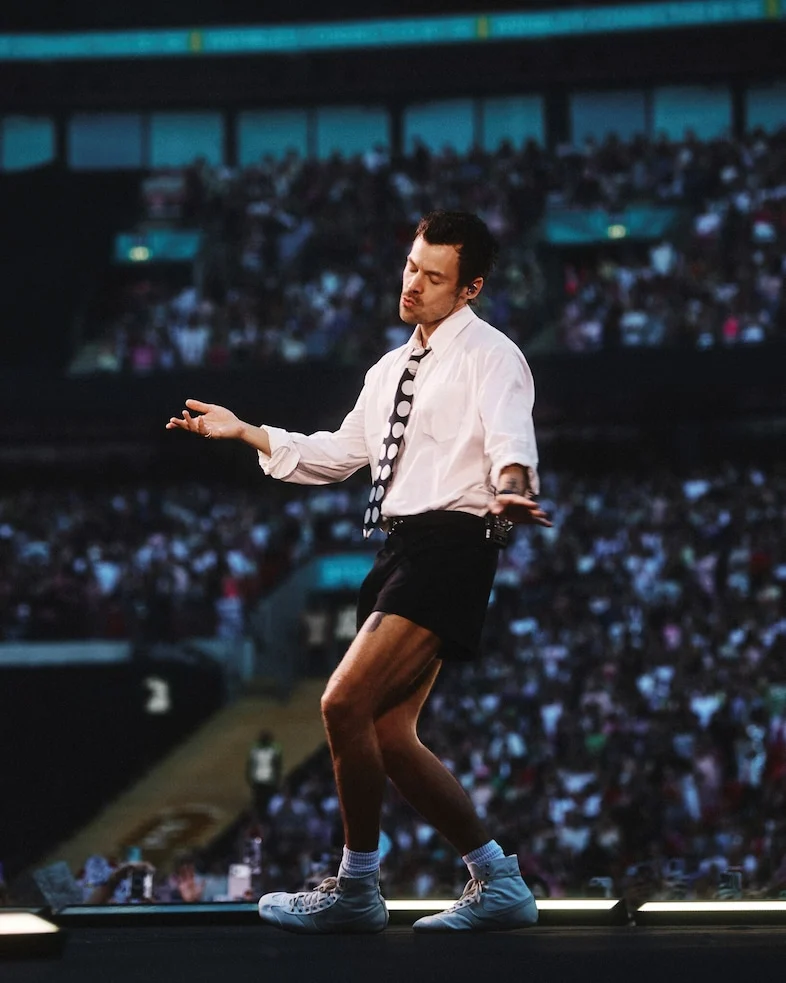
The Celine Statement at Wembley: During one of the most recent Wembley performances, Styles took to the stage in a strikingly slick suit designed by Michael Rider for Celine. The ensemble was a masterclass in understated power dressing, featuring a double-breasted jacket crafted from wool gabardine, paired with complementary mohair wool trousers. Beneath the jacket, a vibrant blue silk shirt provided a pop of color, elegantly tied together with a Paisley-patterned tie. Celine, under the creative direction of Hedi Slimane and his predecessor, Michael Rider (who contributed to Celine’s menswear before Slimane’s era, although Slimane is the current creative director for menswear), is renowned for its sharp tailoring, minimalist yet impactful designs, and a distinct rock-and-roll edge, all of which resonate with Styles’ current aesthetic. The choice of wool gabardine and mohair, while luxurious and visually appealing, would undoubtedly have intensified the heat for the performer, adding several degrees to his internal temperature on stage.
Prada’s Pre-Heatwave Presence: Earlier in the Wembley run, just before the full intensity of the heatwave took hold, Styles championed Italian luxury house Prada. His outfit comprised a distinctive mustard yellow jacket, layered over a hot pink woollen jumper, paired with tailored mohair trousers. Completing the look were Prada’s current "It-shoe," the Collapse. Prada, a powerhouse in the global fashion industry, is celebrated for its intellectual approach to design, often blending classic silhouettes with unexpected colors and innovative textures. The combination of a woollen jumper and mohair trousers, even in the absence of peak heat, signifies a clear prioritization of aesthetic over ambient temperature, showcasing a dedication to the intended style narrative. The "Collapse" shoe, known for its unique design and comfort, grounds the high-fashion ensemble with a touch of contemporary cool.
Amsterdam’s Calvin Klein Ensemble: Prior to his London dates, Styles made a bold statement in Amsterdam with an outfit from American fashion giant Calvin Klein. This ensemble featured billowing blue trousers, a butter yellow blazer, a blood-red T-shirt, and lace-up boxing boots. Calvin Klein, traditionally known for its minimalist designs, denim, and underwear, has been undergoing a revitalization, often embracing a more modern, gender-fluid approach to fashion. Styles’ choice of a more relaxed yet still structured blazer, combined with the vibrant color palette and unexpected boxing boots, demonstrated a playful yet sophisticated take on the brand’s evolving identity. The looser trousers would have offered slightly more ventilation, a small concession perhaps, but the layering and blazer still presented a formidable barrier against the heat.
The Charles Jeffrey LOVERBOY Interlude: A Brief Respite: Amidst this parade of tailored suits, Styles did offer a brief, albeit dramatic, deviation from his "hardline approach." He was photographed wearing black hot pants from Charles Jeffrey LOVERBOY. This moment of playful irreverence, showcasing his legs ("pins"), provided a stark contrast to the predominantly covered-up looks. Charles Jeffrey LOVERBOY is known for its avant-garde, gender-bending designs, often drawing inspiration from club culture and historical fashion. This momentary embrace of a more revealing, whimsical piece underscored Styles’ versatility and his ability to seamlessly integrate high-concept fashion with moments of uninhibited expression. While offering a practical respite from the heat, it remained a high-fashion statement, not a casual concession.
Evolution of Styles’ On-Stage Persona: From Boa to Blazer
The current sartorial direction of Harry Styles represents a significant evolution from his previous tour cycles. His "Fine Line" tour, which concluded in 2021, was a visual spectacle defined by its maximalist aesthetic. Audiences became accustomed to seeing Styles in custom Gucci creations, often featuring sequined jumpsuits, wide-legged trousers, and an abundance of feather boas, many of which were pink – a color that became synonymous with his brand during that era. This period cemented his status as a gender-fluid style icon, challenging traditional masculine dressing norms with flamboyant flair and overt theatricality.
The shift to the more understated, yet equally impactful, corporate-chic aesthetic for "Love On Tour" and the Harry’s House album cycle signifies a maturation of his artistic persona. It suggests a deliberate move towards a more sophisticated, perhaps introspective, representation of himself as an artist. While still embracing elements of gender fluidity through cuts and styling, the emphasis has moved from overt extravagance to a refined elegance. This transition is not merely a change in clothing but a carefully curated progression that mirrors the sonic landscape of Harry’s House – an album that, while still infused with pop sensibilities, delves into more nuanced themes with a polished, disco-funk groove. His fashion, therefore, becomes a crucial narrative device, telling a story of growth, introspection, and a sophisticated understanding of contemporary pop culture.
The Art of Performance and Wardrobe Strategy
Behind every iconic artist’s stage presence is a dedicated team, and for Harry Styles, his collaboration with stylist Harry Lambert has been pivotal in shaping his distinctive image. The decision to maintain such a stringent dress code during a heatwave is undoubtedly a strategic one, reflecting a deep understanding of branding and performance art. It elevates the concert experience beyond merely a musical event, transforming it into a holistic artistic statement where every visual element is meticulously controlled.
The deliberate choice of heavy fabrics and layered looks, despite the obvious discomfort, can be interpreted in several ways. It could be seen as a testament to his dedication to the aesthetic vision, a commitment to character that transcends personal comfort. It reinforces his status as a fashion icon, demonstrating that his style is not dictated by convenience but by artistic intent. Furthermore, it adds a layer of performance to the act of shedding layers. At the culmination of each Wembley night, Styles famously sheds the "hardline approach," throwing off his jacket, undoing his tie, and rolling up his sleeves. This ritualistic unburdening, as he careens across the colossal stage "like a 10-year-old on a sugar high," is not just about physical relief. It’s a powerful symbolic act – shedding the corporate facade to reveal the uninhibited performer, embracing the joy and freedom of the "disco set you free" ethos, and fostering a raw connection with his audience. This moment of release, made more impactful by the prior restraint, becomes a theatrical climax, underlining the very essence of his performance: a journey from refined control to unbridled euphoria.
Implications for Fashion and Music Industry
Harry Styles’ unwavering commitment to his unique tour fashion, particularly in challenging environmental conditions, carries significant implications for both the fashion and music industries. Firstly, his choices wield immense influence over global menswear trends. As one of the most visible and emulated male artists globally, his embrace of tailored suits, gender-fluid silhouettes, and specific luxury brands sends ripples through consumer fashion, impacting sales and design directions. The increased visibility for Celine, Prada, Calvin Klein, and Charles Jeffrey LOVERBOY through his platform translates into substantial brand equity and market presence. These collaborations are not mere endorsements but strategic partnerships that solidify Styles’ status as a cultural arbiter.
Secondly, his approach underscores the increasing importance of fashion as an integral, non-negotiable component of an artist’s brand and live performance. In an era where visual content and social media presence are paramount, an artist’s wardrobe is no longer secondary to their music but a co-equal element in storytelling and audience engagement. Styles’ meticulous attention to his on-stage attire, even in the face of logistical challenges like extreme weather, demonstrates a comprehensive understanding of this modern entertainment landscape.
Finally, his Wembley residency highlights the evolving challenges of balancing artistic vision with practical considerations such as performer comfort and, crucially, audience safety in extreme conditions. While Styles maintains his composure and energy throughout his sets, the venue’s safety warnings serve as a reminder of the broader responsibility that comes with hosting large-scale events during environmental extremes. His ability to fuse high-fashion artistry with demanding live performance, all while navigating the practicalities of a heatwave, solidifies his unique position in contemporary pop culture, where his fashion choices are as scrutinized and celebrated as his chart-topping music.