








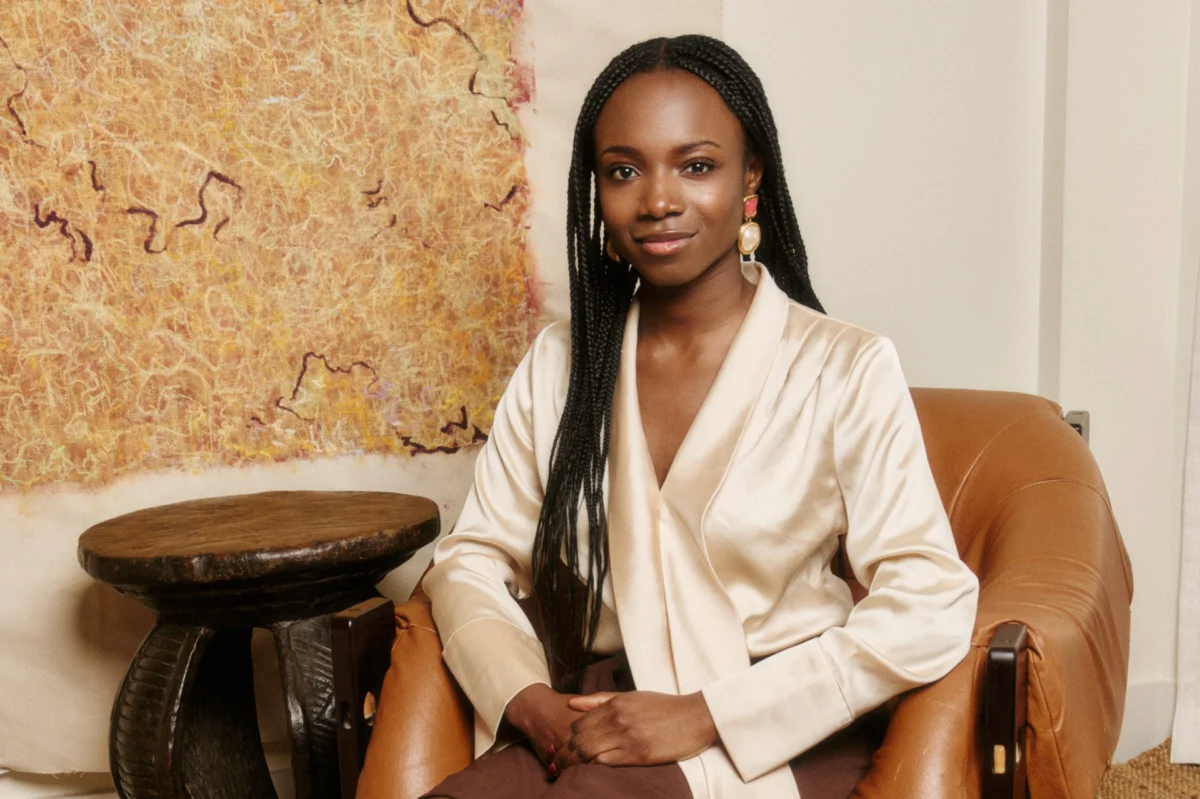
The hair care industry is witnessing a significant technological shift as HaloBraid, a robotics startup focused on automating textured hair styling, announced the successful closing of a $7 million seed funding round. Led by Alexis Ohanian’s venture capital firm, Seven Seven Six, with participation from AlleyCorp and Bling Capital, the investment marks a pivotal moment for a sector that has historically relied on manual labor. The funding will be utilized to finalize product development, scale manufacturing, and establish strategic partnerships with professional salons ahead of the company’s commercial launch scheduled for later this year.
Founded by Yinka Ogunbiyi, an engineer with an MS from Harvard and an MBA, HaloBraid aims to address the significant "time tax" associated with protective hairstyles. For centuries, hair braiding has remained a labor-intensive ritual, often requiring between six and twelve hours of continuous manual work. HaloBraid’s flagship device is designed to act as an automated assistant for professional stylists, reducing the time required for complex styles like box braids and knotless braids from several hours to a fraction of that time.
The Genesis of an Engineering Solution for Cultural Needs
The inspiration for HaloBraid originated during the global COVID-19 pandemic. While isolated in her London apartment, Yinka Ogunbiyi attempted to braid her own hair—a process that took four days to complete. As an engineer who had previously founded a smart cooking appliance company, Ogunbiyi viewed this experience not merely as a personal inconvenience, but as a technical inefficiency ripe for innovation.
Ogunbiyi recognized that while the beauty industry has seen advancements in hair dryers, flat irons, and curling tools, the specific needs of textured hair—particularly the intricate process of braiding—had been largely ignored by major technology developers. She began researching the mechanics of braiding, eventually identifying it as a complex problem of material manipulation.
The technical challenge lies in the nature of hair itself. Ogunbiyi describes hair as one of the "trickiest substrates in the world to manipulate" due to its variable friction, elasticity, and individual strand behavior. To solve this, she and her team of approximately 15 experts drew upon diverse scientific disciplines, including material science and mechanical engineering principles often found in inkjet printing technology. This interdisciplinary approach allowed the team to develop a mechanism capable of handling the delicate nature of textured hair without causing damage or breakage.
Technical Specifications and Salon Integration
While many details of the device remain proprietary due to pending patents, the operational workflow has been clearly defined. HaloBraid is not intended to replace the professional stylist but rather to augment their capabilities. The process begins with a human stylist initiating the braid—managing the scalp tension and the initial intricate knotting or "knotless" transition. Once the foundation is set, the stylist hands the strand over to the HaloBraid device.
The machine then automates the repetitive weaving of the remainder of the braid, completing the length in a matter of seconds. By automating the most time-consuming portion of the service, the device allows stylists to see more clients per day while maintaining a high standard of precision. Ogunbiyi emphasizes that the tool is engineered to be gentle, ensuring that the tension remains consistent and the hair cuticle is protected during the high-speed braiding process.
The Economic Impact: Addressing the Eight-Billion-Hour Problem
The market potential for HaloBraid is supported by staggering data regarding the global braiding economy. According to research conducted by Ogunbiyi, an estimated 8 billion hours are spent worldwide on hair braiding every year. This "time tax" represents a massive amount of lost productivity and leisure time for Black women and girls.
In a survey of 2,000 consumers, HaloBraid found that 95% of respondents would choose to get their hair braided more frequently if the process were significantly faster. Currently, the prohibitive time commitment—often requiring a full day at a salon—limits the frequency of these services. By reducing the time required for a full head of braids from eight hours to potentially two or three, HaloBraid could unlock a massive surge in consumer demand.
Furthermore, the technology addresses a critical occupational health crisis within the professional styling community. Long-term braiders frequently suffer from chronic health issues, including carpal tunnel syndrome, tendonitis, and severe arthritis, caused by the repetitive motion of their hands. By offloading the mechanical repetition to a robot, stylists can extend their careers and reduce the physical toll of their profession.

Investor Sentiment and the "Hard Tech" Renaissance
The involvement of Seven Seven Six and its founder, Alexis Ohanian, signals a growing interest in "hard tech" solutions for underserved markets. Ohanian, who is married to tennis icon Serena Williams, has a personal vantage point on the cultural and temporal significance of braiding. Williams is well-known for her iconic braided styles on the court, and Ohanian has noted the endurance required for his daughters’ hair sessions.
"I’ve studied exactly how long these braiding sessions take," Ohanian stated. "My oldest daughter loves the ritual for the first few hours, but by hour nine, everyone’s ready to call it a night."
Ohanian pointed out that while companies like Dyson have successfully disrupted the luxury hair tool market with high-end dryers and stylers, there remains a massive, untapped opportunity in the textured hair space. He noted that the audience for these products is exceptionally loyal and has a high propensity for spending, yet they have been historically overlooked by Silicon Valley’s hardware innovators.
The $7 million seed round reflects a broader trend of venture capital moving toward tangible hardware that solves specific, high-friction problems. Ohanian categorized the automated braider as "eminently buildable" and "genuinely differentiated," noting that the clear go-to-market strategy—targeting professional salons first—provides a solid foundation for scaling.
Competitive Landscape and Industry Challenges
The market for automated hair braiding is relatively nascent, with few direct competitors. The most notable contemporary is Braidiant, which is also exploring automation in the space. However, the barrier to entry remains high due to the mechanical complexity required to handle various hair textures and densities.
The primary challenge for HaloBraid moving forward will be the transition from prototype to mass production. Hardware startups frequently face "manufacturing hell," where the costs and logistics of producing complex robotic components at scale can strain even well-funded companies. Additionally, the startup must navigate the cultural nuances of the salon environment. Hair braiding is often seen as a social and communal ritual; introducing a machine into that space requires a design that enhances rather than detracts from the client experience.
To mitigate these risks, HaloBraid plans to use a portion of its funding to secure salon partnerships for pilot programs. These partnerships will provide real-world data on how the device performs in high-volume environments and allow for iterative improvements before a wider consumer release.
Chronology of Development and Future Outlook
The journey of HaloBraid has been one of steady technical refinement:
- 2020: Yinka Ogunbiyi identifies the problem during the COVID-19 lockdown after a four-day DIY braiding attempt.
- 2021-2022: Research phase involving material science and mechanical engineering to solve the "hair substrate" problem.
- 2023: Prototype development and initial testing with professional stylists to refine the "assistant" model.
- June 2024: Announcement of $7 million seed funding and public unveiling of the brand.
- Late 2024: Anticipated commercial launch and delivery of the first units to partner salons.
Looking beyond the initial launch, Ogunbiyi and her team are already eyeing the next major hurdle in hair care: the take-down process. Removing braids can often be as time-consuming and tedious as the installation, frequently leading to hair breakage if done improperly. The company’s long-term vision includes a suite of robotic tools designed to handle the entire lifecycle of textured hair care.
"HaloBraid is our first product, but our larger vision is to create breakthrough technology that makes textured hair care faster, easier, more comfortable, and more joyful," Ogunbiyi said.
As the beauty-tech sector continues to expand, HaloBraid stands as a testament to the power of applying high-level engineering to cultural traditions. If successful, the company could fundamentally alter the economic and social landscape of the Black hair care industry, turning a twelve-hour marathon into a streamlined, tech-enabled experience.