









The concept of a computerized, interactive wardrobe—famously popularized by the 1995 cult-classic film Clueless, in which protagonist Cher Horowitz meticulously plans her daily ensembles via a desktop interface—has officially transitioned from Hollywood fiction into tangible e-commerce infrastructure. At the vanguard of this transformation is Alta, a pioneering fashion technology company founded by Jenny Wang. Following a successful $11 million funding round led by Menlo Ventures, Alta is redefining how consumers interact with digital closets, virtual avatars, and artificial intelligence within the global retail ecosystem.
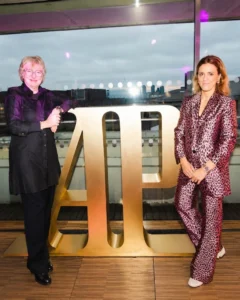
Catching up with Wang during New York Fashion Week (NYFW), industry observers noted a dramatic evolution in the platform’s capabilities since its initial launch. Far from remaining a mere novelty, Alta has rapidly embedded itself into the fabric of contemporary fashion, bridging the gap between digital consumer imagination and enterprise-level retail integration.
The Chronology of Growth: From Concept to Industry Staple
Alta’s trajectory reflects the hyper-accelerated growth curve typical of successful generative AI and consumer tech startups. The platform officially debuted to the public in 2023, offering everyday consumers a standalone mobile application capable of functioning as a modernized, pocket-sized version of Cher Horowitz’s legendary closet. By allowing users to digitize their physical wardrobes and generate virtual avatars, the app unlocked an entirely new method of styling, outfit planning, and digital curation.
Momentum escalated significantly when the company secured $11 million in venture capital funding. The round attracted an all-star roster of strategic investors, including high-profile models Jasmine Tookes and Karlie Kloss, Rent the Runway co-founder Jenny Fleiss, and the Anthology Fund—the venture capital arm of foundational AI developer Anthropic.
This financial backing fueled rapid product refinement and market penetration. Within a remarkably short timeframe, Alta’s utility caught the attention of major cultural publications; both Time and Vogue recognized the platform as one of the standout technological innovations of the year. According to company metrics shared by Wang during New York Fashion Week, users have generated more than 100 million outfits on the platform since its inception. Furthermore, strategic partnerships with prominent resale giants like Poshmark and institutional bodies such as the Council of Fashion Designers of America (CFDA) have firmly established Alta’s credibility within traditional industry circles.
Bridging the Gap: The Public School New York Collaboration
While Alta initially focused on its standalone consumer application—which currently houses thousands of shoppable brands—the company’s strategic horizon has pivoted heavily toward enterprise solutions. Wang and her team have shifted their primary focus to developing seamless application and website integration experiences that embed directly into third-party fashion e-commerce platforms.
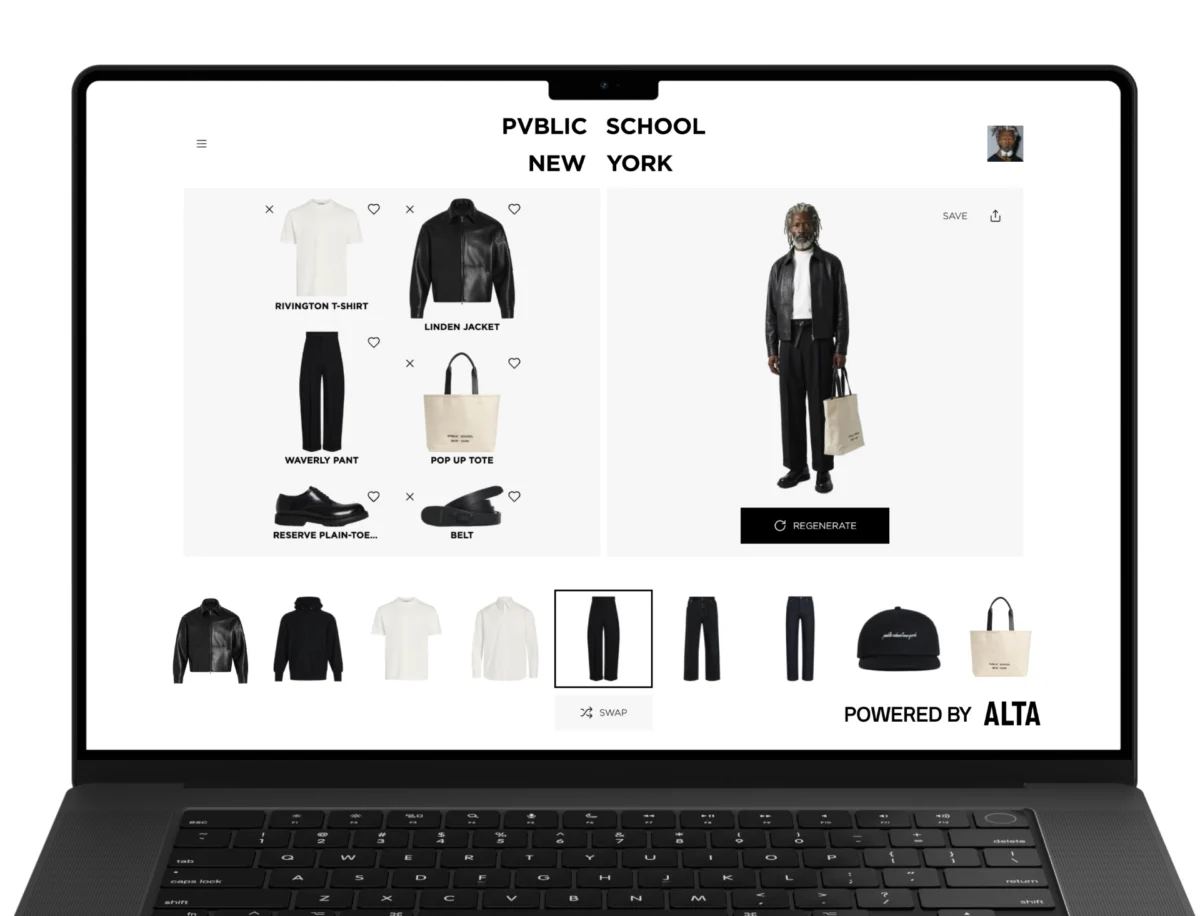
This enterprise strategy came to fruition during New York Fashion Week with Alta’s landmark integration partnership with Public School New York, a storied and influential urban fashion label. The collaboration represents a major milestone: it marks one of the very first instances where a designer has embedded a personalized avatar and virtual styling engine natively into its own e-commerce website.
The user experience is designed to be frictionless. At the bottom of product pages on the Public School New York website—such as listings for outerwear like the Linden jacket—shoppers encounter a clear call-to-action icon reading “Style with Alta.” Clicking the icon seamlessly transitions the customer into an integrated environment where they can apply the garment to their pre-existing, personalized Alta avatar, testing how the piece fits, drapes, and coordinates before committing to a purchase.
Re-debuting on the Fashion Calendar
The partnership carries additional historical weight given Public School New York’s corporate timeline. The brand, co-founded by designers Dao-Yi Chow and Maxwell Osborne, spent several years on a self-imposed hiatus before staging its grand re-debut at NYFW. The founders noted that the break provided necessary clarity, allowing them to rediscover their creative voices and articulate a refined vision for the label’s next chapter.
For Chow and Osborne, embracing advanced technology was not an afterthought, but a core component of their relaunch strategy. In an interview, Chow emphasized the necessity of viewing technology as an active business partner rather than a superficial marketing gimmick.

“It’s not 2015 anymore,” Chow told reporters, underscoring the rapid maturation of digital tools over the past decade. The design duo deliberately sought an AI partner that could extend their narrative reach rather than merely automate the design process. According to Chow, the goal was to utilize AI as a mechanism to deepen consumer interaction, allowing audiences worldwide to experience the brand intimately even if they cannot attend physical runway shows in person.
Significantly, the collaboration originated through organic industry connections. The founders of Public School crossed paths with Wang through the founder of Poshmark, who maintains an angel investment stake in both enterprises. Discovering that Dao-Yi Chow was already an active user of the Alta app, the designers recognized an immediate alignment of vision, leading directly to the integration deal.
Technical Superiority in the Virtual Avatar Space
Alta is far from the first entity to explore digital avatars within the fashion sector. Global fast-fashion titans and luxury houses alike—including Zara and Balmain—have previously experimented with digital supermodels and virtual try-on campaigns to capture tech-forward demographics.
However, industry analysts point out that technical limitations have historically hampered widespread consumer adoption of these early corporate tools. Processing speeds, rendering limitations, and rigid garment-layering constraints often resulted in clunky user experiences.
Wang highlights Alta’s technical architecture as its primary competitive advantage. While traditional virtual try-on tools provided by competitors like Zara frequently restrict users to styling a maximum of four items simultaneously, with rendering times averaging around two minutes per outfit, Alta’s proprietary AI engine operates at a vastly accelerated scale. Alta avatars can successfully layer and render at least eight distinct items within seconds. This technical efficiency eliminates user friction, transforming what was once a tedious digital exercise into a fluid, responsive shopping experience.
The Dual-Pronged Business Model
Today, Alta occupies a unique dual identity within the technology and retail landscapes. Wang describes the enterprise as operating simultaneously as a consumer-facing lifestyle application and a robust enterprise-grade digital avatar infrastructure provider.
The consumer application functions as the digital equivalent of the classic cinematic closet, empowering individuals to manage personal wardrobes, test styling combinations, and discover new items from thousands of integrated brands. Meanwhile, the enterprise tier provides fashion houses with the underlying technology necessary to offer personalized, avatar-based try-ons directly on their proprietary websites.
Looking toward the future, Wang’s ambitions extend well beyond standard e-commerce widgets. She envisions Alta positioning itself as the foundational “personal identity layer” for the burgeoning era of consumer artificial intelligence and automated retail.
Implications for Agentic Commerce and the Future of Retail
As the retail industry inches closer toward the widespread adoption of agentic commerce—autonomous AI systems capable of executing purchases, managing schedules, and making lifestyle decisions on behalf of human users—the need for structured, highly personalized data layers becomes paramount.
Wang argues that for agentic commerce to function effectively, AI shopping agents require deep contextual awareness of a consumer’s unique profile. This includes access to precise body dimensions, digital likenesses, historical purchasing habits, and comprehensive virtual wardrobes. By cementing itself as the central repository for this personal style data, Alta aims to become an indispensable utility layer connecting individual consumers with the global retail market.
The successful integration with Public School New York serves as a proof-of-concept for this broader vision. As Alta prepares to announce additional brand partnerships in the coming months, the company is actively shifting consumer expectations away from static product catalogs and toward interactive, highly personalized digital journeys. In doing so, Alta is turning a nostalgic cinematic trope into the operational standard for twenty-first-century retail.