









The global fashion landscape is undergoing a profound structural transformation, driven by shifting consumer values, economic pressures, and rapid advancements in artificial intelligence. Amidst this backdrop, Atorie, an emerging AI-powered fashion startup, announced on Thursday that it has successfully closed a $9.5 million seed funding round. The investment was backed by high-profile venture capital firms and investors, including a16z Speedrun, Night Capital, and Jeremy Liew of Lightspeed Ventures.
This fresh capital injection positions Atorie to accelerate its operational scaling, expand its proprietary supply chain logistics, and further develop its suite of artificial intelligence tools. The company’s core business model hinges on a novel proposition: providing shoppers with high-end apparel and accessories—such as Italian leather handbags—crafted in the exact same factories and utilizing the identical raw materials as established luxury houses like Prada or Louis Vuitton, but at a fraction of the cost. While luxury handbags from heritage brands routinely command thousands of dollars, Atorie’s comparable offerings retail for several hundred dollars.
The Genesis and Evolution of Atorie
The foundation of Atorie is rooted in the personal history and entrepreneurial background of its co-founder, Redouane Ramdani. Growing up in France, Ramdani was exposed to the luxury manufacturing sector through family members who worked within the industry, instilling in him a lifelong appreciation for fine craftsmanship and garment production. However, Ramdani initially pursued a different entrepreneurial path, co-founding Snipfeed, a creator economy platform designed to help digital creators monetize their audiences and build businesses on social media. Following the successful growth of the platform, Snipfeed was acquired in 2024 by Planoly.
With the conclusion of that chapter, Ramdani turned his attention back to his childhood fascination with fashion. Upon re-entering the market, he observed a dramatic shift in how luxury manufacturing operated compared to previous decades. Historically, traditional luxury brands maintained absolute control over the design and material sourcing phases, approaching contract factories strictly as production execution units. Under this legacy model, brands forced manufacturing partners to commit to excessively high minimum order quantities. This dynamic frequently led to severe inventory overproduction, exposing factories to acute financial and operational vulnerabilities if a major brand partner abruptly canceled an order or if seasonal merchandise failed to sell through.
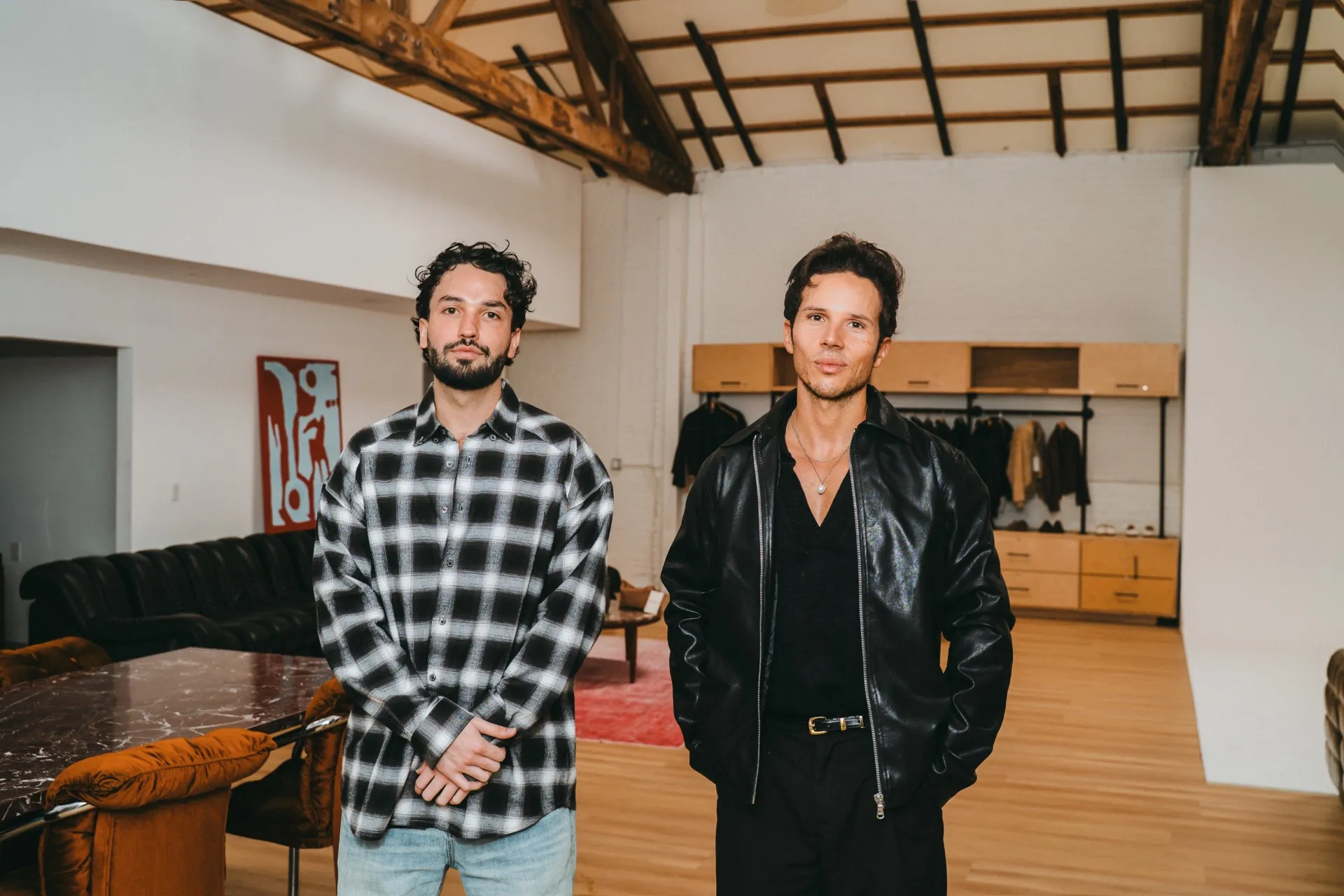
Furthermore, traditional factories historically depended on a heavily concentrated portfolio of a few massive corporate clients, leaving them with little bargaining power. However, Ramdani identified a paradigm shift: top-tier manufacturing facilities increasingly possess independent design, research, and product-development capabilities. Rather than passively executing external blueprints, modern luxury factories are now equipped to conceptualize products internally, execute rapid prototyping, and fulfill smaller, more agile production batches. Capitalizing on this modernization, Ramdani teamed up with co-founder Luis Angulo to establish Atorie, effectively bypassing traditional brand intermediaries and linking high-end factories directly to the end consumer.
Rethinking the Supply Chain Through Artificial Intelligence
Atorie’s operational efficiency relies heavily on the integration of artificial intelligence throughout its supply chain and product development lifecycles. Rather than operating as a conventional fast-fashion retailer—a sector facing severe criticism for its contribution to environmental degradation and unsustainable waste—Atorie positions itself as a methodical, demand-driven alternative that prioritizes longevity and durability, drawing strategic comparisons to value-focused retailers like Quince.
The company utilizes sophisticated AI models to analyze global fashion trends, forecast consumer demand trajectories, and evaluate aesthetic variables such as color trends before committing capital to production cycles. Additionally, predictive AI agents monitor material inventories in real-time, predicting potential supply shortages well in advance to ensure partner factories can secure necessary raw materials without excess stockpiling. By optimizing production quantities based on empirical demand data rather than speculative forecasting, Atorie aims to virtually eliminate inventory waste.
This technological integration extends directly to the customer-facing interface. Visitors to the Atorie website interact with proprietary AI agents designed to deliver personalized shopping experiences. Consumers can input visual or conceptual inspirations—ranging from historical fashion icons to contemporary digital aesthetics—allowing the AI to curate customized outfits tailored to individual preferences. Over time, machine learning algorithms analyze purchasing behaviors and stylistic choices to refine future recommendations. The company has also reported an organic uptick in sales referrals originating from prominent conversational AI platforms such as OpenAI’s ChatGPT and Anthropic’s Claude, highlighting a broader consumer shift toward AI-assisted retail discovery.

Navigating the Post-Pandemic Luxury Backlash and "Dupe Culture"
Atorie’s market entry coincides with a turbulent period for the traditional luxury sector. In the post-pandemic era, major luxury conglomerates have implemented swift and aggressive price hikes across handbags, apparel, and accessories. These continuous increases have alienated significant segments of their consumer base, particularly younger demographics who view the new price points as disconnected from intrinsic product value.
Concurrently, this consumer alienation has fueled the explosive growth of "dupe culture"—a widespread cultural phenomenon wherein shoppers actively seek out affordable, near-identical replications of high-end designer goods. Among Generation Z and millennial consumers, acquiring and displaying these alternative items has evolved into a distinct status symbol, signaling financial pragmatism and cultural savvy.
While Atorie benefits from this anti-luxury sentiment, Ramdani is careful to distinguish his company’s inventory from conventional counterfeit goods or low-quality fast-fashion replicas. Because Atorie sources its inventory directly from the same manufacturing partners that supply heritage luxury houses, the company maintains that its products share the identical material quality, hardware specifications, and artisan craftsmanship as goods sold under marquee brand names.
Financial Trajectory and Rapid Scaling
Atorie’s direct-to-consumer model has yielded substantial financial momentum since its inception. The company concluded the previous fiscal year with approximately $5 million in total sales. Driven by accelerating consumer demand and strategic channel expansions, Atorie’s annualized run rate is projected to exceed $55 million for the current year.
At present, the startup collaborates with a robust network of over 40 specialized manufacturing facilities worldwide. With the newly secured $9.5 million seed capital, the executive team plans to systematically scale several key areas of the business. Primary capital allocation will focus on strengthening international logistics infrastructure, expanding the internal engineering team to build more advanced AI tools, and scaling raw material production capabilities.
Looking ahead, Atorie intends to diversify its revenue streams beyond its primary retail platform. The company plans to launch its own proprietary in-house basic apparel line—modeled after ubiquitous essential brands like Amazon Essentials—to capture everyday consumer spending. Furthermore, Atorie is preparing to launch a collaborative division designed to partner with digital creators and social media influencers, enabling them to design, manufacture, and distribute their own branded clothing lines with unprecedented speed and minimal financial friction.
Broader Implications for the Retail Industry
The rapid rise of Atorie and the validation of its business model by top-tier venture capital firms signal a potential structural realignment within the global fashion economy. For decades, the luxury sector maintained a strict monopoly over high-end manufacturing access, guarded by high marketing expenditures and opaque supply chains. By demonstrating that consumers are increasingly willing to purchase unbranded or independently branded goods manufactured to luxury specifications, startups like Atorie are democratizing access to premium craftsmanship.
As artificial intelligence continues to mature, its integration into supply chain management, predictive demand planning, and personalized retail interfaces will likely become a baseline requirement for competitive apparel brands. By mitigating the overproduction crisis that has long plagued the textile industry, Atorie’s model offers a glimpse into a more sustainable, data-optimized future for global retail. Whether established luxury conglomerates will alter their pricing strategies in response to this rising tier of direct-to-factory competitors remains to be seen, but the consumer appetite for uncompromised quality at accessible price points has firmly established itself as a permanent fixture of the modern retail landscape.