







EBERBACH, Germany — In a significant move that underscores the robust demand for high-performance industrial textiles, DiloGroup has announced the receipt of a major order for a complete needling line designed specifically for the production of hygiene materials within the United States. This strategic project, finalized in July 2026, serves to further solidify the German engineering firm’s footprint in the North American market while addressing the escalating requirements for precision-engineered nonwoven products in the medical and personal care sectors.
The comprehensive contract encompasses the full spectrum of the nonwoven production process, ranging from initial fiber preparation to the final needle-punching stages. As the hygiene industry continues to evolve toward more sustainable and high-capacity manufacturing models, the integration of DiloGroup’s specialized machinery is expected to set a new benchmark for operational efficiency and product uniformity in the region.
Technical Architecture of the New Production Line
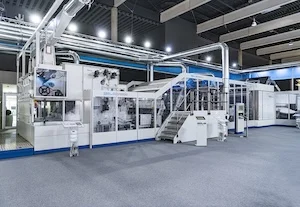
The scope of the supply for this American project is extensive, representing a turnkey solution that leverages the specialized expertise of DiloGroup’s various divisions. The production sequence begins with the latest fiber-opening and filtration technology provided by TEMAFA. In the production of hygiene-grade materials, the initial stage of fiber preparation is critical. The TEMAFA system is engineered to provide a highly stable operation, ensuring that raw fibers are opened with extreme precision. This stage also incorporates advanced filtration and dust management protocols, which are essential for maintaining the sterile environments required for hygiene applications. Efficient particle management not only ensures the purity of the final product but also protects the mechanical integrity of the downstream equipment.
At the heart of the installation is the card feeding and carding system developed by Dilo Spinnbau. Known for its ability to handle a wide variety of fiber types with high throughput, the Spinnbau system ensures that the web formation is consistent across the entire working width. Following the carding process, the line utilizes high-performance crosslapping and needlelooms from DiloMachines.
A defining feature of this installation is the inclusion of the CV1 system. This technological integration allows for real-time monitoring and control of the fiber distribution, effectively minimizing weight variations in the web. For hygiene materials—where specific weights and thicknesses are strictly regulated for absorbency and comfort—the CV1 system provides a critical layer of quality assurance. The synergy between these components allows the customer to achieve a level of process stability that is required for the competitive U.S. hygiene market.
The Strategic Importance of the U.S. Hygiene Market
The decision by a major U.S. manufacturer to invest in DiloGroup technology reflects broader trends within the American textile landscape. The hygiene sector, which includes products such as diapers, feminine care items, adult incontinence products, and medical wipes, has seen consistent growth over the last decade. Market analysts suggest that the U.S. nonwoven market is currently driven by a combination of aging demographics and an increasing consumer preference for high-quality, domestically produced medical supplies.
By 2026, the demand for nonwoven materials has transitioned toward more specialized "needled" structures that offer unique physical properties compared to traditional spunlace or thermally bonded materials. Needled nonwovens are increasingly favored for their durability, breathability, and the ability to incorporate multi-layered functional fibers. DiloGroup’s ability to provide a "complete line" solution allows American manufacturers to reduce the complexities of multi-vendor integration, leading to faster commissioning times and more predictable maintenance schedules.
Chronology of the Agreement and Implementation
The partnership between DiloGroup and the U.S.-based client was cultivated through a series of technical consultations and trials conducted at Dilo’s technology centers in Germany.
- Q4 2025: Initial discussions began regarding the expansion of the client’s hygiene production capacity in the United States.
- Q1 2026: Technical trials were performed using the client’s specific fiber blends to ensure that the DiloMachines needlelooms could meet the rigorous tensile strength and softness requirements of the hygiene sector.
- Q2 2026: Finalization of the engineering specifications, including the integration of the TEMAFA filtration systems and the Spinnbau carding units.
- July 2026: Official contract signing and public announcement of the project.
- Anticipated 2027: The line is expected to be shipped and installed at the customer’s facility in the United States, with full operational status projected by mid-year.
This timeline highlights the meticulous planning required for large-scale industrial installations, where the lead times for specialized German-engineered machinery remain a key factor in global supply chain logistics.
Industry Perspectives and Economic Implications
While the specific identity of the U.S. customer remains confidential due to competitive sensitivities, industry experts view this order as a vote of confidence in European machinery manufacturing. The German textile machinery industry has long been a leader in the "Industrie 4.0" movement, and the DiloGroup line exemplifies this through its high degree of automation and data-driven process control.
"The U.S. market continues to be a primary focus for advanced nonwoven technologies," noted a spokesperson for the German VDMA (Mechanical Engineering Industry Association) in a recent sector report. "Investments like the one seen with DiloGroup demonstrate that manufacturers are prioritizing long-term reliability and energy efficiency over lower-cost, less precise alternatives. In the hygiene sector, where margins are tight and quality is non-negotiable, the cost of downtime is prohibitive."
From an economic standpoint, the installation of this line contributes to the revitalization of the U.S. manufacturing base. While the equipment is engineered in Germany, the operation of the line will create high-skilled jobs in the U.S. for technicians, engineers, and production staff. Furthermore, by producing hygiene materials domestically, the customer reduces the carbon footprint associated with importing bulky nonwoven rolls from overseas, aligning with global sustainability goals.
Advancements in Hygiene-Grade Nonwovens
The technical requirements for hygiene-grade materials are among the most stringent in the textile industry. These materials must be hypoallergenic, possess specific fluid-handling capabilities, and maintain structural integrity when wet. The DiloGroup line is specifically configured to handle the delicate balance between high-speed production and gentle fiber treatment.
The needle-punching process, which mechanically interlocks fibers using thousands of barbed needles, is being refined to produce softer surfaces that were previously the exclusive domain of other bonding methods. Dilo’s high-capacity needlelooms are capable of operating at extreme stroke frequencies, which is necessary to achieve the production volumes required by the American market without sacrificing the "hand" or feel of the fabric.
Additionally, the TEMAFA opening system plays a vital role in the sustainability of the process. By ensuring that fibers are opened thoroughly and uniformly, the system reduces the amount of raw material waste. In a market where the cost of synthetic and natural fibers can fluctuate, the ability to maximize yield is a significant competitive advantage.
Broader Impact on the Global Supply Chain
The announcement of this order comes at a time when global supply chains are still adjusting to the post-pandemic emphasis on regionalization. By establishing high-capacity production lines within the United States, companies are mitigating the risks associated with international shipping delays and geopolitical instability.
DiloGroup’s role as a single-source supplier is particularly relevant in this context. When all components—from fiber opening to the final winder—are designed to work in unison, the efficiency of the entire system is maximized. This holistic approach to plant design reduces energy consumption, a factor that is becoming increasingly important as industrial electricity prices and carbon taxes influence the bottom line of manufacturers worldwide.
The CV1 system included in this order also represents the future of "smart" manufacturing. By utilizing sensors to adjust the crosslapper and carding speeds in real-time, the system compensates for any inconsistencies in the fiber mat. This level of automation reduces the need for manual intervention and ensures that every linear meter of material produced meets the strict specifications required for medical and hygiene applications.
Conclusion and Future Outlook
The successful acquisition of this order by DiloGroup reinforces the company’s status as a global leader in nonwoven technology. As the United States continues to invest in its domestic production capabilities for essential goods, the demand for sophisticated, reliable, and efficient machinery will only grow.
The July 2026 contract serves as a testament to the enduring value of precision engineering and the importance of strategic partnerships in the industrial sector. For the U.S. hygiene market, the addition of this modern production line signifies an increase in domestic capacity and a commitment to quality that will benefit consumers and healthcare providers alike. As DiloGroup moves forward with the manufacturing and eventual installation of this equipment, the textile industry will undoubtedly look to this project as a case study in the successful integration of advanced technology and market-specific requirements.