







The digital transformation of industrial manufacturing reached a significant milestone on October 22, 2026, as Barmag, a subsidiary of the Rieter Group, announced the official launch of its Digital Academy training platform in Chinese. This development marks the latest expansion of an initiative that originally debuted three years ago, aimed at streamlining the technical education of operators, process engineers, and quality managers within the textile machinery sector. By adding Chinese to its existing repertoire of English, Spanish, French, and Turkish, Barmag is positioning itself to capture a larger segment of the global market, particularly within Asia’s rapidly evolving fiber production landscape.
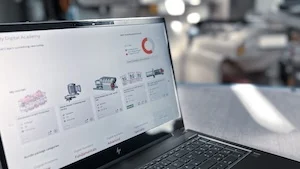
The Digital Academy, hosted on the specialized e-commerce platform myBarmag.com, serves as a centralized hub for e-learning modules focused on the operation, maintenance, and repair of Neumag BCF (Bulked Continuous Filament) S+ and S8 systems. The transition to a multilingual digital classroom reflects a broader trend in heavy industry, where the demand for flexible, on-demand training has begun to supersede the traditional reliance on scheduled, in-person instructional seminars.
Chronology of the Digital Academy Initiative
The trajectory of the Digital Academy began in 2023, following an extensive review of training bottlenecks that were hindering efficiency across global textile manufacturing sites. Historically, training for complex BCF processes relied heavily on on-site workshops, which often proved costly, time-intensive, and disruptive to ongoing production schedules.
In late 2023, the first phase of the Digital Academy was rolled out in English to accommodate a wide international user base. The positive reception of these initial modules prompted a rapid expansion. By mid-2024, the platform had integrated Spanish and French, addressing the needs of key markets in Europe and the Americas. The addition of Turkish in 2025 further solidified the platform’s footprint in major textile-producing hubs. The October 2026 launch of the Chinese language interface represents the most significant expansion to date, given the high concentration of BCF manufacturing infrastructure located within the People’s Republic of China.
Current Market Adoption and User Engagement
Data provided by the Rieter Group indicates that the platform has already successfully onboarded 450 active users. While the United States currently hosts the largest concentration of these users, the introduction of the Chinese version is expected to shift the user demographic significantly over the next eighteen months.
The adoption rate among existing clients suggests that the "micro-learning" model—which breaks complex technical procedures into compact, role-based modules—is resonating with industry professionals. Unlike long-form, static training manuals, the Digital Academy allows technicians to access specific troubleshooting guides via mobile or desktop devices directly on the factory floor. This immediacy is a critical factor for companies seeking to minimize downtime and maintain consistent output quality.
Industry Feedback and Strategic Implementation
The effectiveness of the platform is already being observed in real-world applications. Taicang Universal Fibers Co. Ltd., a key player in the Chinese fiber market, has been among the first to integrate the new language version into their internal training protocols.
"With the Digital Academy, we can provide our employees with optimal support and further increase the efficiency of our equipment," noted Tom Yu, Facility Manager at Taicang Universal Fibers. By standardizing the training process, facilities like Taicang Universal Fibers are able to ensure that best practices are not merely anecdotal but are instead strictly followed according to OEM (Original Equipment Manufacturer) specifications.
This standardization is a major selling point for Barmag. In traditional manufacturing environments, maintenance techniques often evolve through localized habits—sometimes referred to as "tribal knowledge"—which can lead to inconsistent machine performance. By providing a singular, expert-verified source of truth, the Digital Academy helps eliminate technical drift and ensures that all personnel, regardless of their location, are adhering to the exact parameters defined by the machinery’s designers.

The Technical Scope of E-Learning Modules
The current curriculum focuses heavily on the BCF S+ and S8 systems, which are foundational to many modern production lines. However, the scope is set to widen significantly. Following the success of the BCF-specific modules, Barmag is in the advanced stages of developing training programs for the POY (Partially Oriented Yarn) process. Furthermore, e-learning modules for staple fiber processes are currently in the preparation phase.
The structure of these modules is designed to foster both knowledge retention and practical application. Each course includes:
- Role-Based Modules: Content tailored specifically to the needs of operators, maintenance technicians, and quality assurance managers.
- Progress Assessments: Interactive testing phases that verify the user’s comprehension before moving to the next level.
- Certification: Upon completion, participants receive documentation of their skills, which helps human resources departments track the competency levels of their workforce.
- Feedback Loops: A built-in feature that allows users to submit comprehension questions directly, ensuring that technical ambiguities are resolved in near real-time.
Broader Impact and Implications for the Textile Sector
The shift toward digital training is not merely a matter of convenience; it is a strategic response to the increasing complexity of modern textile machinery. As BCF systems become more automated and data-driven, the skill gap required to maintain them grows. Traditional training methods struggle to keep pace with the rapid iteration of hardware and software updates.
By hosting these resources on the myBarmag.com platform, the company is also streamlining the supply chain. When an operator identifies a need for a specific part during an online training module, the platform allows for a seamless transition from learning to procurement. This integration of e-learning and e-commerce represents a sophisticated "digital ecosystem" approach that is becoming the gold standard in industrial B2B operations.
Furthermore, the environmental and economic implications of this transition are substantial. Reducing the need for travel to central training locations decreases the carbon footprint associated with industrial education and reduces the travel-related expenses that typically burden corporate training budgets. Companies can now distribute training resources globally without the logistical hurdles of visa applications, international travel, or the coordination of large-scale, on-site seminars.
Looking Toward the Future of Digital Learning
The commitment to a multi-language, digital-first strategy suggests that Barmag views its educational offerings as a core component of its competitive advantage. In an industry where equipment downtime can result in massive financial losses, the ability to train staff quickly and accurately is a key differentiator.
As the Digital Academy prepares to roll out support for POY and staple fiber processes, the platform is likely to become an essential tool for any facility operating under the Rieter Group umbrella. The scalability of this model suggests that further language integrations—potentially including South Asian languages to support operations in India or Pakistan—could be on the horizon as the company continues to monitor global market shifts.
For now, the successful deployment of the Chinese language version marks a successful conclusion to the 2026 development roadmap. As the industry moves toward 2027, the focus will likely shift from initial implementation to optimizing user experience and deepening the technical complexity of the available modules. For the textile industry, the message is clear: the future of machine operation is no longer found in dusty manuals or sporadic workshops, but in a persistent, accessible, and high-tech digital classroom.
The transition to digital learning is clearly established as the new baseline for Barmag’s operations. By prioritizing standardized OEM expertise and localized accessibility, the company is ensuring that its global client base remains equipped to meet the rigorous demands of modern textile production. The ongoing evolution of the Digital Academy serves as a case study for how traditional manufacturing giants can successfully bridge the gap between mechanical engineering and the digital age.