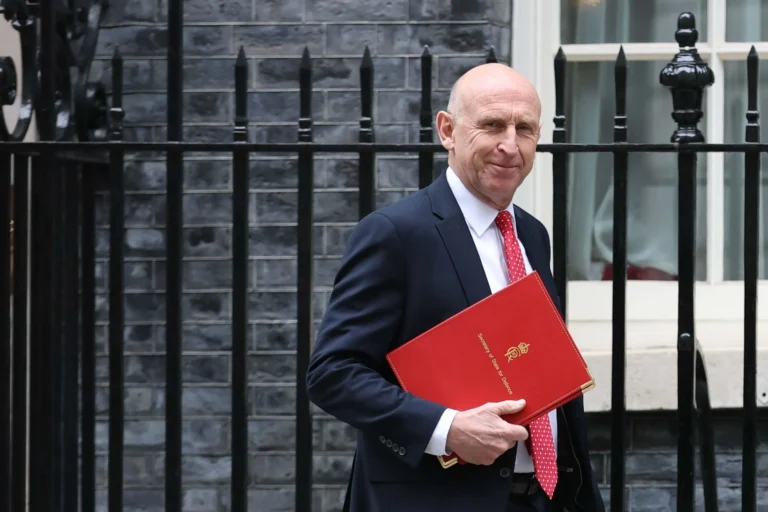











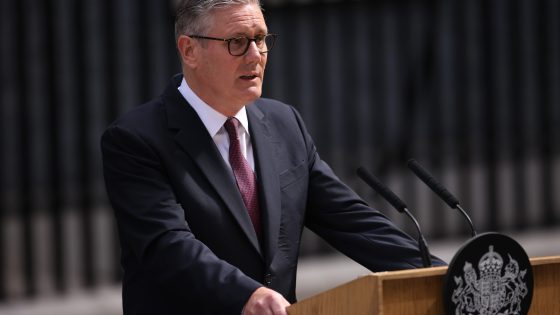
Sir Keir Starmer today, June 22, 2026, announced his immediate resignation as Prime Minister of the United Kingdom and leader of the Labour Party, citing a belief that new leadership was essential for the country’s stability and the party’s future direction. The unexpected announcement, delivered from a sombre Downing Street podium, plunged British politics into immediate uncertainty, triggering a leadership contest within the ruling Labour Party and prompting calls from opposition benches for a swift general election. Starmer, who led Labour to a decisive victory in the 2024 General Election, steps down just two years into his premiership, marking one of the shortest tenures in modern British political history.
The resignation comes amidst a backdrop of escalating economic challenges, persistent public sector strikes, and a series of damaging by-election defeats that had steadily eroded Labour’s parliamentary majority and public trust. Starmer’s premiership, which began with high hopes of ‘national renewal’ and a pledge to tackle the cost-of-living crisis, has struggled to navigate a complex domestic and international landscape. His departure opens a period of intense introspection for the Labour Party and raises significant questions about the government’s ability to maintain stability and deliver on its manifesto commitments.
A Shockwave Through Westminster
The Prime Minister’s announcement was delivered shortly after 10:00 AM BST, following a hastily arranged Cabinet meeting that reportedly lasted less than an hour. Dressed in a dark suit and flanked by senior advisors, Sir Keir’s voice was firm but visibly strained as he addressed the nation. "It has been the honour of my life to serve as Prime Minister of the United Kingdom," he began, "but it has become clear to me that the challenges facing our nation demand a fresh impetus, a renewed vision, and a leader who can unify our party and our country to face the difficult decisions ahead." He confirmed his immediate resignation as both Prime Minister and leader of the Labour Party, stating that he had informed His Majesty The King of his decision. Deputy Prime Minister Angela Rayner has reportedly been asked to serve as acting Prime Minister until a new Labour leader is elected, though the constitutional implications of such an arrangement are already being debated.
The news sent immediate shockwaves through Westminster. Members of Parliament were seen rushing through the corridors, phones pressed to their ears, as the reality of the situation dawned. The pound sterling experienced a momentary dip against major currencies before stabilising, reflecting the markets’ initial unease about the sudden political vacuum. Political commentators were quick to highlight the unprecedented nature of a Prime Minister resigning mid-term with a still-viable parliamentary majority, a stark contrast to previous resignations often forced by internal party revolts or crushing electoral defeats.
Two Years of Tumult: Starmer’s Tenure
Sir Keir Starmer swept into Downing Street in July 2024, securing a comfortable working majority of 68 seats in a snap general election called after months of Conservative Party internal strife and a significant erosion of public confidence. His mandate was clear: to "rebuild Britain" after years of political instability, economic stagnation, and the lingering effects of Brexit and the pandemic. Key pledges included strengthening the NHS with significant new investment, tackling the climate crisis through an ambitious green transition, and addressing regional inequalities with a robust industrial strategy.
Initially, his government enjoyed a honeymoon period. Public approval ratings for Starmer personally peaked at 52% in the autumn of 2024, and Labour’s poll lead hovered consistently around 15-20 points. However, the economic reality proved more intractable than anticipated. Persistent global inflationary pressures, exacerbated by ongoing supply chain issues and geopolitical tensions, meant that the promised "era of economic stability" remained elusive. The government’s flagship "Green Growth Fund," designed to stimulate investment in renewable energy and green industries, faced criticism for slow implementation and perceived bureaucratic hurdles. Meanwhile, the NHS, despite increased funding, continued to grapple with record waiting lists and staff shortages, leading to a wave of industrial action across the health sector throughout late 2025 and early 2026.
Decline and Dissension: The Chronology of Events
The path to Starmer’s resignation can be traced through a series of escalating challenges and setbacks that gradually chipped away at his government’s authority and his personal standing.
- Autumn 2024: Initial legislative successes, including the passage of the National Minimum Wage Uplift Act and the NHS Workforce Retention Bill, were overshadowed by a significant surge in inflation, reaching 8.7% by November. The Bank of England raised interest rates repeatedly, putting pressure on mortgage holders.
- Spring 2025: Local council elections saw Labour lose control of several key metropolitan authorities, including significant losses in parts of the Midlands and the North, regions where they had made substantial gains in 2024. These results were widely interpreted as a public backlash against the government’s perceived inaction on the cost of living.
- Summer 2025: A series of high-profile public sector strikes, including nurses, teachers, and rail workers, paralysed key services. The government’s attempts to mediate were largely unsuccessful, leading to accusations of being out of touch with working families. A poll by YouGov showed public approval for Starmer dropping to 38%, while Labour’s lead over the Conservatives narrowed to 8 points.
- Autumn 2025: The Chancellor’s Autumn Statement was met with a lukewarm reception. While it outlined measures to control public spending, it offered little new relief for struggling households, leading to discontent within the Labour backbenches. Whispers of a potential leadership challenge began to circulate among more left-leaning factions of the party.
- January 2026: A critical by-election in the historically safe Labour seat of Kingswood, triggered by the resignation of the sitting Labour MP due to health reasons, resulted in a shock victory for the Liberal Democrats. The 18% swing against Labour was seen as a devastating blow, indicating widespread disillusionment among traditional voters.
- February 2026: Another by-election in the ‘Red Wall’ constituency of Hartlepool, previously a Labour gain in 2024, saw the Conservatives reclaim the seat with a comfortable majority. This second consecutive by-election loss intensified calls for a change in strategy and leadership.
- March 2026: A highly anticipated policy paper on social care reform was delayed indefinitely, a move widely interpreted as a sign of internal disagreement and a lack of clear direction within the government.
- April 2026: A leaked internal Labour Party memo, published by The Times, revealed deep divisions within the Shadow Cabinet over economic policy, with some senior figures reportedly advocating for more radical fiscal measures to address the national debt.
- May 2026: National approval ratings for Starmer plummeted to 31%, with his disapproval rating soaring to 60%. Labour’s poll lead evaporated, with some surveys even placing them neck-and-neck with the Conservatives, or even slightly behind. This marked a significant psychological turning point.
- June 2026: Intense speculation mounted following a series of private meetings between Starmer and senior Labour figures. Reports suggested he was facing increasing pressure from within his own party to step aside to allow for a fresh start before the next general election, constitutionally due by January 2029.
Data Points to a Brewing Crisis
The decision to resign was underpinned by a stark reality revealed in recent public opinion data and economic indicators. According to a comprehensive analysis by the British Election Study, public trust in the government’s economic competence had fallen from 45% in late 2024 to just 28% by May 2026. Data from the Office for National Statistics indicated that real wages, adjusted for inflation, had stagnated for six consecutive quarters, leading to a palpable sense of economic grievance across the country.
Furthermore, Labour’s internal polling, which became increasingly dire over the past six months, reportedly showed a significant erosion of support among key demographic groups that had propelled them to victory in 2024. Younger voters, frustrated by housing affordability and job market precarity, were increasingly disengaged, while older, traditionally Labour-leaning voters in the North felt their concerns were being overlooked. The party’s parliamentary majority, once robust, had been chipped away by two by-election losses and the defection of one MP to the Green Party in March 2026, reducing it to a still-workable but less comfortable 64. The prospect of facing another general election with such unfavourable data clearly weighed heavily on the Prime Minister.
Political Reactions and Tributes
The immediate aftermath of Starmer’s announcement saw a flurry of reactions from across the political spectrum.
Labour’s Search for Stability: Senior Labour figures expressed a mix of regret and determination. Deputy Prime Minister Angela Rayner, visibly emotional, praised Starmer’s "tireless dedication" and "unwavering commitment to public service." She immediately confirmed her intention to stand for the leadership, stating, "Our party needs to heal, to unite, and to reconnect with the working people we were founded to represent. I believe I am the person to lead that renewal." Other potential contenders rapidly emerged, including Shadow Chancellor Yvette Cooper, Shadow Home Secretary Wes Streeting, and Greater Manchester Mayor Andy Burnham, who is expected to announce his decision in the coming days. The timetable for the leadership election is expected to be announced by the Labour Party’s National Executive Committee within the next 48 hours.
Opposition’s Call for a General Election: The Leader of the Opposition, Conservative Party leader Tom Tugendhat, called for an immediate general election. "The Prime Minister’s resignation is an admission of failure," Tugendhat stated from outside Conservative Campaign Headquarters. "This Labour government has lost its mandate and its direction. The British people deserve a say in who governs them, not merely an internal party reshuffle. We call upon His Majesty The King to dissolve Parliament and allow the public to choose a stable, competent government." Liberal Democrat leader Ed Davey echoed these sentiments, highlighting the "chaos" in Westminster and the need for a fresh start. The Scottish National Party (SNP) also joined calls for an early election, with First Minister Humza Yousaf stating that Scotland’s interests were being "ignored amidst the Westminster turmoil."
Internationally, the news was met with polite but concerned statements. European Union leaders expressed hope for continued stability in UK-EU relations, while the White House issued a brief statement acknowledging Starmer’s service and reaffirming the strong bilateral relationship between the US and the UK.
The Path Forward: Implications for Labour and the Nation
Starmer’s resignation triggers a high-stakes leadership contest for the Labour Party, which will now face the challenge of selecting a new leader capable of uniting its diverse factions and rebuilding public trust. The next leader will inherit a government grappling with significant economic headwinds, a divided nation, and a demanding electorate. The timing of the leadership contest is critical, as the party must present a unified front quickly to counter opposition calls for a snap election.
For the United Kingdom, the immediate future is one of political uncertainty. While a general election is not constitutionally required until early 2029, the political pressure for one will be immense. A new Prime Minister without a personal mandate from the public would likely face an uphill battle to govern effectively. The stability of government policy, particularly on economic matters and international relations, will be scrutinised closely. The country faces the prospect of several months of intense political manoeuvring at a time when decisive leadership is arguably most needed.
A Precedent in Political History
Sir Keir Starmer’s resignation echoes, in some ways, the unexpected departures of other British Prime Ministers, though the circumstances differ significantly. Margaret Thatcher’s resignation in 1990 was forced by a Cabinet revolt, while Tony Blair’s departure in 2007 followed years of pressure to hand over to Gordon Brown. More recently, Boris Johnson and Liz Truss both left office under immense internal and external pressure, though their tenures were marked by scandal and extreme policy instability, respectively. Starmer’s departure, while politically driven, appears to be a more calculated, if reluctant, decision to prioritise the party’s and the country’s perceived long-term interests over his personal leadership. His relatively short time in office will undoubtedly be subject to intense historical analysis, particularly regarding the challenges of governing in a post-Brexit, post-pandemic landscape.
As Westminster braces for a period of intense political activity, the nation watches to see who will emerge to lead the Labour Party and, potentially, the country, through these turbulent times. The legacy of Sir Keir Starmer’s two years in Downing Street will be debated for years to come, but his decision today undeniably marks a significant turning point in modern British politics.