









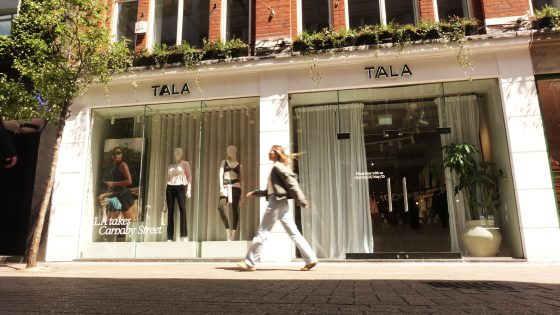
Women’s athleisure brand Tala is officially expanding its physical footprint beyond the capital, with plans to open its first standalone retail location in Edinburgh, Scotland, this November. The move marks a significant milestone for the direct-to-consumer (DTC) label, which has spent the last several years cultivating a robust online community before transitioning into brick-and-mortar retail. The decision to select Edinburgh as the site for this expansion underscores the brand’s strategic intent to capture the burgeoning athleisure market in northern UK hubs, moving away from the London-centric model that dominates much of the contemporary fashion retail sector.
A Chronology of Strategic Growth
Founded in 2019 by fitness entrepreneur Grace Beverley, Tala emerged as a disruptor in the activewear industry, centering its value proposition on high-performance materials derived from recycled plastics and production waste. The company’s journey from a purely digital operation to a physical retailer has been methodical.
The brand initially operated exclusively through its e-commerce platform, leveraging social media influence and community-led marketing to build brand equity. Following years of sustained growth and successful pop-up activations, Tala tested the physical retail landscape with its debut permanent location in London. The success of the London flagship provided the data-backed confidence required for the leadership team to greenlight a national expansion strategy. The selection of Edinburgh for this second store follows a period of localized consumer interest and demographic analysis, which identified Scotland’s capital as a key demographic cluster for Tala’s core customer base—primarily environmentally conscious, fitness-oriented Gen Z and Millennial consumers.
Market Context and Athleisure Trends
The athleisure market has undergone a fundamental transformation over the last decade, evolving from a niche category into a pillar of modern lifestyle apparel. According to recent market analysis from retail consultancy groups, the UK activewear sector is projected to maintain a compound annual growth rate (CAGR) of approximately 4.5% through 2028. This growth is driven by the sustained "work-from-home" culture and a heightened societal focus on wellness and functional fashion.
Tala enters the Scottish market at a time when traditional department stores are ceding space to agile, digitally native vertical brands. By operating its own standalone stores, Tala maintains complete control over the customer experience—a vital component for brands that pride themselves on transparency and supply chain ethics. Unlike legacy retailers that are struggling with bloated inventories and high overheads, Tala’s model relies on leaner, community-focused spaces that prioritize brand storytelling and product education over sheer floor space.
Strategic Implications for Physical Retail
The decision to open in Edinburgh is not merely a geographic expansion; it is an analytical pivot. Retail experts suggest that standalone stores in secondary major cities—those outside the London-Birmingham-Manchester axis—often yield higher customer loyalty rates. Edinburgh, with its dense population of students, young professionals, and tourists, offers a unique environment for high-end athleisure.
By establishing a physical presence, Tala is addressing the "omnichannel" necessity that many DTC brands eventually face. While digital acquisition costs continue to rise due to increased competition for ad space on platforms like Instagram and TikTok, physical stores serve as permanent, high-visibility billboards. Furthermore, these locations facilitate "omnichannel" services, such as "click and collect" or in-store returns, which have been shown to reduce logistics costs and increase the average order value (AOV).
Operational Challenges and Competitive Landscape
Tala’s entry into Edinburgh places it in direct competition with established global players such as Lululemon, Sweaty Betty, and Gymshark. While these competitors have long occupied prime real estate in cities like Edinburgh, Tala differentiates itself through its aggressive commitment to sustainable manufacturing—a factor that has become a primary purchasing driver for younger demographics.
However, scaling a physical retail operation presents significant operational challenges. Rent prices in prime Scottish retail districts, such as George Street or St James Quarter, remain competitive. Tala must navigate the complexities of managing stock levels across disparate locations while maintaining the brand’s premium identity. The company’s ability to manage its supply chain—which is often tied to limited-run collections to minimize waste—will be tested as it increases its geographic footprint. If the Edinburgh store succeeds, it is highly probable that the brand will look to further expand into other key markets, including Glasgow, Leeds, or Bristol, by the end of 2027.
Official Responses and Brand Vision
While specific financial projections regarding the Edinburgh store remain private, representatives for the brand have signaled that the expansion is a response to overwhelming demand from their regional digital customers.
In past statements regarding the brand’s growth, leadership has emphasized that the physical store is designed to be a "community hub" rather than a traditional retail outlet. This includes hosting fitness classes, wellness workshops, and community events that align with the brand’s mission of "doing better." For Tala, the store is not just a place to transact; it is a physical manifestation of the brand’s digital community. By bridging the gap between social media engagement and in-person interaction, Tala aims to foster a level of brand advocacy that is difficult to replicate through digital channels alone.
Analyzing the Sustainability Factor
Tala’s core competitive advantage remains its transparency regarding materials and labor. As the fashion industry faces increased scrutiny from regulators—particularly regarding "greenwashing"—Tala’s business model of using recycled materials (such as repurposed plastic bottles and recycled nylon) positions it favorably among environmentally conscious consumers.
The expansion into a brick-and-mortar environment will likely amplify this message. Store design is expected to mirror the brand’s digital aesthetic, utilizing sustainable materials and energy-efficient lighting to reflect the brand’s commitment to the environment. This consistency between the digital narrative and the physical reality is essential for brand integrity. If the Edinburgh location can successfully communicate the "Tala promise" through its in-store displays and staff expertise, it will likely serve as a blueprint for the brand’s future international ambitions.
Future Outlook and Economic Impact
The retail sector in Edinburgh has shown resilience despite broader economic headwinds in the UK. The arrival of a high-growth brand like Tala is viewed by local commercial analysts as a positive indicator of the city’s retail health. It suggests that brands are willing to invest in regional hubs, provided the target demographic is sufficiently concentrated.
As Tala prepares for its November launch, the industry will be watching closely. The success or failure of this expansion will provide a case study on whether the "DTC-to-Retail" model is sustainable in the long term for niche, values-driven brands. Should the Edinburgh store meet or exceed the performance metrics set by the London flagship, it will solidify Tala’s position as a permanent fixture in the UK fashion landscape, further blurring the lines between online community-building and traditional retail dominance.
In conclusion, the opening of Tala’s first store outside of London is a calculated move that reflects the evolving priorities of the modern retail consumer. By prioritizing sustainable growth and community engagement, Tala is positioning itself to capture a significant share of the Scottish athleisure market. This expansion is a testament to the power of a digital-first strategy, but it also marks the beginning of a more complex phase in the brand’s history—one where it must prove that its digital success can translate into the tangible, high-stakes world of physical retail. With the November deadline approaching, all eyes will be on Edinburgh to see if Tala can successfully replicate its London formula on a broader stage.