










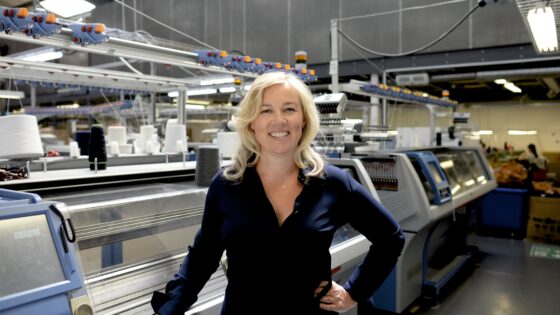
The landscape of UK textile and product manufacturing is undergoing a significant transformation as Make it British, the influential trade show dedicated to domestic production, prepares for a highly anticipated relaunch. Five years after its operational closure in 2020, the event is returning to the industry calendar, signaling a renewed appetite for supply chain transparency, sustainability, and regional economic resilience. Kate Hills, the founder of the organization and a prominent advocate for UK-based production, has positioned the event’s revival as a strategic response to the shifting global trade environment.
The Evolution of a Manufacturing Hub
When Make it British first launched, its mission was to bridge the gap between small-scale British manufacturers and retailers who were increasingly looking to diversify their sourcing away from long-lead-time overseas markets. The event served as a critical networking platform, connecting high-end fashion brands, independent boutiques, and major high-street retailers with factories based in Britain.
The closure of the event in 2020 was a reflection of the profound disruption caused by the global pandemic. At that time, manufacturing sectors were grappling with extreme volatility, labor shortages, and logistical gridlock. The decision to suspend operations was, according to industry observers, a necessity born of a market in flux. However, the subsequent years have proven that the challenges that necessitated the show—specifically the need for agile, localized supply chains—have only intensified.
A Chronology of UK Manufacturing Shifts
To understand the necessity of the Make it British return, one must look at the trajectory of the UK manufacturing sector over the past decade:
- 2014–2018: A period of "re-shoring" curiosity. Retailers began experimenting with "Made in Britain" capsule collections, driven by a desire for improved quality control and a reduction in the carbon footprint associated with long-haul shipping.
- 2019–2020: The "Peak Disruption" era. Brexit-related uncertainties, followed immediately by the COVID-19 pandemic, forced a fundamental reassessment of "just-in-time" global supply chains. Make it British ceased operations during this period of extreme volatility.
- 2021–2023: The era of supply chain fragility. The Suez Canal blockage and the subsequent energy crisis highlighted the risks of over-reliance on distant manufacturing hubs. During this time, the "near-shoring" trend gained political and economic momentum.
- 2024–2025: The current "Strategic Autonomy" phase. Government policy began to pivot toward supporting domestic industrial strategy, recognizing that a robust manufacturing base is vital for national security and economic stability.
- September 2026: The official announcement of the Make it British relaunch, marking a formal attempt to centralize the network of UK producers once again.
Supporting Data: The Case for Domestic Production
Data from the Office for National Statistics (ONS) and independent manufacturing reports suggest that the appetite for domestic production is not merely a trend, but a structural shift. Recent surveys conducted within the textile and garment sectors indicate that over 65% of UK-based retailers are currently looking to increase the proportion of their goods manufactured within the British Isles.
Furthermore, the environmental argument has become a core driver. A report published by the British Fashion Council indicates that shortening the supply chain can reduce the carbon footprint of a garment by up to 30%, primarily through the elimination of international air and sea freight. This aligns with the "Scope 3" emissions reporting requirements that now govern many large-scale retail operations, making domestic sourcing a compliance imperative as much as a brand-building exercise.
Economically, the "multiplier effect" of local manufacturing remains a strong selling point. For every £1 spent on British manufacturing, it is estimated that approximately £1.40 is generated in the wider economy through local employment, taxes, and service procurement.
Industry Perspectives and Official Commentary
Kate Hills has been vocal about the necessity of this relaunch, emphasizing that the current economic climate is uniquely favorable for British production. In recent statements, Hills noted that the "cost of doing business" has changed significantly since 2020. The premium associated with British-made goods is now increasingly offset by the rising costs of international logistics and the increasing difficulty of managing overseas quality assurance from a distance.
"The time is right," Hills stated in an industry briefing. "The reasons to manufacture in Britain have moved beyond just the ‘story’ of the product. It is now about the business case—speed, quality, reliability, and carbon transparency. We are seeing a new generation of entrepreneurs who are prioritizing a local footprint because it makes them more resilient to global shocks."
Retailers have echoed this sentiment. While major luxury houses have long championed their "Made in England" heritage, the mid-market sector is now exploring similar models. Industry analysts suggest that the return of Make it British will act as a "central nervous system" for this movement, providing the infrastructure needed for smaller factories to scale their operations to meet the demands of larger retail accounts.
Broader Implications for the Sector
The return of the trade show carries significant implications for the UK’s industrial policy and the future of regional manufacturing clusters. By providing a dedicated space for trade, the event is expected to revitalize clusters such as the Midlands’ textile belt and the specialist garment manufacturers in London and the North of England.
Strengthening Regional Clusters
One of the primary goals of the relaunch is to bring attention to the specialist skills that exist in regional hubs. Often, these manufacturers operate in silos, lacking the marketing resources to reach national retailers. A centralized platform like Make it British allows these firms to gain visibility, effectively creating a marketplace that promotes regional economic development.
The Role of Technology
Another key area for the upcoming show is the integration of digital manufacturing tools. Since 2020, advancements in 3D knitting, digital printing, and automated cutting have become more accessible. The event is expected to feature a heavy focus on how technology can help bridge the wage gap between UK labor and overseas competitors. By increasing efficiency through automation, British factories can remain competitive on price while maintaining high labor standards.
Sustainability as a Competitive Advantage
Sustainability is no longer a peripheral concern for consumers; it is a core retail strategy. By hosting workshops and seminars on circular economy practices, the Make it British relaunch aims to position domestic manufacturing as the "cleaner" alternative. This focus on sustainability is expected to attract interest from investors and ESG-focused (Environmental, Social, and Governance) funds that are currently looking for tangible ways to improve the credentials of retail supply chains.
Challenges Ahead
Despite the optimism, significant hurdles remain. The UK manufacturing sector continues to face a chronic skills shortage. The aging workforce in textile and manufacturing industries is a well-documented issue, and there is a pressing need for apprenticeship programs and vocational training to ensure the longevity of these craft skills.
Furthermore, while the "Make it British" brand carries weight, retailers are often constrained by margins. The price point of domestic manufacturing remains higher than that of mass-production hubs in Southeast Asia or Turkey. The success of the relaunch will depend on the ability of manufacturers to prove that the higher upfront cost is mitigated by lower inventory risk, faster speed-to-market, and the avoidance of high-duty tariffs associated with complex global trade routes.
Future Outlook
The decision to bring back Make it British is a bold step that aligns with the broader global movement toward regionalized supply chains. As retailers face increasing pressure to provide transparent, ethical, and sustainable products, the platform provides a necessary solution.
The impact of this relaunch will likely be measured by the number of new partnerships forged between domestic producers and retail groups in the next 18 to 24 months. If the event succeeds in creating a robust ecosystem of manufacturers and brands, it could lead to a tangible increase in domestic production volume and a stabilization of the UK’s manufacturing base.
For Kate Hills and the organizing team, the mission remains clear: to demonstrate that "Made in Britain" is not just a legacy label, but a viable, future-proof strategy for the modern retail era. As the industry prepares for the event, the focus will undoubtedly be on how these connections can be scaled, sustained, and integrated into the broader digital transformation of the retail sector. The return of the trade show is more than a reunion; it is an acknowledgment that the future of retail is increasingly local.