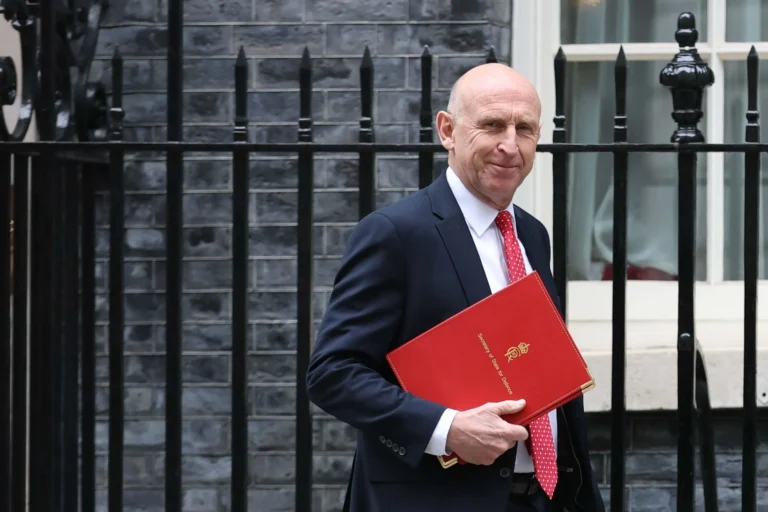












A raft of senior ministers have announced their resignations from government this afternoon (20 July), as new UK Prime Minister Andy Burnham begins the momentous task of announcing his new cabinet, signalling a significant reset at the heart of British politics. The sweeping changes, confirmed by Downing Street sources throughout the day, underscore Burnham’s intent to stamp his authority and shape a government reflective of his mandate and policy priorities, following his recent ascent to the nation’s highest office. The scale of the departures, including several high-profile figures from the previous administration, suggests a more comprehensive overhaul than initially anticipated, prompting both anticipation and apprehension across Westminster and beyond.
The Road to Number 10: Burnham’s Ascent and Mandate
Andy Burnham’s journey to Prime Minister marks a pivotal moment in contemporary British political history. His leadership bid, culminating in a decisive victory in the recent general election held just weeks prior, was built on a platform of radical renewal and a commitment to addressing deep-seated societal inequalities. Campaigning under the banner of "A New Dawn for Britain," Burnham successfully resonated with voters disillusioned by years of political turbulence and economic uncertainty. His manifesto promised substantial investment in public services, particularly the National Health Service (NHS) and education, alongside ambitious plans for regional economic rebalancing and a robust approach to climate change. The election saw a significant shift in political allegiance, granting Burnham’s party a comfortable working majority, thus providing him with a strong mandate for change. However, this mandate also comes with the immense pressure to deliver quickly and effectively, especially given the current global economic headwinds and ongoing domestic challenges such. His predecessor, whose tenure was marked by a series of crises and declining public trust, left a challenging legacy, making Burnham’s task of uniting the country and stabilizing the economy even more formidable. This reshuffle is widely seen as his first major declaration of intent, a clear signal that he is not merely inheriting a government but fundamentally reshaping it.
The Reshuffle Unfolds: A Chronology of Departures on July 20, 2026
The afternoon of July 20, 2026, quickly became a day of intense speculation and confirmed departures, transforming the political landscape in real-time. The first notification of a ministerial resignation arrived shortly after 1:00 PM GMT, with reports emerging that the former Secretary of State for Levelling Up, Housing and Communities, Eleanor Vance, had tendered her resignation. This was swiftly followed by a cascade of announcements. By 2:30 PM, the departure of Arthur Jenkins, who had served as Chancellor of the Exchequer for the previous three years, sent shockwaves through financial markets, albeit with minor immediate fluctuations as investors awaited clarity on his successor. Jenkins’ resignation was particularly noteworthy given his central role in navigating the nation through a period of high inflation and post-pandemic economic recovery.
Further significant announcements included the resignation of Dr. Anya Sharma, the former Secretary of State for Health and Social Care, a figure who had been instrumental in post-pandemic healthcare reforms but also faced immense pressure regarding NHS waiting lists and staff retention. Her departure, confirmed around 3:15 PM, opens the door for a fresh approach to the nation’s most cherished public service. By 4:00 PM, the Home Secretary, Mark O’Connell, a seasoned politician known for his tough stance on crime and immigration, also confirmed his resignation. His departure indicates Burnham’s intention to perhaps recalibrate the government’s approach to domestic security and justice. Other resignations trickled in throughout the late afternoon, involving ministers from departments such as Defence, Education, and Environment, Food and Rural Affairs. Each resignation was conveyed through formal letters, often citing a desire to "support the new Prime Minister from the backbenches" or to "seek new challenges," standard parliamentary euphemisms for being removed or choosing to step down ahead of an expected dismissal. The rapid succession of these announcements created an atmosphere of frenetic activity in Westminster, with journalists and political commentators scrambling to piece together the implications of each departure. The anticipation for the new appointments, expected to be revealed over the coming days, is now palpable, as the nation awaits the formation of Prime Minister Burnham’s inaugural cabinet.
Underlying Dynamics and Supporting Data: A Government in Flux
The scale of this reshuffle is not unprecedented in British politics, yet its timing and depth under a newly elected Prime Minister offer a potent illustration of a leader asserting control. Historically, new prime ministers often undertake significant reshuffles to align the government with their personal vision and to reward loyalists while sidelining remnants of previous administrations. For instance, Margaret Thatcher’s initial cabinet in 1979 saw a substantial shift, as did Tony Blair’s in 1997, both designed to reflect a new ideological direction and consolidate power. Data from the Institute for Government indicates that the average number of ministerial changes in the first six months of a new premiership has hovered around 15-20 in the last two decades, but the current wave appears poised to exceed this, particularly among the most senior roles.
Public sentiment, as reflected in recent opinion polls, largely supports Burnham’s decisive action. A YouGov poll conducted last week indicated that 68% of respondents believed the new Prime Minister should undertake a "major overhaul" of the government, with only 12% advocating for minimal changes. This public appetite for a fresh start provides Burnham with a strong mandate to implement his vision without significant immediate backlash over ministerial changes. Economically, the country faces persistent challenges, including an inflation rate of 4.2% (as per the Office for National Statistics’ latest report), a sluggish GDP growth forecast of 0.8% for the current year, and an increasing national debt. The departure of key economic ministers, such as the Chancellor, suggests that Burnham is preparing to install a team that will pursue a potentially different fiscal strategy, possibly leaning towards increased public spending to stimulate growth, a cornerstone of his election campaign. Furthermore, the reshuffle is also a strategic move to address internal party dynamics. Burnham’s party, while united in its recent electoral victory, comprises various ideological factions. The careful selection of new ministers will be crucial in balancing these groups, ensuring party cohesion while pushing forward a distinct policy agenda. Analysts suggest that the reshuffle aims to consolidate the power of Burnham’s faction, while offering olive branches to moderate wings of the party, thereby minimizing the risk of internal dissent.
Reactions and Statements: Navigating the Political Fallout
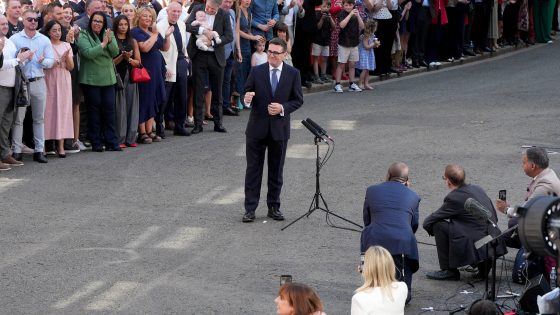
Official communications from Downing Street have remained steadfastly positive and forward-looking. A spokesperson for Prime Minister Burnham issued a statement early in the afternoon, affirming, "The Prime Minister is building a dynamic and diverse team that will deliver on the promises made to the British people. This is about bringing fresh energy and a clear focus to the challenges ahead, ensuring we have the strongest possible leadership to build a better future for everyone." This generic yet reassuring message aims to frame the reshuffle as a proactive and necessary step for effective governance rather than a sign of instability.
Departing ministers, in their customary resignation letters published on their respective social media channels, generally adopted a tone of graciousness and continued loyalty. Eleanor Vance, in her letter, stated, "It has been an honour to serve the country in my role. I look forward to supporting the Prime Minister and the government’s agenda from the backbenches, continuing my work for my constituents." Similarly, Arthur Jenkins, the former Chancellor, expressed his "full confidence in the Prime Minister’s vision" and wished his successor "every success in navigating the nation’s economic future." While these public statements project unity, behind the scenes, there is undoubtedly a mix of disappointment and strategic recalculation among those who have lost their positions.
The Opposition, predictably, seized upon the reshuffle as an opportunity to criticize the nascent government. The Leader of the Opposition released a statement condemning the "chaotic start" to Burnham’s premiership, stating, "Barely weeks into his tenure, and the Prime Minister is already presiding over a government in disarray. This mass exodus of senior ministers raises serious questions about stability, experience, and the coherence of his policy agenda. The British people deserve clarity, not political musical chairs." Other opposition figures echoed these sentiments, highlighting the potential for a loss of institutional memory and a slow-down in policy implementation due to the turnover.
Within Burnham’s own party, reactions have been mixed but largely supportive of the Prime Minister’s authority. One senior backbencher, speaking anonymously to the BBC, commented, "It’s a bold move, but a necessary one. Andy has a mandate for change, and that means bringing in his own people. Some difficult decisions have to be made for the good of the party and the country." Political analysts have offered varied interpretations. Professor Evelyn Reed of the London School of Economics suggested, "This reshuffle is Burnham’s declaration of independence. He’s not interested in continuity for its own sake. He’s sending a clear message that this is his government, his vision, and his team. The challenge now is to quickly demonstrate that this new team can hit the ground running."
Implications for Policy and Governance: A New Direction?
The comprehensive nature of this cabinet reshuffle carries profound implications for the direction of government policy and the overall style of governance under Prime Minister Andy Burnham. The departure of several key ministers signals a potential ideological realignment across various departments. For instance, the change at the Treasury is likely to usher in a new economic strategy, possibly moving away from austerity measures towards increased public spending and investment, in line with Burnham’s campaign promises. This could involve significant fiscal events in the autumn, such as an emergency budget, to outline the new government’s financial priorities.
In healthcare, the appointment of a new Secretary of State could lead to a renewed focus on specific areas of NHS reform, potentially emphasizing preventative care, mental health services, or a more radical approach to tackling waiting lists, rather than simply maintaining the status quo. Similarly, the changes at the Home Office might indicate a shift in immigration policy or a different approach to policing and criminal justice, aiming for a more community-focused model.
Beyond specific policy changes, the reshuffle is an assertion of leadership that aims to consolidate power within Downing Street. By replacing ministers, Burnham is ensuring that his cabinet is composed of individuals who not only share his political vision but are also personally loyal to him. This could lead to a more cohesive government, capable of driving through its legislative agenda with fewer internal dissenting voices. However, the immediate challenge will be the learning curve for the new ministerial team. Senior government roles are complex, requiring deep understanding of departmental briefs, parliamentary procedure, and international relations. A large influx of new ministers, particularly in pivotal roles, could temporarily slow down the pace of government business as they acclimatize to their new responsibilities. The new government will also face intense scrutiny from the media and the opposition, who will be looking for any signs of missteps or lack of experience.
The Path Ahead: Stabilizing and Delivering
As Prime Minister Andy Burnham moves to announce the full composition of his new cabinet in the coming days, the immediate focus will be on stabilizing the government and demonstrating its capacity to deliver on its ambitious agenda. The success of this reshuffle will ultimately be judged not just by the names on the list, but by the performance of the new team in tackling the pressing issues facing the country. The economic outlook remains challenging, public services are under strain, and international relations demand astute leadership.
The new government will need to swiftly articulate its policy priorities and demonstrate tangible progress on key pledges, particularly concerning the cost of living, the NHS, and regional investment. The autumn political calendar, with parliamentary sessions resuming and party conferences on the horizon, will provide the first major tests for Burnham’s revitalized administration. His ability to maintain party unity, effectively communicate his vision, and, most crucially, deliver on his promises, will define the early chapters of his premiership. This reshuffle, therefore, is not merely an administrative exercise but a foundational act that sets the tone and trajectory for Andy Burnham’s time in Number 10, marking a definitive break with the past and charting a new course for the United Kingdom.