










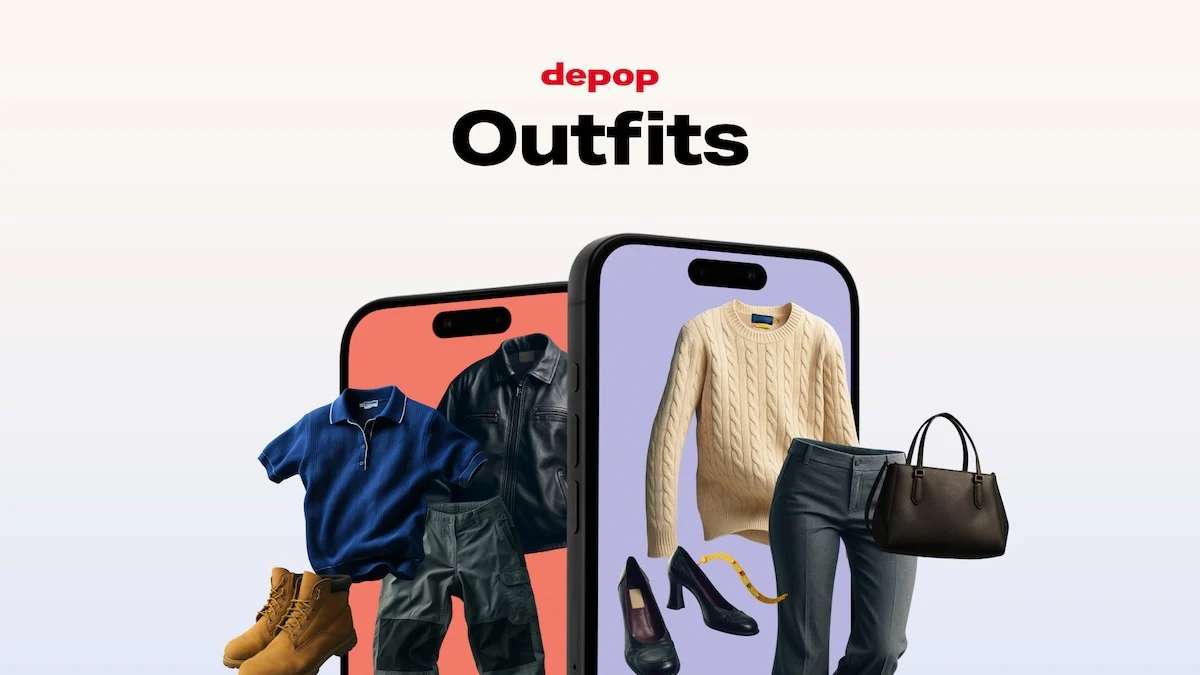
Fashion resale powerhouse Depop has officially introduced "Outfits," a sophisticated digital styling and collaging tool engineered to transform the way users interact with second-hand apparel. The feature, which debuted on Wednesday, represents a significant evolution in the platform’s transition from a standard peer-to-peer marketplace to a comprehensive social commerce ecosystem. By providing a mood board-like interface, Depop is directly catering to the aesthetic-driven habits of its primary demographic, Gen Z, while simultaneously creating new avenues for seller discovery and conversion.
The Outfits tool is designed to facilitate a more immersive and creative shopping experience. Within the app, users can now curate specialized fashion boards by selecting individual items and utilizing a new "scissors" icon located on the right-hand side of the interface. This functionality allows for the extraction of garment images, which can then be layered, resized, and repositioned on a digital canvas. To further enhance the creative process, Depop has included a suite of customization options, including vibrant background colors and pre-designed templates that serve as layout guides for those seeking structured inspiration.
Technical Integration and Shoppable Functionality
A critical component of the Outfits feature is its deep integration with Depop’s transactional infrastructure. Every item featured within a collage is fully shoppable, allowing followers to purchase individual pieces directly from the mood board. In a move to mitigate the friction often found in one-of-a-kind resale markets, Depop has implemented a sophisticated recommendation engine. If a specific item within a curated outfit sells out, the app automatically generates suggestions for similar alternatives currently available on the platform. This ensures that the creative content remains evergreen and continues to drive sales even after the original featured pieces are no longer available.
For sellers, the introduction of Outfits provides a powerful marketing utility. Rather than relying solely on static product photography, sellers can now demonstrate the versatility of their inventory by styling items in various contexts. By showing how a vintage blazer can be paired with modern accessories or specific footwear, sellers can provide the visual "proof of concept" that often triggers a purchase. This holistic approach to presentation is expected to increase the "basket size" of transactions, as buyers are encouraged to view multiple items as part of a cohesive look rather than isolated purchases.
Strategic Alignment with Gen Z Digital Culture
The launch of Outfits is a calculated response to the "digital scrapbook" trend that has dominated youth-oriented social media over the last several years. Platforms like Pinterest have seen a massive resurgence in popularity due to their focus on curation and visual planning. In 2022, Pinterest launched "Shuffles," a standalone collage-making app that quickly gained viral traction before being integrated into the main Pinterest ecosystem. By embedding similar functionality directly within its commerce app, Depop is attempting to capture the "inspiration phase" of the consumer journey—the moment when a user is browsing for ideas rather than a specific product.
Industry analysts suggest that this move helps Depop solidify its position as a "lifestyle app" rather than just a utility for buying and selling. The ability to share these curated outfits as static images across external platforms like Instagram and Pinterest further extends Depop’s reach. This cross-platform interoperability turns every user into a brand ambassador, as their styled collages serve as organic advertisements for the Depop marketplace. This strategy leverages the highly social nature of fashion, where the act of "putting a look together" is often as valued as the ownership of the clothes themselves.
Financial Momentum and Market Positioning
The rollout of the Outfits feature comes at a time of remarkable financial performance for the platform. According to the Q2 2025 earnings report released by Depop’s parent company, Etsy, the resale app has maintained an impressive growth trajectory. Depop’s Gross Merchandise Sales (GMS) increased by 34.7% year-over-year on a currency-neutral basis. This surge has placed the company on a projected run rate of $1 billion in GMS, a milestone that signals its dominance in the competitive resale landscape.
To put this growth into perspective, Depop’s performance is outpacing several of its key rivals. Mercari, another major player in the peer-to-peer marketplace sector, reported a Gross Merchandise Value (GMV) of $728 million for the fourth quarter of 2024. While Mercari maintains a diverse range of product categories, Depop’s hyper-focus on fashion and community-driven commerce appears to be yielding higher engagement metrics and faster scaling within the lucrative Gen Z segment.

The success of Depop is also a bright spot for Etsy, which acquired the London-based company in 2021 for $1.625 billion. At the time of the acquisition, some market observers questioned the high valuation, but Depop’s consistent double-digit growth and its successful expansion into the North American market have largely vindicated the investment. The introduction of tools like Outfits is seen as a way to maintain this momentum by increasing user retention and the time spent within the app.
The Evolution of the Resale Timeline
The journey of Depop from a small social network for readers of PIG magazine to a billion-dollar commerce engine reflects broader shifts in the retail industry.
- 2011–2015: Depop establishes its identity in London, blending the social mechanics of Instagram with the marketplace functionality of eBay.
- 2018–2020: The platform experiences explosive growth during the pandemic as Gen Z consumers turn to resale for both sustainability reasons and as a source of supplemental income.
- 2021: Etsy acquires Depop, providing the capital and infrastructure needed for global scaling.
- 2023–2024: Depop removes selling fees in certain regions to stimulate inventory growth and pivots toward "community-led" features.
- 2025: The launch of "Outfits" marks a shift toward AI-assisted curation and advanced social tools.
This chronology demonstrates a clear trend: the "commoditization" of resale is being replaced by the "curation" of resale. In the early days of online second-hand shopping, the primary hurdle was trust and logistics. Today, the hurdle is discovery. With millions of items listed daily, the "search and filter" model is becoming less effective than the "inspire and discover" model.
Broader Implications for Social Commerce and Sustainability
The launch of styling tools within resale apps has significant implications for the broader fashion industry, particularly regarding sustainability. By encouraging users to "shop the look" through second-hand items, Depop is directly competing with the fast-fashion giants like Shein and Temu, which rely on aggressive visual marketing and trend-chasing to drive sales. If a user can recreate a trending aesthetic using vintage or pre-owned items through a Depop collage, the perceived need for new, cheaply manufactured clothing diminishes.
Furthermore, the "similar items" recommendation feature powered by Depop’s backend technology addresses one of the primary pain points of sustainable shopping: the difficulty of finding specific sizes or styles in a non-standardized inventory. By using visual recognition to suggest alternatives, Depop is effectively creating a "digital twin" of the fast-fashion experience, where if one item is out of stock, another is always ready to take its place.
From a technological standpoint, the Outfits tool also hints at the increasing role of artificial intelligence in fashion curation. While the current tool is user-driven, the data gathered from how users pair items together provides an invaluable dataset for training recommendation algorithms. In the future, it is likely that Depop could offer "auto-generated" collages based on a user’s past likes and browsing history, further blurring the line between human creativity and algorithmic assistance.
Industry Reactions and Future Outlook
While official statements from competitors have been reserved, the industry consensus is that Depop’s move will force other platforms to upgrade their creative suites. Poshmark and Vinted, which have traditionally focused on the utility of the transaction, may find themselves needing to incorporate more social-first features to prevent their younger user bases from migrating toward Depop’s more interactive environment.
Market analysts suggest that the next frontier for Depop will be the integration of video and augmented reality (AR) within the Outfits tool. As mobile hardware becomes more capable of real-time image processing, the transition from 2D collages to 3D virtual try-ons seems inevitable. For now, however, the Outfits feature serves as a robust bridge between the static marketplaces of the past and the interactive social platforms of the future.
As Depop moves toward its $1 billion GMS milestone, its focus remains steadfast on the intersection of community, creativity, and commerce. The Outfits tool is not merely a feature update; it is a statement of intent that the future of fashion retail lies in the hands of the curators and the creators. With the backing of Etsy and a rapidly growing global community, Depop is well-positioned to lead the next generation of the circular economy, proving that sustainability and high-growth profitability can indeed go hand-in-hand.