









Apple Inc. has expanded its luxury accessory portfolio through a high-profile collaboration with the Japanese design house Issey Miyake, introducing the "iPhone Pocket." This new product line, which retails for $149.95 for the short version and $229.95 for the long crossbody model, represents a significant intersection of high fashion and consumer technology. The iPhone Pocket is a specialized textile sling designed to house and protect iPhones, utilizing a unique manufacturing process that has been a staple of the Miyake brand for decades. The launch marks a formal, though posthumous, continuation of the long-standing relationship between Apple’s late co-founder Steve Jobs and the legendary Japanese designer Issey Miyake.
Design Philosophy and the APOC Concept
The iPhone Pocket is rooted in the "A-POC" (A Piece Of Cloth) concept, a revolutionary design philosophy pioneered by Issey Miyake and Dai Fujiwara in 1997. The fundamental principle of APOC is the creation of a garment or accessory from a single, continuous piece of fabric, utilizing a computer-controlled knitting process that minimizes waste and allows for intricate, seamless structures.
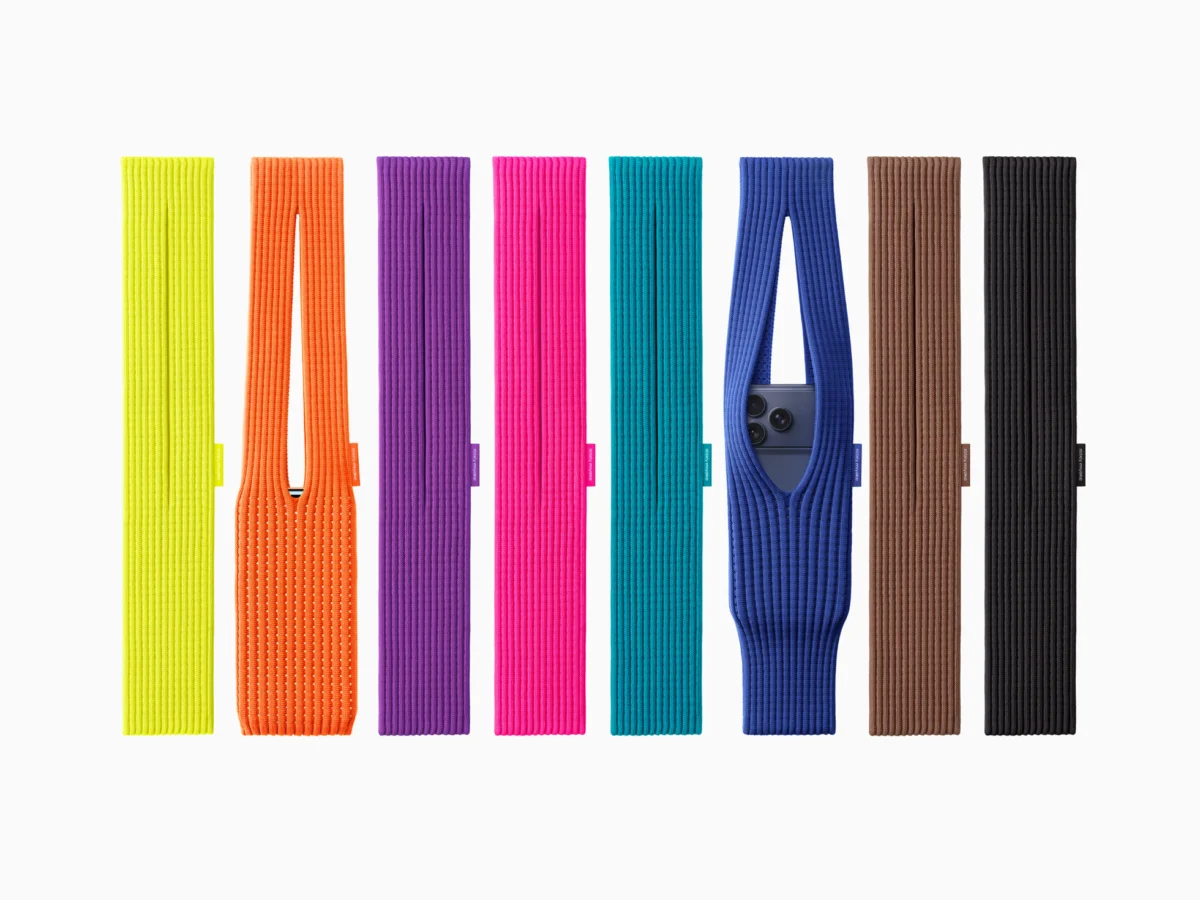
According to product specifications released on Apple’s digital storefront, the iPhone Pocket features a ribbed mesh structure. This design provides the elasticity and tactile quality associated with the signature pleats that made the Issey Miyake brand a global icon. The textile is engineered to be reactive; when the fabric is stretched, the open-weave structure subtly reveals the device inside, allowing users to glance at notifications or the time on their iPhone display without removing it from the pocket.
The product is available in two distinct configurations. The "short" size is designed to be looped around bag handles or carried by hand, offered in a diverse range of vibrant colors including "Lemon." The "long" version is designed as a crossbody accessory, catering to the growing "phone-as-a-purse" trend. This version is available in a more limited color palette, emphasizing a sophisticated, utilitarian aesthetic.
The Historical Context of the Apple and Miyake Relationship
The collaboration between Apple and the Issey Miyake label is not merely a contemporary marketing venture but a culmination of a relationship that dates back to the early 1980s. The connection began when Steve Jobs visited Sony’s factories in Japan and observed that employees wore uniforms designed by Miyake. Jobs, impressed by the sense of corporate identity and the practical elegance of the attire, commissioned Miyake to design a uniform for Apple employees.

While the Apple workforce famously rejected the idea of a corporate uniform, the project birthed one of the most iconic personal "brands" in history. Jobs requested that Miyake create a personal uniform for him that would provide both convenience and a distinct style. Miyake provided Jobs with hundreds of black mock-neck turtlenecks, which became the cornerstone of Jobs’ public persona for the remainder of his life.
Although Issey Miyake passed away in 2022, his design house has continued to operate under the principles he established. The iPhone Pocket serves as the first official co-branded product available through Apple’s retail channels, bridging the gap between the minimalist technology of Cupertino and the avant-garde textile engineering of Tokyo.
Market Positioning and Pricing Analysis
The pricing of the iPhone Pocket—ranging from approximately $150 to $230—places it firmly in the luxury accessory category. Industry analysts suggest that this product is not intended for the mass market but rather for a specific demographic of "prosumers" and fashion-forward individuals who view their technology as an extension of their personal style.
This is not the first time Apple has faced scrutiny over the pricing of its accessories. In 2021, the company released a $19 polishing cloth, which became a viral sensation and a subject of debate regarding the "Apple premium." However, the iPhone Pocket differs in that it carries the prestige of a global fashion house. When compared to other luxury phone cases from brands like Hermès (with whom Apple has a long-standing Apple Watch partnership) or Prada, the $229.95 price point for the long crossbody sling is consistent with the current luxury market for "tech-wear."
Comparative Pricing of Premium Apple Accessories
| Product | Price (USD) | Material/Brand |
|---|---|---|
| Polishing Cloth | $19.00 | Non-abrasive textile |
| FineWoven Case | $59.00 | Microtwill (Apple) |
| Apple Crossbody Strap | $59.00 | Woven Nylon |
| iPhone Pocket (Short) | $149.95 | Issey Miyake Mesh |
| iPhone Pocket (Long) | $229.95 | Issey Miyake Mesh |
| Hermès Case for iPhone | $350.00+ | Barénia Leather |
Consumer Trends: The Rise of the "Accessory for Accessories"
The launch of the iPhone Pocket coincides with a broader cultural shift toward "accessorizing accessories." Market researchers have noted a significant uptick in the popularity of charms, mini-bags, and specialized carriers for everyday items. This trend is exemplified by the "Labubu" craze—designer plush monster keychains that can retail for anywhere from $30 to several thousand dollars on the secondary market.
Similarly, brands like Stanley have seen a surge in sales for "tumbler pouches" and charms, while fashion labels like Telfar and Baggu have found success with "micro" versions of their flagship bags that are sized specifically for smartphones or AirPods. The iPhone Pocket fits into this "micro-utility" ecosystem. As digital wallets and "Tap to Pay" technology reduce the need for traditional handbags, the smartphone has become the primary object people carry. Consequently, the demand for high-fashion methods of carrying these devices has grown.

Technical Specifications and Sustainability
Beyond its aesthetic appeal, the iPhone Pocket aligns with Apple’s broader environmental initiatives. The APOC manufacturing process used by the Miyake label is inherently more sustainable than traditional "cut-and-sew" methods. Because the items are knitted to shape, there is virtually zero fabric waste generated during production.
The material itself is a high-performance synthetic blend designed to retain its shape even after repeated stretching. This durability is a critical factor, as Apple has recently faced criticism for its "FineWoven" line of accessories, which some consumers found to be prone to scratching and wear. By partnering with a house renowned for textile longevity, Apple may be attempting to regain its reputation for premium accessory durability.
Industry Reactions and Broader Implications
While Apple has not released specific sales targets for the limited-edition line, the tech industry’s reaction has been a mix of skepticism regarding the price and admiration for the design heritage. Tech critics have pointed out that while the "sock-like" design may seem simplistic, the engineering required to create a mesh that is both transparent enough to see a screen and strong enough to secure a $1,000 device is non-trivial.
Fashion industry observers see this as a strategic move for Apple to maintain its status as a "lifestyle" brand rather than just a hardware manufacturer. As smartphone hardware reaches a plateau in terms of annual innovation, the "software" of the device—its aesthetic and cultural cachet—becomes a more vital revenue stream.
Conclusion and Future Outlook
The iPhone Pocket by Issey Miyake is a testament to the enduring influence of the relationship between Steve Jobs and Japanese design. While it may be viewed by some as an expensive novelty, it represents a sophisticated application of textile technology to the world of consumer electronics.
As we move into 2026, the success of this collaboration will likely determine if Apple pursues further "limited-run" partnerships with other high-fashion houses. For now, the iPhone Pocket stands as a high-concept tribute to a design philosophy that prioritizes "a piece of cloth" and a single, unified vision of form and function. Whether it becomes a staple of the holiday gift season or remains a niche collector’s item, it underscores Apple’s unique ability to command the conversation at the intersection of technology, culture, and luxury.