











The Alliance for European Flax-Linen & Hemp has officially unveiled a series of technological breakthroughs that demonstrate the successful integration of flax and hemp fibers into high-performance composite manufacturing. Announced in Paris on June 1, 2026, these developments represent a definitive shift in the industrial landscape, moving natural fiber composites beyond niche artisan applications and into the realm of scalable, automated, and high-precision industrial production. By leveraging advanced robotics, additive manufacturing, and novel chemical engineering, the Alliance has showcased how these bio-based materials can now meet the rigorous mechanical and repeatability standards required by the automotive, construction, and aerospace sectors. This transition is being viewed by industry analysts as a critical milestone in the global effort to decarbonize heavy industry while maintaining the structural integrity and performance of modern engineering components.
The Evolution of Biocomposites: From Manual Lay-up to Industrial Automation
For decades, the use of natural fibers in composites was largely confined to manual "hand lay-up" processes, which, while effective for low-volume production, lacked the speed and consistency necessary for mass-market adoption. The recent announcement by the Alliance highlights a fundamental change in this trajectory. The integration of flax and hemp into automated systems such as Automated Fiber Placement (AFP), filament winding, and thin-ply prepreg technology has bridged the gap between sustainability and industrial viability.
The technical foundation for this shift lies in the inherent properties of European flax and hemp. These fibers possess a specific stiffness comparable to glass fibers but with significantly lower density—typically 1.45 to 1.50 g/cm³ compared to 2.5 g/cm³ for E-glass. Furthermore, natural fibers offer superior vibration damping and acoustic insulation, making them highly desirable for transport and architectural applications. The Alliance’s latest report confirms that by refining the processing of these raw materials, manufacturers can now achieve mechanical properties that were previously thought to be the exclusive domain of synthetic carbon or glass fiber composites.
Breakthroughs in Thin-Ply Prepreg and Automotive Engineering
One of the most significant advancements highlighted by the Alliance involves thin-ply prepreg technology. Developed in collaboration with partners such as Depestele, this process transforms flax rovings into ultra-lightweight, high-performance layers. The "thin ply effect" is a phenomenon where thinner layers of composite material demonstrate significantly higher damage tolerance and resistance to micro-cracking compared to standard-thickness plies. By utilizing automated prepreg systems, manufacturers can produce components with a level of precision and uniformity that meets the stringent safety standards of the automotive industry.
A primary example of this technology in action is the DynaMill project. This initiative, led by ContiTech AVS France (a subsidiary of OESL-Automotive) in partnership with Nautix and ComposiTIC, has successfully validated a lightweight automotive engine support connecting rod. The component was manufactured using a combination of injection molding and automated fiber placement, utilizing flax fiber reinforcements embedded within a bio-based PA11 matrix. This specific matrix, derived from castor oil, ensures that the entire component remains bio-based while providing the thermal and mechanical stability required in an engine environment. The DynaMill project builds upon the earlier Dynafib program, proving that bio-composites can withstand the high-stress, high-vibration conditions of automotive powertrains while contributing to overall vehicle weight reduction.
Robotic Filament Winding and the Future of Construction
The architectural and construction sectors are also seeing a transformation through the use of coreless filament winding. This robotic process, which is being pioneered by the FIBRAS project at Eindhoven University of Technology, allows resin-impregnated flax fibers to be wound into complex, three-dimensional geometries. Unlike traditional manufacturing, this method does not require a mold, which drastically reduces material waste and allows for the creation of structurally optimized designs that follow natural load paths.
The FIBRAS project has been instrumental in developing specialized handling methodologies for flax rovings. Because natural fibers exhibit more variability than synthetic ones, the project uses advanced sensors and real-time data adjustments to ensure that the robotic winding process remains precise. This technology is currently being used to create lightweight, resource-efficient architectural structures, such as pavilions and load-bearing beams, which offer a lower carbon footprint than traditional steel or concrete alternatives.
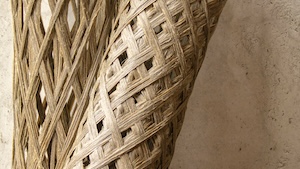
Similarly, the University of Stuttgart’s Institute for Computational Design and Construction (ICD) and the Institute of Building Structures and Structural Design (ITKE), supported by Safilin, have introduced the "Con[knit]uous Rubble" process. This innovative method uses continuous circular knitting to encase demolition waste in seamless flax fiber structures. By creating self-supporting forms like arches and columns without the need for binders or mortars, the project demonstrates a circular economy model where construction materials can be fully disassembled and reused at the end of their lifecycle.
Additive Manufacturing and the Expansion into 4D Printing
The Alliance has also pointed to the rapid expansion of additive manufacturing, or 3D printing, as a key driver for flax-based composites. By co-extruding flax yarns with thermoplastics like Polylactic Acid (PLA), researchers have achieved mechanical properties in 3D-printed parts that are comparable to those made through traditional composite processes. This has immediate implications for rapid prototyping and the production of customized structural components.
In a forward-looking development, the field of 4D printing is now being explored. Led by Professor Antoine le Duigou at the Institut de Recherche Dupuy de Lôme, in collaboration with Coriolis Composites, research is focusing on "hygromorphic" materials—composites that change shape or function in response to environmental stimuli like moisture or heat. These bio-inspired materials are being designed for decarbonization applications, such as self-adjusting ventilation systems or adaptive aerodynamic surfaces, which require no external power source to operate.
The fashion and design industries are also beginning to adopt these 3D-printed natural fiber solutions. Designer Alyssa Cartaut recently received the City of Hyères Prize for Fashion Accessories for her collection, "The Cushion Issue." Her work features footwear components 3D-printed using PLA reinforced with European flax-linen fibers. Supported by the Alliance, the project highlights how high-tech bio-composites can replace conventional plastics in consumer goods, offering a sustainable alternative that does not compromise on aesthetics or durability.
Hemp Processing and Functional Material Innovation
While flax has traditionally led the way in natural fiber composites, hemp is rapidly closing the gap. The EU-funded RAW project, involving partners such as Terre de Lin, Safilin, and Linificio Canapificio Nazionale, has demonstrated new capabilities in long-fiber hemp pultrusion. This process allows for the continuous production of high-strength structural profiles. The "Hemp Halo Canopy," a 3.3-meter architectural prototype showcased at JEC World, serves as a proof of concept. The structure combines pultruded hemp profiles with CNC-knitted hemp surfaces, creating a lightweight, waste-free construction system.
In the realm of functional materials, the German firm Composites Edge GmbH has introduced an adaptive acoustic panel that has set new benchmarks for noise reduction. The panel, which is less than one millimeter thick, is made from natural fibers and thermoplastic resins. Utilizing Automated Fiber Placement (AFP), the panel is designed to absorb up to 95% of low-frequency noise. This innovation was recognized as a finalist in the CAMX Awards, proving that natural fibers are not only structural substitutes but can also offer functional advantages—such as superior acoustic damping—that synthetic fibers struggle to match.
Industry Implications and the Path to 2030
The advancements announced by the Alliance for European Flax-Linen & Hemp come at a time when the European Union is tightening regulations regarding the carbon footprint of industrial products. The "Ecodesign for Sustainable Products Regulation" (ESPR) and the push for "Extended Producer Responsibility" (EPR) are forcing manufacturers to reconsider their material choices.
"European Flax-linen and hemp are redefining what’s possible in biocomposite manufacturing," stated Bruno Pech, a representative of the Alliance. "Moving far beyond traditional lay-up into highly automated processes like filament winding, prepreg systems, and additive manufacturing, these innovations are unlocking new levels of precision, design freedom, and performance. We are proving that natural fibers are ready for the most advanced industrial applications."
The broader impact of these technologies is multifaceted. Economically, the shift toward natural fibers supports the European agricultural sector, specifically in regions like France, Belgium, and the Netherlands, which produce approximately 80% of the world’s high-quality flax. Environmentally, the replacement of glass and carbon fibers with flax and hemp significantly reduces the energy required for manufacturing. Carbon fiber production, for instance, is notoriously energy-intensive; by contrast, flax and hemp sequester CO2 during their growth phase, potentially leading to carbon-neutral or even carbon-negative composite components.
As the industry moves toward the end of the decade, the focus is expected to shift toward the standardization of these materials. With the mechanical validation of components like the DynaMill engine rod and the structural success of the FIBRAS winding projects, the next step will be the creation of comprehensive material databases and certification protocols. This will allow engineers to integrate flax and hemp into their CAD and simulation software with the same level of confidence they currently have with steel or aluminum. The developments announced in Paris suggest that the era of the high-performance biocomposite has not just arrived—it is already beginning to scale.